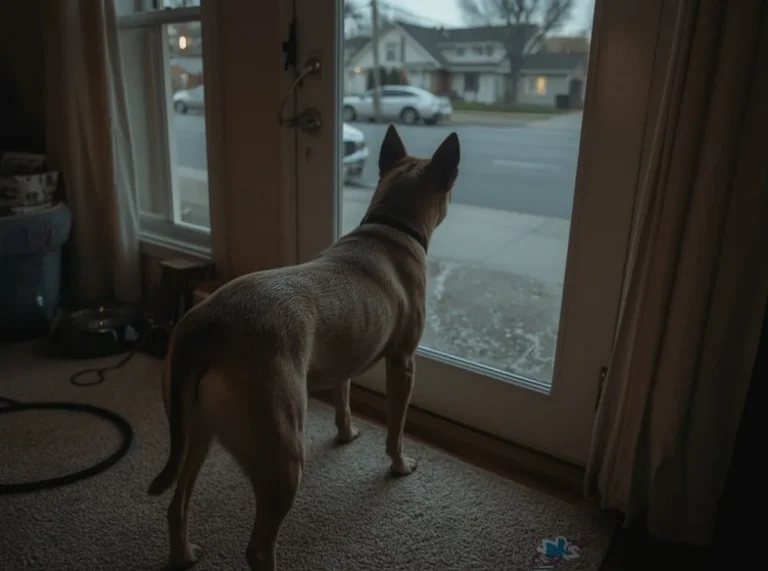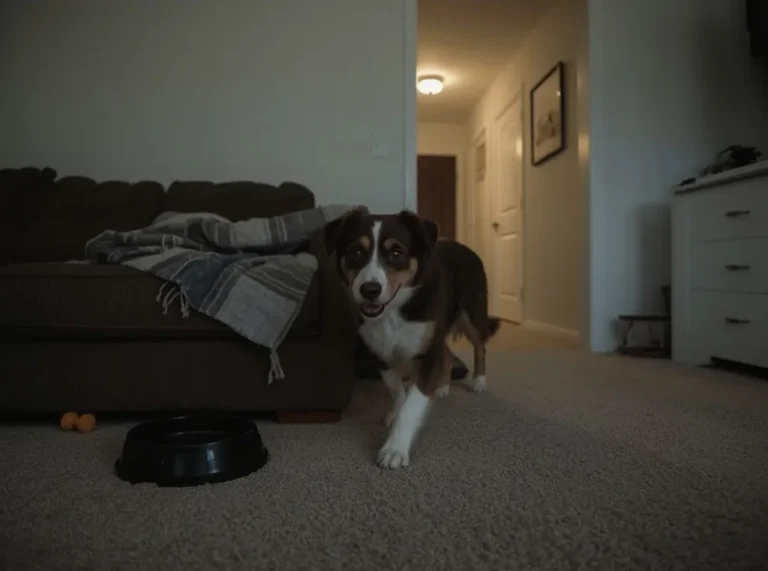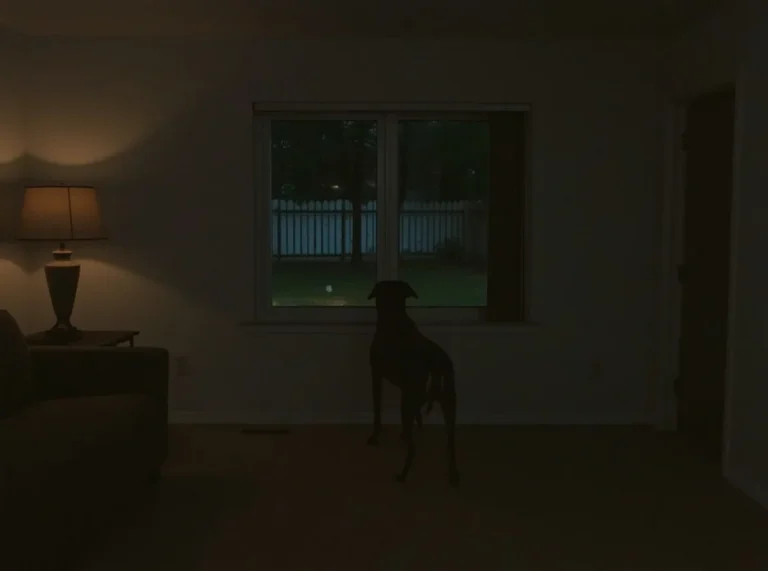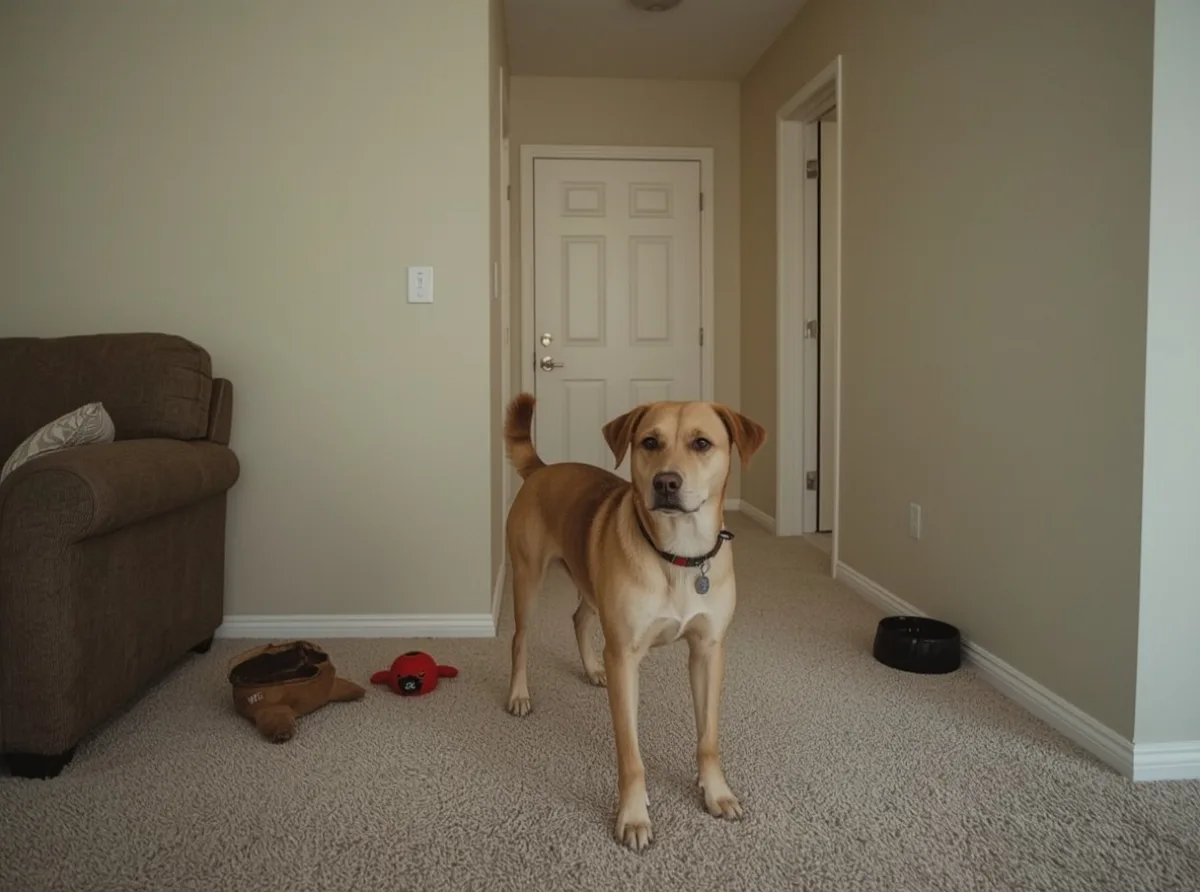
It often happens at the strangest time. The dishwasher stops. The TV goes dark. A noisy family room goes silent for just a few seconds, and then the dog barks once, or twice, or keeps going as if something changed in the air.
That moment of quiet can feel small to people, but to a dog it can be noticeable. A sudden drop in sound changes the whole atmosphere of the home. Some dogs respond with curiosity. Others react as if they need to check whether everything is still normal.
In many households, barking at the moment the house gets quiet is not random at all. It can come from alertness, anticipation, unease, boredom, or a learned habit built from everyday patterns. The bark is often the dog’s way of answering a shift that people barely notice.
What Quiet Can Mean to a Dog
Dogs do not experience silence the same way humans do. They are constantly taking in information from sound, movement, scent, and routine. When a busy home suddenly becomes still, that change can stand out more than the quiet itself.
For some dogs, quiet means the day is moving into a different phase. People are settling down. The activity that gave the dog structure has ended. That transition can trigger a bark because the dog notices that something has changed and wants to respond to it.
In other cases, the quiet is not calming at all. It may feel empty, especially to a dog who is used to background noise, interaction, or steady stimulation. A bark can break that stillness and help the dog feel connected to the environment again.
When a dog barks as soon as a house gets quiet, the bark is often less about the silence itself and more about the change in pattern.
What This Behavior Looks Like in Everyday Life
This kind of barking often appears in familiar moments. A family finishes dinner and stops talking. A person turns off music and heads upstairs. The dog has been lying nearby, then suddenly lifts its head and barks toward the hallway, window, or closed door.
Sometimes the bark is sharp and brief. In other cases it turns into a few restless circles, pacing, or repeated barking at nothing obvious. The dog may stare toward the last active part of the house, as if waiting for the missing noise to return.
Some dogs bark only when the home goes quiet after a burst of activity. Others do it at a specific time every evening, such as when everyone settles in for the night. The behavior can seem inconsistent, but it often follows a pattern the dog has learned over time.
Common situations where it shows up
- After children stop playing and the house suddenly settles
- When a television, radio, or appliance turns off
- When people leave a room and the dog is alone in a quiet space
- At bedtime, when household movement slows down
- After visitors leave and the home returns to a normal routine
Possible Emotional Reasons Behind the Barking
One of the most common reasons for barking in a quiet house is simple alertness. Dogs are naturally tuned to notice changes, and silence can signal that something familiar has shifted. A bark may be a quick way of checking in with the environment.
Some dogs bark because they feel uncertain. Quiet can make sounds that are already present more noticeable: a pipe ticking, a floorboard creaking, a neighbor walking outside, or a distant car. A dog that is mildly uneasy may bark to respond to those small cues.
Other dogs bark because they are seeking contact. If quiet often comes right before attention disappears, a bark can become a learned way to say, “Don’t forget I’m here.” That does not always mean the dog is demanding. Sometimes it simply means the dog wants the home to feel active again.
Excitement can also play a role. A dog that has been waiting for the next part of the day may bark when the energy drops because the change feels important. The bark comes from built-up expectation rather than fear.
A single bark at the moment of quiet can be a sign of alertness, while repeated barking may point more toward tension, boredom, or a learned response.
How Routine and Environment Influence the Behavior
Dogs thrive on patterns, even when those patterns are subtle. If the home is usually noisy, then sudden quiet may stand out more strongly. If the house has a predictable “wind-down” time every evening, the dog may learn to bark during that transition without any obvious cause.
Environmental stimulation matters too. A dog that spends the day with little to do may become especially responsive to small changes in the house. When the noise drops, the dog has more mental space to notice everything else, including sounds people are not paying attention to.
Busy households often create a different kind of bark. In a loud, active home, a dog may become used to constant stimulation. When the energy fades, the dog can react because the quiet feels unnatural or incomplete.
House layout can influence the behavior as well. Dogs in homes with echoing hallways, thin walls, large windows, or many outside sounds may bark when the indoor noise stops because outside sounds become easier to detect. A quiet house is not truly silent to them.
Environmental factors that can make it more noticeable
- Long periods without play, walks, or mental engagement
- Changes in household schedule
- Homes with many outside noises
- Dogs who spend a lot of time monitoring doors or windows
- Sudden changes from busy activity to stillness
What the Bark May Say About the Dog’s State of Mind
A dog barking when the house gets quiet is not always anxious, but the emotional tone matters. The same bark can look similar while coming from different places internally. A relaxed dog may bark once and settle. A more stressed dog may bark repeatedly, move stiffly, or struggle to relax afterward.
Body language helps fill in the picture. A loose posture, soft eyes, and easy movement often suggest the dog is simply reacting to a change. A tight body, raised hackles, fixed gaze, or hard stare can point to a stronger emotional response.
Some dogs become most vocal when they are tired. That may seem backwards, but overtired dogs often react more strongly to small disruptions. Quiet can make their restlessness more obvious, and barking becomes part of that unsettled energy.
There are also dogs that bark in the quiet because they are waiting. These dogs watch for the next cue, the next person, or the next activity. In that case, the bark may be tied to anticipation rather than distress.
| What you may notice | Possible meaning |
|---|---|
| One or two barks, then calm | Alertness or quick reaction to change |
| Repeated barking with pacing | Uncertainty, frustration, or heightened arousal |
| Barking near doors or windows | Response to outside sounds becoming more noticeable |
| Barking after people settle down | Attention-seeking or learned routine |
| Barking with stiff posture | Possible tension or watchfulness |
The Role of Learned Behavior
Dogs are excellent pattern learners. If barking has ever caused people to look at them, talk to them, or move around, the dog may remember that response. Even a small reaction from a person can reinforce the habit.
In some homes, barking when the house gets quiet becomes part of the evening rhythm. The dog barks, someone says the dog’s name, the lights change, a door opens, or a person checks on the dog. Over time, the dog may connect quiet with a predictable human response.
That does not mean the dog is being manipulative. It means the behavior has become effective in some way. Dogs repeat what works, especially when it gets attention or changes the energy in the room.
Learned barking can be tricky because it often looks emotional even when it has a simple origin. A dog may begin by reacting to the first few moments of silence, then gradually continue because the habit has been strengthened by the household’s response.
When Quiet Triggers More Barking Than Noise Does
Some dogs seem more bothered by silence than by sound. This may happen in homes where they are rarely left with nothing to do, or in dogs who rely heavily on the presence of human activity to feel settled. When the house goes quiet, they may sense a gap that feels unresolved.
Other dogs get more vocal when they can hear every small sound clearly. The dishwasher stopping, a footstep in another room, or a dog barking outside can become easier to pick out. The bark is then a reaction to sharper awareness, not the silence itself.
In certain cases, quiet can also uncover separation-related sensitivity. If the house grows still after a person leaves, the dog may bark because the shift reminds them that social contact has changed. The timing matters as much as the quiet itself.
It is useful to pay attention to what happens right before the bark. Did the room get empty? Did the dog stop getting interaction? Did the home go from structured to unstructured? Those details often explain more than the bark alone.
Questions that help identify the pattern
- Does the barking happen at the same time each day?
- Does it start when people stop moving around?
- Is there a specific room or sound that sets it off?
- Does the dog calm down quickly afterward?
- Does the barking happen more when the dog is under-stimulated?
How Different Dogs Show the Behavior Differently
Not every dog barks in the same way when the house becomes quiet. A confident, social dog may do a quick alert bark and then lie back down. A sensitive dog may bark, listen, and bark again at the slightest sound.
Breed tendencies can shape the style, but individual temperament matters more. Some dogs are naturally vocal and use barking freely. Others are quieter overall and only bark when a change in the house stands out sharply.
Age can matter too. Younger dogs often react more strongly because they are still learning what normal household rhythms mean. Older dogs may bark for different reasons, including hearing changes or increased watchfulness, which can make quiet feel unfamiliar.
Even within the same home, one dog may bark when the house gets quiet while another barely reacts. That difference usually reflects sensitivity, past experiences, and how each dog has learned to interpret the environment.
What Owners Often Misread
It is easy to assume the bark means the dog heard something dangerous. Sometimes that is true. But many times, the bark is less dramatic than people expect. The dog is responding to change, not necessarily to threat.
It is also common to think a barking dog is being stubborn or difficult. In reality, the dog may simply be unsettled by a shift in activity. Quiet can remove the structure the dog has been following, and the bark is part of the adjustment.
Another misunderstanding is assuming the behavior only matters if it is loud or frequent. A dog that barks once every night when the home goes still may be showing a reliable pattern worth noticing. Small routines often reveal larger habits.
Context matters more than volume. A short bark, a repeated bark, and a tense bark can all mean very different things.
When the Behavior Becomes More Noticeable
The barking may become more frequent during changes in the household. A new schedule, more time at home, guests coming and going, or a shift in the dog’s exercise routine can all make quiet moments feel more significant.
It may also stand out during seasons when people spend more time indoors. A dog used to daytime movement, outdoor activity, or frequent noise can react more strongly when the home becomes still for longer stretches.
Dogs can also become more reactive when they are not getting enough mental engagement. If the day has been repetitive and uneventful, the first quiet moment may feel like a signal that invites the dog to fill the space with barking.
Sometimes the change is subtle and gradual. The dog does not suddenly become “a barker.” Instead, the barking increases a little at a time until the pattern is easy to notice. That slow shift often points to a routine issue rather than a single event.
Reading the Full Picture
To understand why a dog barks when the house gets quiet, it helps to look at the whole sequence, not just the bark. What happened in the minute before? What does the dog do afterward? Does the dog settle, keep watching, or continue vocalizing?
The same behavior can mean different things in different homes. A barking dog near the front window may be reacting to outside sounds. A dog in the middle of the living room may be responding to the end of social activity. A dog that barks right after everyone goes to sleep may be reacting to the disappearance of household movement.
The more consistent the pattern, the easier it becomes to understand. Dogs rarely bark at random for no reason at all. Usually, the reason is just quieter than people expect.
That is why this behavior often makes more sense once the home is observed as a system of rhythm, sound, and social contact. Silence changes that system. A dog notices, and barking is one way of answering the change.
Natural Instincts Behind the Reaction
Dogs are built to notice transitions. In wild or semi-wild settings, a sudden shift in sound can mean the group is moving, resting, or becoming aware of something nearby. That same sensitivity lives on in household dogs, even though the setting is very different.
Alert barking is part of that instinctive pattern. A dog hears the environment change and responds. In a home, the trigger may not be a threat at all. It may simply be the absence of familiar activity.
Dogs are also social animals. When the household gets quiet, some dogs interpret the change as reduced social connection. Barking can be a way to restore a sense of presence, almost like checking whether everyone is still there.
This is why the behavior can look mild in one dog and intense in another. It depends on how sensitive the dog is to shifts, how much social reassurance they need, and how much background stimulation they are used to.
Living With a Dog Who Barks at the Quiet
In everyday life, the pattern often becomes familiar. The house winds down, the dog listens, and a bark breaks the stillness. Over time, owners can usually tell whether it is an alert bark, an attention-seeking bark, or a sign the dog is uneasy.
What matters most is noticing consistency. If the barking always happens after the same trigger, the dog is probably responding to a learned moment in the daily rhythm. If the barking appears alongside stiffness, pacing, or difficulty settling, it may reflect stronger tension.
Quiet can feel empty to a dog that depends on the flow of the household. For another dog, it may be the exact moment they become most aware of the world around them. Either way, the bark is usually a reaction to change, not a mystery with no cause.
Once the pattern is clear, the behavior often becomes easier to interpret. The dog is not just barking into silence. The dog is answering the moment the house changes shape around them.