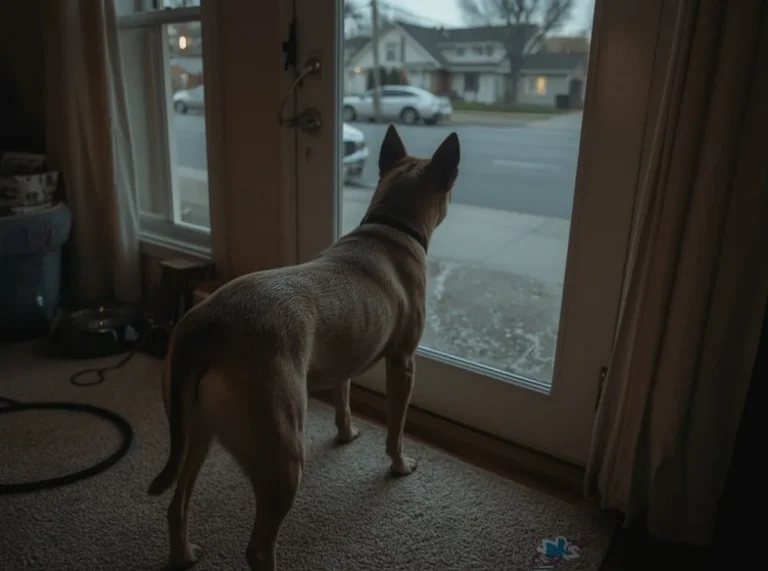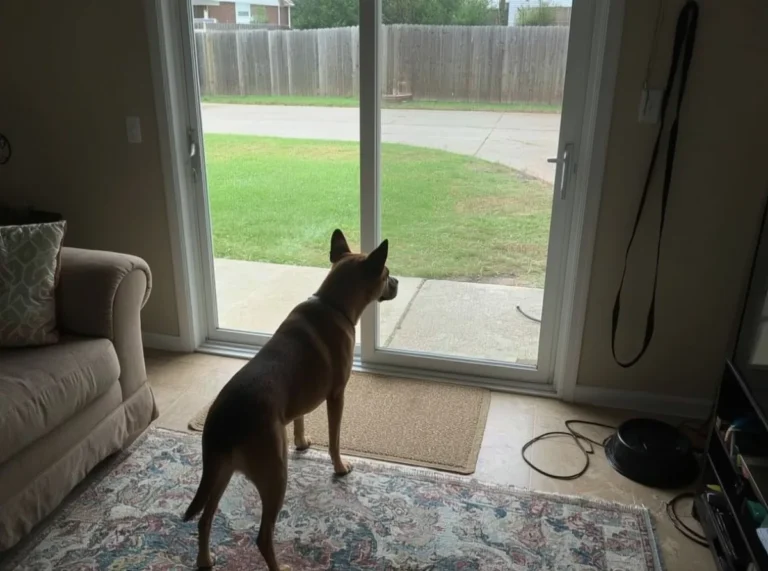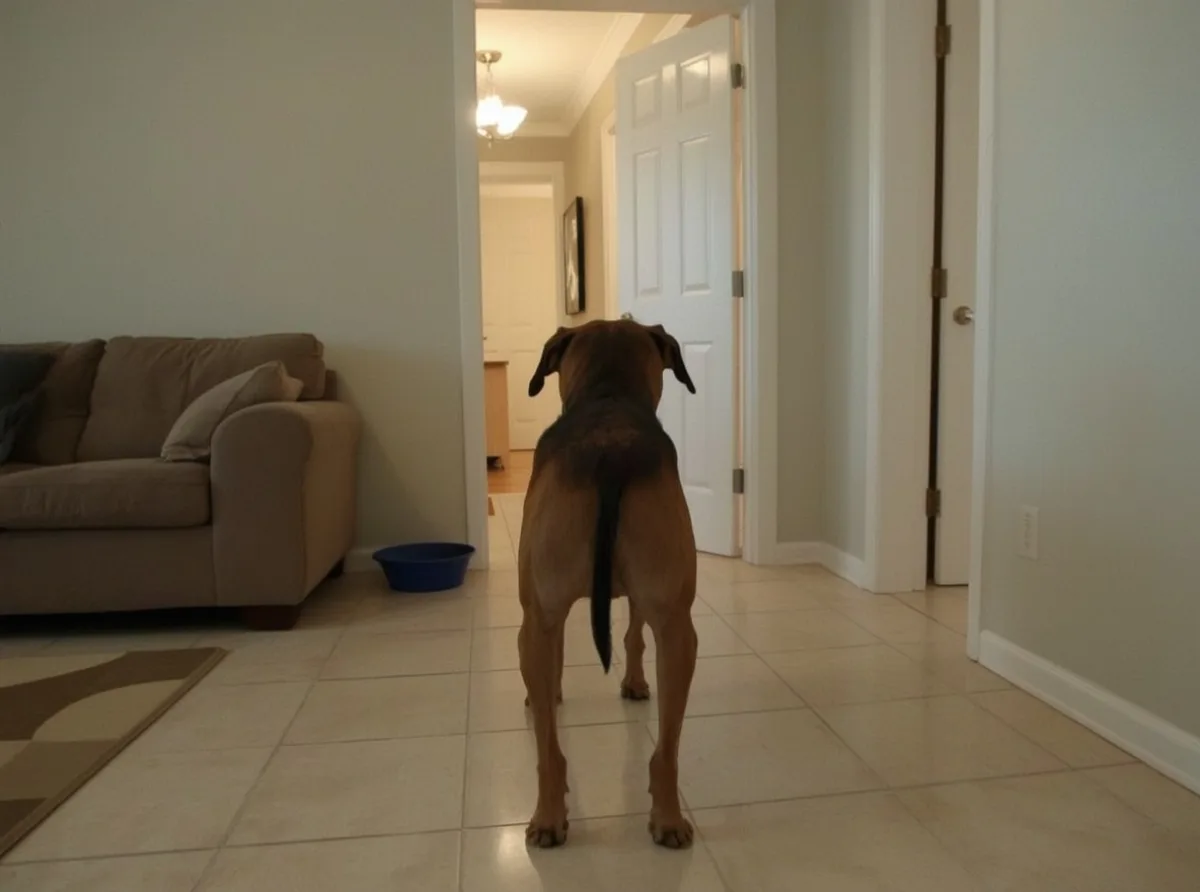
A dog that suddenly seems nervous indoors can be unsettling, especially when the change feels out of nowhere. One day the dog walks through the house with ease, and the next day it flinches at a hallway, avoids a room, or follows you around more closely than usual. That shift often has a reason, even if it is not obvious at first.
Indoor nervousness can show up in small ways before it becomes easy to notice. A dog may pause at the threshold of a room, hold its tail lower than normal, lick its lips, or keep checking the windows and doors. Some dogs become quiet and clingy. Others pace, pant, or seem jumpy at sounds that never bothered them before.
It is tempting to think the behavior is random, but dogs usually react to something in their surroundings, their body, or their daily routine. The trigger may be loud. It may also be subtle. A new smell, a changed schedule, a strange sound from the walls, or even a shift in the dog’s own comfort can be enough to make a normally relaxed dog seem uneasy indoors.
What nervousness looks like in everyday home life
Indoor nervousness does not always look dramatic. Many dogs simply become careful. They move more slowly through the house, stay near one person, or stop settling in places they used to nap comfortably. Some dogs hover near doorways instead of entering a room. Others keep their head low and scan the environment more than usual.
The signs can be easy to miss because they blend into ordinary behavior. A dog that wants to be near you may seem affectionate, but if it is suddenly glued to your side and cannot relax, that closeness may be a sign of stress. A dog that keeps leaving and returning to the same room may not be indecisive; it may be unsure about what feels safe.
Common signs of nervous behavior indoors include:
- Lowered body posture
- Tail tucked or held lower than normal
- Excessive lip licking or yawning
- Pacing or circling
- Sudden startle responses to everyday sounds
- Refusing to enter a room or go down a hallway
- Clinginess or increased following behavior
- Hiding under furniture or behind objects
Not every nervous dog shows all of these signals. Some dogs become very still instead of active. Others act restless but never bark or whine. The pattern matters more than any single gesture.
When a dog seems nervous indoors, look at the full picture: body posture, movement, breathing, and where the behavior happens. One odd moment can be harmless; repeated avoidance usually means something is bothering the dog.
Why a dog may suddenly feel uneasy indoors
A sudden change in indoor confidence usually has a trigger, even if the trigger is not visible to people. Dogs notice details that humans overlook. Their ears catch faint noises. Their noses detect changes in scent. Their bodies also respond to discomfort in ways that can make a familiar room feel unsafe.
One of the most common reasons is noise. Appliances, vents, pipes, HVAC systems, and construction nearby can create sounds that are inconsistent or hard for humans to detect. A dog may react to a humming refrigerator only when it starts making a new noise. A distant alarm, an elevator, or even the buzz of a light fixture may be enough to create tension.
Another common factor is change. Dogs often notice when furniture moves, a new item appears, a room smells different, or the household routine shifts. A guest staying overnight, a baby gate placed in a hallway, or new cleaning products can change how the home feels. Even minor changes may affect a sensitive dog.
Physical discomfort can also make a dog seem nervous. A dog that feels sore, nauseated, itchy, or tired may act uncertain inside the house because movement feels less comfortable. This kind of nervousness is often mistaken for fear when it is really a response to discomfort. If the behavior appears along with reduced appetite, reluctance to jump, stiffness, or changes in sleep, the dog’s body may be playing a bigger role than the environment.
Some dogs become nervous indoors after a startling event. A slip on a tile floor, a loud crash from the kitchen, or being unexpectedly cornered in a tight space can leave a lasting impression. Even after the event is over, the dog may remember where it happened and avoid that area for a while.
How environment shapes a dog’s confidence inside the house
Home should feel familiar, but that does not mean it always feels predictable to a dog. Indoor spaces can contain many triggers packed into a small area. Sound bounces off walls. Strong smells linger. People move quickly from room to room. Doors open and close without warning. For a sensitive dog, that can add up.
Some homes are naturally more stressful than others. A quiet dog may do well in a calm household but become uneasy in a home with children running through hallways, frequent guests, or constant television noise. Another dog may struggle in a very quiet home because every little sound stands out. The environment does not need to be chaotic to feel difficult; it only needs to feel unpredictable to that particular dog.
Temperature and air quality can also matter. A dog that feels too warm may pant, pace, and seem unsettled. Dry air, dust, or lingering odors from smoke or cleaners can irritate sensitive dogs. These discomforts are easy to overlook because they do not look like fear at first glance.
The layout of the house matters too. Narrow hallways, slippery floors, echoing staircases, and dim corners can all make a dog hesitant. A dog that is fine in one part of the home may look nervous only in a specific area. That pattern often points to a location-based trigger rather than a general anxiety problem.
Household changes that can affect a dog quickly
- New furniture or blocked pathways
- Changed feeding or walking times
- Guests staying over
- New scents from candles, cleaners, or paint
- Noise from remodeling or nearby repairs
- Shifts in the owner’s work schedule
- Added pet gates, crates, or closed doors
These changes may seem minor to people, but dogs build their understanding of the house from repeated experience. When the pattern changes, the dog may need time to adjust.
Routine and internal state can make the difference
A dog’s nervousness indoors is not always about the room. Sometimes it is about the dog’s internal state on that day. A dog that is under-rested, overstimulated, or hungry can become more reactive to ordinary home life. A dog that has not had enough exercise or mental engagement may also seem on edge because energy has nowhere comfortable to go.
Routine disruptions are especially important. Dogs rely on patterns to help them predict what happens next. If meals, walks, rest periods, and social time suddenly shift, the home can feel less stable. Even a dog that adapts well may become unsettled after a few days of inconsistent timing.
There is also a difference between nervousness caused by too much stimulation and nervousness caused by too little. A dog that has been overstimulated may seem jumpy, over-alert, and unable to settle. A dog that has had too little activity may pace, whine, or shadow people in search of something to do. Both can look like anxiety, but the underlying cause is different.
Sleep matters more than many owners realize. Dogs that are repeatedly disturbed during rest often become more reactive indoors. A tired dog can be less patient with normal household noise and movement. If the nervous behavior increases in the evening or after a rough night, fatigue may be part of the picture.
When a dog’s indoor nervousness appears alongside changes in sleep, appetite, stiffness, or energy, the behavior may be tied to physical comfort as much as emotion.
What the behavior may be saying emotionally
Nervousness indoors can reflect uncertainty, anticipation, or the feeling that something is not quite right. Dogs do not need a dramatic event to become uneasy. Some are naturally more sensitive and notice patterns faster than others. A dog with a cautious temperament may react to small changes that another dog ignores.
In many cases, the dog is not being disobedient or stubborn. It is trying to cope. A dog that hesitates at a doorway may be asking for more time. A dog that stays close to the owner may be seeking reassurance through proximity. A dog that watches a sound source closely may be trying to gather information before deciding whether to move.
Fear and uncertainty can overlap, but they are not always the same. Fear often involves a clearer sense of threat. Uncertainty is more like waiting for the answer. A dog that seems nervous indoors may not know what to expect next, and that lack of predictability can be enough to create tension.
Some dogs also become nervous when they are socialized poorly or have limited experience in a home environment. For example, a rescue dog may know outdoor spaces better than indoor ones. A puppy that missed calm household exposure may become uneasy around vacuum cleaners, stairs, reflective floors, or even the sound of dishes in the kitchen. In those cases, the dog is not reacting to danger so much as unfamiliarity.
Subtle signs owners often miss
Because indoor nervousness often develops gradually, people sometimes notice only the more obvious symptoms. By then, the dog may have been signaling discomfort for some time. The earlier signs are usually small and easy to dismiss.
Early body language to watch for
- Brief freezing before moving forward
- Repeated checking behind or around itself
- Turning the head away while keeping the body tense
- Staring at one area of the house for too long
- Slower blinking or avoiding eye contact
- Light trembling without obvious cold
- Excessive sniffing in one spot
These signals often appear before barking, retreating, or refusing to move. A dog may still accept treats or follow cues, but that does not always mean it feels fully comfortable. Some dogs continue to respond while quietly staying tense underneath the surface.
Another subtle clue is inconsistency. If a dog is fine in the morning but uneasy later in the day, the trigger may be linked to timing. If the dog only seems nervous in certain rooms, the issue may be environmental rather than general. Tracking patterns helps reveal what the dog is actually reacting to.
When nervousness looks like a fear of one specific indoor space
Sometimes the behavior is limited to one room, hallway, staircase, or corner of the house. That narrow pattern is useful. It often means the dog is reacting to a specific memory, sensory trigger, or physical feature of the space.
A dog may avoid a kitchen because something loud dropped there once. It may hesitate in a hallway that echoes footsteps. A stairwell may feel unsafe if the surface is slippery or the space is too enclosed. Some dogs dislike rooms with strong odors, while others react to shadows, mirrors, or ceiling fans.
In these situations, the dog’s nervousness is often highly consistent. It may stop at the same spot every time, or approach only when encouraged by a trusted person. This kind of repetition is a clue. Dogs rarely invent the same fear in the same place for no reason.
If the concern is linked to one room, it helps to think in terms of what the dog experiences there. Noise, traction, visibility, scent, and prior events all matter. A room that feels fine to a person may still seem strange to a dog because of one hard-to-notice detail.
How owners often misread the behavior
Indoor nervousness is often mistaken for clinginess, laziness, stubbornness, or a desire for attention. A dog that wants to stay near the owner may be labeled needy, but that closeness may be the dog’s way of feeling safer. A dog that refuses to enter a room may be seen as dramatic, but the dog may genuinely be unsure about the space.
Another common misunderstanding is assuming the behavior is always behavioral and never physical. Dogs cannot explain pain, digestive upset, or sensory discomfort. If a dog starts acting worried indoors without an obvious environmental reason, the body deserves attention too.
Owners sometimes also miss the role of timing. A dog that seems nervous right after a walk may be tired or overstimulated. A dog that becomes uneasy only after visitors leave may be reacting to the change in household energy. A dog that seems unsettled in the evening may be affected by shadows, fatigue, or a different noise pattern in the building.
What looks like “sudden nervousness” is often a dog responding to a change that happened before the owner noticed it. The behavior is the last step, not the first one.
What helps make sense of the pattern
The most useful next step is observation, not quick correction. Watching when the behavior appears, where it happens, and what changes around that time can reveal a lot. A simple pattern may be enough to point toward the cause.
It helps to ask a few practical questions:
- Did anything change in the home recently?
- Is the dog nervous in one room or everywhere?
- Does the behavior happen at a certain time of day?
- Is the dog also eating, sleeping, and moving normally?
- Are there loud noises, strong scents, or new barriers in the house?
These questions do not diagnose the reason, but they help separate environmental discomfort from broader emotional or physical concerns. A dog that is nervous only indoors and only in specific situations is giving a clearer message than it may first appear to be giving.
Sometimes the answer is straightforward. A new air purifier hums all day, and the dog dislikes it. A slippery floor makes the dog uncertain. A room smells different after recent cleaning. Other times the cause is layered, with routine changes, mild discomfort, and a sensitive temperament all contributing at once.
Why some dogs seem more affected than others
Not every dog reacts the same way to the same indoor environment. Breed tendencies, early experiences, personality, age, and health all influence how a dog handles uncertainty. Some dogs are naturally observant and cautious. Others are more adaptable and brush off changes quickly.
Young dogs often seem nervous indoors because they are still learning what the home means. Mature dogs may become nervous after a new health issue or a bad experience. Older dogs can develop uncertainty as vision, hearing, or mobility changes. A senior dog that once moved confidently through the house may become hesitant if stairs feel harder or lighting feels dimmer.
Rescue dogs may need extra time, especially if their past included unstable indoor environments. But even dogs raised in one home from puppyhood can suddenly seem nervous when something in the environment changes. Familiarity does not always protect against stress.
The important detail is that nervousness indoors is often situational rather than permanent. A dog may have a strong preference for predictability and a low tolerance for changes. Once the trigger is identified, the pattern often makes more sense.
When the nervousness is worth paying closer attention to
Some indoor nervousness is temporary. A dog may recover after a storm, a visitor, or a new appliance. But if the behavior becomes more frequent, spreads to other parts of the home, or comes with signs of pain or illness, it deserves closer attention.
Watch for changes such as refusal to use stairs, sudden hesitation to jump onto furniture, increased trembling, trouble settling at night, or a new sensitivity to touch. A dog that once moved normally indoors but now seems worried about ordinary movement may be dealing with more than anxiety.
If the nervousness is paired with panting, drooling, vomiting, diarrhea, limping, or abrupt changes in appetite, the behavior should not be treated as just a mood issue. Dogs often express discomfort through behavior first, and their surroundings may only be part of the story.
Even when the cause is emotional, the pattern still matters. Dogs feel safer when their environment becomes easier to predict. Small adjustments in household routine, noise, and access to calm spaces can make a real difference. The key is noticing what the dog is already trying to say through its movement, posture, and hesitation.
A dog that suddenly seems nervous indoors is usually responding to something concrete, even if it is subtle. The trigger may be sound, scent, pain, routine change, or a memory tied to one part of the house. Once that possibility is taken seriously, the behavior starts to look less mysterious and more like information.
That information is often visible in the little things: a pause at the doorway, a lowered tail, a glance toward the hallway, a body that cannot quite settle. Those details are often the clearest clues a dog can give.