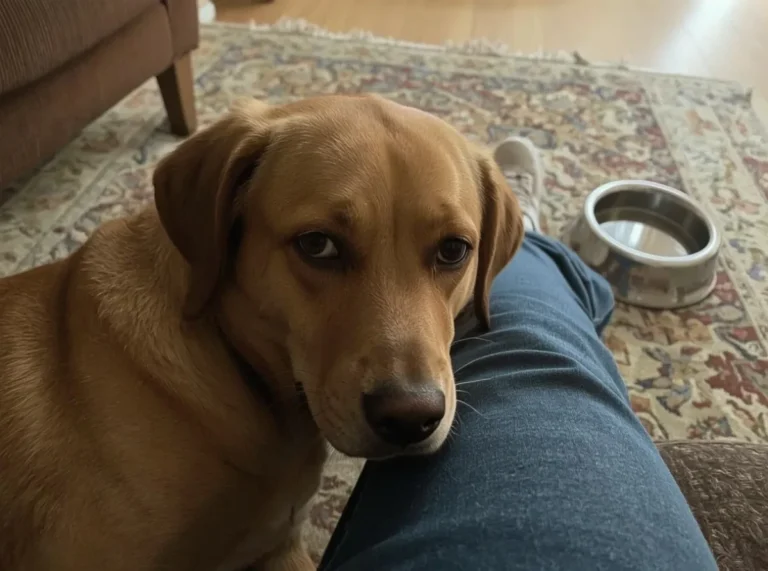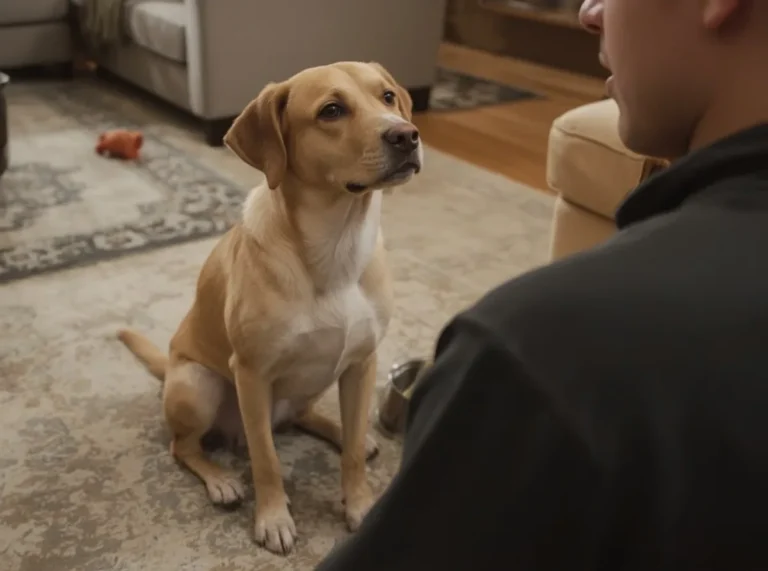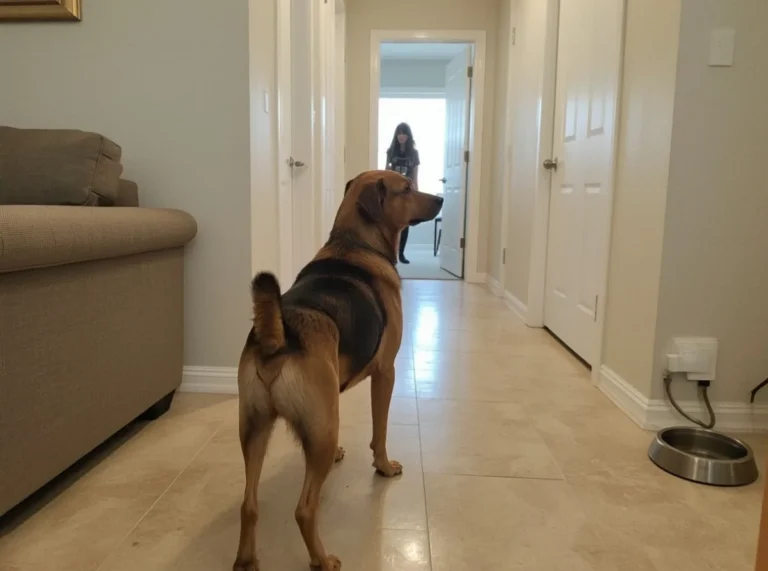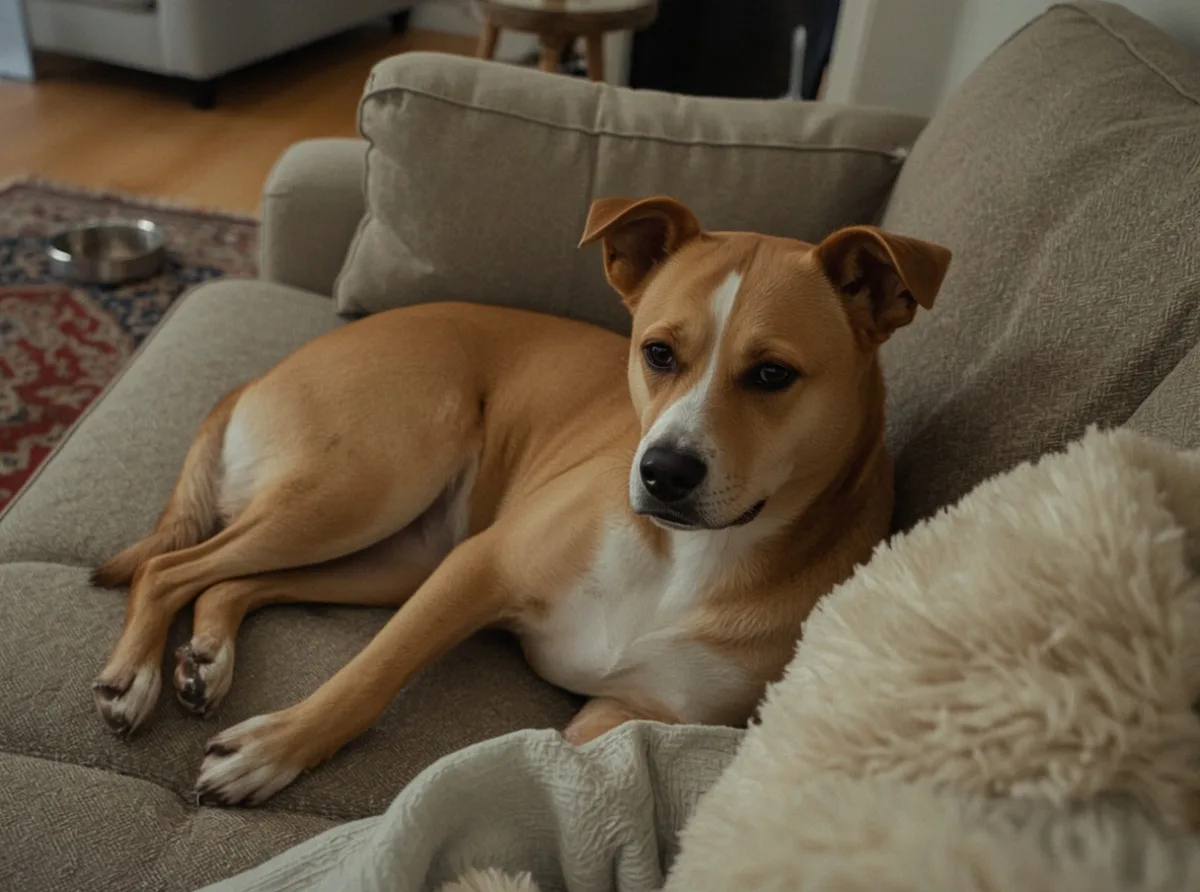
A dog with pinned-back ears can look wary, submissive, relaxed, or somewhere in between. Indoors, that small change in posture often gets noticed because the home is where dogs spend most of their time, and owners tend to read familiar signals more closely there. The tricky part is that the same ear position can mean different things depending on what else is happening around the dog.
Sometimes the ears move back because a dog is calm and soft in the face. Other times they go back when the dog feels unsure, wants to avoid conflict, or is responding to a sound, person, or routine change. The setting matters. A dog lying near the couch with loose eyes and a wagging tail is not telling the same story as a dog flattening its ears when someone reaches over its head.
Indoors, dogs also react to smaller details that people often overlook. Footsteps in another room, a child running by, the vacuum turning on, a doorbell, or even a shift in household energy can change the way a dog holds its ears. That is why pinned-back ears are best understood as part of a larger body language picture, not as a single fixed message.
What Pinned-Back Ears Often Look Like at Home
In everyday indoor life, ear position changes constantly. A dog may walk through the house with ears back and a loose body, then raise them when it hears the treat bag, then flatten them again when someone bends over to pet it. This can happen in seconds, and it does not always signal stress. Many dogs simply adjust their ears in response to attention, sound, and movement.
Owners usually notice the behavior most in quiet spaces or during close interaction. A dog may pin its ears back when greeted at the door, when tucked beside a person on the sofa, or when being brushed in a narrow hallway. In these moments, the ears often combine with other signals such as head turning, lip licking, a lowered body, or a soft tail.
Some dogs keep their ears back indoors more often than outside. That may happen because the indoor environment feels socially loaded. People reach for dogs, lean over them, talk in close quarters, and make direct eye contact more often at home. For a sensitive dog, all of that can encourage a tucked, careful posture even when nothing is seriously wrong.
Common Emotional Reasons Behind the Behavior
One of the most common reasons dogs pin their ears back indoors is simple uncertainty. A dog that is not fully comfortable may pull its ears away from the source of attention. This can happen when a visitor enters the room, when a person speaks in a louder voice, or when a dog is not sure what will happen next.
Another common reason is appeasement. Dogs often use soft body language to show they are not looking for trouble. Ears back, a lowered head, and gentle movement can all be part of that message. In a household setting, this may appear when a dog approaches a person after being corrected, or when it wants to reconnect after a tense moment.
Some dogs pin their ears back as a sign of affection or deference. This is especially common when greeting a trusted person. The dog may wag, lean in, or roll slightly to one side while keeping the ears low. The behavior can look submissive, but not every submissive gesture means the dog is fearful. Often it is just polite social behavior.
Pinned-back ears are not a diagnosis. The meaning changes with the rest of the body: eyes, mouth, tail, posture, movement, and context all matter.
Discomfort can also play a role. If a dog is sensitive to being handled, ear-tucked body language may appear when someone reaches toward its collar, wipes its paws, or tries to hug it. Indoors, these interactions happen often. A dog that seems fine in general may still feel uneasy during close physical contact.
How Routine and Household Energy Influence Ear Position
Dogs thrive on familiar patterns. When the indoor routine is steady, their body language tends to be steadier too. But when meals happen later than usual, guests arrive unexpectedly, or furniture gets moved around, some dogs become more watchful. Pinned-back ears can show up during those moments because the dog is trying to process the change.
Busy homes often bring more ear-back behavior than quiet ones. More voices, faster movement, and more sudden interaction can make a dog keep its ears in a cautious position. This is especially noticeable in homes with children, where excitement levels rise and fall quickly. A dog may look relaxed in one room and guarded in another simply because the energy shifts.
Noise matters too. Indoors, sound travels in a way dogs notice immediately. Appliances, alarms, TV volume, or voices from another floor can cause the ears to move back before the rest of the body reacts. In some dogs, this is a brief response. In others, it becomes a default posture whenever the house feels active.
Routine factors that often matter
- Unpredictable feeding or walk times
- Frequent visitors or deliveries
- Loud appliances or sudden household noises
- Changes in room layout or furniture placement
- High activity levels in the home
- Inconsistent handling from different family members
When the environment feels easy to predict, many dogs hold their ears more neutrally. When it feels busy or uncertain, pinned-back ears may appear more often as part of a cautious indoor pattern.
Situations Where the Behavior Appears Most Often
One of the most common indoor moments is greeting. Many dogs flatten their ears slightly when a favorite person comes home, especially if the greeting is close, fast, or emotionally charged. The dog may want contact but also feel a little overwhelmed by the energy of the moment. That mixed feeling often shows up in the ears first.
Another frequent situation is handling. Brushing, nail trimming, putting on a harness, cleaning ears, or checking a paw can all trigger ear-back posture. The dog may not be in full distress, but it may be anticipating something that feels intrusive. That anticipation alone can change the ears.
Some dogs do this when resting near humans. They may look soft and drowsy, with ears gently pinned back as they settle into a bed or blanket. In those cases, the posture is more about relaxation than worry. The difference is usually obvious in the rest of the face. The dog’s muscles are loose, breathing is steady, and there is no tension in the mouth or shoulders.
Feeding time can bring out a different version. A dog may pin its ears back while watching a bowl being prepared or while waiting near the kitchen. That can reflect excitement, anticipation, or mild impatience. It is not the same as fear, but it is still an emotional state that changes how the body looks.
What the Behavior May Signal About Emotional State
Pinned-back ears often mean the dog is in a socially sensitive state. That does not always mean nervousness. It can mean the dog is aware, responsive, and adjusting to the people around it. Dogs are experts at reading human behavior, and many of them modify their posture to fit the moment.
Stress-related ear-back posture usually comes with other clues. The body may look lowered, the tail may be tucked or held still, the mouth may close tightly, and the eyes may avoid direct contact. A stressed dog may also move slowly, freeze, or shift weight away from the interaction. These signs together are more meaningful than the ears alone.
Relaxed ear-back posture looks different. The dog may be lying on its side, rolling onto its back, or leaning into a hand with a soft face. The mouth may be slightly open. Breathing stays easy. The dog may even keep its ears back while stretching or dozing. That is a very different picture from a dog that is backing away or shrinking from touch.
If the ears are back but the rest of the body is loose, the dog may simply be calm. If the ears are back and the body is tense, the message is usually more cautious.
Some dogs are naturally more sensitive than others. They notice tone, movement, and routine changes faster, so ear-back posture becomes part of their normal indoor style. For these dogs, the behavior may not indicate a problem at all. It may just be how they manage social space.
How Owners Commonly Misread It
Many people assume pinned-back ears always mean guilt. That idea is common because dogs often look apologetic when they are approached after an accident or a mistake. But guilt is not a simple explanation for body language. More often, the dog is reacting to the owner’s tone, body posture, or past experience of correction.
Another common misunderstanding is to treat ear-back posture as proof of fear. Sometimes it is fear, but not always. A dog can keep its ears back while greeting happily, resting peacefully, or waiting for a familiar routine to happen. The rest of the body tells the fuller story.
Owners may also miss how often their own behavior shapes the signal. Leaning over a dog, reaching too quickly, talking in a sharp voice, or crowding a favorite resting place can all encourage a tucked ear position. The dog is not being dramatic. It is responding to social pressure in the moment.
Questions that help separate meanings
- Is the dog moving toward the interaction or away from it?
- Are the eyes soft or tense?
- Is the mouth relaxed, closed, or tight?
- Is the tail loose, tucked, still, or wagging rigidly?
- Does the posture change when the environment becomes quieter?
These details make a big difference. Ear position alone can be misleading, especially indoors where the dog is constantly reacting to family activity.
The Role of Attachment and Social Sensitivity
Many dogs keep their ears pinned back indoors because home life is full of close social contact. Dogs that are strongly attached to their people often show soft, deferential body language during interaction. They may want to be near their family, yet still respond carefully to touch, attention, or excitement. That push and pull can show up in the ears.
Some dogs are particularly sensitive to human mood. They notice frustration, urgency, or stress very quickly. When the atmosphere in the house changes, their posture may change with it. Pinned-back ears in these dogs are often less about the room itself and more about the emotional tone they are picking up from the people in it.
Social history matters too. A dog that has learned that direct approaches lead to handling, restraint, or unpredictable contact may start holding its ears back before anyone even touches it. The behavior becomes a kind of prepared caution. Indoors, where interaction is frequent, that pattern can appear many times a day.
On the other hand, a dog with positive associations may keep its ears back during gentle contact because it is anticipating something pleasant. A quiet pat, a soft voice, or a familiar bedtime routine can all bring on a relaxed, lowered ear position. The emotional meaning depends on the dog’s experience and the specific context.
When the Pattern Becomes More Noticeable Over Time
Some dogs show this behavior only in certain moments. Others do it often enough that it becomes part of their indoor personality. If the ears are pinned back more frequently than before, the pattern is worth paying attention to. A gradual change can reflect shifts in comfort, household routine, or the dog’s physical state.
In older dogs, ear-back posture may become more common because movement feels less easy or because the dog prefers calmer interaction. In younger dogs, it may appear during learning, excitement, or uncertainty as they figure out household rules. A puppy that keeps its ears back around people may simply be social and open, but if the posture is paired with freezing or retreating, the pup may be unsure.
Dogs can also develop a consistent “indoor mode.” They may be more cautious in the house than outside, especially if the home is where most handling and close attention happen. Over time, that can make pinned-back ears seem normal even when the dog is not distressed. The key is whether the rest of the body supports a relaxed pattern or a guarded one.
| Indoor situation | Possible ear-back meaning | What else to notice |
|---|---|---|
| Greeting a person | Excitement, affection, mild uncertainty | Tail, leaning, hopping, mouth softness |
| During brushing or handling | Anticipation, discomfort, appeasement | Tension, stillness, backing away |
| Resting beside family | Relaxation, contentment | Loose body, steady breathing, soft eyes |
| Near loud household sounds | Alertness, sensitivity, caution | Startle response, scanning, lowered head |
What to Watch Alongside the Ears
Ear position matters most when paired with the rest of the dog’s posture. A relaxed dog usually looks balanced and fluid. A worried dog often looks smaller, tighter, or more still. That difference can be subtle, especially with dogs that naturally have soft features or droopy ears.
Body movement gives useful clues. A dog that moves freely, chooses to approach, and recovers quickly after a sound is usually not showing a serious problem. A dog that freezes, avoids interaction, or repeatedly keeps distance may be telling a different story. Indoors, those signs can be easy to miss because the dog is already close by.
Facial expression helps as well. Soft eyes, a loose mouth, and normal breathing usually point to comfort. Tight lips, hard staring, frequent yawning, or repeated lip licking can suggest tension. When these appear with pinned-back ears, the dog is likely trying to cope with something it finds uncomfortable.
The ears are one part of the message. The whole body shows whether the dog is relaxed, cautious, or trying to stay out of the way.
Daily Home Life and the Meaning of the Behavior
Most indoor ear-back behavior is shaped by ordinary life rather than a single dramatic event. Dogs respond to the rhythm of the house. They learn which sounds matter, which people are gentle, which routines are predictable, and which moments bring pressure. Their ears reflect that learning every day.
A dog may keep its ears back while lying near the family because it feels settled. It may do the same thing when someone enters the room because it is uncertain. It may also do it when it is simply waiting for the next routine step, like dinner or a walk. The ears are flexible, and so is the meaning.
That is why the best reading comes from patterns. If the behavior appears only in calm settings and the rest of the dog looks loose, it is probably part of normal social softness. If it appears during handling, loud activity, or tense interactions, it may be a sign that the dog is trying to make itself smaller or safer. The home environment helps explain which version is showing up.
Some dogs keep their ears pinned back indoors because they are gentle, observant, and responsive to human space. Others do it because they are uneasy, overstimulated, or unsure about what comes next. The difference lives in the details, and those details are usually right there in the room: the body, the noise, the routine, and the way people move around them.