A dog that sits still and watches you can seem almost unreadable. The eyes stay fixed, the body barely moves, and the silence feels heavier than usual. Sometimes it is peaceful. Sometimes it is a little unsettling. Most of the time, it is a form of communication that makes more sense once you look at the whole picture instead of the stare alone.
Dogs do not watch people for one single reason. A steady gaze can come from affection, curiosity, anticipation, caution, habit, or a need for guidance. The same behavior may mean something completely different depending on the dog’s posture, the setting, and what happened right before it started. A still dog is not always a mysterious dog. Often, it is simply a dog collecting information.
When a dog watches you without moving, the most useful question is not “Why is my dog staring?” but “What else is my dog doing at the same time?” The answer often reveals whether the dog is relaxed, waiting, alert, worried, or deeply focused on you. Small details matter more than the stare itself.
What the behavior looks like in everyday life
This kind of watching happens in ordinary moments. Your dog may stand in the kitchen and follow your movements while you prepare food. A dog may sit near the couch and stare while you work, hoping you will look up and notice. Some dogs quietly watch when you reach for a leash, open a cabinet, or put on shoes, because those actions have meaning in their daily routine.
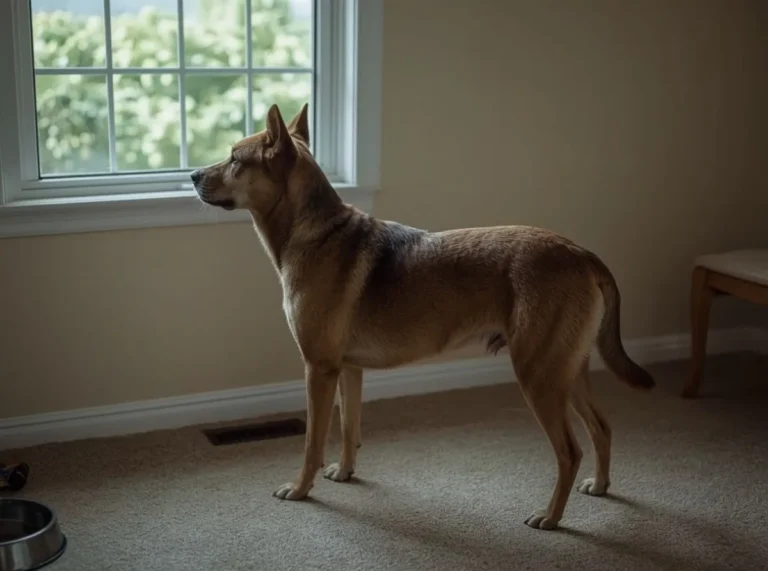
At times, the dog is almost statue-like. The paws stay planted. The head may tilt slightly, but not always. The tail might be loose and still, or it may make a tiny slow wag. The eyes can look soft and calm, or sharp and focused. The same posture can appear before a walk, before dinner, or during a moment when the dog is trying to understand what comes next.
In other homes, the watching is more constant. A dog may track one person from room to room without following closely. This is common in dogs that are strongly attached to their people. It can also happen with dogs that prefer to observe before they engage. Not every dog wants to rush into every situation. Some prefer to stand back and read the room.
A still gaze is best interpreted with the whole body, not just the eyes. Soft muscles, loose posture, and an easy expression usually point to curiosity or connection. Tightness, stiffness, or a frozen body can mean something else entirely.
Possible emotional reasons behind the behavior
One of the most common reasons a dog watches without moving is simple interest. Dogs pay close attention to the people they live with because human behavior predicts good things. Food appears. Doors open. Walks begin. Attention comes and goes. If your dog has learned that your movements matter, quiet watching makes perfect sense.
Curiosity and anticipation
Many dogs stare because they are waiting for the next clue. They know the sound of a treat bag, the click of a keyboard, or the way you move when you are about to leave the house. Some dogs become very still when they expect something important. The body pauses, and the eyes stay locked in place. They are not frozen out of fear; they are focused because they are ready.
Anticipation can look very calm. A dog may watch you from across the room with a relaxed mouth and forward attention. This often happens with dogs that like routine. They do not need to pace or bark. They simply wait, watching for the signal that tells them what is happening next.
Attachment and social checking
Dogs are social animals, and many keep track of their person the way a child keeps track of a parent in a crowded place. A quiet gaze can be a form of checking in. The dog may be asking, without words, whether everything is fine and whether it is time to act or relax. This is especially common in dogs that are bonded closely to one person.
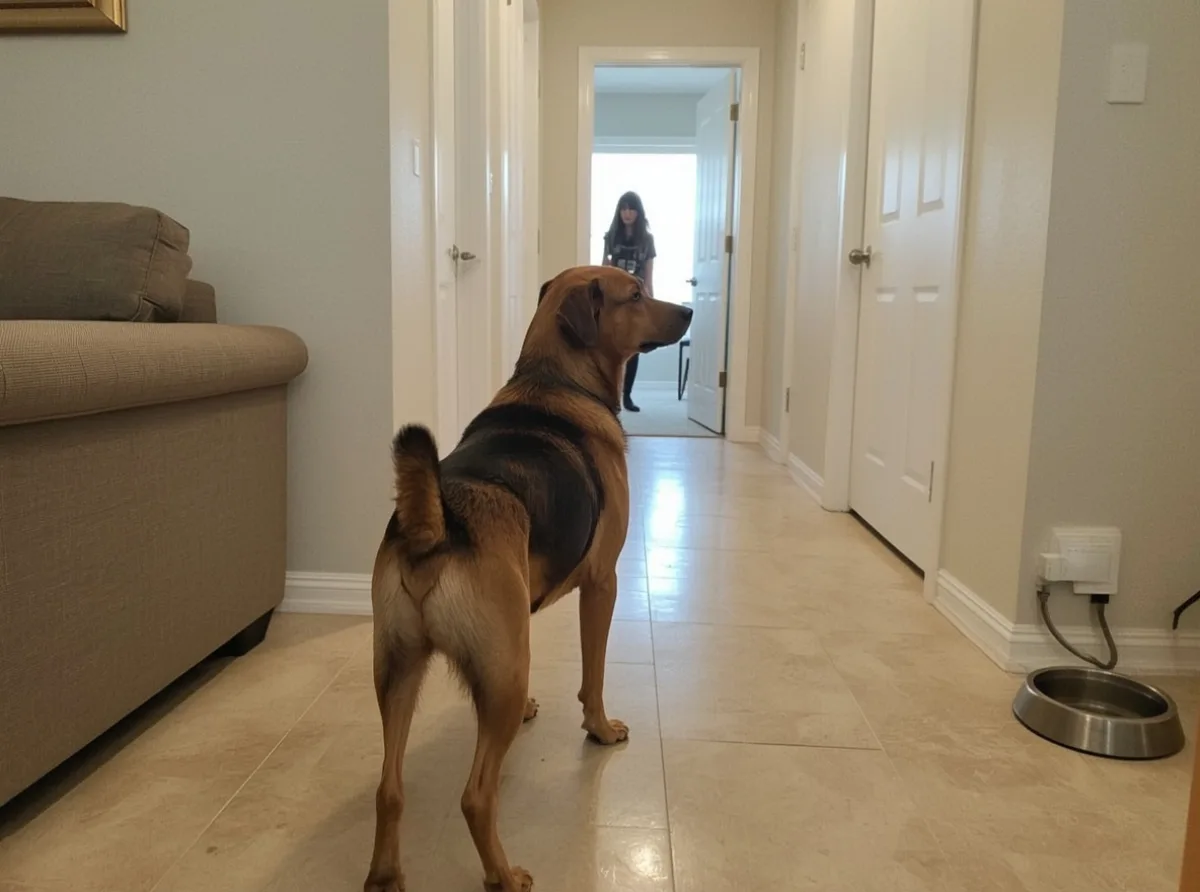
Some dogs do this more when the household is quiet. The absence of noise makes every movement noticeable. If you change rooms and your dog simply watches from the doorway without following, it may be a sign of comfort and attachment rather than uncertainty. The dog already knows where you are. It just prefers to keep watch.
Need for guidance
Dogs often watch when they are unsure how to proceed. They may be waiting for direction, especially in a new environment or during a change in routine. A still dog can be a dog that is seeking cues. In these moments, the stare is less about control and more about dependency on familiar leadership.
This is common in younger dogs, newly adopted dogs, or dogs that have not yet learned what certain household patterns mean. They may stand quietly and observe because observation is the safest option. Moving too quickly can feel risky when the situation is unclear.
Body language that changes the meaning
The way a dog watches you matters more than the fact that it watches you. A calm stare and a tense stare are not the same thing. One may be friendly and relaxed. The other may reflect stress, concern, or heightened alertness. The rest of the body usually tells the truth.
Relaxed watchful behavior
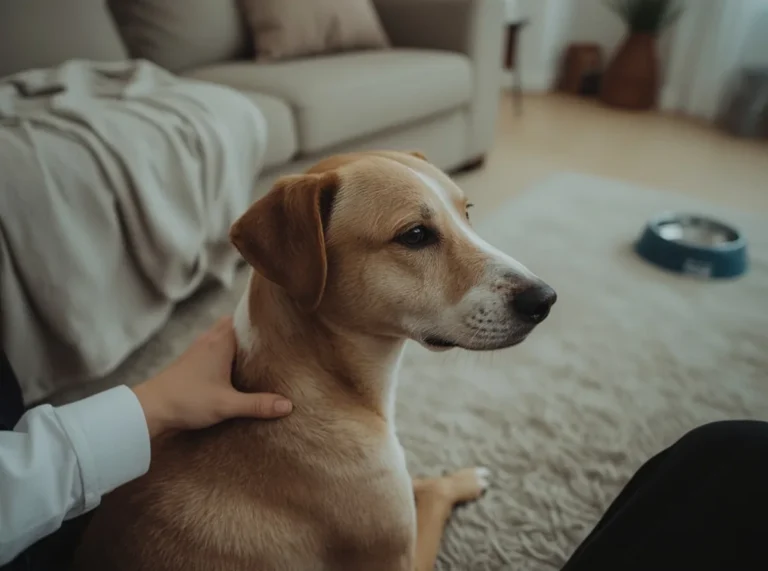
A relaxed dog often has a loose body, soft eyes, and an easy face. The ears may rest naturally instead of pointing rigidly forward. Breathing stays even. The mouth may be closed or slightly open. This kind of watching is often tied to trust, interest, or a familiar routine.
Dogs in this state may watch you from a bed, from the hallway, or while lying on the floor with their legs tucked or stretched out. They are attentive but not tense. If you move, they follow with their eyes, not their whole body. That difference matters. A relaxed watcher is staying aware, not preparing for trouble.
Tense or frozen watchfulness
A dog that watches you without moving can also be showing stress. The body becomes stiff. The mouth may close tightly. The ears may pin back or push sharply forward. The eyes may appear wide, fixed, or hard. Instead of casual attention, the dog looks locked in.
This is more likely when a dog feels conflicted, uncertain, or defensive. It may happen near a resource such as food, a toy, a resting area, or a doorway. It can also appear if the dog is startled by a sudden movement, unfamiliar person, or unusual sound. In these situations, the stillness is part of a caution response.
Other signals that help interpret the stare
- Tail position: loose and neutral often suggests calm interest; rigid or tucked can suggest tension.
- Weight distribution: balanced posture usually reads as relaxed; leaning forward without movement can suggest intensity.
- Facial muscles: a soft face is different from a hard, fixed expression.
- Ear position: natural ears usually indicate ease, while pricked, pinned, or locked ears can change the meaning.
- Context: a dog watching before a walk is different from a dog staring near food or during conflict.
If the stare is paired with stiffness, avoidance, low growling, whale eye, or a closed mouth, it is worth taking it seriously as a stress signal rather than treating it as simple attention.
Why the environment shapes this behavior
Dogs do not watch in a vacuum. The household setting often tells the story. A quiet home with predictable routines may encourage calm observation because the dog can easily anticipate what happens next. A busy home can create a different kind of watchfulness, where the dog monitors people because movement and noise happen often.
Routine makes watching more common
Dogs are very sensitive to patterns. If breakfast happens after you sit at the table, or the leash comes out before the front door opens, your dog learns to connect those events. Over time, the dog may stop moving and simply wait while watching you. The stillness is efficient. It reduces missed signals.
In homes with strong routines, dogs often become excellent observers. They notice the smallest change in your habits. A different pair of shoes, an unexpected phone call, or a shift in your usual morning pace can draw their attention. This kind of watching is not unusual. It is part of living closely with a creature that tracks patterns so well.
Boredom and under-stimulation
Sometimes a dog watches because there is not much else to do. If the environment is quiet and the dog has not had enough physical or mental activity, staring can become a default behavior. The dog may watch you because you are the most interesting thing available. It is not always a sign of emotional depth. Sometimes it is just a lack of alternatives.
This is more common in dogs that spend long stretches indoors without enough outlets for energy. They may stay still and monitor household movement instead of settling fully. A dog that has learned to wait all day can become a very patient observer. The behavior can look thoughtful, but the cause may be simple understimulation.
Busy homes and constant monitoring
In active households, dogs may watch because life is unpredictable. Children move quickly. Doors open often. People switch rooms, speak loudly, and change plans. A dog living in that environment may learn to sit back and keep track of everyone at once. Stillness becomes a useful strategy.
This kind of watchfulness can be calm, but it can also be vigilant. The dog is not necessarily anxious, yet it may be scanning for cues because so much is happening. A dog that does this may have a narrow threshold for surprise and may prefer to observe before joining the action.
What it may signal about the dog’s emotional state
A motionless stare often shows concentration, but concentration has many roots. A dog may be feeling secure and simply waiting. It may be feeling hopeful and watching for the next reward. It may also be feeling uneasy and keeping still to avoid making a wrong move.
Confident and secure
Confident dogs often watch people without seeming tense. They understand the rhythm of the home and are comfortable waiting. Their stillness feels settled. They are not demanding anything, and they are not pulling away. They are simply present.
This kind of dog may watch you while you cook, nap, or work, then shift position when something more interesting happens. The gaze comes and goes naturally. There is no sense of strain. The dog is attentive, but the attention is relaxed.
Hoping for interaction
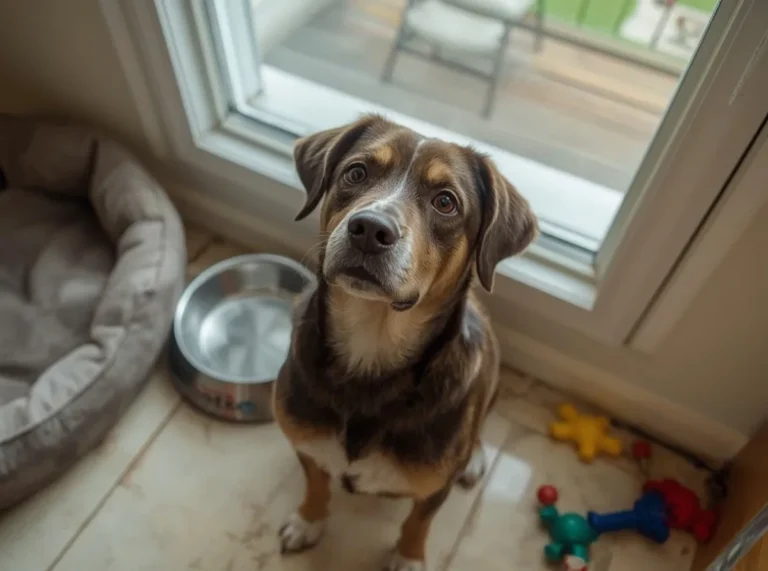
Some dogs watch because they want something from you. Not always food. It may be a walk, a toy, a game, or simply your attention. The stillness here is purposeful. The dog is waiting for you to make the first move. If you have ever looked up and found your dog staring at you from the doorway, you have likely seen this version of the behavior.
These dogs may look especially calm right before a predictable event. Their posture can stay unchanged for long stretches because they know patience often works. Humans eventually respond. Dogs learn this well.
Uncertain or uneasy
When watchfulness comes with tension, the meaning changes. A dog may be staring because it is unsure about someone entering the room, a new sound outside, or a disagreement in the household. In these cases, the dog is not just observing; it is evaluating risk.
That can show up as a fixed gaze with very little blinking, a body that seems unusually stiff, or a readiness to retreat or react. The dog may remain silent, which can make the behavior easy to miss. Stillness does not always mean ease. Sometimes it means the dog is deciding what to do next.
| What you notice | Likely meaning |
|---|---|
| Loose body, soft eyes, relaxed mouth | Interest, bonding, or calm anticipation |
| Still body near routine events | Waiting for a familiar cue |
| Stiff body, hard stare, closed mouth | Tension, alertness, or discomfort |
| Watching from a distance in a quiet room | Observation, curiosity, or mild boredom |
| Fixed stare near food or toys | Resource concern or strong focus |
How owners often misread the behavior
People often assume a dog that watches without moving is either being dramatic or trying to “control” the situation. That interpretation misses a lot. Dogs are usually not plotting anything. They are responding to what they notice, what they expect, and how safe they feel in the moment.
Another common mistake is assuming that all staring means affection. Sometimes it does. Sometimes it is polite waiting. And sometimes it is a signal that the dog is uncomfortable but trying not to show it openly. The difference is in the details around the stare, not the stare itself.
Owners may also overlook how often dogs watch during transition points. Before meals. Before walks. Before departure. Before bedtime. Those are moments when the dog is trying to predict the next part of the day. Watching is a practical behavior. It helps the dog reduce uncertainty.
When a dog’s stillness feels unusual, pay attention to what changed just before it started. New people, altered routines, pressure around food, or sudden noise often explain more than the stare alone.
How this behavior connects to attachment and social habits
Dogs live in close social contact with humans, and watching is one of the simplest ways they stay connected. They do not need to touch or follow constantly to remain engaged. Some dogs keep a quiet visual check on their people throughout the day. It is part of how they maintain the relationship.
This can be especially noticeable in dogs that like proximity but not constant physical contact. They may choose a spot with a clear view of you and stay there for a long time. The dog is participating in the household without interfering with it. That is a very typical social style for many dogs.
In some dogs, watchfulness becomes a habit learned over time. If attention, food, walks, or reassurance often come after the dog watches carefully, the behavior becomes reinforced. The dog learns that stillness plus attention leads to useful outcomes. That is not manipulation. It is learning.
When the behavior becomes more noticeable over time
A dog may start watching more closely during life changes. A new baby, a move, a schedule change, or a shift in household energy can all increase quiet observation. Dogs often become more attentive when their world is less predictable. They do not need to understand every reason. They just notice the pattern has changed.
Age can also matter. Some older dogs become quieter observers. They may move less and rely more on watching. This does not always mean anything is wrong. It can be a reflection of comfort, habit, or reduced energy. The dog may simply prefer to stay put and monitor the room from a familiar place.
If the behavior appears suddenly and is paired with other changes such as withdrawal, restlessness, appetite shifts, or sensitivity to touch, it deserves more attention. The watching itself may be harmless, but a change in pattern can reveal that the dog is responding to discomfort or stress.
What consistent watchfulness can tell you
One moment of still staring means very little on its own. Repeated patterns matter more. A dog that watches quietly every time you reach for the leash is likely reading that cue. A dog that freezes and stares whenever another dog passes the yard may be reacting to a trigger. A dog that watches during evenings but relaxes at other times may simply be more alert when the household winds down.
Consistency helps separate personality from state. Some dogs are naturally observant. Others are more sensitive to sound, motion, or social tension. Over time, you can often tell whether the behavior belongs to the dog’s normal style or reflects something situational. The key is to notice when it happens, what else is going on, and whether the body looks loose or tight.
That kind of observation often makes the behavior less mysterious. The dog is not sending one universal message. It is responding to a living environment that changes from hour to hour. Watching without moving is often part of that response.
Natural instincts behind the reaction
There is also a basic canine reason for this behavior. Dogs are built to notice movement, read posture, and track the actions of other animals and people. A stationary watch position fits that instinct very well. It allows the dog to gather information without drawing attention to itself or wasting energy.
In the wild, still observation can be useful for assessing safety, opportunity, or social intent. In the home, the same tendency shows up in everyday forms. The dog watches to understand what people are doing, what will happen next, and whether the environment feels stable. The instinct remains even though the setting is very different.
That is why the behavior can seem so intense. A dog standing still and staring is using one of its oldest tools: focused observation. In a home, that may translate into affection, habit, anticipation, or caution. The body language around it tells you which one is more likely.
When a dog watches you without moving, it is usually not trying to be strange. It is trying to make sense of the moment. Sometimes that means waiting for dinner. Sometimes it means checking whether you are leaving. Sometimes it means staying alert because something about the environment feels different. The stare is only the first layer. The rest is written in posture, timing, and routine.