A change at home can rearrange a dog’s sense of safety faster than many people expect. A moved couch, a new baby, a partner working from home, a renovation, or even a quieter household after guests leave can all shift the emotional balance in ways dogs notice immediately.
When that happens, some dogs do not pull away. They move closer. They follow more tightly, rest against your legs, wait outside the bathroom, and seem to want more physical contact than before. What looks like simple clinginess is often a dog trying to make sense of a changed world.
That change in attachment can be subtle or obvious. It may show up within hours, or it can build slowly over days as the dog realizes the household no longer feels exactly the same. The reaction is not always about insecurity alone. Sometimes it is about curiosity, sometimes relief, and sometimes a new need to track what matters most.
What the Behavior Looks Like in Daily Life
Dogs do not announce emotional shifts in neat, human terms. Instead, they show patterns in small movements and routines. After a home change, a dog that was independent may become more insistent about staying nearby. A dog that once napped in another room may now choose the floor beside your chair.
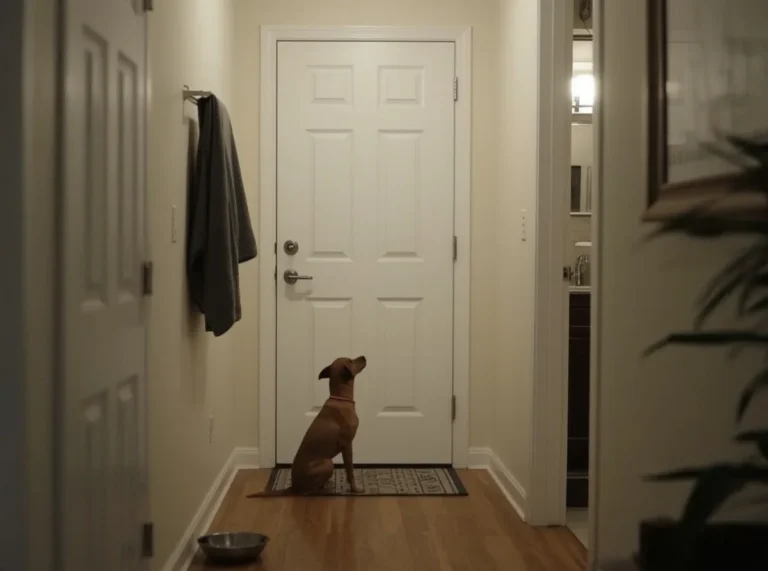
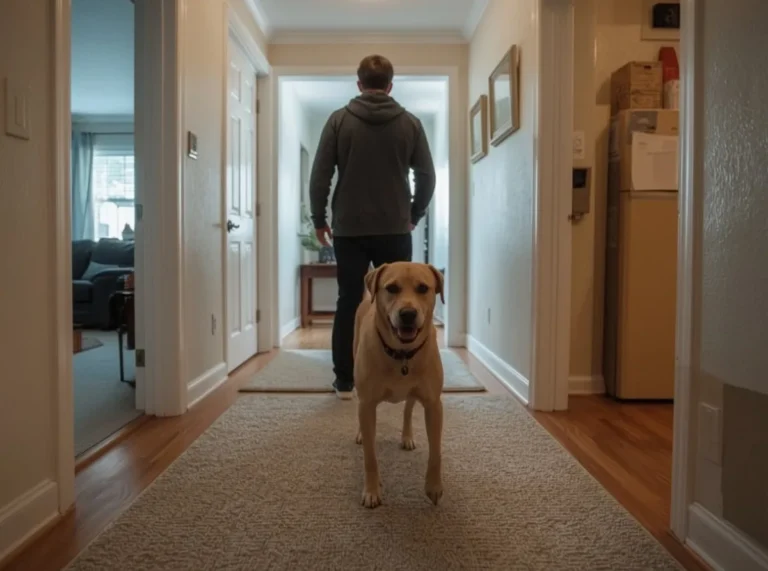
Some dogs start shadowing one person in particular. They may follow from room to room, sit facing the doorway when you leave, or get up every time you stand. Others become more physical. They lean harder, press into your side, or place a paw on you more often than usual.
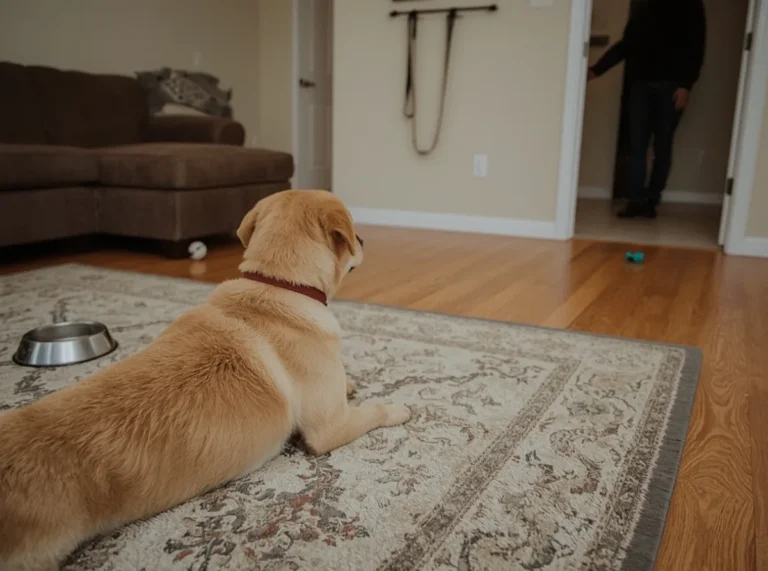
In many homes, the first clue is not dramatic. It is the dog’s refusal to settle alone as easily as before. A nap that used to happen in the sunroom now happens only if you are visible. A casual absence from the room becomes enough to trigger pacing or searching.
Common signs owners notice
- Following one person around the house
- Sleeping closer than usual
- Increased staring or checking in
- Whining when a person leaves the room
- Seeking more touch, contact, or lap time
- Difficulty relaxing in previously familiar spots
These behaviors can look sweet, but the context matters. A dog that is more attached after a household change is often trying to regain predictability. The person they stick to becomes a moving anchor in a setting that no longer feels fully familiar.
Attachment that increases after a home change is often less about “spoiling” and more about a dog searching for stability.
Why Household Changes Can Intensify Attachment
Dogs are highly tuned to patterns. They notice who wakes up first, which doors open at what time, where food appears, which rooms are quiet, and how often sounds repeat. A change at home disrupts that map. Even a pleasant change can create uncertainty because the dog has to update what is normal.
When the map changes, many dogs respond by staying closer to their most trusted person. That person becomes a reference point. If the environment feels less readable, the dog watches the human who seems most likely to provide the next clue.
There is also a practical reason. A dog may simply have learned that your presence predicts comfort, routine, and access to important things. If the household becomes noisy or unstable, staying near you becomes a good strategy.
Common changes that trigger stronger attachment
- A move to a new home or apartment
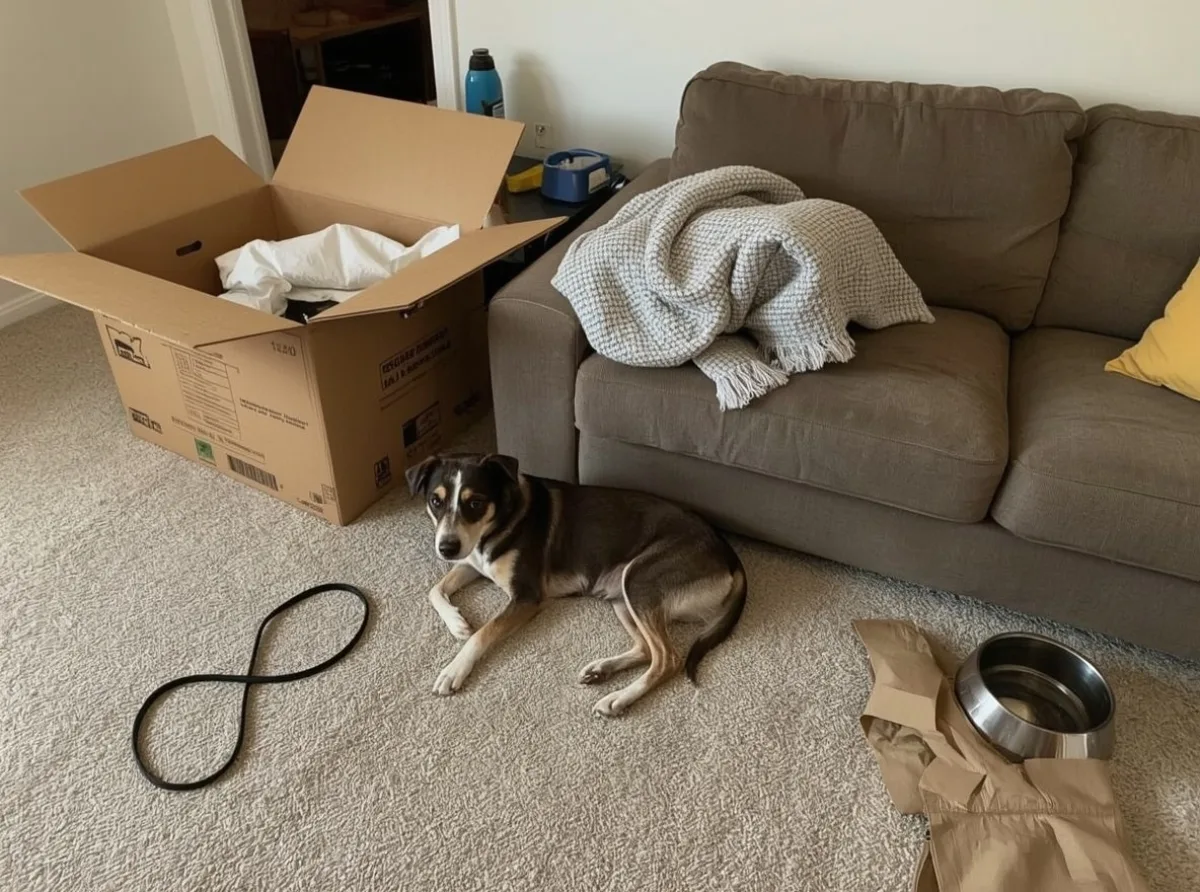
- New furniture or major rearranging
- A family member leaving or arriving
- Construction, repairs, or loud activity
- Changes in work schedules
- Visitors staying for extended periods
- New pets, babies, or roommates
Sometimes the change is not obvious to people. A dog may react to the absence of one household member, the loss of a familiar scent, or a shift in daily energy. What matters to the dog is not whether the change seems large to you, but whether it alters the pattern the dog depended on.
The Emotional Reasons Behind Increased Attachment
Attachment after home changes often reflects a mix of feelings rather than one simple emotion. A dog may feel uncertain, but also excited, curious, watchful, or relieved. These states can overlap. A dog that keeps close may be gathering information while also seeking reassurance.
Some dogs are naturally more sensitive to change. They notice environmental details quickly and may react by staying physically close to their people. This is common in dogs with a strong social orientation. They are not necessarily anxious in every way. They may simply use proximity as their preferred way of coping with novelty.
Other dogs become more attached because the household change alters their daily relationship with stimulation. A quieter home can make a dog more aware of people. A busier home can make a dog feel less secure. Either way, closeness becomes a way to stay regulated.
Emotional states that can sit behind the behavior
- Uncertainty about the environment
- Need for reassurance after disruption
- Heightened alertness
- Social seeking when routines shift
- Reduced confidence in unfamiliar circumstances
It is also possible for a dog to become more attached simply because positive association has increased. If a home change brings more time with a person, more rest, or more calm attention, the dog may naturally choose that person more often. Not every increase in attachment is a stress response. Some of it is just reinforcement through daily life.
A dog’s stronger attachment after a home change may signal caution, comfort, or both at once.
How Routine Shapes the Reaction
Routine is one of the biggest organizing tools in a dog’s life. Feeding times, walks, door openings, and evening quiet all help the dog predict what happens next. When a home change disrupts those patterns, attachment often increases because the dog is searching for a new reliable rhythm.
A dog may become noticeably more attached if meals move later, sleep schedules change, or walk times become inconsistent. Even small disruptions matter when they happen all at once. A household in transition can feel like a puzzle with pieces still moving.
In some homes, the dog becomes more dependent during the time it takes to rebuild routine. Once daily patterns settle, the behavior may soften. In others, the attachment persists because the dog has learned that sticking close is the easiest way to stay comfortable during ongoing change.
Routine shifts that often matter more than owners realize
- Different wake-up and bedtime times
- Meals served at new hours
- Reduced walks or shorter outings
- Less predictable attention from family members
- More time alone than before
- Sudden increases in noise or foot traffic
Dogs do best when some parts of life remain steady. Even in a changing home, familiar feeding bowls, sleeping spots, walk cues, and simple daily rituals can help reduce the need to cling. The dog does not need every detail to stay the same. It needs enough sameness to feel grounded.
How Stimulation and Environment Influence Closeness
Not all changes at home create the same kind of attachment. A quiet house after children leave for college can lead a dog to seek more closeness because the energy has shifted. A busy house full of visitors can produce the same result because the environment becomes harder to read.
Too little stimulation can make a dog more focused on people. Too much stimulation can do the same. In both cases, the dog may use attachment as a way to manage a lifestyle that no longer feels balanced.
If a dog suddenly has less access to outdoor time, enrichment, or exercise because the household routine changed, the dog may also become more people-oriented out of frustration. Staying near a person becomes something to do, and sometimes it becomes the safest available choice.
Environment-related factors to notice
- Noise levels in the home
- How much outdoor time the dog gets
- Availability of resting places
- Changes in access to toys or enrichment
- How often the dog is left alone
- Whether the home feels crowded or empty
Many dogs react not only to emotional change but to physical change in the environment. A crate moved to a different room, a bed placed near a hallway, or a new barrier blocking a familiar path can all alter how secure the dog feels. Attachment often increases when the dog has fewer calm places to choose from.
What the Behavior May Signal About the Dog’s Internal State
Increased attachment is not one fixed signal. It can mean the dog is unsettled, but it can also mean the dog is attentive and adapting. The difference often appears in body language.
A calm, attached dog usually looks loose and comfortable. The body stays soft. The dog may rest, sigh, and settle easily near you. A more stressed dog may still stay close, but the posture becomes tense. The dog may track movement with a rigid head, hesitate before relaxing, or seem unable to stop scanning the room.
Calm attachment vs stressed attachment
| Calm, connected behavior | Stress-related behavior |
|---|---|
| Seeks contact, then settles | Follows constantly without relaxing |
| Soft eyes, loose body | Tense muscles, hard staring |
| Can rest when you sit still | Struggles to settle even near you |
| Moves away and returns normally | Shows distress when separated briefly |
This distinction matters because owners often assume all increased closeness means the same thing. It does not. A dog lying near your feet with a relaxed jaw is different from a dog pacing behind you and whining every time you disappear from view. The first may simply enjoy proximity. The second may need more support in adjusting.
Attachment becomes more concerning when closeness does not lead to relaxation.
Different Home Changes, Different Reactions
The type of household change often shapes the form of attachment. A dog may react differently to a move than to a new baby, even if the visible behavior looks similar at first glance. That is because the emotional challenge is different.
A move often removes familiar smells, rooms, and landmarks. In that case, increased attachment may reflect confusion and a need for orientation. A dog may stick to one person because the person is the one constant in an unfamiliar place.
A new baby can produce a different pattern. The dog may become more watchful, more attached to one adult, or more needy when routines around the house become less available. The dog is not only responding to a new presence but also to a shift in attention and access.
In homes with guests or extended family, attachment may intensify because the dog chooses one trusted person over the broader social crowd. The dog may appear to “pick a favorite,” but often it is just choosing the safest and most predictable relationship during a lively period.
How Owners Often Misread the Behavior
It is easy to interpret this kind of closeness as stubbornness, spoiled behavior, or simple preference. Sometimes people assume the dog is being manipulative or overly dependent. Those labels miss the more ordinary truth: dogs often move toward what feels stable.
Owners may also think the dog is suddenly “too attached” when the dog is actually responding to a temporary disruption. A dog that wants more lap time after a remodel may return to its earlier habits once the house feels normal again. The behavior is not always a new personality trait.
Another common misunderstanding is assuming that a dog who seems attached is always secure. Some secure dogs become temporarily clingy during change, but that closeness has a different feel. The dog comes and goes, explores, and then returns. The attachment is flexible rather than anxious.
What people often miss
- The dog may be reacting to household uncertainty, not attention-seeking
- Closeness can be a way to monitor change
- Attachment may lessen once routine stabilizes
- Body language matters more than the amount of contact alone
When owners watch for the full pattern, the behavior becomes easier to interpret. A dog who checks in more often during a change may simply be doing what many social animals do: staying close to the members of its group when the world feels less predictable.
When the Behavior Becomes More Noticeable
Some dogs show stronger attachment right away. Others wait until the novelty wears off. In a new home, the dog may seem curious at first and then become more dependent once the newness fades and the dog realizes the change is lasting.
Attachment also becomes more noticeable during transitions that affect the dog’s access to a person. If one owner begins working different hours, if a child returns to school, or if another family member becomes less available, the dog may increase closeness to whoever remains most consistent.
These shifts are often clearest during quiet moments. Nighttime, early morning, and periods after the home settles can reveal how much the dog relies on presence and proximity. A dog that seems fine during the day may become especially attached when the house gets still.
How Long the Reaction Usually Lasts
There is no fixed timeline. Some dogs adjust in days. Others need weeks. A dog with a strong bond and a sensitive temperament may remain especially close for longer, especially if the home change continues to unfold in stages.
The reaction often depends on whether the dog can predict what comes next. If the household finds a new rhythm, attachment may ease. If change keeps arriving in waves, the dog may stay in a heightened state of tracking and seeking.
What matters most is whether the dog can still rest, eat, play, and explore. A dog that remains close but otherwise behaves normally is often adapting. A dog that cannot relax, refuses normal activities, or seems unable to disengage may be struggling more deeply with the shift.
Duration matters less than pattern: a brief increase in closeness can be normal, but persistent tension deserves attention.
Natural Traits That Make Some Dogs More Prone to Clinginess
Some dogs are simply built to stay near people more readily. Breed tendencies, early social experience, and individual temperament all play a role. A dog with a naturally social, observant, or sensitive personality may respond to home changes with stronger attachment than a more independent dog.
Early life experience matters too. Dogs that have had stable, reassuring relationships often handle change with more flexibility. Dogs that have experienced inconsistency may rely more strongly on proximity when the home shifts. That does not mean they are difficult. It means closeness is one of the tools they use to feel safe.
Even mature, well-adjusted dogs can become more attached after a major change. Age does not remove the need for reassurance. It only changes how that reassurance is expressed.
What Helps the Dog Feel Steadier
Dogs usually do better when the household gives them clear, repeatable signals. A few familiar routines can go a long way. Predictable meals, regular walks, quiet resting places, and calm interaction patterns can help the dog settle without needing constant physical contact.
It also helps to let the dog choose closeness instead of forcing distance or overloading the dog with attention. A dog that wants to stay nearby may need that option for a while. Over time, confidence often returns when the environment becomes more legible again.
Small consistencies matter more than grand gestures. A familiar blanket, the same bedtime cue, or the return of a normal morning routine can reduce the need for constant checking. The dog does not need a perfect house. It needs enough predictability to stop guarding against every shift.
What Increased Attachment Means in the Bigger Picture
When a dog becomes more attached after changes at home, the behavior usually reflects adaptation. The dog is reading the household, measuring the uncertainty, and choosing closeness as a response. That closeness can mean comfort, caution, or a practical attempt to keep life understandable.
Some dogs lean in because they are uneasy. Some do it because they are relieved to have a stable person nearby. Many feel both at once. The important part is the pattern the dog shows over time: whether the attachment helps the dog relax, or whether it keeps the dog in a state of ongoing tension.
A dog that follows you more closely after a home change is often telling you that the room has changed, even if the person has not. The bond is still there. It just becomes more visible when the rest of the house stops feeling the same.