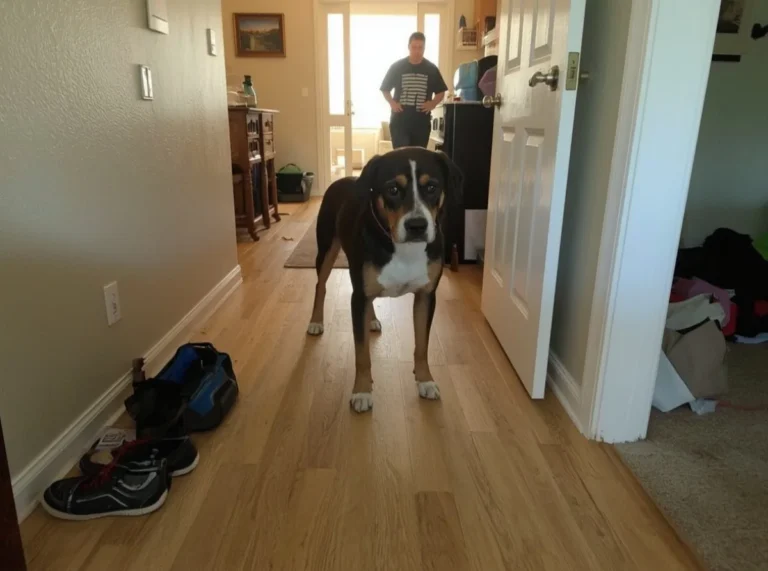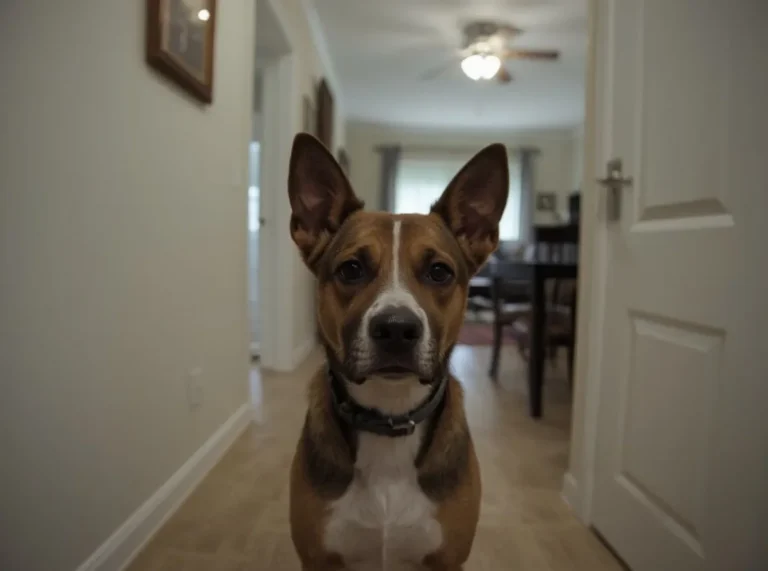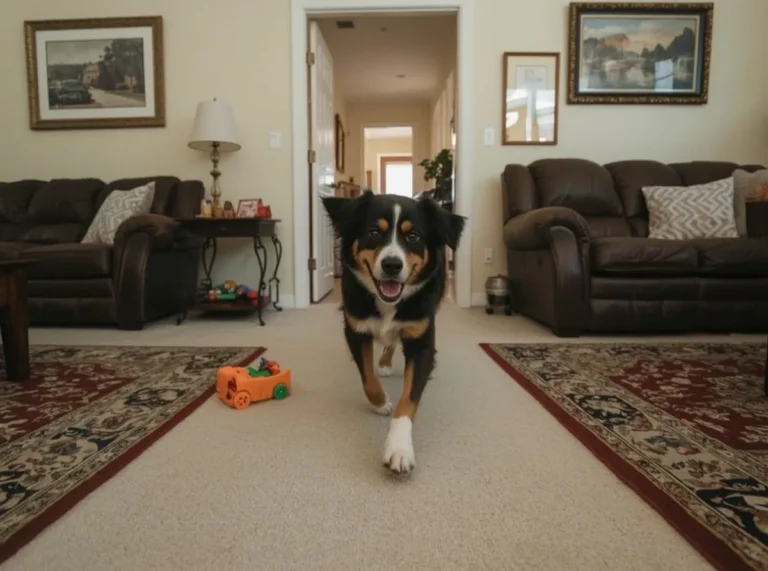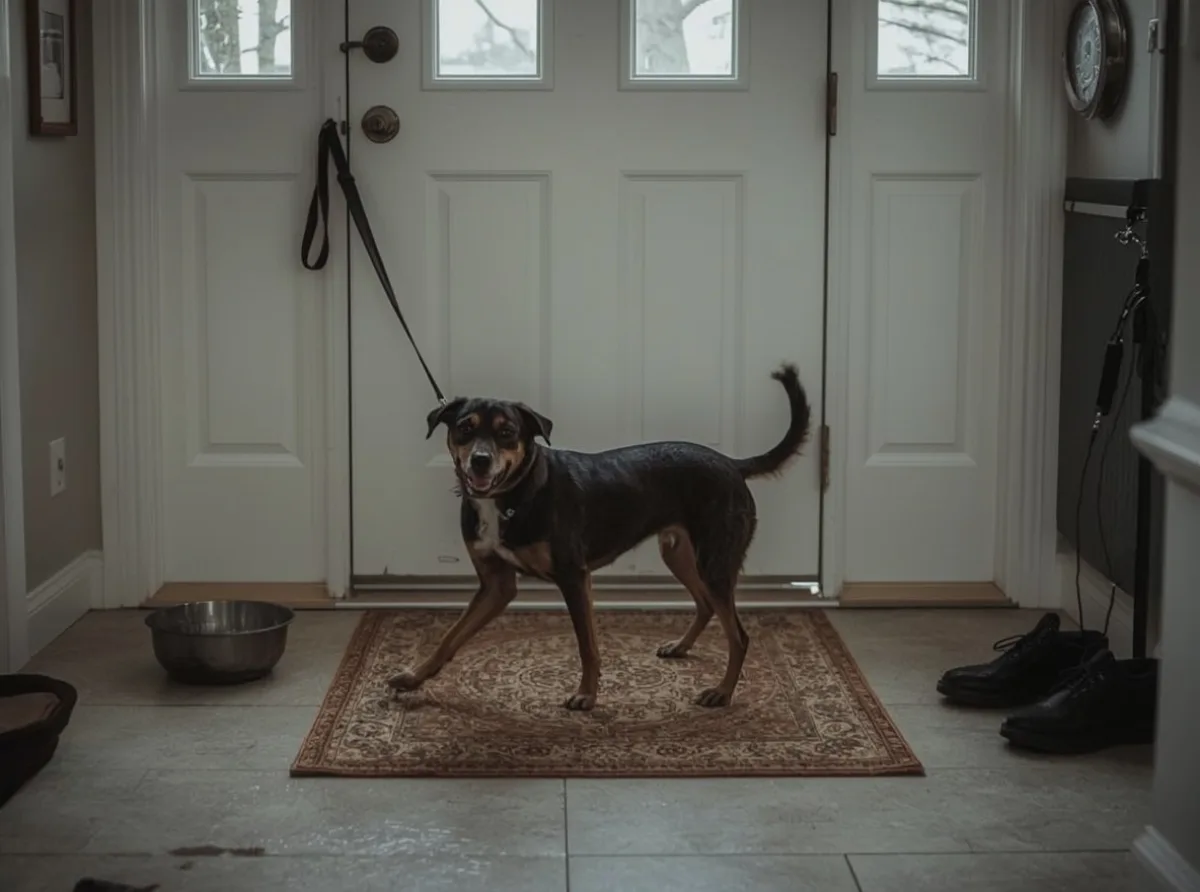
It can feel backwards at first. You take your dog out for a walk to help them settle, and instead they come home with even more energy than before. They zoom through the hallway, bounce off the couch, grab a toy, or pester everyone in the house for attention.
This kind of post-walk surge is common, and it does not always mean the walk “failed.” In many cases, the walk was stimulating in a way that left the dog aroused rather than relaxed. Fresh smells, movement, sounds, social encounters, and the simple excitement of being outside can all build up into a burst of energy once the leash comes off.
Some dogs also use the end of a walk as a release point. They held it together outside, stayed focused, followed cues, and managed a lot of input. Once they are back inside, that pressure has somewhere to go. The result can look chaotic, but it often has a clear pattern.
Understanding why this happens makes it easier to respond without accidentally making it worse. The answer is usually not “too much exercise” in the simple sense. More often, it is about the kind of stimulation the dog experienced, how their body handled it, and what happened next in the routine.
What Hyper After Walks Usually Looks Like
Not every excited dog looks the same. Some become noisy and bouncy. Others turn mouthy, carry objects around, or start repeating small behaviors over and over. A dog may rush from room to room, slap at the door, paw at you, or run tight circles with a stiff, alert body.
In a home setting, the change often appears right after the leash is removed. The dog that seemed tired outside suddenly becomes sharp and restless. They may sniff more intensely, bark at small sounds, pounce on toys they had ignored earlier, or seek rough interaction.
Sometimes owners notice a strange mix: the dog looks tired and wired at the same time. They may flop down briefly, then spring back up the moment something catches their attention. That combination is a clue that the dog is not simply energetic. They may be overstimulated.
Common signs people notice
- Fast running or sudden “zoomies” indoors
- Jumping on furniture or people
- Barking, whining, or grabbing at toys
- Difficulty settling for several minutes after the walk
- Restless pacing or repeated circling
- Overfriendly or pushy behavior toward family members
These signs can appear in a calm, playful dog too. The difference is often in the intensity and how quickly the dog can come back down. A playful dog may settle after a short burst. A truly over-aroused dog may seem unable to switch gears.
Why a Walk Can Make a Dog More Activated Instead of Calm
Walking is not always a relaxing activity for dogs. For many, it is a flood of information. Every bush, mailbox, patch of grass, and passing scent line carries a story. That amount of input can wake up a dog’s nervous system more than a quiet afternoon at home ever would.
Movement matters too. A dog who spends much of the day indoors may build up energy before the walk even starts. Then the walk adds excitement, not just exercise. The body becomes more alert, and the brain stays on high signal even after the outing ends.
Some dogs are naturally more responsive to the world around them. They notice small changes, get excited quickly, and struggle to downshift. For those dogs, a walk can act like a switch that turns on a strong emotional state, especially if the route includes other dogs, bicycles, children, traffic, or new smells.
Hyper behavior after a walk is often less about “needing more exercise” and more about being overstimulated, under-settled, or emotionally revved up.
Reasons the walk can raise arousal
- Too many sights, sounds, and smells in one outing
- Excitement from seeing other dogs or people
- Leash tension that keeps the dog mentally keyed up
- Switching quickly from intense activity to a quiet house
- Inconsistent routines that keep the dog guessing
A walk can also become a habit trigger. If the dog expects high excitement every time the leash appears, the entire outing can start the arousal cycle before the first step outside. By the time the dog returns home, their system is already running high.
Pent-Up Energy Is Only Part of the Story
People often assume a hyper dog after a walk simply did not get enough exercise. Sometimes that is true, but not always. A long walk can tire the muscles while still leaving the brain activated. In those cases, physical fatigue and mental arousal sit side by side.
That is why some dogs seem worse after a high-activity outing than after a shorter, calmer one. A fast walk with lots of stopping, pulling, sniffing, and excitement may create more emotional activation than a steadier, lower-key outing. The dog may come home with a body that is tired and a mind that is still spinning.
Breed tendencies, age, and individual temperament matter too. Young dogs often have more trouble regulating excitement. Working breeds, herding breeds, and dogs with high environmental sensitivity may respond strongly to normal neighborhood events. Even a mild walk can leave them buzzing.
What pent-up energy may look like after the walk
- Running laps immediately indoors
- Seeking a game of tug or fetch without pause
- Nibbling hands or clothing
- Bringing toys repeatedly and not stopping
- Ignoring food, water, or rest cues because they are still “on”
In these cases, the dog is not refusing to calm down out of stubbornness. Their body may be ready to rest, but their nervous system has not switched over yet. That difference matters because it changes how you interpret the behavior.
The Role of Overstimulation
Overstimulation is one of the most overlooked reasons dogs get hyper after walks. A dog can only process so much input before their behavior starts to fray. The outward signs may be excitement, but underneath there is often too much sensory load.
Some dogs stay composed outside by holding themselves together. They suppress their urge to react to every passing trigger. Once they get home, the pressure drops and all that stored energy spills out. The home environment feels safer, so the dog finally lets go.
That release can look dramatic. It might involve sprinting, vocalizing, nudging, or grabbing random items. It may happen every day after a certain route or only after walks in busy areas. The pattern often points to the dog being overwhelmed, not underworked.
If a dog only becomes wild after busy, noisy, or crowded walks, the issue may be emotional load rather than physical exhaustion.
Walks that are more likely to trigger it
- Routes with heavy foot traffic
- Areas with many dogs behind fences or on leash
- Walks full of stop-and-start pulling
- New neighborhoods or unfamiliar scents
- Highly exciting fetch-and-walk combinations
Even “fun” outings can push a sensitive dog too far. A dog that loves the outdoors may still need help regulating after the excitement ends. Enjoyment and overload can happen together.
Emotional Reasons Behind the Behavior
Excitement is not the only emotion involved. Some dogs become hyper after walks because they are anxious. Others feel frustrated. A few are simply highly attached to their person and become more demanding after a shared outing ends.
An anxious dog may act frantic because the walk did not feel fully predictable. They may have encountered stressful dogs, strange noises, or sudden changes in pace. When they return home, the dog can continue to release that tension through movement, barking, or clingy behavior.
Frustration can also show up as hyperactivity. A dog who wanted to greet every person or chase every squirrel may return home with unmet energy. That blocked drive can spill into the house as bouncing, vocalizing, or grabbing at things.
Some dogs become more active after a walk because they associate the outing with interaction. They may expect attention, play, or food afterward. If the routine usually includes all three, the dog learns to stay revved up at the finish line.
Emotional states that can sit under the behavior
- Excitement from novelty or social contact
- Anxiety from unpredictable experiences
- Frustration from leash limits or unmet goals
- Anticipation of treats, play, or affection
- Attachment-based seeking of more engagement
These emotional layers can look similar on the surface. A dog that is anxious and a dog that is thrilled may both bounce around after a walk. The details of body language help separate them.
Body Language That Helps Explain the Hyper Spell
Looking closely at posture, movement, and facial expression can tell you a lot. A playful dog often has loose muscles, softer eyes, and a more flexible body. Their movement is bouncy but not tense. They can break off and settle more easily.
An over-aroused dog may look different. Their body can appear tight, their movements sharper, and their focus harder to redirect. They may struggle to hear cues they know well. Their tail, ears, and mouth can shift quickly, and they may seem caught in a loop of motion.
Stress-related hyperactivity can be especially confusing because the dog may appear energetic while actually being uncomfortable. The signs are not always dramatic. Sometimes it is just a refusal to lie down, frequent scanning of the room, or repetitive nudging for more stimulation.
Helpful body-language clues
- Loose, wiggly movements usually point toward playfulness
- Tense shoulders and rapid motion may suggest arousal
- Hard staring or scanning can signal alertness or stress
- Fast breathing without recovery may indicate the dog is still keyed up
- Inability to pause often matters more than the energy itself
A dog that cannot decompress after a walk is telling you something about the experience. The message is not always “I need more.” Sometimes it is “That was a lot.”
How Routine Shapes Post-Walk Behavior
Dogs are pattern learners. If a walk is usually followed by play, treats, or a burst of attention, the dog may begin to expect that sequence every time. The routine itself can build excitement before the door even opens.
In some homes, the walk is the loudest, most stimulating event of the day. If the rest of the day is quiet, the dog may have no practiced way to settle after a big event. The body has to come down from a peak without much experience doing so.
Routine can help, but only if it is consistent. Sudden changes in time, route, length, or post-walk activity can make a sensitive dog more reactive. One day of a calm walk followed by another day of a high-energy outing can keep the dog guessing and make the arousal harder to manage.
Patterns that often increase hyper behavior
- Walks at unpredictable times
- Returning home and immediately launching into play
- Giving attention the second the dog bursts through the door
- Using the walk as the main source of daily excitement
- Very long gaps between outings, followed by intense exercise
A steadier routine does not mean a rigid one. It means the dog knows what happens next and does not have to stay on alert for surprises. Predictability can lower the emotional spike after the walk.
When the Behavior Shows Up Most Often
Some dogs are only hyper after certain kinds of walks. Others do it almost every time. The pattern often points to the trigger, not just the dog’s general energy level.
Busy urban walks may lead to more arousal than quiet neighborhood loops. Evening walks can be more activating for some dogs because they are already brimming with leftover energy from the day. Walks after long periods alone can also bring a bigger emotional release.
Puppies often show this behavior more dramatically because they have limited self-control and strong reactions to stimulation. Adolescents can be similar. Adult dogs may still do it, but the behavior often becomes more patterned, especially if the environment keeps pushing their arousal up.
| Situation | What may be happening |
|---|---|
| Short walk in a quiet area | Little stimulation, but pent-up energy still needs a release point |
| Busy neighborhood walk | Overstimulation from sounds, smells, and activity |
| Off-leash play plus walk | High excitement with little time to recover |
| Walk after being alone all day | Emotional release and increased arousal |
How to Read the Behavior Without Mislabeling It
It is easy to call a post-walk burst “bad behavior,” but that label usually misses the point. The dog may not be misbehaving so much as overshooting their ability to settle. That distinction changes how you think about the next step.
If the dog becomes hyper after every outing, the walk may need to be adjusted. That could mean a quieter route, fewer social encounters, more sniff time, or a calmer finish to the outing. It may also mean the dog needs help learning how to come down gradually instead of switching from outside to inside in one step.
Some owners find that a dog settles better when the walk ends with a short pause outside the house, a drink of water, and a brief moment before any play begins. Others notice improvement when the first few minutes indoors stay boring and low-key. The point is not to drain the dog completely. It is to avoid stacking more stimulation on top of stimulation.
When a dog seems hyper after a walk, the most useful question is often not “How do I tire them out?” but “What kind of walk left them so activated?”
What the Behavior May Be Telling You Long-Term
Repeated post-walk hyperactivity can reveal a lot about a dog’s threshold for stimulation. Some dogs need fewer surprises. Some need shorter outings. Some need more decompression time between experiences. A few need a different kind of exercise altogether.
The behavior may also show that the dog has learned to expect a big payoff after every outing. If every walk ends in a burst of affection, play, or treat searching, the dog may never get a chance to practice quiet re-entry. Over time, that can strengthen the pattern.
For dogs with high sensitivity, the behavior may be one piece of a broader picture. They may also be more alert in the house, more reactive to sounds, or harder to settle after visitors. The post-walk energy is not isolated. It may be part of a larger pattern of arousal management.
Signs the pattern is becoming established
- The hyper phase happens after nearly every walk
- The dog has trouble calming down even after rest
- Any outdoor outing, even short ones, causes a big rebound
- Excitement grows when the leash appears
- The dog seems unable to separate exercise from stimulation
When these signs keep repeating, the walk itself is only part of the story. The dog’s environment, expectations, and daily rhythm are all feeding into the response.
Natural Instincts Can Add to the Mix
Dogs are built to notice motion, smells, and changes in their surroundings. That alertness has practical value, but in a modern household it can create a mismatch. A dog may return from a walk with instincts still switched on, while the home expects quiet behavior right away.
That mismatch can make the house feel like a strange place for a few minutes. The dog’s body is ready to act, but there is nothing to chase or track. So the energy gets redirected into pacing, barking, or play-seeking.
Some dogs also become more hyper because of social excitement. They love the human-dog bond that comes with walks. They may associate the leash with companionship, shared movement, and exploration. Coming home can feel like the end of a rewarding event, so they try to keep it going.
That does not mean the dog is clingy in a negative sense. It may simply mean the walk itself was highly meaningful. The dog is trying to prolong the experience in the only way available to them.
A Calmer Way to Think About It
A dog who becomes hyper after walks is often showing a blend of excitement, stimulation, and delayed release. The walk may have been fun, stressful, intense, or all three. What happens afterward is part of the same story.
Rather than treating the behavior as random, it helps to notice the details. Was the route busy? Did the dog meet other dogs? Was the pace fast? Did the dog have time to sniff, pause, and recover? Did the end of the walk turn into a second activity as soon as the leash came off?
Those small observations usually matter more than the length of the walk alone. Dogs do not only need movement. They need a way to handle what the movement brings with it. When the post-walk surge keeps happening, the real clue is usually in the walk’s emotional texture, not just its distance.
That is why two dogs can take the same route and come home very differently. One may settle on the rug within minutes. The other may spiral into zoomies, demands, and noise. The difference is often not discipline or stubbornness. It is how each dog processes the outing once it ends.