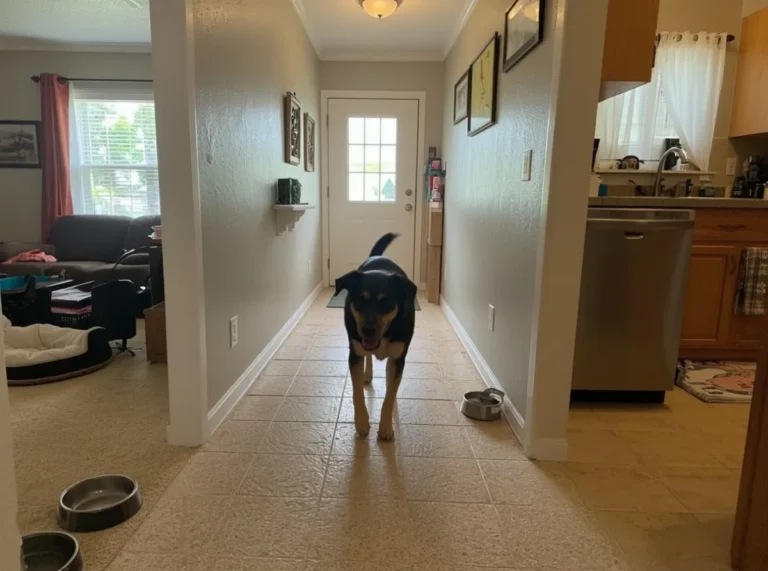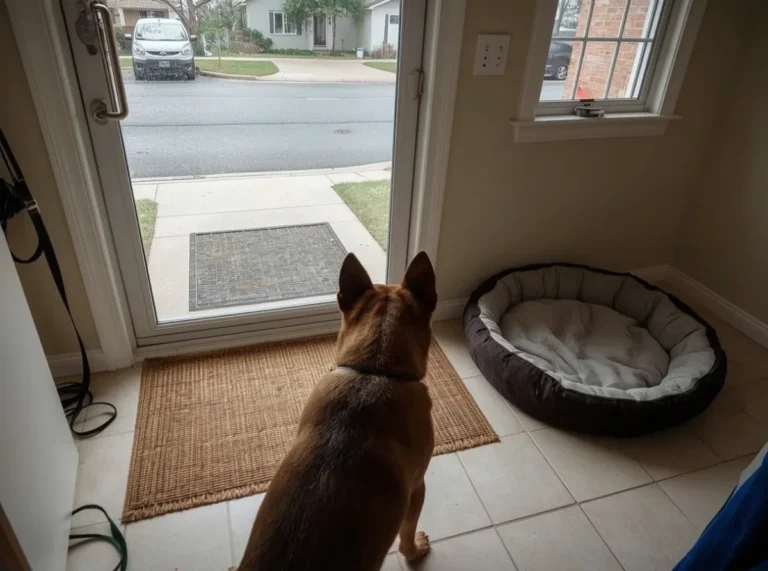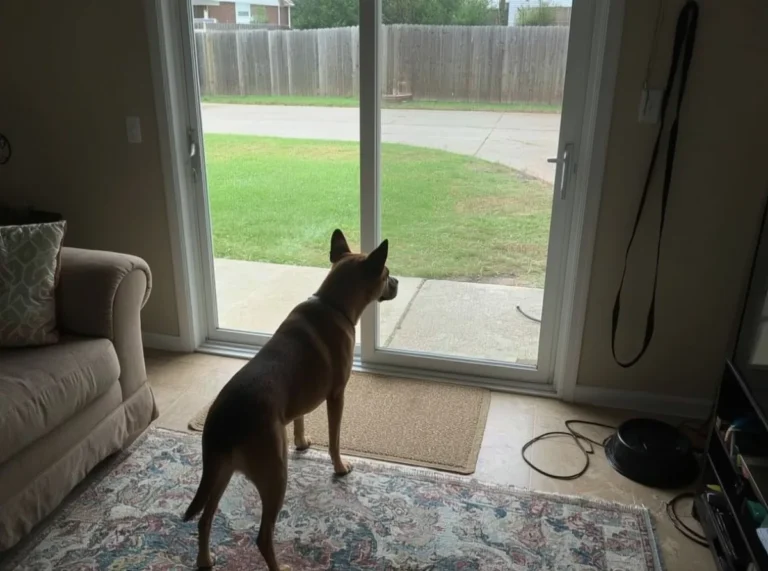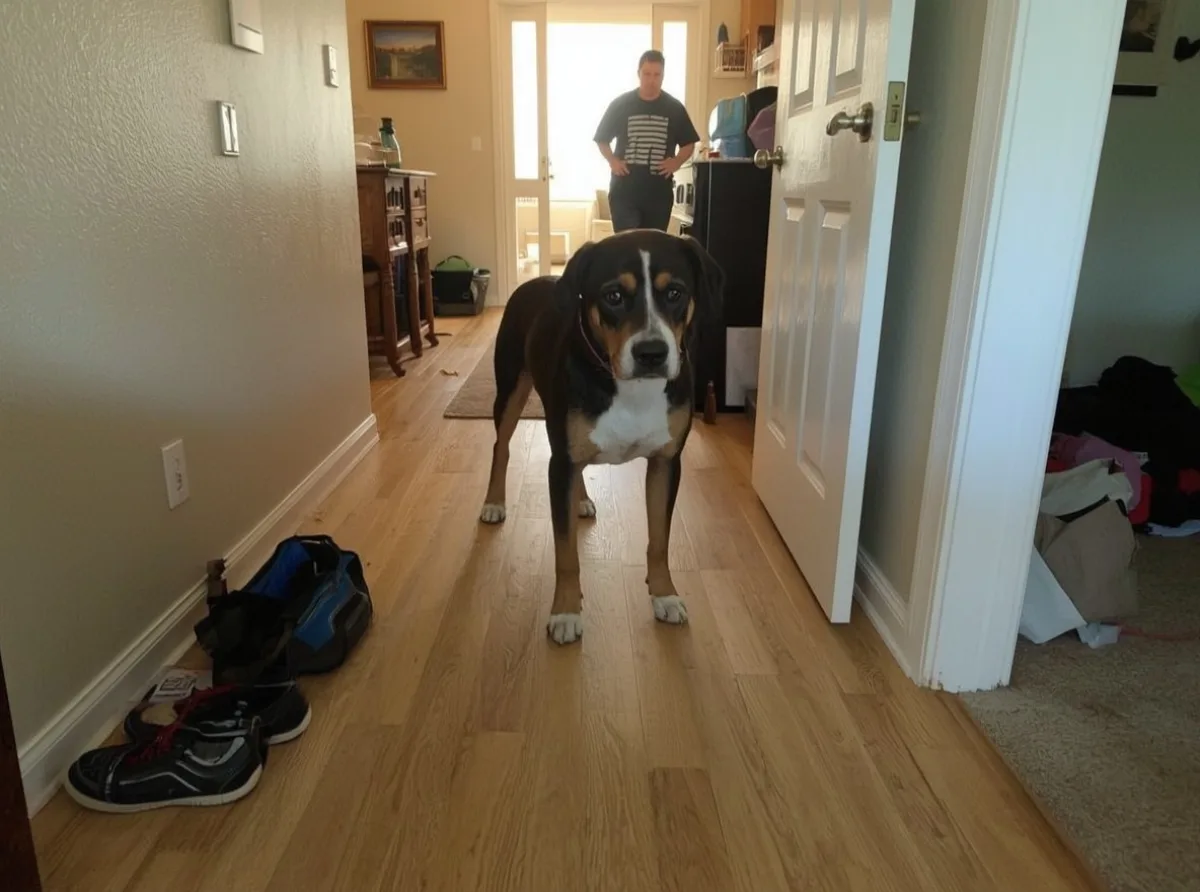
On busy days, some dogs seem to notice everything. A door shuts a little harder than usual. Footsteps move faster. Voices carry more energy. Even a small change in the home can make a dog act clingier, more watchful, or more easily unsettled than they were the day before.
This sensitivity does not always look dramatic. Sometimes it shows up as following you from room to room. Sometimes it is a dog refusing to settle near the front door, reacting to every sound, or asking for more contact than usual. In other homes, it looks quieter: a dog that sleeps less deeply, startles more easily, or becomes more hesitant during normal routines.
Busy days can change the emotional rhythm of the whole house. Dogs are very good at reading patterns, and when those patterns become irregular, they often respond before people realize anything has changed. A schedule that feels ordinary to a person may feel crowded, unpredictable, and hard to read from a dog’s point of view.
That sensitivity often has a practical explanation. It can be tied to stress, extra stimulation, less rest, or simply the dog noticing that the household is moving in a faster, noisier way. The reaction is not random. It usually reflects how the dog experiences the day around them.
What sensitivity looks like in everyday life
Dogs rarely become “sensitive” in one obvious way. The behavior usually appears through small changes that build through the day. A dog may seem normal in the morning, then grow more reactive once guests arrive, children come home, work calls start, or errands disrupt the usual routine.
One common sign is increased watchfulness. The dog tracks movement more closely, keeps an eye on people, or stays near exits and doorways. Another is a lower tolerance for normal handling or noise. A collar adjustment, a dropped object, or a sudden laugh may seem like too much.
Some dogs become more physically attached. They press against their person, ask to be held closer, or lean in more often than usual. Others go the opposite direction and choose distance, hiding under furniture, moving to another room, or avoiding interaction altogether. Both responses can come from the same core feeling: the environment feels harder to manage.
There are also dogs that become more vocal. They may whine, bark at ordinary sounds, or offer repeated attention-seeking behaviors. The reaction is not always a sign of disobedience. Often it is a signal that the dog has lost some sense of ease and is trying to regain it.
Common signs seen on busy days
- Following people more closely than usual
- Startling at sounds that normally do not matter
- Reduced interest in resting or chewing
- More whining, pacing, or door monitoring
- Clingy behavior or avoidance of contact
- Lower patience around handling, children, or other pets
Why the pace of the day matters so much
Dogs depend on patterns. Wake-up times, meal times, walks, quiet periods, and familiar household sounds help them predict what happens next. When a day becomes crowded with visitors, phone calls, errands, extra noise, and interruptions, that predictability weakens.
A lot of dogs do better when life feels easy to read. Busy days can interrupt the usual cues that help them relax. If people are moving in and out, if the house is louder than normal, or if the dog is being asked to adapt to several changes at once, their sensitivity often rises.
Many dogs are also affected by the energy level in the home. Even without understanding the details, they notice tension, hurry, and irregular movement. A person rushing around in the kitchen, grabbing items, and switching tasks quickly can create a very different emotional atmosphere from a slow morning with a steady routine.
Noise plays a large role too. Dogs hear things people may barely register. On busy days, sound often stacks up: a vacuum, repeated doorbells, children talking over one another, packages arriving, music, traffic, and phones ringing. The dog may not be reacting to one event. They may be reacting to the accumulation.
When a dog seems more sensitive on hectic days, the problem is often not one single trigger. It is the overall load of movement, noise, and unpredictability.
Possible emotional reasons behind the behavior
Some dogs become more sensitive because they feel less secure when the environment changes quickly. Security for a dog often comes from knowing what happens next. If the next thing keeps shifting, the dog may stay on alert longer and recover more slowly.
That alert state can look like emotional sensitivity. The dog may react strongly to minor disruptions because their threshold is already lower. A dog that is usually calm may still feel comfortable in a quiet room, but once the day becomes crowded, they no longer have much margin for extra stimulation.
Attachment can also play a role. Many dogs form a strong sense of closeness with their people, and on busy days that connection can feel more important. If the household is hard to read, the dog may seek reassurance through proximity. They want to stay near the person who seems most stable.
For some dogs, sensitivity is connected to anticipation. If they know something unfamiliar is happening, they may begin reacting before the event fully unfolds. A dog that hears luggage being packed or senses the arrival of visitors may start showing signs early, because the day already feels different.
In other cases, the behavior reflects limited coping capacity rather than strong emotion in one direction. A dog may not be anxious in a broad sense. They may simply be reaching the edge of what they can comfortably handle after too many changes in a short period.
How routine changes affect sensitivity
Routine is one of the strongest influences on canine behavior. It does not have to be rigid, but it does need some shape. When meals, walks, rest periods, or potty breaks shift too much, dogs often become more reactive because they no longer know when relief is coming.
A busy day may cause subtle disruptions that people do not connect right away. A walk gets delayed. The dog’s nap is interrupted. Lunch happens later than usual. Someone is home, but too occupied to interact in the usual way. Each change may seem small. Together, they can create a day that feels off-balance.
Rest matters more than many owners expect. If a dog cannot fully settle, the sensitivity often rises as the day goes on. A tired dog is not always a calm dog. Sometimes a tired dog is less patient, more startled, and less able to process normal household activity.
Food timing can matter too. Some dogs become more attentive or uneasy when meals are delayed. Others are more affected by the general loss of routine than by the delay itself. Either way, the body notices patterns, and the mind often follows.
Routine changes that often make dogs more reactive
- Delayed walks or missed outdoor breaks
- Unusual meal timing
- Frequent interruptions to rest periods
- More people coming and going
- Unexpected changes in who is home
- Extended periods of noise without quiet recovery time
When stimulation becomes too much
Busy days are full of stimulation, and stimulation is not always exciting in a good way. For dogs, stimulation includes sounds, movement, smells, social contact, and visual activity. Once the amount becomes too high, the dog may shift from engagement into overload.
Overload can look like sensitivity because the dog no longer responds with normal flexibility. They may become jumpy, unsettled, or needy. Some dogs pant more, pace, or struggle to lie down and stay there. Others seem almost stuck, watching everything without ever fully relaxing.
This is especially common in homes where the dog is expected to “just deal with it.” A busy household can unintentionally demand too much tolerance. The dog keeps adapting, but only up to a point. Once that point is passed, the behavior often changes fast.
Not every sensitive response means the dog is frightened. Sometimes the dog is simply overstimulated. The difference matters because overstimulation tends to improve when the environment quiets down and the dog gets a chance to reset. Fear can have other layers, but overload often follows the pace of the day quite closely.
A dog that becomes more sensitive during busy days may be signaling overload, not misbehavior.
How sensitivity can look different from dog to dog
Some dogs show their discomfort outwardly. They bark, pace, shadow people, or demand attention. Others turn inward and become quiet, stiff, or withdrawn. The outward style is easier to notice, but the quieter style can be just as meaningful.
A social dog may cope by staying close and trying to stay involved in everything. A more reserved dog may cope by leaving the room and avoiding eye contact. A young, energetic dog may become jumpy and disorganized. An older dog may seem more fragile because the same level of activity is harder to filter out.
Breed tendencies and individual temperament can shape the pattern, but they do not determine it completely. Two dogs in the same home may react very differently to the same busy day. One may become excitable and restless, while the other becomes quiet and stiff. Both are responding to the same overall pressure in their own way.
Life experience matters too. Dogs that have had a lot of exposure to changing environments sometimes handle bustle better than dogs that prefer consistency. That does not make one dog better or worse. It simply means their tolerance for busy environments is different.
Subtle signals that often go unnoticed
Some of the earliest signs are easy to miss because they do not look serious. A dog may lick their lips more often, glance repeatedly at a sound, or keep shifting position instead of settling. These are small changes, but they can tell a clear story when they appear together.
Body posture is especially useful. A dog that usually moves loosely may look tighter through the shoulders or neck. Their tail may stay lower than normal, or their ears may angle back more often. The dog may still be functioning well enough to eat, walk, or greet people, but the ease is gone.
Eye contact can also change. Some dogs seek more eye contact when they want reassurance. Others avoid it, especially if they feel overburdened by the atmosphere around them. Looking for the pattern matters more than looking for one fixed sign.
Movement often tells the clearest story. A dog that cannot choose one place to rest, keeps repositioning, or keeps getting up to follow sound after sound is usually not fully settled. That restlessness often appears before more obvious reactions like barking or snapping at a stimulus.
| Behavior | What it may suggest on a busy day |
|---|---|
| Following closely | Seeking reassurance or stability |
| Pacing | Difficulty settling or processing stimulation |
| Hiding | Trying to reduce exposure |
| Whining | Heightened tension or need for contact |
| Startling easily | Lowered tolerance for noise or movement |
How owners often misread the behavior
It is easy to assume a dog is being dramatic, needy, or stubborn when they become more sensitive during a hectic day. That interpretation can miss the point. The dog may not be trying to control anything. They may be trying to cope.
Clinginess is sometimes mistaken for simple affection, which it can be, but on busy days it can also be a request for steadiness. A dog that hovers near one person may be choosing the calmest available anchor. The behavior becomes more understandable when seen in context.
Withdrawal is also easy to misread. A dog that disappears under a bed or stays in another room may be dismissed as antisocial. In reality, they may be choosing the path of least stimulation. That choice can be a healthy one if the dog has somewhere safe to go.
Even barking can be misunderstood. Some dogs bark more when they feel overwhelmed because they are trying to create distance, confirm what is happening, or manage arousal. The sound is not always a sign of confidence. Sometimes it is the sound of a dog trying to regulate a crowded moment.
What busy-day sensitivity may be telling you
When a dog becomes more sensitive during busy days, the behavior usually says something about their current capacity. The dog may be near their limit for noise, social interaction, or unpredictability. That limit can shift from day to day depending on sleep, age, past experiences, and the amount of change happening around them.
It may also show that the dog relies heavily on routine for emotional balance. Dogs that are comfortable with predictability often seem fine until the day changes too much. Then the behavior reveals how much structure supports them underneath the surface.
In some cases, the sensitivity points to a dog that is more observant than people realize. They notice the household before people notice themselves. A slightly tense atmosphere, a different walk time, or a flurry of movement can be enough to affect them.
That kind of sensitivity is not always a problem. It becomes a concern when the dog cannot recover, cannot rest, or seems stuck in alert mode for much of the day. The pattern across multiple busy days tells more than one isolated reaction ever will.
Pay attention to recovery time. A dog that settles once the house quiets is usually reacting to the pace of the day. A dog that stays tense long after things slow down may need a closer look at the broader pattern.
Long-term patterns that stand out over time
Some dogs are consistently more sensitive in fast-moving households. Others only react when the day becomes unusually full. Over time, the difference becomes easier to see. The key is watching for the conditions that reliably bring the behavior out.
If the dog struggles most on days with visitors, it may be the social load that matters. If they seem off during chaotic mornings, it may be the lack of structure. If their sensitivity appears after several days of disrupted routine, accumulated fatigue may be the real factor.
Noticing the pattern helps explain the behavior without forcing a one-size-fits-all answer. One dog may need more quiet before the day gets busy. Another may need a predictable rest block in the afternoon. Another may simply do best with fewer interruptions during meals and sleep.
Busy-day sensitivity can also become more noticeable with age. Older dogs may have less patience for constant movement or noise. Puppies and adolescents may be more easily overstimulated because they are still learning how to regulate their responses. The same household can feel very different to a dog at different stages of life.
Natural instincts and social habits behind the reaction
Dogs are social animals, and social awareness is built into how they move through the world. They monitor the people around them. They read shifts in mood, pace, and interaction. That makes them good companions, but it also means they absorb more of the day’s energy than many owners realize.
From an instinctive standpoint, noticing changes in the environment makes sense. A crowded, noisy, or unpredictable setting can signal that the dog needs to stay ready. In a home, that readiness can look like sensitivity, but the underlying pattern is rooted in attention and adaptation.
Attachment deepens the response. Many dogs orient strongly to their people, and busy days can challenge that sense of connection. When the household becomes less available, less calm, or less easy to read, the dog may cling harder to whatever relationship feels most stable.
Alertness and sensitivity are closely linked. A dog that is naturally attentive may be excellent at noticing new details, but that same quality can make them more reactive when too many details pile up. The trait is useful until the environment pushes it past a comfortable level.
When the behavior may deserve extra attention
Most busy-day sensitivity is situational, but certain patterns deserve more attention. If the dog is suddenly much more reactive than usual, or if the sensitivity appears even on quiet days, it may point to something beyond routine overload. Pain, illness, poor sleep, and discomfort can all make a dog less tolerant of ordinary activity.
Changes in appetite, posture, willingness to move, or interest in rest can be useful clues. A dog that is more sensitive and also seems physically off may not simply be reacting to a hectic day. The behavior could be part of a broader change in wellbeing.
When a dog only becomes sensitive in busy periods and recovers well afterward, the pattern is often easier to understand. Still, it is worth noticing exactly what helps them settle. Quiet time, predictable breaks, a safe room, a familiar chew, or reduced social pressure can all change how the day feels.
Dogs do not always need dramatic solutions. Often they need less crowding, fewer sudden demands, and a little more room to recover. That is especially true on days when the home is full, the schedule is messy, and the usual rhythm has gone missing.
Why the reaction makes sense
A busy day asks a dog to process more than usual. More sound. More movement. More unpredictability. More social energy. More reasons to stay alert. Sensitivity is often the result of those demands adding up in a way the dog can feel, even if no one else notices it right away.
What looks like a sudden change is often a response to a changed environment. The dog is not becoming a different animal. They are showing that the day has become harder to navigate. Once that is understood, the behavior reads less like mystery and more like information.
The strongest clue is usually the pattern itself. If a dog is calmer when the household slows down, the sensitivity is likely linked to the pace, noise, and uncertainty of the busier hours. That connection often becomes clearer the more closely the day is observed.
Busy days do not affect every dog in the same way, but they almost always leave a trace. Some dogs need more distance. Some need more reassurance. Some need fewer interruptions. What they all tend to show is that the shape of the day matters more to them than people often expect.