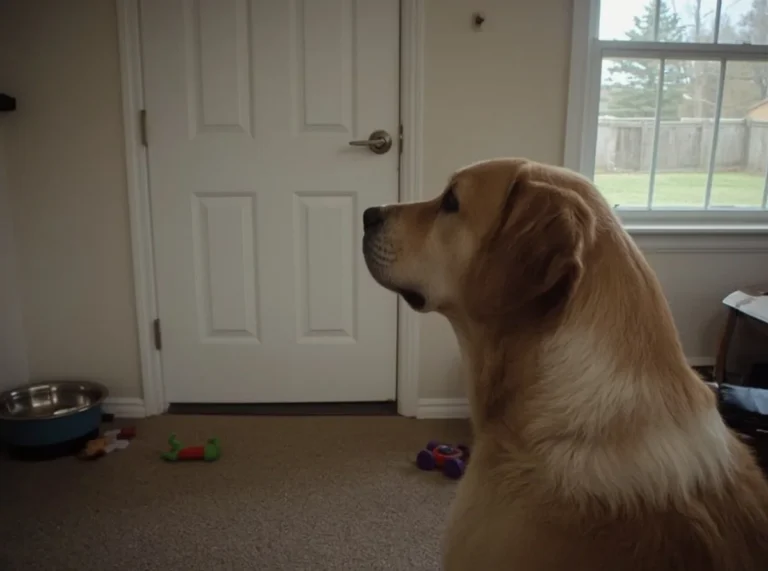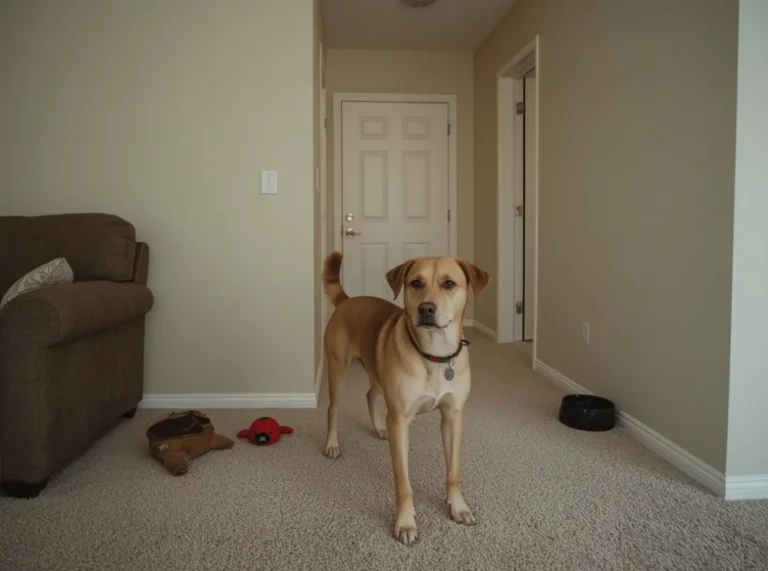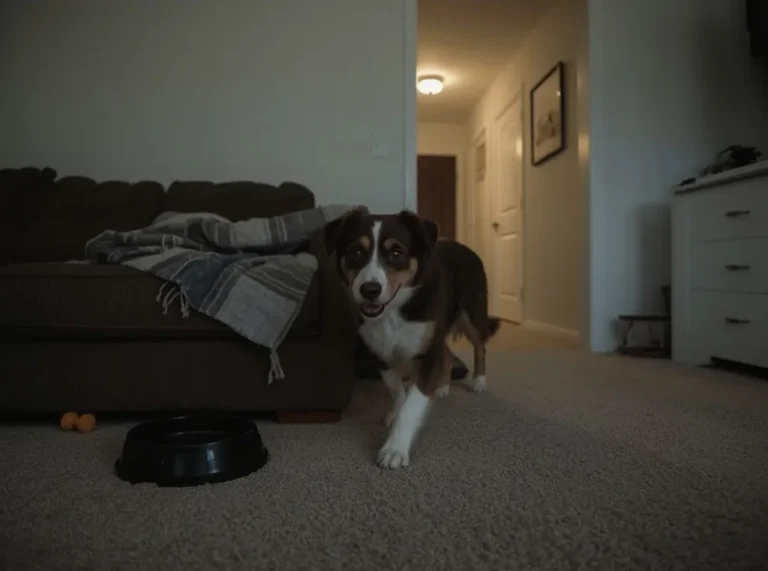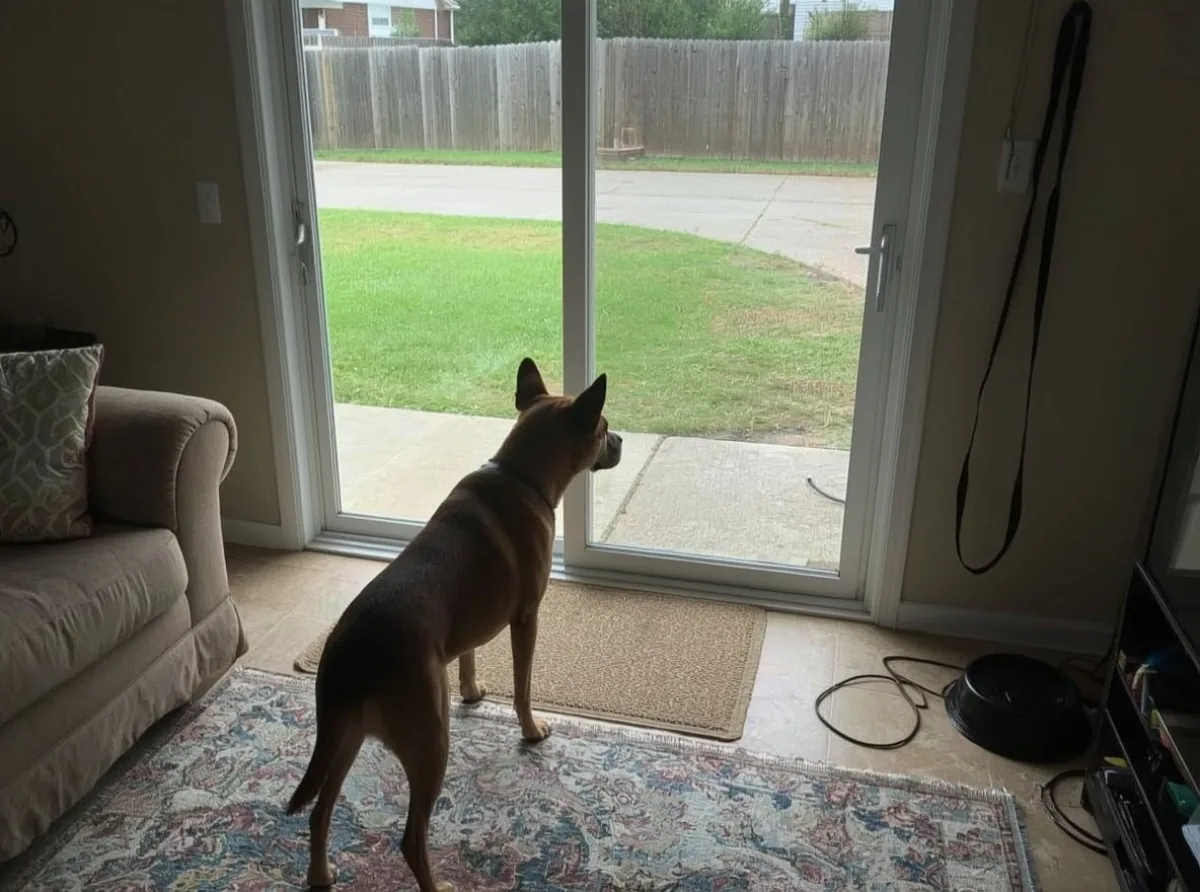
Sometimes a dog seems to switch on all at once. A sound in the hallway gets noticed immediately. A small shift in the room changes their posture. A familiar walk suddenly feels like a full scan of every corner, every bush, every passing movement.
To a person, it can look like the dog has become unusually tuned in, almost as if they are reading the room before anything happens. That impression is often real. Dogs do not just react to obvious threats or loud noises; they track patterns, smell changes, movement, routines, and tiny differences that people miss completely.
When a dog suddenly seems overaware of the environment, the behavior is usually not random. It often reflects a change in arousal, comfort, confidence, stimulation, or habit. In some dogs, it appears as quiet vigilance. In others, it shows up as scanning, freezing, staring, pacing, or checking doors and windows more often than usual.
The shift can be mild or dramatic. A relaxed dog may begin to watch every sound at the fence. A normally social dog may hesitate before entering a room. A confident dog may start following their owner from place to place as if they need to keep track of everything at once. None of these behaviors mean the same thing in every dog.
What matters is the pattern around the behavior. A dog that becomes more aware after a move, a schedule change, guests, illness, loud weather, or a stretch of boredom is responding to something in the environment or in their own body. The behavior is often a clue, not a diagnosis.
What “overaware” often looks like in daily life
In everyday settings, overawareness can be easy to miss at first. A dog may simply look more alert than usual. Their head turns faster than before. Their eyes linger on doorways, windows, stairs, or the street. They may pause before entering a room they once entered casually.
Some dogs begin monitoring the household more closely. They track footsteps from one room to another. They notice the clink of a leash, the opening of a drawer, or the sound of a car outside. Others become more careful outdoors, reading distant movement and scent trails with unusual intensity.
The behavior can show up in a few common ways:
- frequent head turns toward small sounds
- holding still and staring at one area for longer than usual
- moving from one perch to another to keep watch
- checking doors, windows, fences, or hallways repeatedly
- staying close to a person, especially in unfamiliar spaces
- hesitating before crossing thresholds
- walking with a tighter, more controlled body posture
Not every alert dog is anxious. Some dogs are simply attentive by nature. Herding breeds, guardians, and many scent-driven dogs can appear deeply watchful even when they feel calm. The difference lies in the rest of the body. A dog that is aware but relaxed moves freely, eats normally, and can disengage when nothing is happening. A dog that is overly keyed up often struggles to settle.
Overawareness is often less about “seeing too much” and more about not being able to turn the monitoring off.
That distinction matters. A dog can be observant without being stressed. But when the alertness seems new, persistent, or difficult to interrupt, it usually deserves attention.
Why dogs may suddenly become more alert
Dogs notice change quickly. A person may think the house feels normal, while the dog catches a new scent, a different schedule, or a change in tension. Small shifts can matter. A neighbor’s construction, a new pet in the home, rearranged furniture, a different feeding routine, or even a change in the owner’s mood can alter how safe or predictable the environment feels.
One common reason is sensory change. Dogs hear more than people do, and they pick up on frequencies and vibrations humans never register. A new appliance, a distant siren, or subtle noise in the walls can keep a dog on edge. Outdoors, they may notice wildlife, another dog’s scent, or activity around the house long before anyone else does.
Another reason is routine disruption. Dogs rely heavily on pattern. When meals, walks, play, or rest times shift, some dogs become more vigilant. They may spend extra energy trying to predict what happens next. That can look like increased scanning or monitoring the people in the home.
Physical discomfort can also play a role. A dog that is sore, nauseous, itchy, or generally unwell may become more watchful. When a dog does not feel fully comfortable in their body, the world can seem harder to navigate. They may remain on guard because something feels “off,” even if they cannot explain why.
There is also emotional carryover. A stressful event does not always fade right away. A thunderstorm, a veterinary visit, a recent scolding, or an overwhelming social situation can leave a dog more reactive to the next few days of ordinary life. The result can be a temporary state of hyper-awareness.
Sudden alertness is often a response to change, not a personality shift.
Emotional and internal reasons behind the behavior
Dogs do not just respond to what is visible. They respond to how the situation feels. That internal experience shapes whether they settle, investigate, avoid, or stay on high alert. A dog that seems overaware may be trying to gather enough information to feel safe.
Fear is one possible factor, but not the only one. Uncertainty can be just as powerful. A dog does not need a clear threat to become watchful. If the environment is unpredictable, they may stay mentally prepared for something to happen. That state can look like stiff posture, persistent checking, and reduced relaxation.
Some dogs are naturally sensitive. They react strongly to new sounds, changes in household movement, or emotional shifts in the people around them. Sensitive dogs are not necessarily fearful dogs. They may simply process the world more intensely. A new visitor, a different walk route, or a child running through the house may feel significant to them.
Other dogs become overaware because of attachment. They are highly tuned to their people and monitor them closely. They notice departures, returns, bathroom trips, kitchen activity, and changes in attention. In many households, this looks like loyal shadowing. In more intense cases, it becomes restless tracking.
Anticipation can also explain the behavior. A dog that expects something exciting, like a walk or mealtime, may become intensely aware of everything related to the event. They watch the owner’s hands, listen for keys, and track movement through the home. This is not always stress. Sometimes it is simply a dog who has learned to predict good things very well.
Still, anticipation can spill into frustration. A dog may know something is about to happen but not understand when. That uncertainty can make them seem overly alert. They are not just waiting; they are bracing.
How environment and routine shape the reaction
The same dog may seem calm in one setting and highly aware in another. Environment matters because it changes the amount of information the dog has to process. A quiet home with consistent routines gives many dogs a sense of stability. A busy household with constant movement, noise, and visitors asks much more of the dog’s attention.
In a calm environment, a dog may notice things and then let them go. In a chaotic one, they may never fully relax long enough to stop scanning. That can happen in homes with children, multiple pets, frequent deliveries, open windows, or a lot of late-night activity. The dog keeps monitoring because the environment keeps giving them reasons to.
Routine matters just as much. Dogs often feel safer when daily life is predictable. Meals around the same time, walks with familiar patterns, rest periods that are respected, and clear transitions between activity and quiet all reduce the need for constant watchfulness. When those patterns disappear, some dogs start paying attention to everything.
Stimulation also plays a role. Under-stimulated dogs may become hyperaware because they have too much unused attention. Their minds have nowhere to go, so they start tracking every sound and movement. On the other hand, over-stimulated dogs may stay alert because they never get a true break from input. Both situations can produce a dog that seems unusually keyed in to the world.
Environmental triggers can be surprisingly specific. A dog may become more watchful near windows if street activity has increased. Another dog may start monitoring hallways after hearing a strange noise in the walls. Once the dog makes a connection, even a loose one, the place itself can begin to feel significant.
| Common setting | What the dog may appear to do | Possible reason |
|---|---|---|
| Quiet home with consistent routine | Relaxed vigilance, occasional checking | Normal awareness with low stress |
| Busy household | Scanning, following, difficulty settling | Too much activity or sensory input |
| After routine changes | Increased monitoring of people and rooms | Uncertainty about what happens next |
| After a stressful event | Startling easily, staying close, freezing | Lingering arousal or worry |
Subtle signals that often accompany the behavior
Overawareness usually comes with body language that tells the fuller story. A dog may look forward and still, but the rest of the body can reveal whether the state is calm, cautious, or tense. Observing the whole picture helps separate normal alertness from a more troubled state.
Relaxed alertness often looks loose and responsive. The dog may turn their head toward a sound, then resume what they were doing. Their mouth may remain soft. Breathing stays even. They are engaged with the environment, but not trapped by it.
More tense alertness often includes other signs:
- tight or raised shoulders
- closed mouth with a firm jaw
- slow, deliberate movement
- repeated lip licking when nothing is being offered
- wide eyes or fixed staring
- ears locked forward or held unevenly
- difficulty lying down comfortably
- frequent position changes without obvious rest
A dog may also become unusually attentive to human movement. They follow hands, track footfalls, and react to small shifts in posture. Sometimes the dog is trying to predict the next event. Other times they are checking whether their person is a source of safety.
Vocal changes can appear too. Some dogs become quieter and more reserved. Others whine softly, bark at minor triggers, or make short alert sounds when something catches their attention. The vocal pattern often depends on whether the dog feels curious, concerned, or frustrated.
The same behavior can mean curiosity in one dog and tension in another. The body usually tells the difference.
What owners often assume, and what it may actually mean
It is easy to misread overaware behavior as stubbornness or bad manners. A dog that will not settle may look disobedient. A dog that keeps watching the window may seem nosy or dramatic. But these labels do not explain much. They only describe the surface.
Sometimes owners assume the dog is “protecting” the house when the dog is actually uneasy. A dog that barks at passing noises is not always acting out of confidence. They may be unsure, overstimulated, or simply unable to relax. On the other hand, some dogs are naturally territorial and observant without being upset. The same behavior can come from very different internal states.
Owners also sometimes assume a dog is bored when the real issue is uncertainty. Boredom can increase scanning, yes, but a dog that becomes suddenly overaware after a change in the home may be responding to stress rather than a lack of activity. The timing matters.
Another common mistake is to ignore the behavior because the dog still eats and plays. Many dogs do continue to function while feeling unsettled. They may still take treats, but they keep one eye on the door. They may still go for a walk, but they are less loose in their movement. Mild distress often hides in these in-between behaviors.
It helps to ask a simple question: is the dog aware in a flexible way, or is the dog stuck in alert mode? Flexible awareness comes and goes. Stuck alertness lingers, spreads into other situations, and makes rest harder.
How different types of awareness can look
Not all overawareness is the same. Some dogs are watchful but calm. Others become reactive. Some are defensive, while others are simply trying to understand the environment before relaxing. Sorting these out can make the behavior easier to interpret.
Calm awareness
This is the dog that notices everything but does not seem distressed by it. They may look up at a sound, sniff the air, or watch a person walk by, then return to resting. Their body remains loose, and they can disengage easily. Many well-adjusted dogs live in this range much of the time.
Reactive awareness
This version is more intense. The dog notices a trigger and immediately escalates with barking, lunging, pacing, or repeated checking. The reaction may be brief or prolonged. It often appears when the dog cannot comfortably process the stimulus from a distance.
Defensive awareness
Here the dog seems to keep a careful distance from whatever is happening. They may freeze, avoid, or place objects between themselves and the trigger. Their behavior suggests caution rather than curiosity. This can happen in new places, around unfamiliar people, or after a negative experience.
Social awareness
Some dogs seem overaware because they are tuned to people. They monitor the emotional state of the home, follow family movement, and read social cues with precision. This can be affectionate and normal, but it can also become difficult if the dog cannot rest away from human activity.
These forms can overlap. A dog may be socially tuned in, environmentally cautious, and reactive to sudden sounds all at once. That is why the surrounding context matters so much.
How age and experience can change the pattern
A puppy can seem overaware for very different reasons than an adult dog. Puppies are still learning what matters. Their world is full of firsts, and many things that seem ordinary to people are new and significant to them. A sudden pause, a staircase, a vacuum cleaner, or a visitor can draw intense attention because the puppy is still building a mental map of the world.
As dogs mature, awareness often becomes more patterned. They learn which sounds matter, which spaces feel safe, and which routines predict good outcomes. Adult dogs may appear less jumpy but more selective. They know what to watch and what to ignore, unless something has changed enough to matter.
Older dogs can become more aware again, sometimes for practical reasons. Changes in hearing, vision, comfort, or cognition can make the environment feel less predictable. A dog that once moved easily through the house may start checking rooms more often or hesitating in dim corners. In those cases, the behavior is not just alertness; it may be compensation for uncertainty.
Experience also shapes how quickly a dog returns to calm. A well-socialized dog that has had many ordinary exposures may settle sooner after a surprise. A dog with fewer positive experiences or a history of stressful events may stay vigilant longer. The past matters, even when the current trigger seems small.
What long-term patterns can reveal
One odd day of alert behavior is not the same as a long-term pattern. Watching for consistency helps separate a passing reaction from a deeper shift. If the behavior appears after particular events and then fades, it may simply reflect temporary stress. If it keeps returning in the same situations, the dog has likely learned something about those moments.
Long-term overawareness can suggest that the environment needs adjusting. Sometimes the fix is simple: more rest, quieter spaces, fewer unpredictable interruptions, better management of outdoor triggers, or a return to a steadier routine. Sometimes it points to an emotional habit the dog has built over time, especially if vigilance has been accidentally reinforced.
Dogs can learn that being on alert brings results. A bark may make the noise go away. A stare may draw human attention. Following a person closely may lead to reassurance. These responses are understandable, but they can maintain the cycle if they happen repeatedly.
That is why consistent observation matters. Notice when the dog seems most aware, what happens before it starts, and how long it lasts. A pattern around doors, meals, visitors, evening noises, or specific rooms usually says more than the alert behavior alone.
When the awareness is new, intense, or paired with other changes like appetite shifts, reduced play, sleep disruption, or unusual avoidance, it may reflect more than a passing habit. At that point, the behavior is part of a broader story about comfort and environment.
A dog that suddenly seems hyper-aware is often showing you where predictability has broken down.
Closing perspective on the behavior
Dogs notice the world with remarkable detail, but they do not all filter that detail the same way. When a dog suddenly seems more aware of everything around them, the behavior usually points to a change in what feels safe, expected, or manageable. Sometimes the cause is external. Sometimes it is internal. Often it is a mix of both.
The most useful response is careful attention to context. Look at timing, routine, body language, and the setting itself. A dog who scans more after a thunderstorm needs something different from a dog who keeps watching the hallway in a busy house or a dog who becomes watchful after moving to a new home.
Overawareness does not always need to become a problem. In many dogs, it is a temporary adjustment. In others, it is a clue that the world has become a little harder to read. When the behavior is understood in that light, it becomes easier to respond to the dog’s actual experience rather than the surface behavior alone.