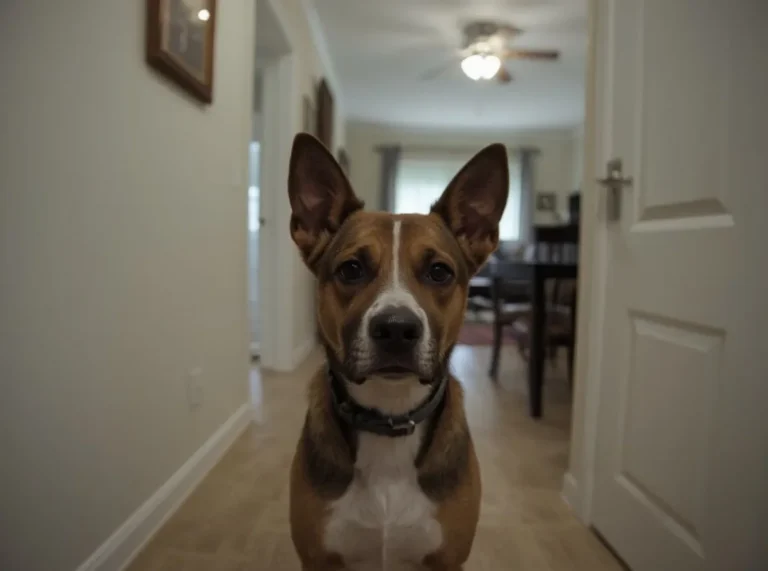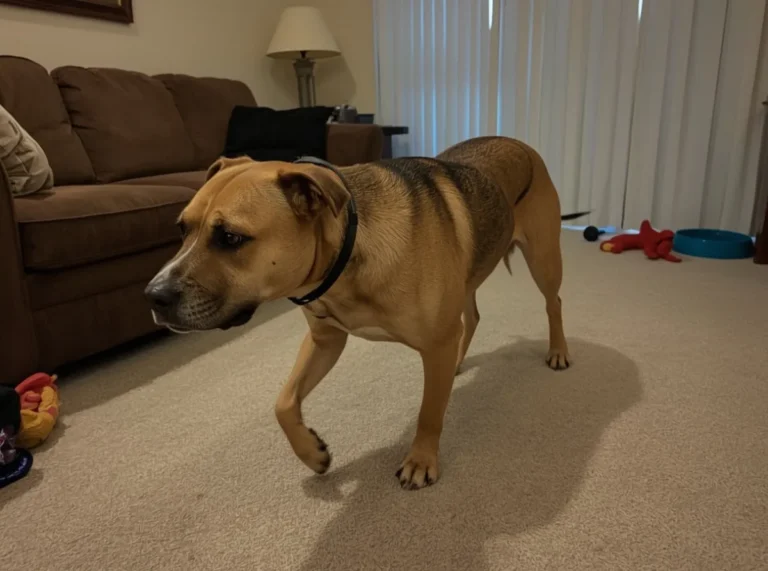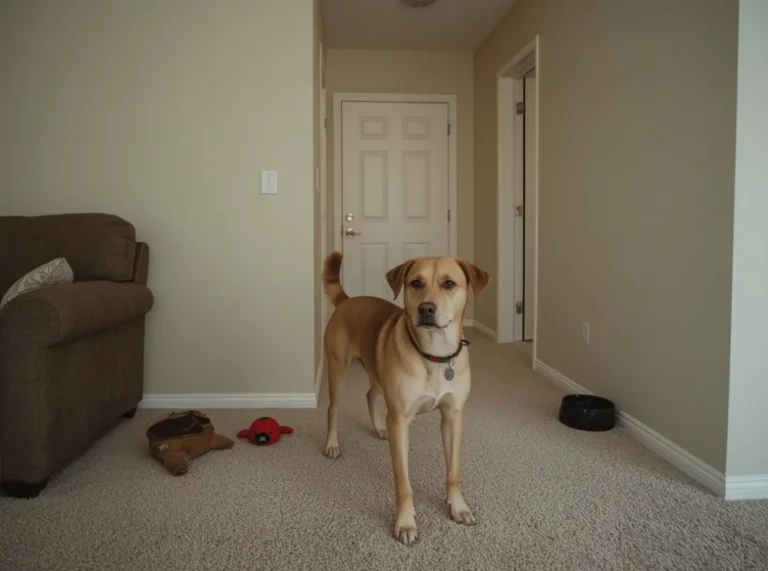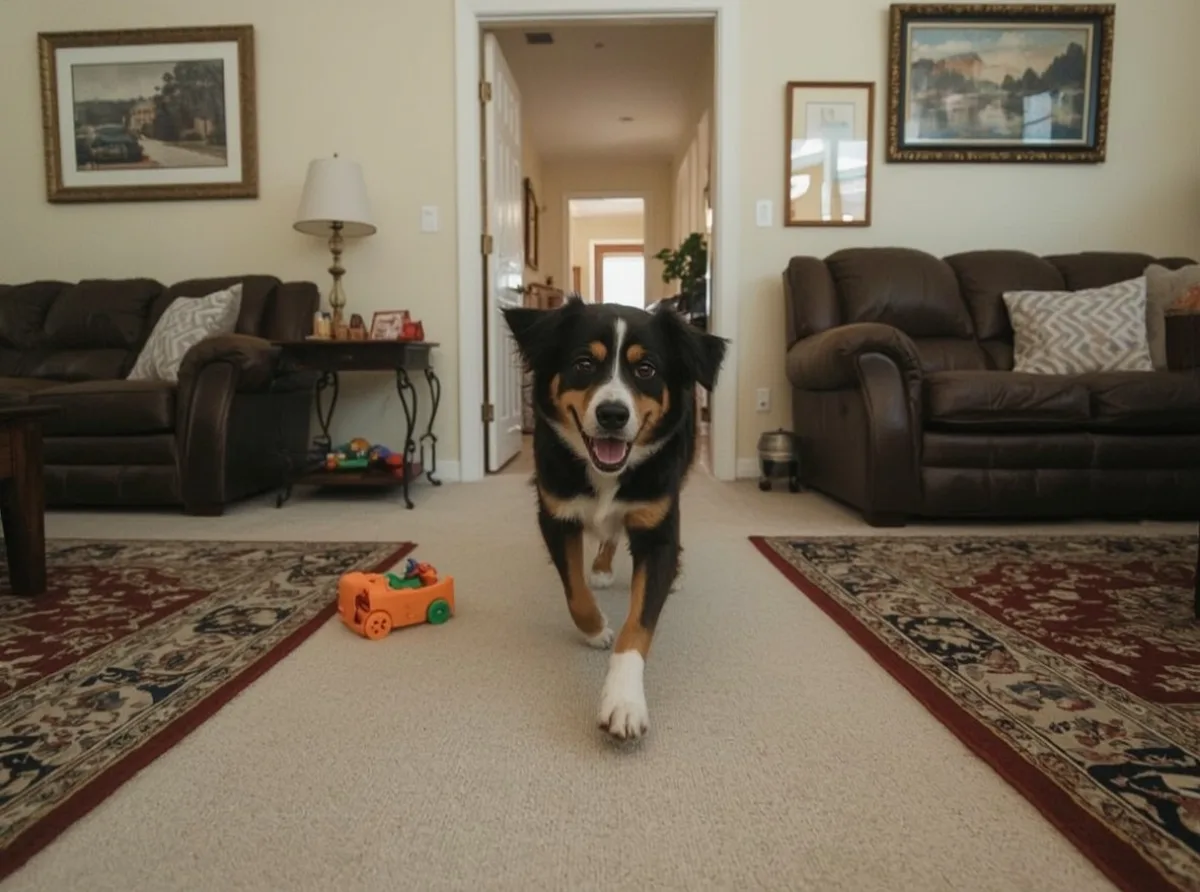
A dog that suddenly tears through the house can look hilarious one minute and worrying the next. One second they are calm on the floor, and the next they are sprinting from room to room, circling the couch, skidding across the hallway, and making sharp turns like they are being chased by an invisible force.
For many dogs, this burst of speed is completely normal. It can come from excitement, relief, play, or a build-up of energy that needs somewhere to go. In other cases, the same behavior can point to stress, discomfort, or a change in the dog’s routine.
The key is not just noticing that the running happened, but paying attention to what came before it, what the dog looked like while doing it, and how they acted afterward. Those details usually tell the real story.
What This Behavior Looks Like in Everyday Life
When people describe a dog suddenly running around the house, they often mean more than simple walking or pacing. It is usually a quick, energetic burst that seems to arrive without much warning. The dog may zip down a hallway, leap onto the sofa, race back to the kitchen, or do tight circles in a familiar pattern.
Some dogs keep their bodies loose and playful while doing it. Their mouths may be open, their tails may wag broadly, and they may glance at their person as if inviting a game. Others look more intense, with stiff movement, wide eyes, or a sense that they are trying to escape something they cannot name.
That difference matters. The same running pattern can come from very different internal states, and the rest of the body often gives away which one is most likely.
Common Reasons a Dog Suddenly Starts Running Around the House
One of the most common reasons is pure excitement. A dog may suddenly burst into motion after hearing keys, seeing a leash, or realizing it is mealtime. Some dogs simply struggle to hold in their enthusiasm, and the body releases it all at once in a quick sprint.
Another common reason is pent-up energy. Dogs that have been resting, indoors too long, or left without enough activity may reach a point where their body needs release. The running is not random in that case; it is often the result of a day, or several days, that has been too quiet.
Sometimes the trigger is emotional rather than physical. Relief after being left alone, anticipation before going outside, or the return of a favorite family member can all produce sudden zooming through the house. The dog is not just moving. They are reacting to a moment that matters to them.
There are also dogs that run because they are startled. A loud noise, a strange smell, a shadow, or another pet’s movement can set off a quick flight response. In that situation, the running may look a lot more urgent than playful.
When Dogs Do It Most Often
This behavior tends to show up at predictable times, even when it feels random at first. Many dogs do it in the evening, after a nap, or right after being let inside from the yard. Others get the urge after bath time, after eating, or when the whole household suddenly becomes active.
Puppies often run in fast bursts because they have more energy than self-control. Their bodies and brains are still learning how to regulate excitement. Mature dogs can do it too, but in adults the trigger is often more specific, such as a stimulating event or a change in routine.
It is also common in homes where the dog has been calm for a while and then suddenly gets a strong cue. A door opens. Someone grabs shoes. A toy appears. The behavior can happen within seconds.
Possible Emotional Reasons Behind the Running
Not every burst of speed is just physical energy. Dogs experience many of the same broad emotions that shape human behavior, even if they express them differently. A dog that is bursting around the house may be excited, overstimulated, anxious, relieved, or trying to self-soothe.
A sudden run can be a release, a reaction, or a request. The meaning depends on the dog’s body language, the trigger, and the pattern behind it.
Excitement usually looks bright and loose. The dog may bounce, curve through the room, and keep returning to people or toys. Anxiety or nervous energy can look less fluid. The dog may dart without settling, seem unable to focus, or repeatedly check doorways and corners.
Some dogs also run when they are trying to manage a build-up of tension. After a long quiet stretch, the body may need an outlet. The running is not always about fun. Sometimes it is the dog’s way of resetting themselves.
Body Language That Helps Explain the Behavior
Body language is often the fastest way to tell whether the running is playful or concerning. A loose, wiggly dog with soft eyes and a relaxed mouth is usually in a good state. Their movement may be bouncy and irregular, but it still feels flexible and open.
A more stressed dog may move in a sharper, tighter way. Their tail may be tucked or held high and rigid. Their ears may be pinned back, and they may seem unable to pause between laps. In some cases, the dog is not inviting interaction at all. They are simply moving hard and fast.
Pay attention to whether the dog stops when spoken to, whether they take treats, and whether they seem able to shift into a calmer mode afterward. A dog that can easily settle again usually differs from one that keeps escalating.
Signs the Running Is More Likely Playful
- Loose, curved body movement
- Open mouth with relaxed expression
- Tail wagging in wide, soft motion
- Returning to people or toys
- Pausing briefly, then starting again
Signs It May Be Stress-Related
- Stiff or frantic movement
- Wide eyes or repeated scanning
- Difficulty settling afterward
- Startling easily during the run
- Repetitive pacing or circling without play cues
How the Home Environment Influences It
The environment inside the house can make a big difference. A quiet, predictable home may lead some dogs to store up energy until they finally release it in a sudden burst. In a busy household, the opposite can happen. Noise, people moving around, and constant changes can leave a dog overstimulated and more likely to dash around.
Routine also shapes the behavior. Dogs often become more animated when their daily pattern changes. A missed walk, a later dinner, visitors in the home, or an unusually long indoor stretch can all make running more likely.
Even small details matter. Slippery floors can make a dog race in short, sharp bursts because they cannot get steady traction. Narrow hallways, open floor plans, and access to favorite routes can all encourage repeated laps. Some dogs develop a habit of using the same path every time because it feels familiar and fast.
How Daily Stimulation Affects the Pattern
A dog that has had enough physical exercise, mental activity, and social contact usually has fewer mysterious indoor sprints. That does not mean the behavior disappears completely. It means the running is more likely to happen for an obvious reason, such as excitement or play.
Dogs with very little stimulation may act differently. They can become restless and use the house as a track because there is no better outlet. A simple walk, a sniffing session, or a short game of fetch can sometimes reduce the urge.
But stimulation is not only about exercise. Mental work matters too. Dogs who spend all day waiting with nothing to do may still reach a point where their energy spills out in bursts. A bored dog can look very much like an overexcited one, which is why context is so important.
When Sudden Running May Signal a Health Issue
Most of the time, a dog running around the house is behavioral. Still, sometimes health concerns are part of the picture. If a dog suddenly starts running in a frantic or unusual way, especially if it is new behavior, it is worth noticing whether anything else changed.
Dogs experiencing discomfort may move strangely in an attempt to escape the feeling. Itching, pain, digestive upset, or a sudden urge to relieve themselves can all cause restless movement. A dog with ear problems or neurological issues may also appear off-balance or unusually reactive.
Watch for signs that the running is paired with other changes, such as hiding, whining, panting when the house is cool, limping, skipping meals, or trouble lying down comfortably. Those clues matter more than the running itself.
If the behavior appears out of nowhere, looks frantic, or comes with other physical changes, it deserves attention beyond simple “zoomies.”
Situations That Often Trigger Sudden House Running
Some triggers show up again and again in real homes. A dog may explode into motion after hearing the garage door open because they know someone is arriving. Another may race through the living room right after being released from a crate or pen. Some dogs do it after a nap, almost like they wake up with a jolt of stored energy.
Feeding time is another strong trigger. The anticipation can be so intense that the dog runs laps before the bowl even touches the floor. Returning from a walk can also spark a second wave of energy, especially if the dog was holding back excitement outside and now feels free to release it indoors.
Play with another dog can lead to indoor zooming as well. Even if the initial game happened outside, the excitement may continue inside for a few minutes. In these moments, the dog often appears socially engaged, not distressed.
Playful Zoomies vs. Restless Circling
Not all fast movement means the same thing. Playful zoomies usually appear sudden, bright, and brief. The dog runs, loops, maybe shakes off, then settles. The pattern feels energetic but manageable.
Restless circling can look similar at first but feels different once you watch longer. The dog may keep moving without much variation, seem unable to relax, and return to the same path over and over. There may be little sense of joy in the movement.
A simple way to separate them is to ask whether the dog looks like they are enjoying the motion or needing it. The answer is often visible in their face, not just their feet.
| Pattern | Typical Feel | Common Clues |
|---|---|---|
| Playful zoomies | Light, bouncy, social | Wiggly body, wagging tail, brief bursts |
| Restless running | Tense, urgent, unfocused | Stiff body, repeated loops, hard to settle |
| Startle response | Sudden and reactive | Trigger event, quick dash, alert posture |
How Owners Often Misread the Behavior
People sometimes assume a dog is being naughty, ignoring commands, or trying to act out. In many cases, the dog is not making a choice in that way. They are reacting to an internal state that has become too strong to hold quietly.
Others assume all sudden running is harmless and never needs a second look. That can also be a mistake. A dog that constantly seems unable to settle, especially if the behavior is new, may be telling you something about their routine, stress level, or comfort.
The important part is not labeling it too fast. The same movement can mean different things depending on the dog and the day.
How Age Changes the Behavior
Young dogs are more likely to sprint indoors because their bodies are still learning how to manage excitement. Puppies and adolescents often have sharp energy swings. They sleep hard, wake up wild, then crash again. That cycle is normal, but it can feel dramatic in a house with walls and furniture.
Adult dogs may be more predictable, yet many still get bursts of running at familiar times. A mature dog that suddenly starts doing it more often may be responding to a change in exercise, schedule, or household energy. Older dogs are different again. If a senior dog starts racing around the house in a new or unusual way, it is worth paying attention to comfort, mobility, and overall health.
Age does not tell the full story, but it helps set expectations. A puppy zooming after a nap is common. A senior dog with a brand-new habit of frantic running is more notable.
What the Behavior May Say About the Dog’s Emotional State
Running around the house can be a sign that the dog is carrying more energy than they know what to do with. That energy may be happy, nervous, frustrated, or mixed. Dogs do not separate those states as neatly as people often do.
Some dogs run because they want connection. They may dart toward a person, stop, and look back as if asking for a response. Others run because the movement itself helps them cope. They are not necessarily looking for attention. They are releasing pressure.
That emotional difference shows up in how the dog re-enters calm. A dog who was excited to see you may settle after a few minutes of interaction. A dog who is anxious may need a quieter, more predictable environment before their body truly relaxes.
What to Notice Before and After the Burst
The moments around the running often matter more than the sprint itself. What happened just before it? Was the dog sleeping, hearing noises, watching the window, or left alone? Was there a change in the household, such as guests, a skipped walk, or a different feeding time?
Afterward, watch how the dog behaves. Do they flop down and rest, come back for affection, drink water, or ask to go outside? Or do they keep pacing, remain on edge, or seem unable to focus? The after-effects help clarify whether the running was a healthy release or a sign of something else.
When the behavior happens often in the same context, a pattern usually emerges. That pattern is more useful than the one-time event.
When the Behavior Becomes More Noticeable
Some dogs start running around the house more often during weather changes, long winter days, or periods when outdoor time gets cut short. Others do it more after guests visit, during training changes, or when the household schedule is inconsistent.
It can also become more noticeable in homes where there is a lot of excitement concentrated into a small period of time. A dog that waits all day and then gets one intense burst of interaction in the evening may show a bigger reaction than a dog with regular activity spaced throughout the day.
That is why the same dog may seem calm for weeks, then suddenly start zooming every night. The trigger is often in the rhythm, not the randomness.
What Usually Helps Clarify the Cause
The most helpful approach is simple observation. Notice timing, triggers, and body language. Keep an eye on whether the dog seems playful, startled, restless, or out of sorts. Patterns matter more than one dramatic lap through the hallway.
If the dog looks cheerful and settles normally afterward, the behavior is often just a burst of energy. If the dog seems tense, repeats the running often, or shows other changes in health or mood, the situation needs a closer look.
Dogs use movement in many ways. A sudden sprint through the house can be joy, relief, frustration, or a quick response to something in the environment. The behavior becomes clearer when you watch the whole picture instead of the running alone.
A dog that suddenly runs through the house is usually communicating something with their body, even if the message is simple: I have energy, I am excited, or something feels off.
That message is easier to read when you notice the small details. The pace. The posture. The reason the moment began. What happens when it ends. In everyday life, those details tell you far more than the dash itself.