Some dogs circle the same blanket before settling down. Others nudge the same toy into the same corner every morning. A few patrol the window at exactly the same hour, or wait by the kitchen when they hear a familiar cabinet door open. These small rituals can look amusing, but they are usually doing more than filling time.
Dogs often repeat certain actions because repetition feels predictable. Predictability can be comforting, especially in a world full of sounds, smells, schedules, and people coming and going. A ritual can become part of how a dog checks the environment, calms itself, or marks the transition from one part of the day to another.
That does not mean every repeated habit has the same meaning. One dog repeats a behavior because it is excited. Another does it because the routine has become deeply familiar. Another may be responding to stress, boredom, or learned expectations. The details matter, and the same movement can mean very different things depending on when it appears and what comes before and after it.
What small rituals look like in daily life
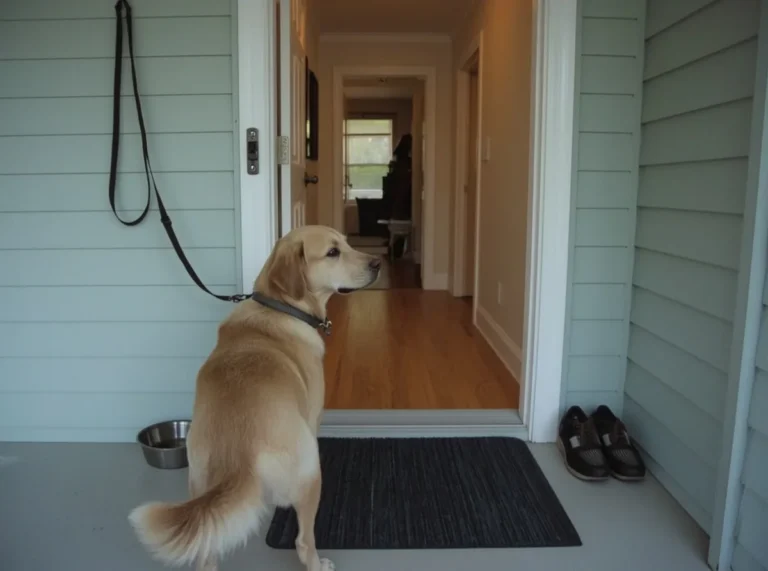
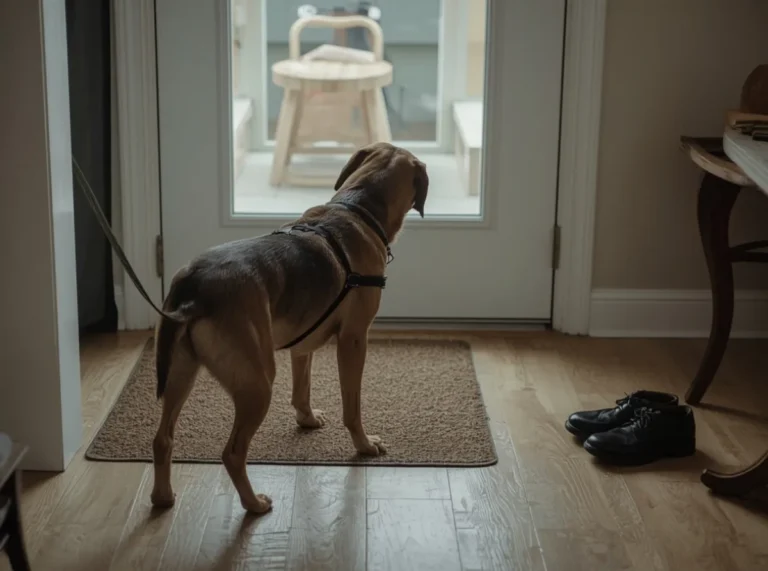
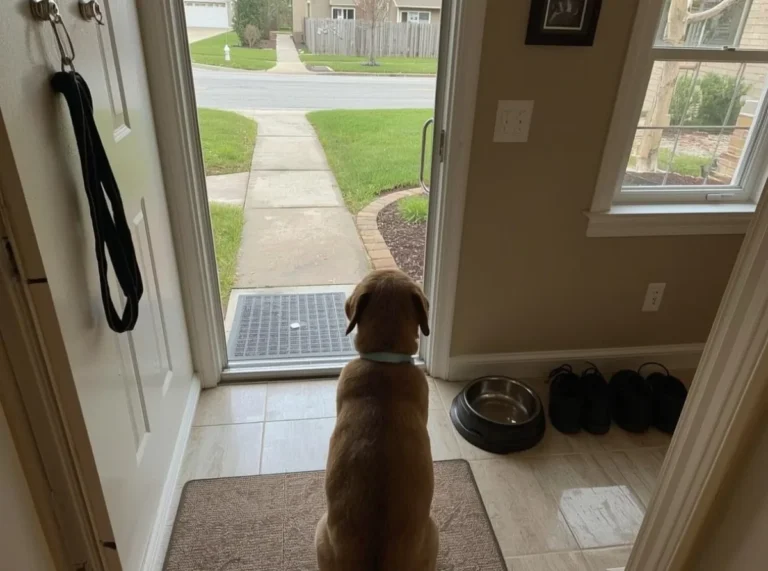
At home, these habits are often easy to spot because they happen in the same places and at the same times. A dog may perform a little spin before lying down, lick the same spot on a paw after meals, carry a toy from room to room, or sit by the door before a walk at the usual hour. Some dogs paw at bedding in a repeated pattern even when they are not really digging. Others do a brief “check-in” walk around a room before finally relaxing.
These actions can be subtle. A ritual may be only a few seconds long, but it still matters to the dog. In many cases, the behavior is not about the object itself. The blanket, toy, door, or window is simply part of a sequence the dog knows well.
Common examples owners notice
- Turning in circles before lying down
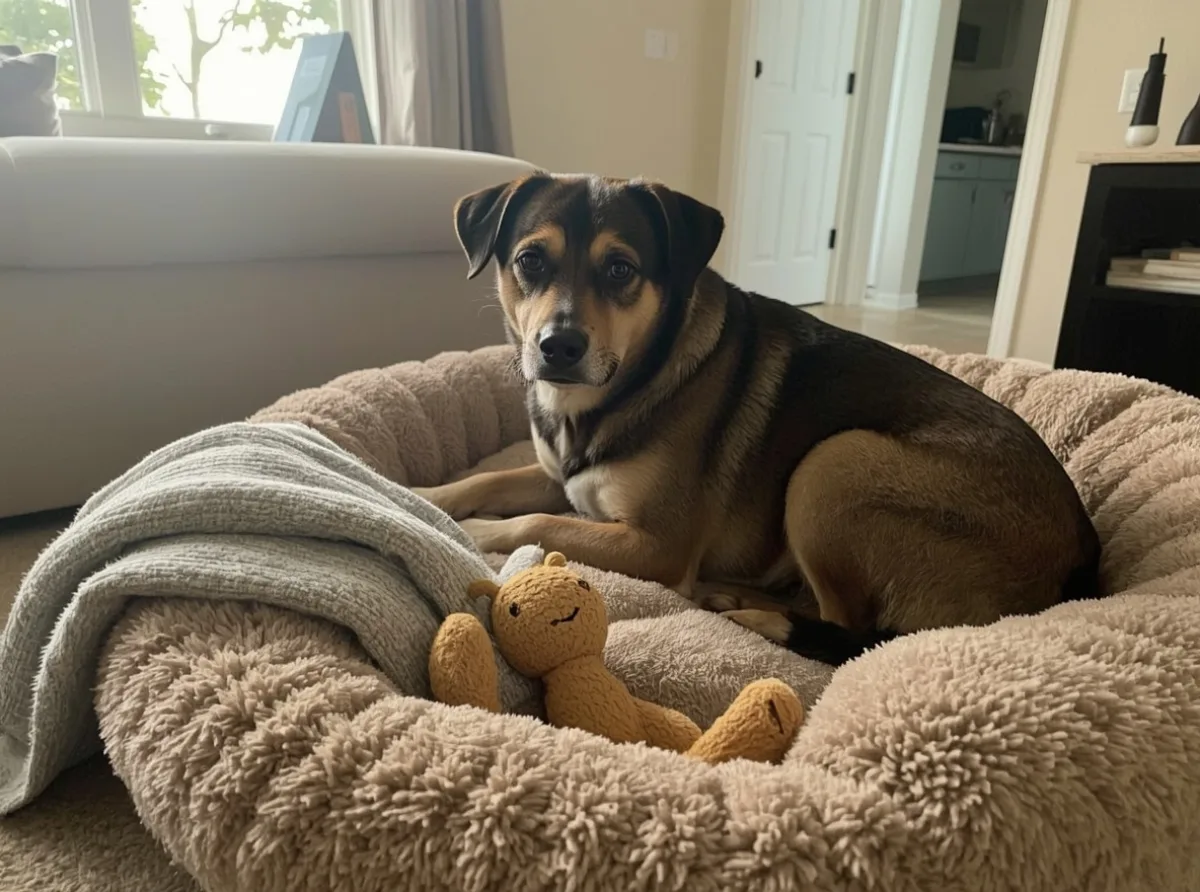
- Bringing the same toy to the same sleeping spot
- Waiting at the window at a regular time
- Touching or nudging a person in the same way each evening
- Sniffing a specific area before meals or bedtime
- Pacing a short route through the house
What makes these behaviors feel like rituals is consistency. They happen again and again, often with very little variation. That repetition is a clue that the dog has learned something useful from the pattern, even if it is simply the comfort of knowing what happens next.
Why dogs repeat the same small actions
One major reason is that repetition helps dogs create structure. Dogs are highly attentive to patterns. They notice when the leash appears before a walk, when the family sits down for dinner, and when the house gets quiet before bedtime. Repeating small behaviors can be part of how they organize those moments.
Another reason is emotional regulation. A familiar sequence can help a dog settle. The dog that circles twice before lying down may not be “performing” for anyone. The circling may help it feel ready to rest. The dog that carries a toy from room to room may be using that object as a bridge between activity and calm.
Repetition often makes a dog feel safer, not because the dog is rigid, but because the pattern is known.
Learning plays a big role too. If a dog repeats a behavior and something good usually follows, the habit gets stronger. That “good” may be a meal, attention, a walk, or simply the relief of reaching a quiet moment. Over time, the dog begins to expect the sequence and may repeat it automatically.
Instinct can also be part of the story. Some repeated behaviors have older roots in digging, nesting, scouting, guarding, or checking territory. Modern home life changes the setting, but not all the underlying tendencies. A dog that paws at bedding may be echoing an old nesting pattern. A dog that makes rounds through the house may be following a mild version of territorial monitoring.
Comfort, anticipation, and emotional memory
Many small rituals are tied to what dogs remember feeling before. If a behavior has been followed by comfort enough times, the dog may return to it without thinking. This is why some dogs always arrange the same sleeping spot before settling. The sequence has worked before. Their body remembers that.
Anticipation is another strong driver. Dogs often repeat behaviors before something meaningful happens. A dog may sit by the food cabinet every afternoon because dinner usually follows. Another may wait at the back door when it senses the family is about to move into the yard. The ritual becomes a way of preparing for the event.
Emotional memory does not always involve excitement. It can also involve relief. Some dogs repeat a small routine after a noisy period ends, such as pacing the hallway and then curling into a bed. The behavior helps the dog move from alertness back into rest. It is less about habit for habit’s sake and more about a transition the dog knows how to handle.
Signs a ritual is helping the dog settle
- Breathing slows after the behavior
- Muscles look looser afterward
- The dog chooses to lie down soon after
- Eyes and ears become less alert
- The movement is brief and ends naturally
When the behavior ends with relaxation, it often points to self-soothing or anticipation rather than distress. The dog may simply be using a familiar sequence to move into a calmer state.
How routine and environment shape these habits
Dogs living in stable routines often develop very consistent small rituals. They learn when meals arrive, when doors open, where people sit, and which sounds predict which events. In a quiet home, these habits can become especially noticeable because the dog has fewer competing distractions.
Busy households can also encourage rituals, but for a different reason. More activity means more cues, and dogs often build their own little patterns to navigate the movement. A dog may wait in the hallway when children get ready for school, follow the same person from room to room, or perform a brief check of the yard each evening before settling in.
Environment matters even in small ways. A dog that has a favorite bed near a window may repeat a ritual every time the sun shifts to that corner. A dog that hears the mail carrier at the same time each day may bark once, then walk the same route across the house afterward. The home itself becomes a map of repeated experiences.
Regular stimulation changes the picture too. Dogs that have enough exercise, social interaction, and mental activity often show rituals that are calm and contained. Dogs that are under-stimulated may repeat behaviors more noticeably because they have fewer other outlets. The same can happen when the day feels fragmented or unpredictable.
When a dog’s day has clear patterns, the rituals often look neat and manageable. When the day feels empty or chaotic, the same behaviors may become more frequent or more intense.
When rituals are playful, neutral, or stress-related
Not every repeated behavior means the same thing. Some rituals are playful. Some are simply neutral habits. Others can hint at tension. The context gives the clearest picture.
Playful rituals
Playful rituals often show up with loose body language. The dog may grab a toy in a silly, predictable way before inviting attention. It may bounce to the same spot before playtime or do a small spin when someone reaches for the leash. These are usually easy, light behaviors that seem linked to excitement and social interaction.
Neutral rituals
Neutral rituals are the most ordinary. The dog circles the bed, checks the room, or rests in the same chair every afternoon. There is no obvious tension and no big emotional build-up. The behavior is just part of the dog’s routine and may not mean much beyond comfort and habit.
Stress-related rituals
Stress-related rituals tend to look tighter, faster, or less flexible. A dog may pace the same line over and over, lick its paws in a repetitive way, or keep checking a door without settling. The movement may seem difficult to interrupt. The body often looks more tense, and the dog may not relax after finishing the behavior.
Stress-related repetition is often more concerning when it increases suddenly or appears in new situations. A dog that only circles once before lying down is not the same as a dog that paces for long stretches and seems unable to stop. The difference is not just in the action itself, but in the dog’s state while doing it.
| Type of ritual | Common signs | Likely meaning |
|---|---|---|
| Playful | Loose body, quick movement, social invite | Excitement, fun, anticipation |
| Neutral | Calm repetition, predictable timing | Routine, comfort, habit |
| Stress-related | Tension, repetition without settling, hard to interrupt | Unease, agitation, frustration |
Subtle signals that often travel with the ritual
The repeated action itself is only part of the story. Body language usually tells you whether the dog feels comfortable, alert, uncertain, or over-activated. Small changes in posture can shift the meaning of the behavior a lot.
A relaxed dog might circle once, sigh, then stretch out. A tense dog might circle several times, pause, scan the room, and repeat the pattern. One version looks settled. The other looks like the dog is trying to manage something that has not quite resolved.
Signals worth noticing
- Tail position and movement
- Ear carriage and head turns
- Breathing speed
- Whether the dog can stop easily
- How the dog responds when interrupted
- Whether the same ritual appears in calm or busy moments
Eye contact can matter too. A dog that glances at you and returns to the ritual may be checking in. A dog that looks fixed or narrowed, especially during repetitive pacing or licking, may be less comfortable. Posture helps complete the picture. Loose muscles suggest ease. A rigid back or crouched stance suggests something else.
Even the end of the ritual matters. If the dog completes the behavior and then shifts into resting, the pattern may be a normal part of settling down. If the dog repeats the same thing again and again without reaching rest, it deserves more attention.
How owners often read the behavior, and what it may really mean
It is easy to assume a ritual is random or cute. Sometimes it is. But owners also tend to assign human meanings too quickly. A dog waiting by the door is not necessarily “being dramatic.” A dog carrying one toy around all day is not necessarily “obsessed.” A dog that circles the bed is usually not being fussy for its own sake.
In many cases, the dog is responding to pattern, comfort, or anticipation. The behavior has a practical function from the dog’s point of view. It may help the dog prepare, settle, or navigate a familiar event.
At the same time, some habits are easy to overlook because they are small. A dog that always licks one paw after visitors leave may be showing mild stress. A dog that patrols the house at the same hour each night may be reacting to noise outside or to a shift in household activity. These are not dramatic signs, but they still tell a story.
Small rituals are most meaningful when they are compared with the dog’s overall pattern, not judged as isolated moments.
If the ritual is stable, brief, and followed by relaxation, it often reflects ordinary comfort. If it is intensifying, appearing in more settings, or crowding out rest, the meaning may be less simple.
How the same ritual can change over time
A puppy’s repeated habits are often messy and experimental. A young dog may circle, nudge, chew, or pause in half-finished patterns as it learns where to sleep, how to settle, and what follows what. Many of these early repetitions are simple practice. The dog is trying out sequences and keeping the ones that feel good or work well.
As dogs mature, some rituals become more polished. The movement gets shorter and more efficient. The dog knows exactly when to perform it and when to stop. An adult dog may no longer seem to think through the sequence at all. It just happens as part of the day.
Older dogs may repeat rituals for a different reason. Familiar routines can become especially important when senses change or the world feels less predictable. A senior dog may revisit the same bed, same hallway, or same person more often because those places and patterns are easy to understand. The ritual can provide structure when the body or environment feels less certain.
That does not mean every change is meaningful in a worrying way. Some dogs simply grow more attached to certain habits over time. Others become less ritualized as they gain confidence or as their environment becomes more stable. The pattern is flexible for many dogs, but the core tendency to repeat what feels familiar usually remains.
What long-term consistency suggests
When a dog repeats the same small ritual for months or years, it often means the behavior has an important role in the dog’s daily life. Maybe it marks bedtime. Maybe it helps with transitions. Maybe it is tied to anticipation of a favorite event. Consistency is a sign that the behavior is useful enough to keep.
Long-term repetition can also show what the dog values. Some dogs need a specific toy before they can relax. Others always do a house check after meals. Some dogs have a little greeting routine that never changes. These behaviors are not usually problems. They are part of the dog’s personal rhythm.
What matters is whether the ritual stays easy. A helpful habit generally remains simple, brief, and flexible. The dog can still adapt if the day changes. It may prefer the routine, but it does not seem trapped by it.
If the ritual becomes more frequent, more intense, or harder to interrupt, the meaning may have shifted. A once-calm habit can become a sign of frustration, under-stimulation, or stress. That is why long-term observation is useful. The same behavior can be ordinary in one season of a dog’s life and more significant in another.
Why some dogs have more rituals than others
Personality plays a role. Some dogs are naturally more pattern-oriented. They like familiar sequences and repeat them often. Other dogs are looser and less attached to specific routines. Breed tendencies can influence this, but individual temperament matters just as much.
Life experience matters too. Dogs that have lived with reliable routines may develop stronger habits around certain times of day. Dogs with more change in their background may still form rituals, but the rituals may look different. They might involve checking spaces, staying close to a person, or using objects as anchors.
Training and household structure can also shape the behavior without anyone intending to create it. If a dog learns that sitting by the pantry leads to food, or that carrying a toy into the living room leads to attention, the pattern can become self-reinforcing. Small rituals often emerge from ordinary daily reinforcement rather than from anything unusual.
Natural conclusions from everyday patterns
Dogs repeat small rituals because those actions help them navigate daily life. The habits can calm them, prepare them, or connect them to a predictable event. Sometimes the behavior comes from instinct. Sometimes it comes from learning. Often it is a mix of both.
What looks like a tiny routine to a person may be a meaningful part of the dog’s inner organization. A familiar sequence can make a room feel safer. It can turn a noisy afternoon into a manageable one. It can help a dog move from activity into rest without confusion.
That is why the same little ritual can be seen in so many forms. A spin, a paw tap, a toy carry, a bed check, a window watch. The action may seem small, but the reason behind it often reaches into the dog’s sense of comfort, expectation, and daily rhythm.