Dogs notice more than many people realize. A change in the time you wake up, the sound of a car pulling into the driveway, or the way the house feels in the evening can all get a reaction from a dog that seems surprisingly precise. What looks like a simple habit is often a response to patterns the dog has learned to expect.
That reaction can show up as waiting by the door before you leave, becoming restless when the household starts to wind down, or suddenly looking alert when a familiar routine shifts. Some dogs respond with excitement. Others become watchful, clingy, or unsettled. In each case, the trigger is often less about a single event and more about the repeated structure of daily life.
Daily environmental patterns matter because dogs live in close contact with the rhythm of the home. They read movement, sound, smells, and timing as part of a larger picture. Once those pieces repeat often enough, they become meaningful to the dog in a very practical way.
Why Routine Feels So Important to Dogs
Dogs are not trying to organize the world the way humans do, but they are constantly building expectations. A household has patterns whether anyone notices them or not. Food arrives at certain hours. Walks happen after specific cues. People gather in the kitchen at predictable times. These repeated events become familiar landmarks.
When the pattern is stable, a dog usually feels more settled. The dog knows what comes next, and that predictability reduces uncertainty. When the pattern changes, even in a small way, the dog may respond because the expected sequence has been interrupted.
Many “unexpected” dog reactions are really responses to a familiar pattern that has changed by just enough to feel important.
This is one reason a dog may react strongly to very ordinary events. A normally quiet morning may become exciting if the leash comes out early. A peaceful evening may feel different if the owner starts moving around at an unusual hour. To a dog, those details are not random.
What This Looks Like in Everyday Life
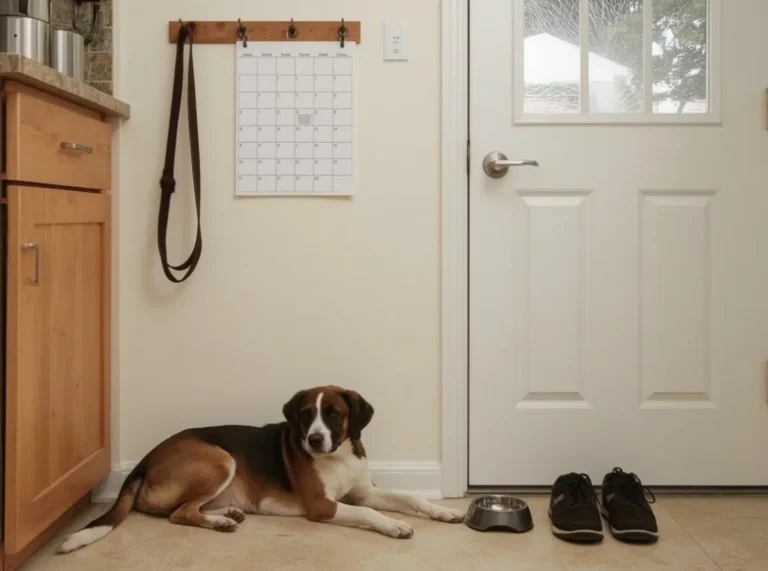
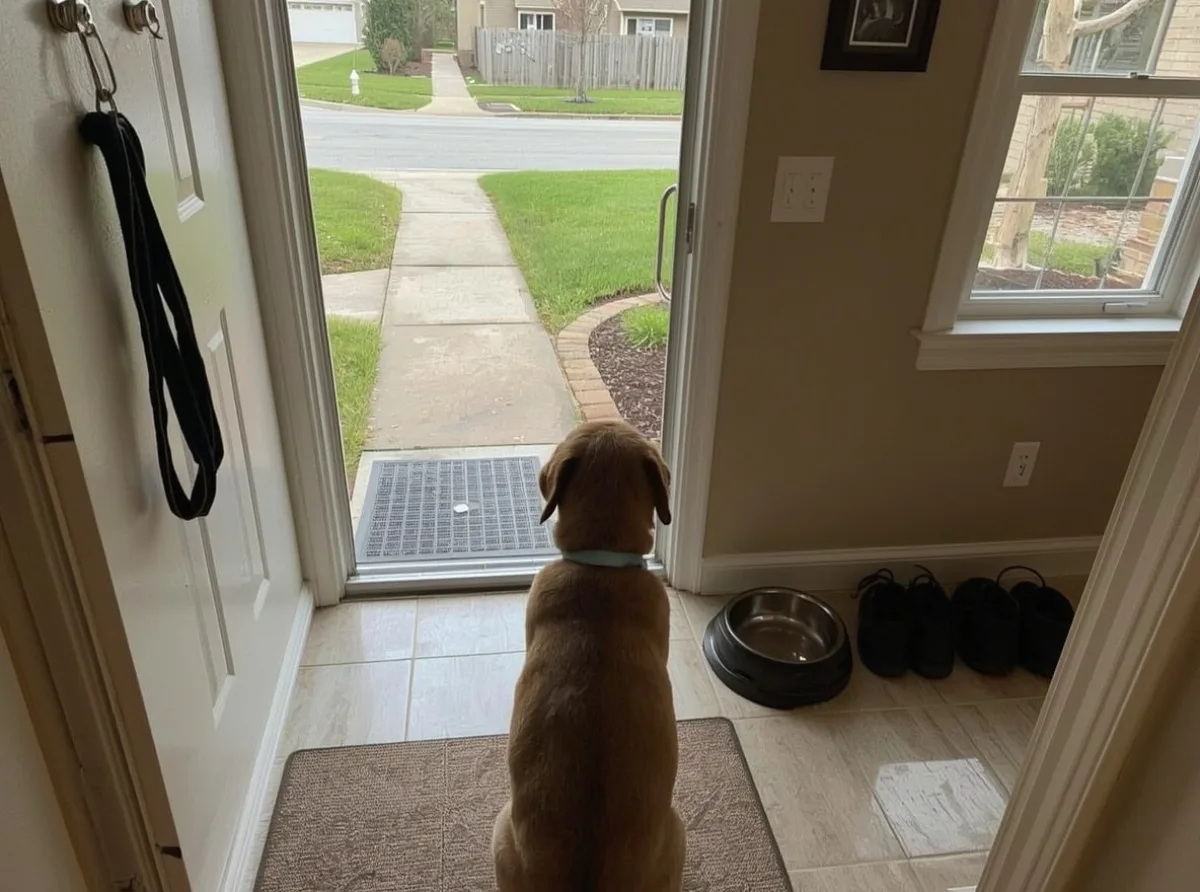
The most common signs are easy to miss because they can look like simple habit. A dog may go to the door at the same time every afternoon. It may wait near the hallway before the owner usually returns. It may become animated as soon as the usual bedtime routine begins.
Some dogs also react to changes in the environment itself. A neighbor’s trash pickup, a school bus passing by, children playing outside, or a delivery arriving on a different day can all stand out. Dogs often notice the order of events before they understand the reason behind them.
These reactions can be subtle. A dog may perk up its ears, pace a little, stare toward a sound, or follow a person from room to room. More obvious reactions include barking, whining, scratching at doors, jumping, or refusing to settle.
Common everyday situations that trigger pattern-based reactions
- The sound of keys or shoes before a walk or departure
- Mealtimes that happen with unusual delay
- Evening household activity that signals bedtime
- Visitors arriving at a familiar or unfamiliar time
- Outdoor noises that occur in a repeating schedule
- Changes in who is home, and when
These situations can seem ordinary to people, but a dog may read them as meaningful shifts in the day.
What Dogs May Be Feeling Internally
A dog’s reaction to daily environmental patterns is not always about excitement. Sometimes it reflects anticipation. Sometimes it reflects uncertainty. The same behavior can come from different emotional places, which is why context matters so much.
A dog that races to the door when the family’s evening routine starts may simply be eager for what usually follows. Another dog may do the same thing because the change in movement around the house makes it uneasy. Both dogs are responding to a pattern, but the internal experience may be very different.
Attachment also plays a role. Dogs are social animals, and they pay close attention to the availability and movement of the people they trust. If a dog notices that a person usually leaves after breakfast, the dog may start watching for that moment each morning. The reaction can be driven by closeness, expectation, and memory all at once.
Not every reactive dog is stressed, and not every excited dog is calm. The same outward behavior can carry different emotional meanings.
How Sound, Smell, and Movement Shape the Response
Dogs rarely react to only one thing. They combine information from sound, scent, sight, and timing. A footstep on the stairs might matter more when it happens at the same time as a person picking up a bag. A car door outside might mean nothing in the middle of the day but feel significant when it usually signals a family member coming home.
Smell can be especially important. Dogs may notice the scent of people arriving, the smell of the kitchen before meals, or the lingering trace of outdoor changes after rain, mowing, or construction nearby. These details help them identify patterns that humans often overlook.
Movement patterns matter too. Dogs are very aware of how people move through a house. A person putting on a jacket, reaching for a leash, or heading toward the same room at the same time each day can become part of a learned sequence. Once the dog connects those actions, the reaction often starts before the event is fully underway.
When the Home Environment Becomes the Trigger
A quiet home, a busy home, and a changing home can all shape the way a dog reacts. In a calm household, the dog may become highly tuned to small shifts because there are fewer competing distractions. In a busy household, the dog may react more often simply because there is more activity to interpret.
Large changes in the home environment can make daily patterns even more noticeable. A new work schedule, a new baby, a move, or a family member’s temporary absence can alter the rhythm the dog relied on. Even if the overall routine still looks similar from a human perspective, the dog may feel the difference.
Some dogs adjust easily. Others keep looking for the old pattern long after it has changed. That can show up as waiting in the usual place, reacting at the old time, or becoming restless when the expected event does not happen.
Environmental factors that often intensify reactions
- Irregular feeding or walking times
- Loud neighborhood activity
- Frequent visitors or changing household traffic
- Long periods of inactivity followed by sudden excitement
- Limited mental or physical stimulation during the day
- Repeated disruptions to sleep or resting space
When these factors stack up, a dog may appear more sensitive to ordinary daily cues than it otherwise would.
Why Some Dogs Seem More Sensitive Than Others
Not all dogs react to daily patterns in the same way. Breed tendencies, early experiences, individual temperament, and learning history all matter. Some dogs are naturally more observant and quick to notice environmental change. Others are easiergoing and seem less affected by shifts in routine.
Past experience can shape the strength of the response. A dog that has learned that a certain sound predicts a walk, a meal, or the arrival of a favorite person may react strongly to that cue. Another dog with less consistency in its past may take longer to connect the same pattern.
Age can influence the response as well. Puppies often react with curiosity and bursts of energy because nearly everything is new. Adult dogs may become more selective in what they notice. Older dogs may rely even more heavily on routine, especially when the world becomes harder to process or physical comfort changes.
How Daily Patterns Can Build Anticipation
Anticipation is one of the clearest reasons dogs react to environmental patterns. The dog is not just responding to the current moment. It is predicting what comes next. That prediction can happen very quickly, especially when the same sequence has repeated for weeks or months.
This is why a dog may get excited the moment the pantry door opens, or why it may start watching the front window around the same time each afternoon. The dog has linked one event to another. The reaction begins before the next piece of the routine fully appears.
Anticipation can be helpful when it leads to calm readiness. It can also create frustration if the expected event is delayed or skipped. A dog that waits for a walk and does not get one may pace, vocalize, or keep checking the person who usually handles the routine.
Signs that anticipation is building
- Repeated looking toward the usual source of the event
- Increased alertness before the normal time
- Restless movement or pacing
- Whining, barking, or soft vocalizing
- Following a person closely
- Difficulty settling until the expected pattern resolves
These signs often appear before the event itself, which is what makes the reaction seem so timed and accurate.
When the Reaction Is About Security
Some daily-pattern reactions are less about excitement and more about seeking reassurance. A dog may stay near a person when the household becomes noisy. It may become more attached during a change in schedule. It may look toward the owner more often when the environment feels less predictable.
This kind of behavior can be easy to misread. A dog that shadows someone from room to room is not always being demanding. Sometimes it is trying to maintain contact in a setting that feels slightly off balance. A familiar human presence can help the dog feel grounded when the rest of the environment shifts.
Security-seeking behavior often becomes more noticeable during transitions. Morning routines, late evenings, guests coming and going, and periods when people are packing or cleaning can all create small layers of uncertainty. The dog may respond by staying close, lying near exits, or watching the household closely.
How Owners Often Misread the Behavior
People sometimes assume a dog is being stubborn, overly dramatic, or simply difficult when it is really responding to a pattern it has learned. A dog that becomes restless before dinner may not be “bad at waiting.” It may be responding to a clock it understands better than the humans around it realize.
Another common misunderstanding is assuming the dog reacts to the visible event alone. In many cases, the reaction starts much earlier. The real trigger may be the sound before the sound, the sequence before the event, or the subtle change in tone and movement that comes first.
What looks like overreaction is often a dog doing exactly what its senses and memory have taught it to do.
That does not mean every pattern-based reaction should be ignored. It simply means the dog’s behavior is more informative than it may first appear. The timing, intensity, and consistency all tell part of the story.
What Consistency Reveals Over Time
A single reaction may not mean much. Repeated reactions in the same context usually mean more. If a dog consistently becomes alert before the same event, the pattern is likely important to it. If the reaction only appears when the household is unusually tense or active, the dog may be responding to overall atmosphere rather than one specific cue.
Consistency also helps distinguish between preference and distress. A dog that always greets a certain routine with enthusiasm may simply enjoy the predictability. A dog that seems unable to relax until the routine is complete may be showing a stronger need for reassurance.
Watching over time can reveal which patterns matter most. Some dogs care deeply about feeding schedules but barely notice the rest of the day. Others react most strongly to departures and returns. Still others are most responsive to evening quiet, outdoor sounds, or the changing energy of the household.
| Pattern | Common dog reaction | Possible meaning |
|---|---|---|
| Feeding time | Waiting near the kitchen, pacing | Anticipation, learned routine |
| Owner departure | Following, watching, barking | Attachment, uncertainty, expectation |
| Evening quiet | Settling, vigilance, restlessness | Routine recognition or sensitivity to household energy |
| Neighborhood noise | Ears up, staring, barking | Alertness to outside changes |
How to Read the Difference Between Calm and Strained Reactions
Not every reaction deserves the same interpretation. A calm, loose-bodied dog that perks up when the leash comes out is showing a very different response from a dog that stiffens, pants, or cannot settle when the same cue appears. The outward behavior may look similar at first glance, but the body language often tells a fuller story.
Relaxed anticipation usually includes soft eyes, easy movement, and a quick return to normal once the event unfolds. Strained reactions often include tension, intense staring, repeated pacing, or difficulty disengaging from the cue. These signs suggest the pattern is carrying more weight for the dog.
Mixed signals are common. A dog may wag its tail while also scanning the room. It may approach the door and then back away. It may seem curious but remain tense. Those combinations usually mean the dog is processing more than one feeling at once.
Subtle signs that a pattern is affecting the dog more deeply
- Holding the body still before reacting
- Repeated checking of the same location
- Delayed settling after the routine change passes
- Small but persistent vocalizing
- Increased alertness without obvious excitement
These details help separate ordinary habit from a more meaningful emotional response.
The Role of Long-Term Habit
Once a dog learns a pattern, it may keep expecting it for a long time. That is why old routines can remain powerful even after the household changes. A dog may still wake up at the old time, wait in the old spot, or become excited by cues that used to lead to something important.
This long-term memory is practical. It helps the dog predict the world. It also means the dog may not quickly adapt when humans assume the routine has changed “enough” for it to matter less.
For many dogs, the environment itself becomes a map of repeated events. The map is built from days, not hours. That is why ordinary patterns can generate such specific reactions. The dog is responding to a familiar system, not just a moment in time.
Natural Instincts Behind the Reaction
Daily environmental patterns connect to older dog instincts too. Dogs are alert to changes in their surroundings because noticing movement, sound, and timing has always been useful. Even in a home, that instinct remains active. A dog that reacts to the sound of the gate opening or the shift in household energy is using a very old set of survival tools in a modern setting.
Social awareness also matters. Dogs are built to track the behavior of others, especially the people they live with. In a home, that social sensitivity can make them remarkably tuned in to repeated cues. A person may think they are just putting on shoes. The dog sees the beginning of a familiar sequence.
That connection between instinct and learned routine is what makes the behavior so common. Dogs are not only living in the environment. They are reading it.
When a dog reacts to daily patterns, it is often blending instinct, memory, and social observation in one response.
Natural End to the Pattern
Daily environmental patterns shape a dog’s expectations in quiet but powerful ways. The reaction may look small at first: a glance toward the door, a shift in posture, a change in breathing, a little pacing near the kitchen. Over time, those reactions reveal how closely a dog is tracking the shape of the day.
Some dogs respond because they feel excited. Others respond because they feel uncertain, attached, or simply highly aware of what comes next. The difference often shows up in body language, timing, and how quickly the dog settles once the pattern resolves. In a home full of repeated cues, a dog is constantly learning what the day means.
That is why familiar routines can seem to bring a dog to life, while small disruptions can make the same dog seem unusually reactive. The reaction is rarely random. It usually belongs to a pattern the dog has already learned very well.