Dogs notice household patterns faster than many people realize. They remember when food appears, when doors open, when the leash comes out, and when the home becomes quiet. Over time, those repeated moments can shape the way they move, wait, ask for attention, or settle into the day.
Some of these habits look ordinary at first. A dog checks the same window every afternoon. Another circles the couch before lying down. Another follows the same route from kitchen to hallway to living room, then repeats it again a few minutes later. These actions can be harmless, practical, or simply part of a familiar routine.
When a behavior starts showing up again and again in the same household moments, it helps to pay attention to the setting around it. Repetition often says as much about the environment as it does about the dog. The pattern, timing, and body language usually matter more than the habit alone.
What Repetitive Household Habits Can Look Like
Repetitive habits in dogs often appear as small, predictable actions tied to daily life. They may not seem dramatic. In fact, most of them are easy to miss unless you watch closely.
Common examples include:
- Following the same person from room to room
- Checking doors, windows, or entryways repeatedly
- Returning to the food bowl before meals
- Circling before lying down, even on a familiar bed
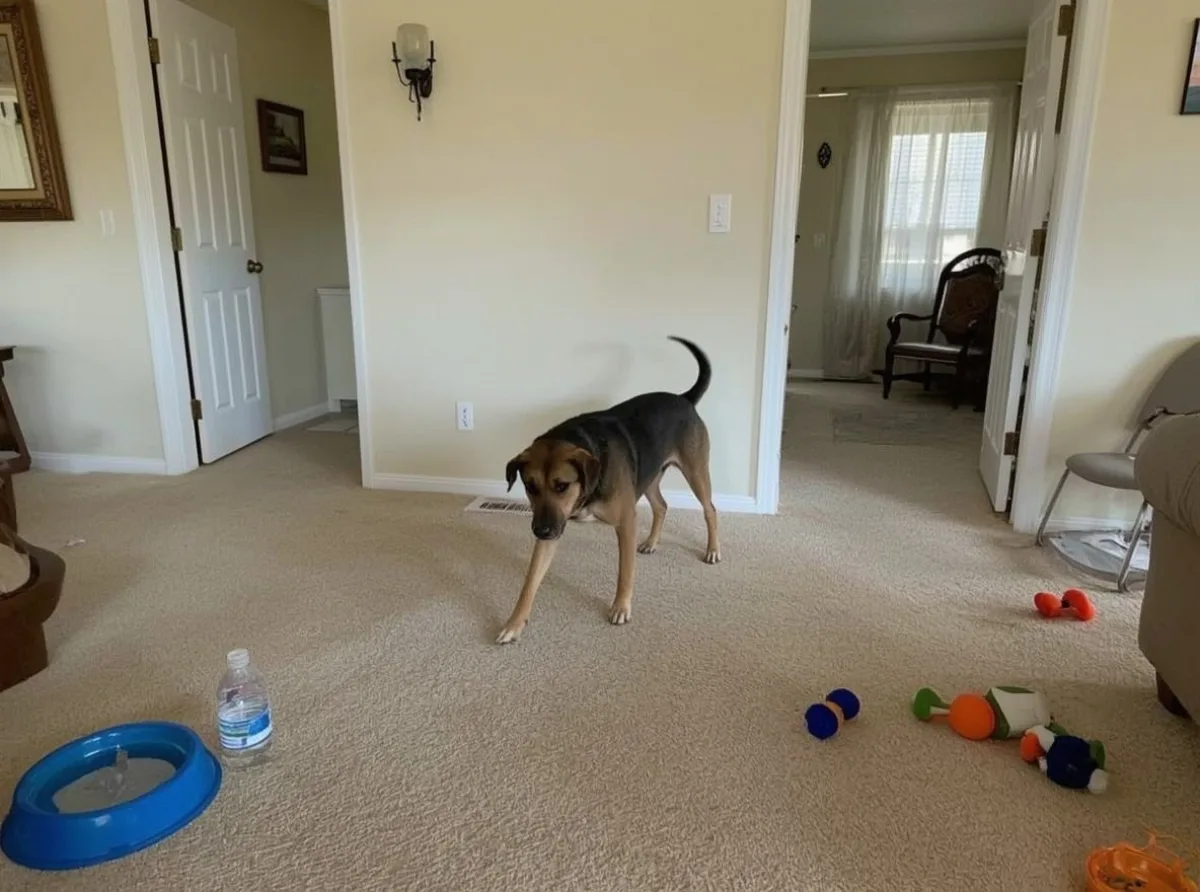
- Pacing through the same path in the house
- Bringing toys to the same spot over and over
- Waiting near the kitchen at predictable times
- Sniffing around locations where household activity usually happens
Some habits are tied to comfort. Others are linked to anticipation. A dog may repeat an action because it reliably leads to something important, like feeding time or a walk. In that case, the repetition is less about worry and more about expectation.
Still, not every repeated household habit is purely routine. The same behavior can look different depending on the dog’s body language. A dog that calmly circles once and lies down is not sending the same message as a dog that keeps pacing, cannot settle, and repeatedly scans the room.
Why Dogs Form Repeated Patterns at Home
Households are full of cues. Dogs learn those cues quickly. They notice sound, movement, smell, and timing, then connect them with what usually happens next.
That is why repetition often grows around predictable events. A dog hears cabinets open before dinner. A dog sees shoes near the door before a walk. A dog notices that the couch becomes a resting place after the household quiets down in the evening. After enough repetitions, those events become part of the dog’s internal schedule.
Repetition in dogs is often a response to predictability. The more consistent the household pattern, the more likely the dog is to build a habit around it.
Some dogs are naturally more observant than others. They keep track of every small change in the home. These dogs may develop routines that seem almost precise, like checking the same hallway at the same time each evening or sleeping near the room where family activity usually starts.
Breed tendencies, personality, and early life experiences can also play a role. A watchful dog may repeatedly patrol the house because it feels responsible for staying aware. A highly social dog may follow people because being near them has become the most rewarding part of the day. A sensitive dog may repeat movement when the home feels too busy or too quiet.
Everyday Situations Where Repetition Shows Up Most
Repeated household habits often become most visible during transitions. Dogs tend to notice moments when one part of the day changes into another.
Meal Times
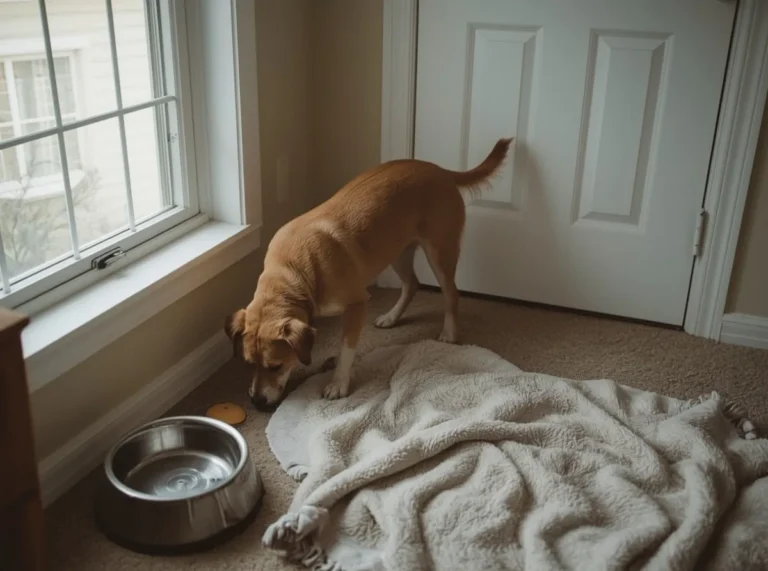
Food creates one of the strongest patterns in a dog’s day. A dog may stand near the bowl long before the meal is served, return to the feeding area several times, or sit nearby after eating as if waiting for something else to happen. These habits are usually built from experience. The dog learns the sequence and starts acting before the event arrives.
Arrivals and Departures
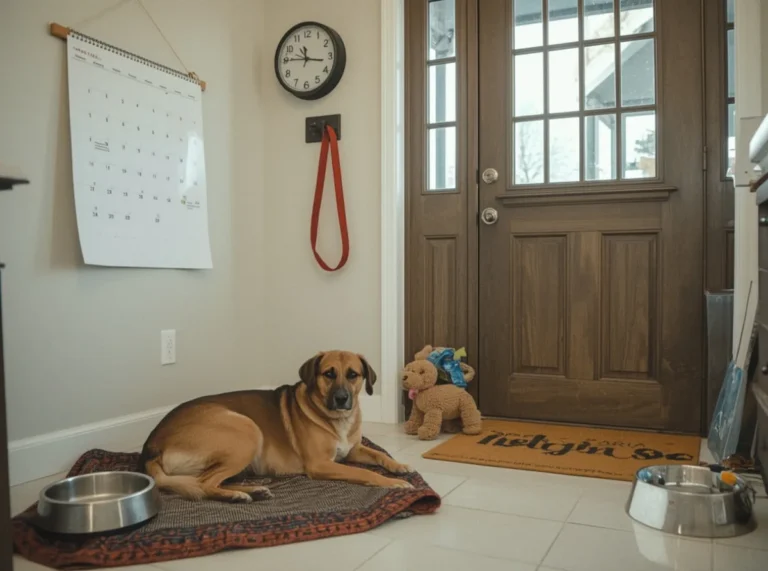
When people leave or return, many dogs repeat the same motions. Some wait at the door. Some pace. Some pick up a toy, drop it, then pick it up again. These habits can reflect anticipation, excitement, or uncertainty. A dog that becomes fixed on entryways may be responding to the pattern of comings and goings rather than the event itself.
Quiet Evening Hours
As the home slows down, some dogs settle more deeply. Others become more active. They may loop through the house, check on family members, or revisit familiar resting spots. Repetition in the evening can be a sign that the dog is winding down, but it can also happen when the dog has not fully found an easy way to relax.
Rainy Days, Schedule Changes, and Off-Routine Moments
When normal activities do not happen, dogs often show their habits more clearly. A missed walk, a delayed meal, or an unusually loud day can trigger repeated checking behavior. The dog may return to the door, the crate, the window, or the kitchen because those places usually connect to the missing event.
What Repetition May Say About a Dog’s Emotional State
Repetitive habits can come from many internal states, and not all of them are negative. Some are signs of confidence and healthy anticipation. Others point to discomfort, frustration, or difficulty settling.
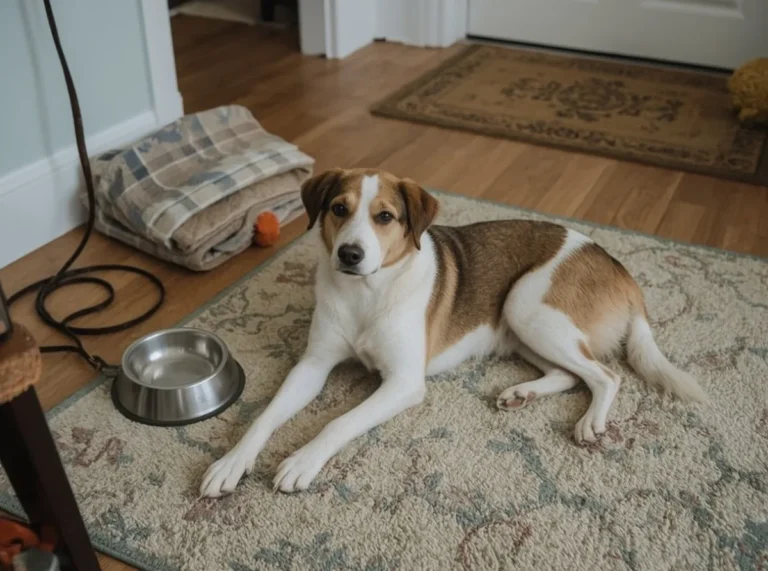
A calm repeated habit often has a loose, easy quality. The dog may move, pause, sniff, and choose a resting place without tension. The tail may stay neutral. The face may look soft. The dog seems to be engaging with the home, not fighting against it.
More stress-related repetition usually looks tighter. The dog may pace in narrow loops, return to the same place without resting, or repeat the same movement with little variation. The eyes may stay fixed. The body may look stiff. The dog may ignore usual comforts, like toys or beds, because the habit itself has become the main outlet.
If a repeated habit comes with restlessness, tension, or an inability to settle, the pattern matters more than the motion itself.
Frustration can show up in household routines too. A dog that keeps checking the door might not be anxious in a broad sense. It may simply be impatient because the expected walk or outdoor break is late. A dog that circles the kitchen may be responding to food smells and learned timing, not a behavioral problem.
Emotional context is what gives repetition meaning. The same act can signal different things depending on what happens around it and how the dog carries its body while doing it.
Body Language That Often Accompanies Repeated Habits
Looking at the whole dog helps make sense of repeated behavior. The movement itself is only part of the picture.
Relaxed Repetition
- Loose muscles
- Natural breathing
- Soft eyes
- Easy tail position
- Ability to stop the habit and move on
This kind of repetition usually fits normal household rhythm. The dog may revisit a doorway or a favorite bed several times, but there is no sense of urgency. The behavior blends into the day.
Tense or Reactive Repetition
- Stiff posture
- Rapid pacing
- Repeated scanning of the room
- Inability to lie down comfortably
- Fixation on one spot or event
This pattern deserves more attention. The dog may not know how to settle, or it may be reacting to a trigger in the environment. A sound outside, a household conflict, visitors, or changes in routine can all make repetitive habits more obvious.
Mixed Signals
Some dogs look calm at first glance but still repeat the same motion too many times. Others seem busy and alert, yet their body remains fairly loose. Mixed signals are common. That is why timing matters. A dog that checks the hallway once after hearing a sound is different from a dog that keeps returning there for twenty minutes.
How Household Routine Shapes Repetition
Dogs live inside patterns people create. The more structured the home, the easier it is for a dog to develop repeated habits around those patterns.
A quiet home with steady schedules often encourages tidy routines. The dog may sleep, wake, eat, and rest in roughly the same places each day. A busier home can produce more frequent repetition because the dog keeps reacting to changing people, noise, and movement. In both cases, the environment teaches the dog what to expect.
Routine can be helpful. It gives dogs clarity. They do not need to guess when basic things happen if the household stays consistent. But too much predictability can also make some habits stronger, especially if the dog becomes very focused on one event, like feeding or walks. The habit grows because the dog keeps rehearsing it.
Changes in stimulation matter too. A dog that gets little mental or physical activity may start repeating harmless household behaviors simply because there is not much else to do. The dog may patrol the same route, follow people more closely, or revisit the same toy pile again and again.
When a dog repeats the same household habit every day, it is worth looking at the broader rhythm of the home, not just the behavior itself.
Repetition in Puppies, Adults, and Older Dogs
Age changes how repeated household habits appear. Puppies often repeat actions because they are still learning the rules of the house. They may follow, chew, circle, or check in with people often because the world still feels new.
In puppies, repetition is frequently part of learning. They test the same route, the same door, the same toy, and the same resting place. Many habits fade as they gain confidence and familiarity. Others become lifelong preferences.
Adult dogs usually show more stable patterns. By this stage, the home has become familiar enough for the dog to rely on memory and routine. A mature dog may know exactly where to wait, when to nap, and which room becomes active at certain times of day.
Older dogs can also become more repetitive, but for different reasons. They may revisit spaces more often because they are less flexible with movement, more dependent on habit, or more sensitive to changes in hearing, vision, or comfort. A senior dog may circle before lying down more than before, especially if joints feel stiff or the sleeping spot no longer feels easy.
That shift does not always mean distress. Sometimes it simply reflects the body’s changing needs. Still, a long-standing habit that suddenly grows stronger in an older dog deserves a closer look, especially if it comes with restlessness or trouble settling.
What Owners Often Misread
Repeated household habits are easy to misinterpret because they sit close to normal behavior. A dog that checks the front door repeatedly is not necessarily anxious. A dog that circles before resting is not automatically struggling. Context decides the meaning.
One common mistake is assuming repetition always means boredom. Boredom can contribute, but it is only one possibility. Another mistake is treating every repeated habit as a training issue. Some behaviors are simply part of the dog’s learned household rhythm.
People also sometimes overlook how much dogs depend on sequence. If dinner always follows a particular sound, the dog will begin to expect that sound. If walks happen after certain shoes are put on, the dog will notice. What looks like insistence may actually be a very accurate reading of the home’s pattern.
On the other hand, ignoring a repeated habit that has become intense can be a problem. A dog that paces, cannot rest, or repeats the same motion long after the trigger is gone may be signaling that something in the environment is not working well for them. The habit may be the first visible clue.
How Repetition Can Reflect Attachment and Social Behavior
Many household habits are built around social connection. Dogs are naturally tuned to people, and repeated behavior often follows the locations where people spend time.
A dog may lie outside the bathroom door, sit beside a home office, or check the hallway every few minutes because being near people feels important. This does not always mean the dog is needy. It may simply show that the dog has learned where life happens in the house.
Some dogs repeat social habits in a very steady way. They greet the same person the same way each day. They bring the same toy to the same chair. They wait in the same place for the same routine. These actions often create a sense of order for the dog.
Other dogs are less focused on people and more focused on space. They may repeat patterns around windows, doors, or favorite resting spots. Even then, the habit is often social in a broader sense. The dog is tracking the movement of the household and trying to stay connected to it.
When Repeated Habits Become More Noticeable
Some household habits stay mild for years and only become obvious when something changes. A move, a new pet, visitors, different work schedules, or more time alone can all make repetition more visible.
A dog may start checking the same room repeatedly after furniture is rearranged. Another may pace near the door when the family leaves at different times than usual. A calm habit can become sharper when the dog no longer knows what to expect.
It is also common for repetition to increase during periods of under-stimulation. A dog that has fewer walks, less play, or less social contact may create its own patterns indoors. Those patterns are not always bad. They are often the dog’s way of filling the day with structure.
But when the behavior becomes less flexible and more driven, the pattern may be doing more than filling time. It may be helping the dog cope with a gap in routine, comfort, or clarity.
Reading the Habit in Real Life
Repetitive household habits are best understood through small details. Where does the behavior happen? When does it start? Does it stop easily? Does the dog look comfortable while doing it?
A dog that circles once before bed, then settles, is showing a very different habit from a dog that circles the room several times, lies down, gets up, and repeats the pattern again. One is a normal transition. The other may show that the dog is not fully at ease.
The same applies to door checking, pacing, and following behavior. A dog can be attentive without being distressed. A dog can be routine-driven without being troubled. Repetition becomes meaningful when it grows rigid, loud, or hard to interrupt.
Watching the pattern across several days usually tells more than one isolated moment. Dogs are creatures of habit, but the kind of habit matters. Some routines are comforting. Some are learned. Some are signals that the home environment needs a little more balance.
That difference is often found in the details: the rhythm of the day, the dog’s posture, the emotional tone of the household, and the way the behavior rises or fades when life stays steady or shifts unexpectedly.