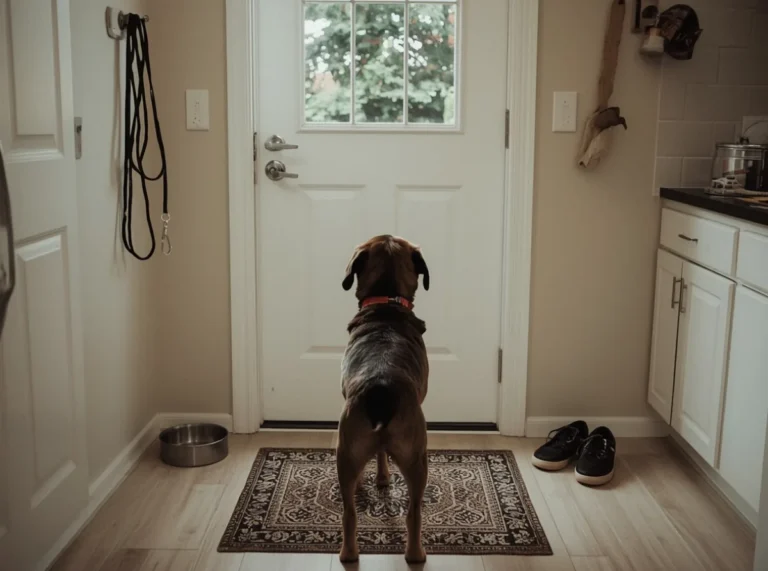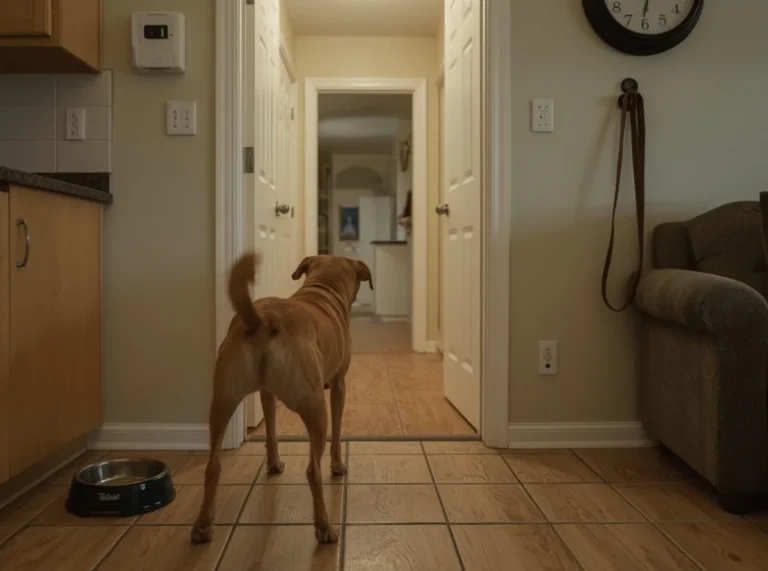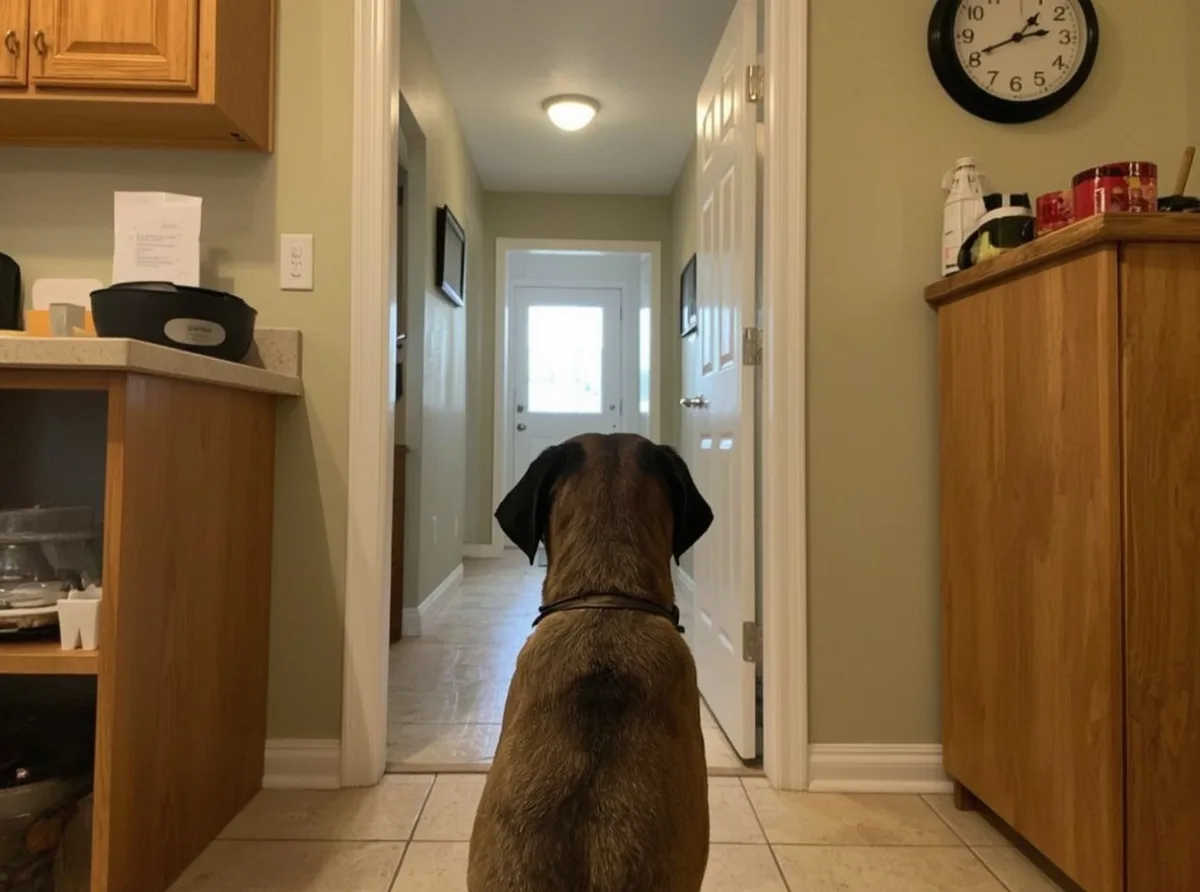
Dogs often seem to know things they were never explicitly taught. One of the most familiar examples is the way some of them begin waiting near the door before a person normally arrives home, or drift toward the kitchen a few minutes before dinner is served. To people, it can look almost like a stopwatch is running inside the dog’s head.
That impression is powerful because the timing is often so consistent. A dog may not react much during the rest of the day, then suddenly become alert at 5:45 every evening, or start pacing when the household begins its bedtime routine. The behavior can feel uncanny, especially when the schedule changes only slightly and the dog still seems to anticipate it.
What looks like memorizing time is usually a mix of pattern recognition, sensory clues, emotional expectation, and routine. Dogs do not need a clock in the human sense to build a strong sense of what happens next. They notice repeated sequences in the home, and those sequences can become deeply familiar.
What this behavior looks like in everyday life
Household timing can show up in small, easy-to-miss ways. A dog may wander toward the hall five minutes before someone usually returns. Another may sit by the food cabinet when the family starts shifting from afternoon activities to evening cleanup. Some dogs become more vocal at certain times, while others simply reposition themselves and wait.
These patterns often look deliberate because they are tied to events that matter to the dog. Food, walks, play, rest, and social contact are all predictable parts of daily life. Once a dog connects a chain of cues with a desired outcome, the response can become remarkably steady.
Owners sometimes notice that the dog is accurate even when they themselves are not keeping track. A person may feel the evening is still far away, yet the dog begins to hover near the leash or kitchen. That is usually not magical timing. It is the result of repeated observation and a memory built from everyday signals.
Why dogs commonly seem to memorize household timing
The simplest answer is that dogs are excellent at learning patterns. They pay close attention to what happens before important events. If breakfast usually follows the sound of an alarm, the opening of a bedroom door, and a trip to the kitchen, the dog can link those pieces together as one reliable sequence.
Dogs also have a strong motivation to notice regular routines. Repetition matters to them because routine creates predictability. Predictability lowers uncertainty, and lower uncertainty is comfortable. A dog that can anticipate food, walks, or family arrivals does not have to stay on edge waiting to see what happens next.
There is also the matter of reinforcement. When a dog reacts at the “right” moment and something good follows, the behavior gets stronger. If a dog sits by the front door and then a person arrives, the dog may not understand human time, but it does understand that the pattern worked. Over time, the association becomes tighter.
Dogs often appear to memorize timing because they are tracking a sequence of cues, not the clock itself. The cues can be sound, movement, smell, light, and habit.
The household signals dogs notice without anyone realizing it
People tend to think of timing as numbers on a clock. Dogs think in events. That difference changes how household routines are experienced. A meal is not “6:00 p.m.” to a dog; it is the moment the kitchen becomes active, bowls appear, smells change, and the family’s pace shifts.
Even very small cues can matter. Cabinets opening, shoes being put on, the tone of voices changing, or a car engine in the driveway can all become part of a routine. Dogs are highly sensitive to these repeated details, and they use them as markers for what comes next.
Smell is especially important. Human routines leave odor traces that change across the day. A dog may be able to detect when a person usually comes home because clothing, bags, and outdoor scents appear at predictable times. That kind of information is invisible to people but obvious to a dog with an attentive nose.
Common cues dogs may learn
- Sound of keys, footsteps, or a garage door
- Specific household movements before meals or walks
- Changes in light near the same part of the day
- Daily noise from neighbors, traffic, or nearby activity
- Shifts in the owner’s mood, pace, or body language
- Smells tied to food, clothing, or outdoor routines
Memory is only part of the story
When a dog seems to “know the time,” memory is involved, but memory alone does not explain everything. Expectation plays a major role. Once a dog has learned that a certain sequence usually ends with something rewarding, the dog begins preparing for it in advance.
That preparation can look like waiting, pacing, checking the window, or following a person from room to room. In some dogs, the behavior is subtle. In others, it becomes obvious enough that the whole household can tell when the next event is approaching.
Expectation can also sharpen over time. The more consistent the schedule, the more confident the dog becomes. A dog that has experienced the same feeding pattern for months may react earlier than one with a looser routine. Consistency builds certainty.
How routines shape the behavior
Dogs living in homes with stable routines often become especially tuned to timing. Regular feeding, predictable walks, and repeated bedtime patterns make household life easier to anticipate. Some dogs thrive on that stability and appear almost synchronized with the family schedule.
In contrast, dogs in homes with changing schedules may still learn patterns, but the timing can be less exact. They may respond to shorter daily routines, such as the usual sequence of waking, breakfast, and morning door activity, while remaining less certain about longer events like weekend outings.
Routine does not have to be strict to matter. Even if the clock changes, many other details stay the same. A dog may not know whether dinner will be at 5:30 or 6:15, but it might notice that after a certain kind of evening movement, feeding usually follows soon after.
A dog’s sense of timing often comes from the pattern of the day, not from the exact hour. When the pattern stays stable, the behavior becomes stronger.
When the behavior becomes most noticeable
Some moments bring the behavior into sharper focus. Mealtimes are the clearest example because food is one of the most reinforcing daily events. Dogs often become highly alert as the usual feeding hour approaches, even if the kitchen activity has not started yet.
Arrival and departure routines are another common trigger. If family members leave and return in predictable ways, a dog may learn the sequence quickly. The jingling of keys, the familiar shoes by the door, or the usual pre-departure rush can all become part of a learned pattern.
Bedtime is often overlooked, but many dogs respond to it strongly. They may move toward a preferred sleeping spot when the household quiets, lights dim, or the family begins a repeated nighttime routine. In homes where the same winding-down pattern happens every night, the dog may seem to anticipate sleep just as accurately as meals.
Everyday situations where timing appears strong
- Waiting near the kitchen before breakfast or dinner
- Becoming restless before a family member usually arrives home
- Following an owner into a hallway when walk time approaches
- Settling down after the household noise level drops in the evening
- Checking doors or windows around a familiar transition period
What it may signal about the dog’s emotional state
Timing-related behavior is not always just about anticipation of a reward. It can also reflect a dog’s emotional comfort with routine. A dog that watches the clock-like rhythm of the house with relaxed body language is often showing that the routine feels safe and understandable.
At the same time, strong timing behavior can sometimes suggest tension. If a dog becomes increasingly restless, vocal, or fixated long before an expected event, the behavior may be tied to frustration or anxiety as much as excitement. The difference is often visible in posture and movement.
A calm dog may wait quietly, nap between routines, and appear alert only as the expected event nears. A more stressed dog may have trouble settling at all, shadow people constantly, or show signs of agitation well before the routine point arrives. Timing itself is not the concern; the emotional state behind it is what matters.
Body language that helps separate excitement from stress
- Relaxed waiting, loose body, soft eyes, and easy breathing often suggest comfort
- Pacing, whining, clinginess, or inability to settle may suggest tension
- Focused but calm attention usually reflects anticipation
- Rigid posture, persistent scanning, or repeated checking can point to heightened arousal
How attachment influences timing behavior
Many dogs memorize household timing because the routine centers on people. Dogs are social animals, and their day is often organized around human activity. If a person is the source of food, walks, play, or comfort, the dog quickly learns the rhythm of that person’s habits.
This is why some dogs seem especially tuned to one family member’s schedule. They may recognize when that person showers, gets dressed for work, or begins the sequence that leads to leaving or returning. The dog is not only noticing time; it is noticing the person.
Attachment can make the timing behavior stronger, but it does not always mean separation distress. A dog can be deeply bonded and still remain relaxed. The difference shows in how the dog handles the gap between events. A secure dog waits. A more uneasy dog struggles.
Age and life stage can change the pattern
Puppies often learn timing through repetition, but their responses can be uneven at first. They may seem to understand the meal routine one day and ignore it the next. Their attention shifts fast, and their internal sense of sequence is still developing.
Adult dogs usually show the clearest pattern because they have had enough repeated experience to build strong expectations. If the schedule stays consistent, adult dogs can become very accurate at reading household events. This is where people most often notice the “they know the time” effect.
Older dogs may become even more attached to routine. Changes in comfort, hearing, vision, or energy can make familiar patterns feel more important. Some senior dogs lean heavily on predictable timing because it helps them navigate the day with less uncertainty.
Why some homes make timing behavior stronger than others
A quiet, repetitive home often creates the strongest timing response. When daily life follows the same sequence with few interruptions, dogs get a clear map of the day. They do not need to guess as much.
Busy households can still produce strong timing behavior, but the pattern may be built from larger anchors rather than minute-by-minute detail. School pickups, work shifts, meal prep, and evening routines all become landmarks. The dog learns the household’s rhythm, even if it is more complicated.
Dogs in highly variable homes may be less exact, but they still notice recurring pieces. Even a loose routine has patterns. The same person may always feed the dog after a specific task, or the same room may become active before a walk. Dogs learn whatever remains consistent.
Environmental consistency often matters more than clock time. The more repeated the cue chain, the more reliable the dog’s timing behavior becomes.
When timing turns into a visible habit
Some dogs turn anticipation into a daily ritual. They may sit in the same place, trot to the same room, or wait by the same door at nearly the same point each day. Once this habit is established, the dog may seem less like it is predicting and more like it is following an internal schedule.
That ritual can be comforting. A dog that understands the structure of the day may settle more easily between events. It knows when attention, food, or movement is likely to happen, and that knowledge reduces uncertainty.
Still, habits can become so fixed that even small disruptions stand out. A delayed meal or a changed work schedule may lead to prolonged waiting, wandering, or repeated checking. The dog is not being stubborn. It is trying to reconcile the expected sequence with a new reality.
Why owners sometimes misread the behavior
It is easy to assume the dog has an exact internal clock, but the explanation is usually more grounded. What looks like precise timing often comes from a combination of learned cues and memory of consequences. The dog is reading the house, not the minute hand.
Owners may also misinterpret the emotional tone. A dog that appears excited before dinner is not necessarily anxious, and a dog that waits quietly near the door is not necessarily bored. The surrounding signals matter. Body language, intensity, and recovery after the event all help show what the dog is actually feeling.
A second common misunderstanding is assuming the dog only learns by direct training. In reality, dogs learn constantly from ordinary life. Repeated household patterns are a kind of informal lesson. The dog does not need a formal cue word to predict what happens next.
Signs that the timing behavior is healthy and balanced
Balanced timing behavior usually looks calm, flexible, and short-lived. The dog notices the routine, responds when it begins, and then settles once the event passes. There is attention, but not fixation.
That kind of behavior often includes relaxed waiting, quick recognition of familiar cues, and an easy return to rest after the routine is complete. The dog may be eager, but the eagerness does not spill into distress or agitation.
When the pattern becomes unhealthy, the difference is usually visible in how long the dog stays activated. A dog that cannot disengage, cannot rest between routines, or reacts strongly to small changes may be carrying more tension than simple anticipation. The timing behavior is then only the surface of something deeper.
Helpful differences to notice
- Calm anticipation ends once the expected event happens
- Stress-related anticipation may continue even after the event is over
- Flexible dogs adjust when schedules change
- Rigid dogs may remain upset when routines shift
What this reveals about dogs in daily life
Household timing is one of the clearest examples of how closely dogs pay attention to ordinary life. They do not need complex reasoning to appear remarkably accurate. Repetition, scent, sound, movement, and emotional memory give them enough information to build a dependable model of the day.
That model can be surprisingly detailed. A dog may know when the family tends to wake, when the kitchen becomes active, when the front door usually opens, and when the home begins to quiet down. The result is a kind of practical understanding shaped by living alongside people.
For many dogs, this learned rhythm is part of what makes home feel manageable. The day has landmarks. Even when the schedule changes, the dog keeps looking for the old pattern because it has learned to trust it. That habit can be simple, quiet, and deeply rooted in everyday experience.