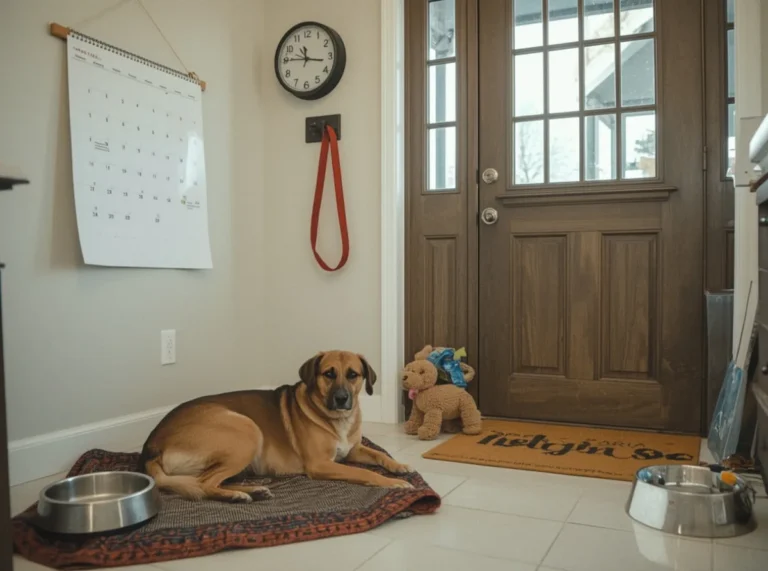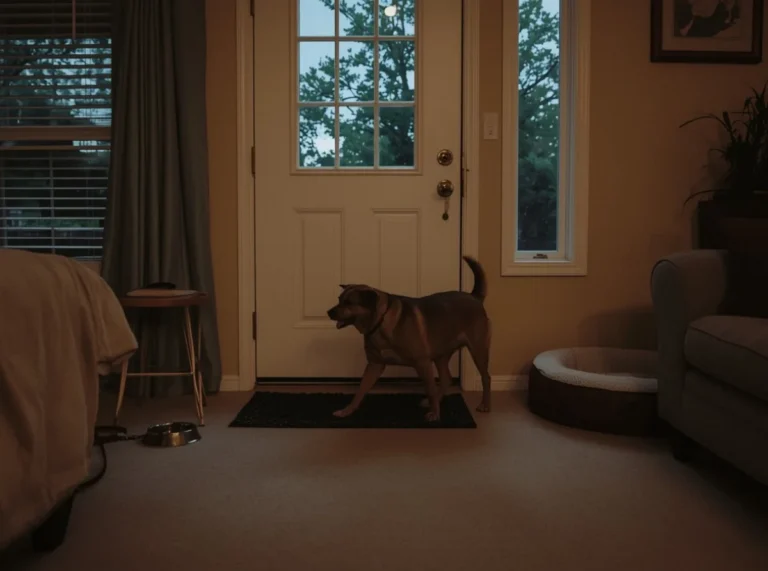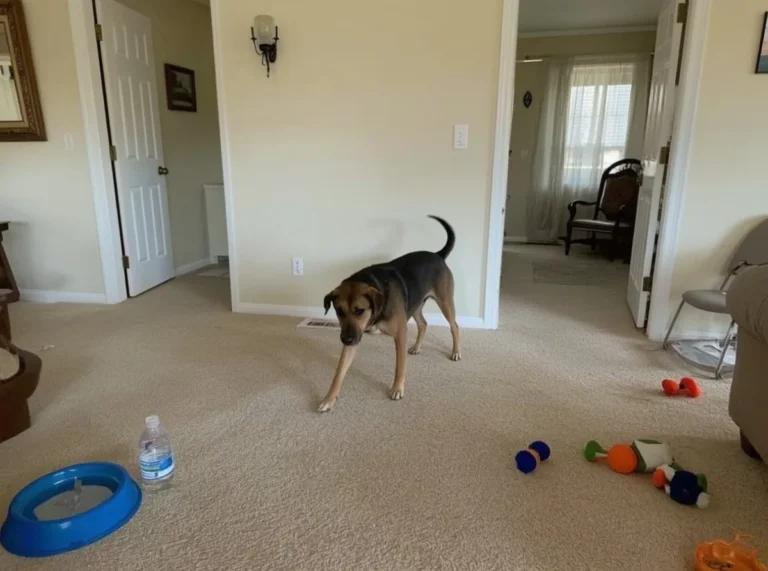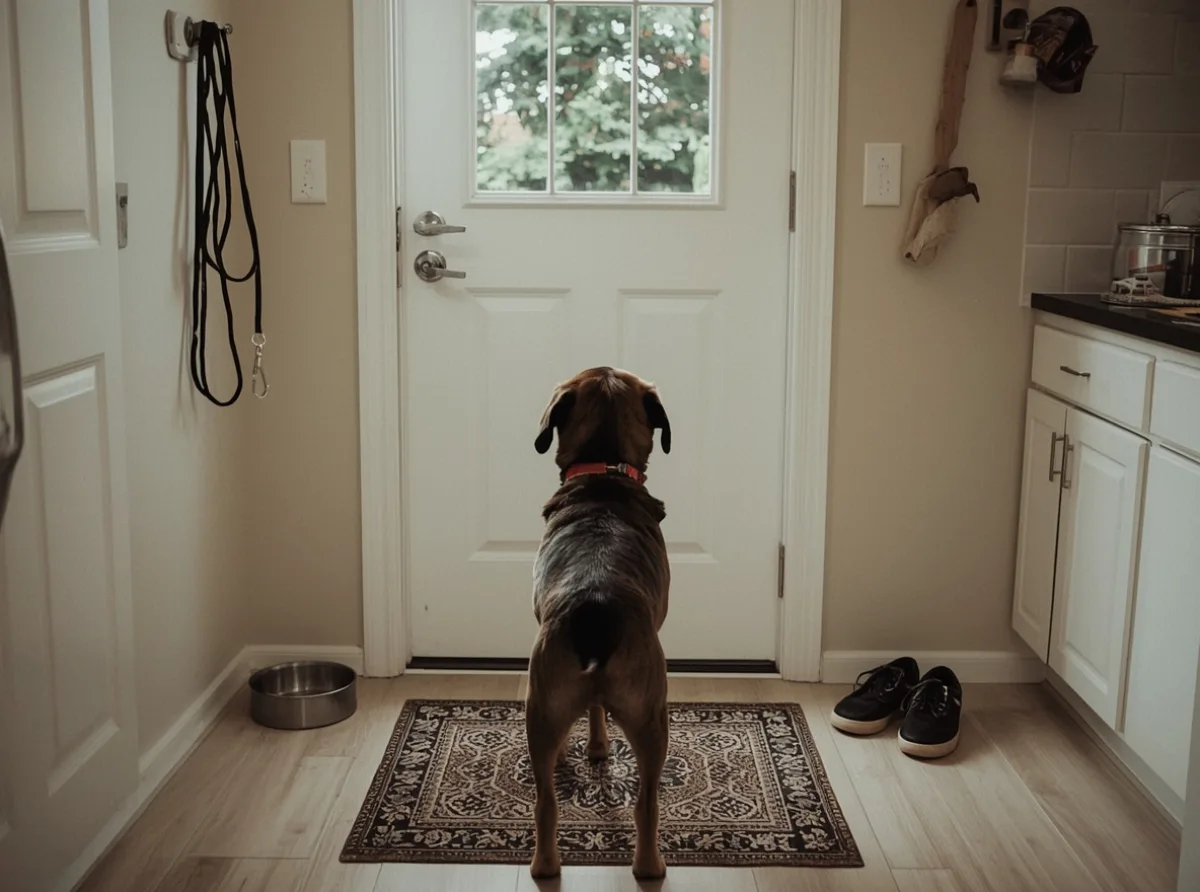
Dogs live close to our routines, and they notice more than many people realize. The same door opening each morning, the clink of a food bowl, the sound of keys on a hook, or the path someone walks through the kitchen can all become meaningful signals. To a dog, these familiar household patterns are not background noise. They are information.
That information helps dogs predict what comes next. Predictability can feel comforting, but it can also create excitement, anticipation, or concern depending on what the pattern usually leads to. A dog that hears the family getting ready for work may become quiet and watchful. Another may follow every step because the sequence has taught them that something important is about to happen.
When people ask what familiar household patterns mean to dogs, the real answer is often less about the pattern itself and more about the dog’s memory, expectations, and emotional state. The same routine can signal safety to one dog and stress to another. A small change in a familiar sequence can be enough to show how deeply a dog has learned the rhythm of the home.
What looks ordinary to people can feel highly structured to a dog. Repeated sounds, movements, and household habits become part of the dog’s map of daily life. Once that map is built, dogs use it constantly to decide whether to settle, wait, follow, alert, or prepare for something exciting.
Why Familiar Household Patterns Matter So Much
Dogs are pattern learners. They do not need formal lessons to notice that certain events usually happen in the same order. If breakfast follows the coffee grinder, if walks happen after someone changes shoes, or if visitors often arrive after the doorbell and the sound of laughter, a dog starts building expectations around those cues.
This pattern recognition is one reason dogs seem so tuned in to daily life. They are reading the home like a sequence of signals. The better they know the pattern, the more quickly they can anticipate what is coming.
For dogs, household patterns are less like habits in the abstract and more like reliable clues about what happens next.
That is why a dog may get excited before a leash is even picked up, or begin pacing when the family’s usual evening routine starts. The behavior is often not random. It is connected to memory.
What Familiar Patterns Look Like in Everyday Life
Some dogs respond to routine in very obvious ways. Others show it in quiet, subtle behavior that is easy to overlook until it becomes consistent. The same household pattern can trigger different responses depending on the dog’s temperament, age, and past experiences.
Common reactions dogs show around repeated routines
- Waiting near the kitchen at a certain time
- Following a person from room to room during a known routine
- Looking toward the door when specific sounds appear
- Settling down once an expected event has passed
- Pacing or whining when the usual sequence changes
- Becoming alert during transitions such as shoes, bags, or keys
Some of these responses are about anticipation. Others reflect a desire for reassurance. A dog may not know exactly what is happening, but they know something in the pattern is important.
A dog that becomes calm when the evening routine begins may have learned that the home is predictable and safe. Another dog may become more active because they know the pattern leads to attention, food, or play. In both cases, the household pattern has meaning.
Patterns dogs often track without people noticing
Dogs are especially sensitive to small sequences. The order of events matters. A person putting on shoes before grabbing a coat may mean something different from doing it the other way around. Opening a cupboard, turning on a faucet, or moving toward the leash hook can all be part of a larger pattern the dog understands.
Over time, these tiny details become powerful cues. A dog does not need the full routine to begin reacting. Sometimes one sound or movement is enough to activate the whole memory of what usually follows.
What the Behavior May Mean Emotionally
Familiar household patterns can point to several emotional states. The most common are comfort, excitement, vigilance, and uncertainty. The same dog may move between these states throughout the day.
A dog that relaxes when the home settles into a known rhythm may be showing trust. The routine tells them the environment is understandable. They do not have to guess as much.
A dog that becomes energized by a familiar sequence may be experiencing positive anticipation. If the household pattern usually leads to attention, food, or outdoor time, the dog is likely responding to that reward history. The behavior is not necessarily impatience. It may simply be confidence that something good is coming.
When a dog reacts strongly to a routine, the reaction usually reflects expectation first and emotion second.
But not every reaction is pleasant. Some dogs become tense around patterns that predict separation, handling, cleaning, or noise. If certain household events usually lead to things the dog dislikes, the routine itself can become a stress signal. In those cases, the dog is not reacting to the pattern because it is familiar. They are reacting because it is meaningful in a negative way.
How calm and stress-related responses differ
- Calm anticipation often looks loose, quiet, and responsive
- Excitement may bring tail movement, searching, or vocalizing
- Stress can show up as pacing, licking lips, stiff posture, or avoidance
- Confusion may appear when the expected routine does not happen
The important point is that dogs rarely read household patterns in a neutral way. Familiarity almost always carries some emotional charge.
How Routine Shapes a Dog’s Response
Routine gives dogs a sense of structure. In a quiet home, the same repeated events may become especially important because there are fewer competing signals. In a busier household, a dog may learn to sort through many patterns at once and focus on the ones that reliably predict meaningful outcomes.
When the routine is consistent, dogs often settle faster. They know when to expect meals, rest, play, or attention. When the routine is unpredictable, the same dog may become more watchful. They keep checking for clues because the usual sequence no longer feels dependable.
Routine elements dogs learn quickly
- Wake-up times and morning habits
- Meal preparation sounds
- Leash, shoe, or jacket routines
- Entry and exit patterns in the home
- Evening wind-down behaviors
- Bedtime signals and room transitions
Dogs thrive on clear patterns, but that does not mean they need a rigid schedule every minute of the day. What matters most is that the main cues are understandable. A dog that can predict the general flow of the day often behaves with more ease.
Consistency also builds memory. The more often a pattern repeats, the stronger the association becomes. That is why even small household habits can become powerful triggers. One family may not think much of a certain sound or motion, but to the dog it may be part of a long-established chain of events.
When Household Patterns Become More Noticeable
Dogs often become more reactive to familiar patterns during transitions. This is when the household is shifting from one type of activity to another. Morning departures, meal times, visitors, nighttime settling, and weekend changes can all make routine cues more visible.
Changes in the home environment can also sharpen a dog’s attention to patterns. A move, a new family member, altered work hours, or even seasonal changes can disturb the rhythm they once relied on. When that happens, dogs may search more actively for the familiar cues that used to guide them.
Stress, boredom, and under-stimulation can increase this sensitivity. A dog with little to do may become highly focused on small household events because there is not much else to occupy their attention. In contrast, a well-balanced dog with enough exercise and mental engagement may respond to the same pattern with more ease.
When a dog seems unusually fixated on household routines, the issue may be less about the routine itself and more about what the dog needs in the rest of the day.
Age can play a role too. Puppies often notice patterns quickly but react with more visible energy and less stability. Adult dogs usually show more consistent interpretation. Older dogs may rely on routine even more, especially if their senses or memory are changing and predictable cues help them feel secure.
Subtle Signals That Reveal What the Pattern Means
A dog’s body language often says more than the obvious behavior. A dog may appear calm while still being alert, or they may seem excited when they are actually uneasy. Looking closely at posture and movement helps reveal how the familiar pattern is being processed.
Signs of relaxed familiarity
- Soft face and loose body
- Quiet breathing
- Easy movement without rushing
- Ability to disengage and rest
- Brief attention to cues, then calm settling
Signs of heightened anticipation
- Focused staring at the person or object involved in the routine
- Quick movement toward expected locations
- Tail activity paired with alert posture
- Gentle vocalization or circling
- Difficulty staying still even without distress
Signs the pattern may be stressful
- Stiff posture or frozen stillness
- Repeated pacing
- Yawning, lip licking, or turning away
- Whining before the pattern fully unfolds
- Hiding, moving away, or avoiding the cue entirely
The same routine can produce different signals from day to day. A dog may handle breakfast cues easily but struggle with departure cues. Or they may be comfortable with family movement but tense around vacuuming, laundry, or visitor routines. The pattern only makes sense in context.
How Owners Often Read the Behavior vs What It May Really Mean
People often interpret familiar-routine behavior as simple excitement or “being clingy.” Sometimes that is true, but not always. A dog that shadows every step during the evening may not be seeking attention in a casual way. They may be following the pattern because they have learned that important events happen at that time.
Likewise, a dog that barks when the same sound happens each morning may not be “acting out.” They may be responding to a reliable cue that has come to mean something important to them. If the cue predicts food, a walk, departure, or interaction, the barking is part of the learned sequence.
Owners sometimes assume a dog should outgrow these reactions if the dog is well behaved. But learned household patterns can remain strong for years. In fact, repeated routines often become more stable over time, not less.
A dog’s reaction to household patterns is often a learned response to daily life, not a deliberate choice to be difficult.
That does not mean every response should be accepted without thought. It means the first question should be, “What does this cue predict for my dog?” rather than “Why is my dog being like this?”
Different Homes Create Different Meanings
The same pattern can mean different things in different homes. In one household, keys on a counter may signal a short outing and a calm return. In another, the same sound may always mean a long absence. A dog learns the meaning of cues from the outcomes that follow them.
Busy households often create layered patterns. One person’s morning routine may overlap with another person’s departure sequence, while children, appliances, and feeding times all happen near each other. Dogs in these homes often become skilled at reading context. They know which person is doing what, and they may react differently to each cue.
Quiet homes can create stronger focus on small signals. If only a few major events happen each day, those events may carry extra weight. A slight change in pacing, posture, or object placement may stand out more clearly to the dog.
Homes with irregular schedules can be especially challenging. When the pattern changes often, dogs may spend more time trying to figure out what is happening. Some adapt well. Others become restless because the cues they trust are less dependable.
How Long-Term Patterns Shape Behavior
Over months and years, dogs do not just notice household patterns. They build expectations around them. That expectation becomes part of how they move through the home. Some dogs learn to wait patiently by the door before the walk routine starts. Others settle near a favorite space when they know the evening sequence is beginning.
Long-term consistency can create a dog who appears almost uncanny in their timing. They may start looking toward the hallway before anyone has fully committed to the next task. That response is not magic. It is memory combined with repetition.
At the same time, patterns can become harder to adjust if the dog has relied on them for a long period. Sudden changes may feel bigger to the dog than they appear to people. A new work schedule, a different feeding time, or altered household movement can temporarily unsettle even a stable dog.
That is why long-term observation matters. A single reaction rarely tells the whole story. It is the repeated pattern across days, weeks, and seasons that reveals what the household routine means to the dog.
Reading the Meaning in Real-Life Situations
A dog that perks up when someone stands near the coat rack may be responding to departure cues. A dog that waits by the pantry each afternoon may have learned a feeding pattern. A dog that becomes still when the family gathers near the front door may be watching for visitors or an outing. Each response reflects a learned link between a familiar household pattern and an expected outcome.
When those cues are positive, the dog often looks engaged and comfortable. When they are tied to separation, handling, or overwhelming activity, the same cues can bring tension. The behavior may look similar from a distance, but the emotional tone behind it is not the same.
Some dogs also use household patterns as a way to organize themselves. They may rest after breakfast, become more active during midday movement, and settle again when evening cues begin. In this sense, routine is not just something they notice. It helps shape the flow of the day.
What Familiar Households Teach Dogs
Familiar household patterns teach dogs what to expect from the people around them. They learn who moves where, when attention tends to happen, and which events usually lead to comfort or change. Over time, these lessons become part of the dog’s sense of security.
That is why a dog may seem so aware of tiny changes in the home. They are not simply watching. They are interpreting. A missing key, an altered step, a delayed meal, or a new sound can all shift the meaning of the moment.
When a dog responds strongly to familiar patterns, the response is usually rooted in learning, memory, and emotion working together. The pattern has become part of the dog’s map of home life. What it means depends on what that pattern has consistently promised.
In a household that feels predictable, those cues often support calm behavior and easy transitions. In a household that feels uncertain, the same cues may lead to watchfulness or tension. The dog is not reacting to routine in isolation. They are reacting to the history built into it.