Predictability has a direct effect on a dog’s nervous system, even if the changes are easy to miss at first. A dog does not need a perfect life to feel steady, but it does need enough repeatable patterns to understand what comes next. When daily life feels familiar, the nervous system has less reason to stay on alert.
That does not mean dogs need the same day on repeat. It means their bodies work better when meals, walks, rest, and social contact follow a rhythm they can learn. A nervous system that can predict what is about to happen spends less energy scanning for danger and more energy on normal behavior, digestion, play, and recovery.
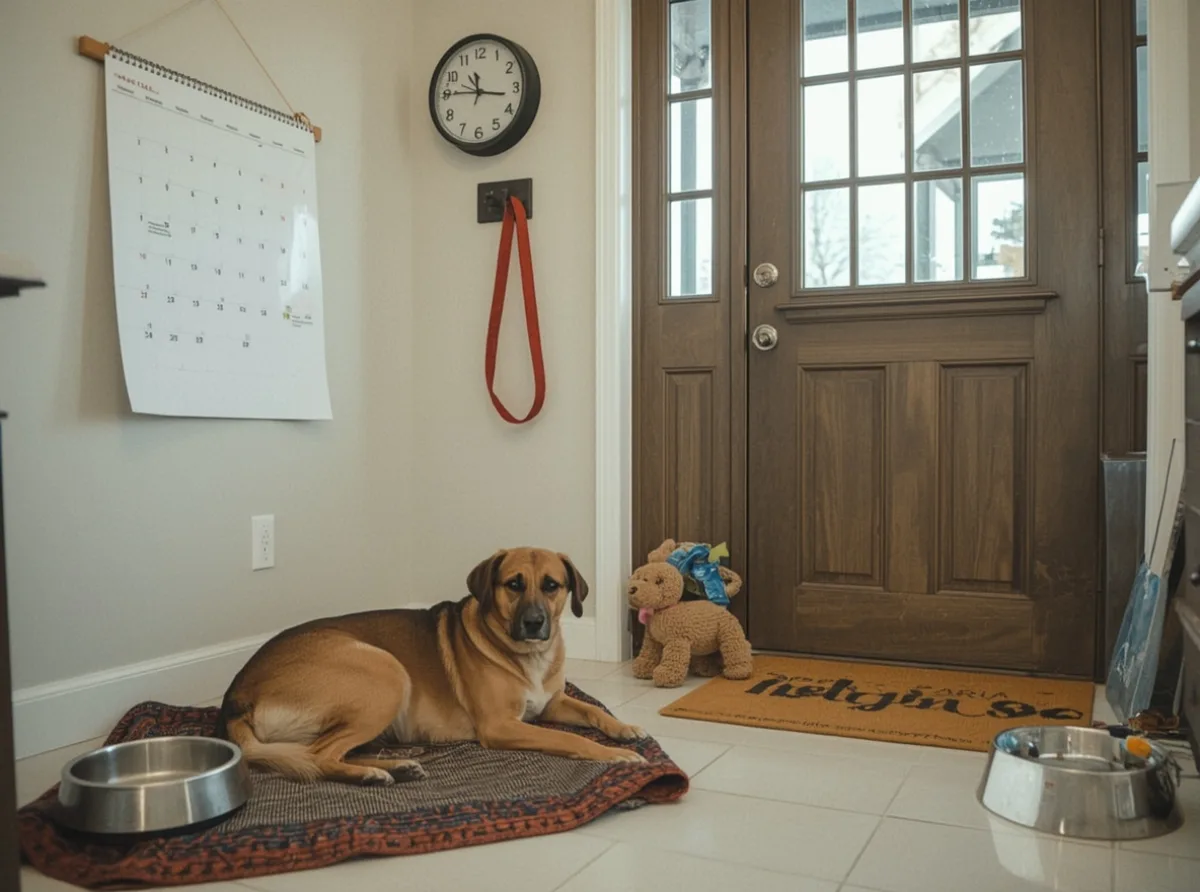
In a household, predictability often shows up in small ways. The same leash comes out before walks. Dinner happens around the same time. A certain chair means someone is settling down for the evening. Dogs notice these patterns quickly, and their bodies begin preparing before the event actually starts.
That preparation is not just mental. It is physical. Heart rate, muscle tone, attention, and stress hormone release all shift based on what the dog expects. A predictable day gives the nervous system a chance to organize itself instead of reacting to every moment as a surprise.
Why predictability matters to a dog’s nervous system
A dog’s nervous system is built to respond to the environment fast. That is useful in the wild and still useful at home. The problem starts when the environment feels random or hard to read. If food, attention, noise, visitors, and handling arrive without warning, the body often stays in a higher state of readiness.
Predictability helps the nervous system distinguish between real change and routine change. When the dog learns that certain events happen regularly and safely, those events stop triggering the same level of alarm. The body does not have to waste as much energy on watchfulness.
This matters because constant readiness is tiring. A dog that never fully settles may look fine on the outside, but inside the system can be working harder than it should. Over time, that can affect sleep quality, appetite, tolerance for handling, and the ability to bounce back after excitement or stress.
Predictability does not remove all stress. It gives the nervous system a map, so normal life feels less like a series of surprises.
What predictability looks like in everyday life
In daily home life, predictability often appears as behavior that seems almost automatic. A dog may wait near the kitchen when it is close to feeding time, relax when the family begins its evening routine, or move to a favorite resting spot when the home gets busy. These are signs that the dog has learned the pattern and can prepare without becoming frantic.
There is also predictability in how people interact with the dog. A dog that knows when petting is welcome, when quiet time follows, and when visitors are likely to arrive often behaves with more ease. The body does not have to guess as much.
Common examples include:
- resting more easily when walks happen around consistent times
- waiting calmly for meals because the sequence is familiar
- settling after greetings because the excitement has a known end
- showing less vigilance when household noise follows a routine pattern
- recovering faster after stimulation because the overall day feels organized
These behaviors can seem ordinary, but they reflect a nervous system that has learned to trust the rhythm of the day. The dog is not just “used to it.” The body has reduced the need to stay on guard.
Why the nervous system feels safer with routine
The nervous system constantly decides whether to stay calm, prepare for action, or defend against a possible threat. Predictable routines help it choose calm more often. That happens because the brain can compare the current moment with past experience and decide, with some confidence, what comes next.
When the same event repeats in a similar way, the body starts conserving energy. It no longer needs to activate a strong stress response every time footsteps sound in the hallway or a car pulls into the driveway. Familiar cues become information instead of warnings.
This is one reason many dogs seem more settled in homes with simple, consistent patterns. Not rigid patterns, just readable ones. A dog that can anticipate what happens after waking, after meals, or after the family arrives home often looks more relaxed throughout the day.
That relaxation has a chain effect. A calmer nervous system supports better digestion, smoother sleep cycles, and more flexible behavior. The dog has more room to cope when something unusual does happen, because the body is not already maxed out.
How predictability reduces stress signals
Stress in dogs is not always dramatic. Sometimes it shows up as pacing, barking, panting, or hiding. Other times it appears in subtler ways: trouble settling, frequent checking of doors or windows, stiff body posture, or a dog that is always “on” even when nothing seems wrong.
Predictability tends to lower these signals by reducing uncertainty. When a dog knows that a pause in activity is normal and not a sign that something bad is coming, the nervous system has less reason to escalate. The dog can rest without needing to monitor every sound.
Subtle signs that a dog may be benefiting from a more predictable routine include:
- softer facial muscles
- less startle response to ordinary household sounds
- easier transitions between activity and rest
- fewer repetitive checks of doors, windows, or people
- more willingness to lie down in open spaces
These changes may not happen overnight. Some dogs need time to believe the pattern is real. But once the body starts to trust the sequence of the day, stress signals often decrease in small, noticeable ways.
The difference between predictable and boring
Predictability is not the same as lack of enrichment. A dog can have a stable routine and still enjoy walks, play, chewing, sniffing, learning, and social contact. In fact, routine often makes enrichment more effective because the dog is not starting from a stressed baseline.
A boring life can create its own problems. But so can chaos. The most useful environment usually sits between the two. The dog knows when the day’s structure will happen, and within that structure there is room for variety.
That balance matters to the nervous system. Too much unpredictability can keep the dog keyed up. Too little stimulation can leave the dog underused and restless. Predictability gives shape to the day, while variety gives the dog something worthwhile to do inside that shape.
For example, a dog may always have a morning potty break, but the walking route can vary. Dinner can happen after the family settles in, while the details of play can change. The nervous system still gets the comfort of routine without feeling trapped in sameness.
How environment shapes the body’s expectations
Environment has a strong influence on how predictable life feels. A quiet home with regular routines usually gives the nervous system more chances to settle. A busy home with frequent visitors, sudden noises, or changing schedules may require more adjustment.
Dogs do not judge the environment the way people do. They read patterns. If the house is noisy every evening but still follows a clear sequence, many dogs adapt well. If the house is quiet one day, hectic the next, and unpredictable the day after, the body has a harder time forming expectations.
Some factors that make predictability harder include:
- irregular feeding times
- inconsistent wake-up and bedtime patterns
- unpredictable handling or correction
- frequent changes in who provides care
- high household noise without warning
- long gaps between exercise, rest, and social contact
When those factors are present, a dog may stay more vigilant. That does not always look like fear. It may look like clinginess, restlessness, overreaction to normal events, or difficulty switching off. The nervous system is trying to stay ready because the world does not seem readable.
Routine and the dog’s internal clock
Dogs are very good at noticing timing. They learn not only what happens, but roughly when it happens. That timing helps the nervous system prepare with less strain. Anticipation becomes organized instead of scattered.
The internal clock influences eating, resting, potty habits, and periods of activity. When daily events happen at similar times, the body starts adjusting before the event arrives. That is one reason many dogs get excited around the time a family member usually returns or become sleepy at the hour they normally wind down.
This internal timing can be a real advantage. The body can move smoothly between states instead of being forced to react from scratch every time. The dog is not having to relearn the day every morning.
Consistent timing helps the nervous system predict transitions, and transitions are often where stress lives.
When predictability is especially important
Some dogs benefit from predictability more than others. Puppies, newly adopted dogs, anxious dogs, senior dogs, and dogs recovering from illness or injury often need a clearer rhythm. Their systems are already managing a lot, so stable patterns can reduce the number of decisions the body has to make.
Puppies are still learning what the world means. If everything changes constantly, they may have a harder time building confidence. New rescue dogs may need routines to understand that food, rest, and human attention are reliable. Older dogs often appreciate predictability because change can take more energy than it used to.
Dogs with a history of reactivity or chronic stress often show the impact of routine very clearly. When the day becomes more readable, they may sleep more deeply, startle less, and recover faster after stimulation. The nervous system is not being forced to guess all the time.
What happens when predictability is missing
Without enough predictability, a dog may remain in a state of uncertainty. That can look like a dog who cannot fully relax, even in a familiar home. The body stays alert because it has not learned what to expect.
In everyday life, this may show up as difficulty with transitions. The dog may get anxious when people suddenly leave, become agitated when meals are delayed, or react strongly when routines change. Some dogs become extra attached in these situations and follow people from room to room. Others become more independent on the surface but still seem tense.
Possible signs of a nervous system under more strain include:
- increased pacing or roaming
- restlessness during quiet periods
- excessive vigilance near windows or doors
- difficulty sleeping deeply
- stronger reactions to small changes
- slow recovery after excitement
These signs do not mean a dog is “bad at coping.” They often mean the body has not yet had enough consistent experiences to expect safety. Predictability can help close that gap.
How owners can create a steadier day without overcontrolling it
Predictability works best when it stays practical. Dogs usually do well with a few dependable anchors in the day rather than strict control over every detail. A stable wake-up window, regular meals, known potty breaks, and familiar wind-down time can do a lot.
It also helps to make transitions clear. If a walk is coming, use the same basic sequence. If guests are arriving, give the dog a chance to notice what is happening before the house becomes busy. If play is ending, create a recognizable ending instead of letting it stop abruptly every time.
Useful anchors often include:
- consistent meal timing
- regular rest periods
- repeatable walking or potty patterns
- predictable cues before handling, grooming, or medication
- clear start and end points for high-energy activity
These small patterns tell the nervous system that life has structure. The dog does not need every hour scheduled. It just needs enough stability to know the day is not random.
Why predictability supports recovery after stress
One of the less obvious benefits of predictability is recovery. A dog may still encounter sudden noise, unfamiliar people, or a stressful event. Predictability does not erase those moments. What it does is make recovery easier afterward.
When the nervous system is already used to a dependable pattern, it has a quicker path back to baseline. The dog recognizes that the unusual event has ended and that the rest of the day still makes sense. Without that foundation, the body may stay activated long after the original trigger is gone.
This is why consistent routines matter after changes such as moving homes, boarding, veterinary care, or a schedule disruption in the family. The more the dog can find a few familiar anchors, the easier it is for the body to come down from stress and settle again.
Predictability and social behavior with people
Dogs often become more socially balanced when human behavior is predictable. A dog that knows when attention is likely to happen may not need to demand it constantly. A dog that knows when people are unavailable may learn to rest instead of hovering.
This can improve everyday interactions. The dog may approach more calmly, wait more easily, and show less frustration around daily events. The relationship starts to feel more manageable because the dog is not trying to decode every human movement in real time.
That does not mean every interaction should be identical. Warmth, play, and surprise still matter. But predictability in the basic structure of the day gives social contact a safer frame. The dog learns that connection happens in understandable ways.
When human behavior is consistent, dogs often spend less energy guessing and more energy engaging.
Different dogs, different needs for predictability
Not every dog wants the same amount of structure. A confident adult dog may handle changes more easily than a sensitive puppy. A high-arousal dog may need clearer routines than a naturally mellow one. Breed tendencies, life history, and past stress all play a role.
Some dogs seem to relax once they understand the day. Others need many repetitions before routine starts to register. A few dogs love mild variation but become unsettled when the big anchors disappear. The nervous system is individual, and the level of predictability that helps one dog may not be enough for another.
That is why observation matters. Watch what happens after routine changes, not just during them. Notice whether the dog settles faster with structure or becomes more distressed when patterns shift. Those responses reveal how the nervous system is handling the environment.
Reading the body’s response over time
Predictability shows its value in patterns, not single moments. A dog may have one off day and still be well adjusted. The more useful question is how the body behaves across weeks and months.
Does the dog rest more easily when the day follows a familiar rhythm? Does recovery after stress get faster? Does the dog startle less when the household is consistent? These long-term changes tell you more than one dramatic reaction ever could.
Over time, a nervous system supported by predictability often looks less strained. The dog may be less reactive, more flexible, and more willing to settle in unfamiliar situations because home life has given enough practice with safety and order.
That is the real effect of predictability. It teaches the body that not every moment requires defense. It gives the nervous system permission to stand down when nothing is actually wrong.
And in the daily life of a dog, that can be the difference between simply getting through the day and moving through it with ease.