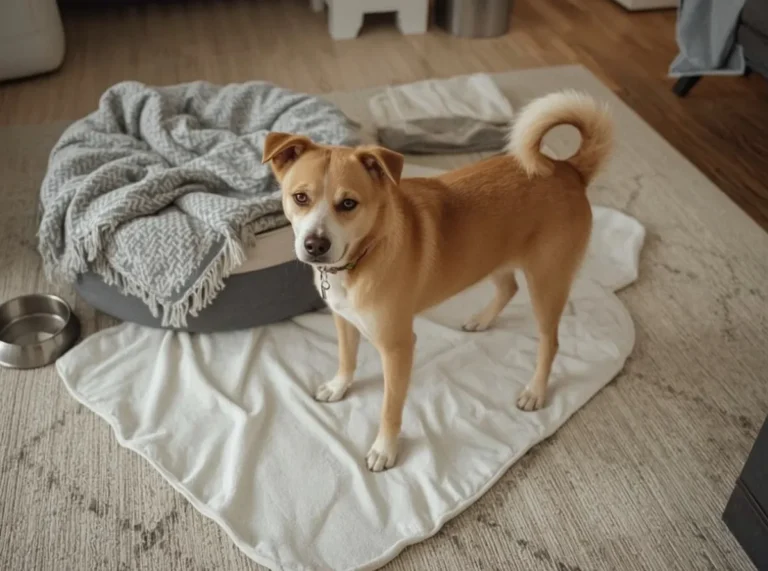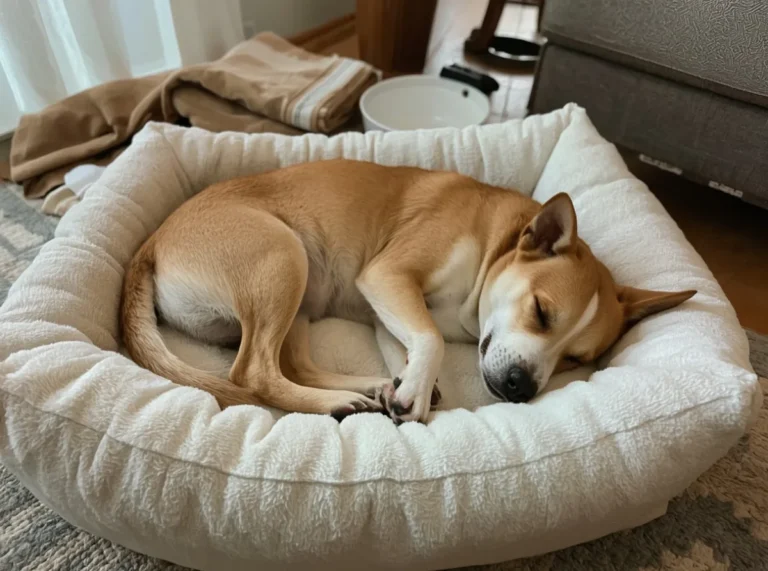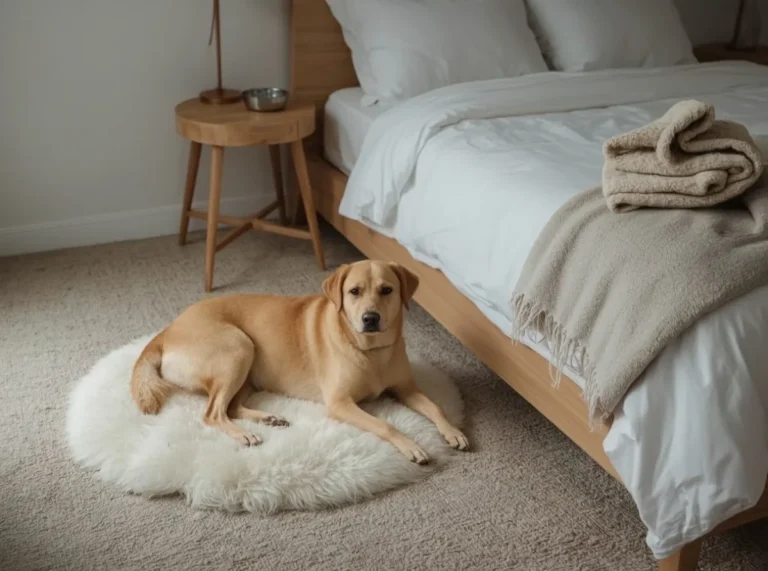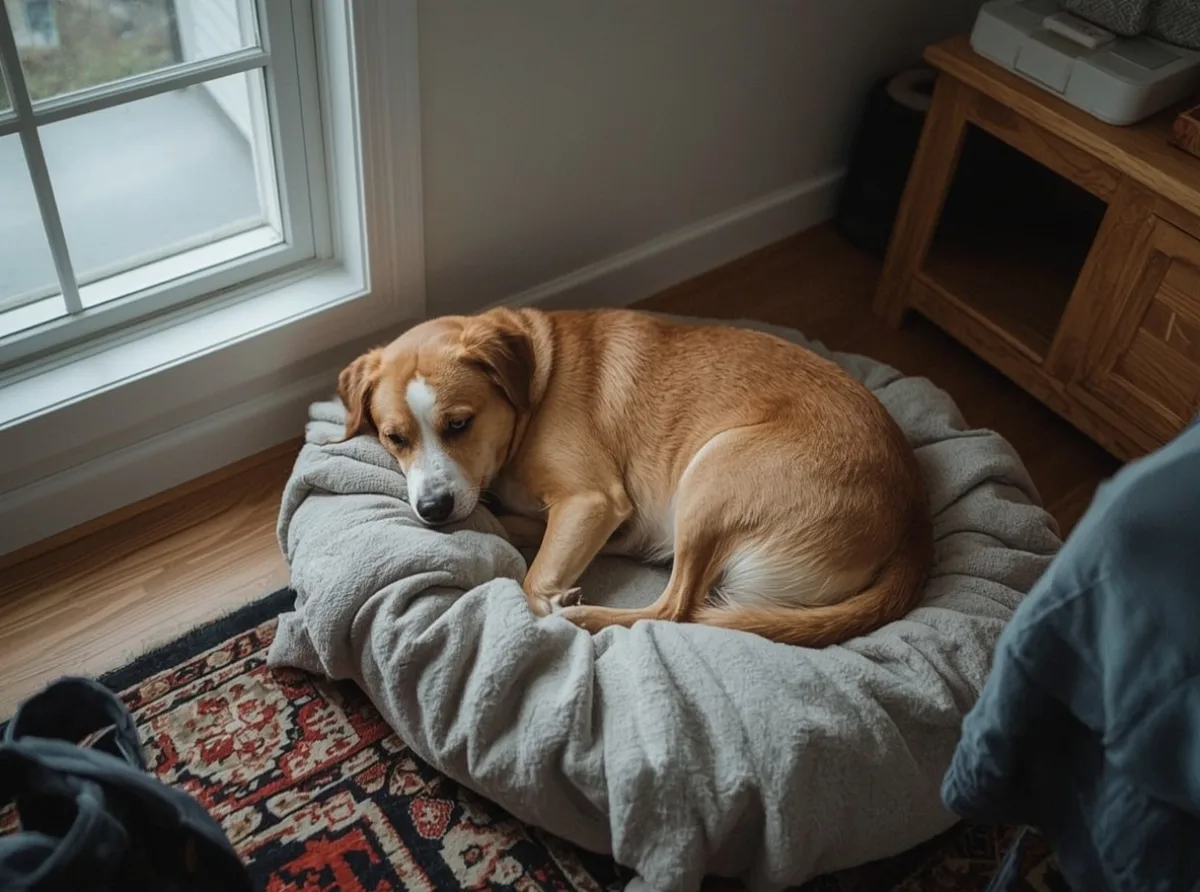
Dogs have a way of choosing one particular place and returning to it again and again. It might be the corner of the living room rug, the sun patch near the window, the foot of the bed, or the spot beside the couch that still smells faintly like family life. When a dog naps there every day, it usually does not mean there is anything strange going on. More often, it reflects comfort, habit, and a sense of safety.
That repeated choice can look simple from the outside, but dogs often make it for several reasons at once. The place may feel physically good, emotionally familiar, and socially important. It may also offer the right balance of quiet, temperature, visibility, and routine. Once a dog decides a spot works, that choice can become part of the day’s rhythm.
People sometimes assume dogs nap in the same place out of stubbornness or boredom, but the pattern usually makes more sense than that. Dogs are creatures of habit, and they are also sensitive to small details that humans overlook. A patch of floor that seems unremarkable to us can feel steady, predictable, and deeply reassuring to them.
What the Habit Looks Like in Everyday Life
In many homes, the pattern is easy to notice. A dog may leave a favorite bed after breakfast, circle once or twice, and settle in the exact same spot it used yesterday. The nap may happen after a walk, after play, or after a burst of activity around the house. Sometimes the dog does not even use the softest option available. It chooses the place that seems to fit best from its point of view.
Some dogs are very specific about where they rest. They may sleep with their back against a wall, in a doorway, under a table, or on the edge of a room where they can still see what is happening. Others prefer a spot that catches a little warmth or a breeze. The repeated choice often reflects a combination of comfort and awareness, not just preference alone.
There can also be a strong timing pattern. A dog may nap in the same place every afternoon, then move elsewhere at night. Another may return to the same location only when the house gets loud or when guests arrive. These details matter, because the same spot can mean slightly different things depending on when and why the dog uses it.
Why That Spot Feels Right to the Dog
Dogs like places that feel predictable. A familiar nap spot carries a known texture, familiar smells, and a history of safe rest. If nothing bad has happened there, the dog learns that the place is dependable. That sense of predictability is powerful for animals that pay close attention to their surroundings.
Comfort is part of it, too. The surface may support the body better than other places, or the temperature may be just right. A dog might prefer a cool tile floor in summer and a cushioned rug in winter, then keep returning to the exact same section of each. Dogs notice what feels good on joints, paws, and muscles, even if they never show it in obvious ways.
Familiar scent also matters more than many owners realize. Dogs use smell constantly, and their own scent can create a calming effect. A nap spot that carries their smell, or the smell of their people, may feel like a small anchor in the home. That is one reason dogs often settle where they have rested before.
A dog often repeats a nap spot because the place feels safe, smells familiar, and matches the dog’s need for comfort or awareness.
Emotional Reasons Behind the Habit
Some dogs nap in the same place because it helps them regulate how they feel. A quiet corner can reduce stress. A spot near a trusted person can provide reassurance without demanding interaction. Even when a dog seems fully relaxed, the choice of location may still reflect a desire for emotional steadiness.
Attachment plays a role as well. Many dogs prefer to be near their people, but not necessarily on top of them or in the middle of the action. They may pick a place that keeps them connected while still allowing rest. That balance is common in dogs who like to observe the household from a comfortable distance before drifting off.
Some dogs are naturally more alert than others. These dogs often choose places that let them rest lightly while remaining aware of movement and sound. The same spot every day may be the place where they feel they can relax without losing track of what is happening around them. It is a quiet kind of watchfulness, and it is not the same as anxiety in every case.
When comfort, not concern, drives the choice
It helps to separate normal preference from worry. A dog that naps in the same place, stretches out, breathes evenly, and settles easily is often simply resting in its favorite location. The pattern becomes part of the dog’s routine, much like a person always sitting in the same chair at night.
Concern is more likely when the dog seems unable to settle anywhere else, startles easily, paces before lying down, or appears tense even in a familiar spot. In those cases, the location is only part of the picture. The body language tells you whether the nap spot is a comfort zone or a place the dog uses because it feels on guard.
How Environment Shapes the Habit
The home itself strongly influences where a dog chooses to nap. A calm household with predictable traffic patterns often leads to stable resting habits. A dog may find one quiet corner and return there daily because it stays undisturbed. In a busier home, the dog may select the only place that offers a break from children, visitors, or constant movement.
Temperature is another practical factor. Dogs commonly return to the same place if it stays cooler, warmer, softer, or more protected than the rest of the house. A spot near an air vent, a fireplace, a sunny window, or a draft-free wall can become a daily destination. Dogs are often more strategic about these environmental details than people expect.
Noise matters, too. A dog may nap in the same place because that area muffles sound. The place might be farther from doors, hallways, or appliances that create unpredictable interruptions. When a dog values peace, it can develop a very consistent resting habit around the quietest part of the home.
Routine makes the pattern stronger
Dogs thrive on routine, and naps are often woven into it. If the dog eats, walks, and rests at roughly the same times each day, the nap spot can become part of a larger sequence. After a meal, for example, a dog may head directly to its chosen location because the routine has taught the body what comes next.
Repeated reinforcement also shapes behavior. If the spot always feels good and nothing interrupts the rest there, the dog learns that returning to it works. Over time, this can become a near-automatic habit. The dog may not think through the choice consciously each day; it simply follows a pattern that has paid off before.
When a resting place is quiet, comfortable, and predictable, dogs often return to it without hesitation.
What the Spot Can Say About the Dog’s Mood
A familiar nap place often points to a stable emotional state. A dog that chooses the same location daily may be showing that it feels settled enough to build a pattern around rest. That does not mean every repeat nap is identical, though. The dog’s posture, breathing, and muscle tone still reveal whether the rest is deeply relaxed or only partly so.
A loosely curled body, soft eyes, relaxed ears, and an even breath usually suggest ease. The dog may rest there because the environment feels good and the dog trusts that nothing urgent is expected. The same spot can also be used by a dog that wants to stay nearby but not be bothered. In that case, the emotional tone is still calm, just slightly more alert.
Different dogs show this in different ways. A social dog may choose a location near the kitchen to remain close to activity. A more sensitive dog may select a place that reduces stimulation. Both dogs can nap in the same spot every day, but for different internal reasons. The outward behavior is similar; the meaning depends on the details around it.
Common body language around a favorite nap spot
- Loose body and easy breathing usually suggest genuine comfort
- Curled posture can mean the dog wants warmth or a little protection
- Stretched-out posture often points to trust and physical relaxation
- Head lifted during rest may show light alertness rather than deep sleep
- Frequent repositioning can mean the dog is still searching for the most comfortable state
When Repetition Reflects Sensitivity or Uncertainty
Sometimes the same nap spot is less about preference and more about caution. Dogs that feel uncertain may select a location where they can monitor the room, protect their space, or avoid surprise. The spot may be near an exit, against a wall, or in a place where no one steps over them. In these cases, the repetition can reveal a dog that prefers control over its surroundings.
This does not automatically mean the dog is fearful. Many dogs simply like to know what is happening around them. But if the rest spot is paired with stiff body language, watchful eyes, or a quick shift into alertness when someone moves nearby, the behavior may reflect a dog that is more guarded than relaxed. The spot itself becomes a kind of buffer.
Dogs with a history of changes in environment may also hold tightly to a familiar resting place. A dog that has lived in a shelter, moved homes, or experienced a lot of household change may cling to one particular location because it helps create continuity. Repetition can be emotionally useful long after the external change is over.
How People Often Misread the Habit
It is easy to overread a dog’s favorite nap spot. Some people assume the dog is being antisocial if it naps in the same corner each day. Others think the habit means the dog is anxious or unhealthy. In reality, the meaning depends on the whole pattern, not the location alone.
A dog may pick the same place simply because it is practical. That can look dramatic when a more expensive bed, sofa, or blanket is ignored. But dogs are not guided by what seems luxurious to humans. They care about stability, scent, access, temperature, and the feeling of being left alone when rest is needed.
Owners sometimes mistake consistency for rigidity. Yet a dog can be perfectly flexible and still prefer one nap spot because it is the best option most days. If the dog also naps elsewhere when the house changes or the weather shifts, the habit is likely a preference, not an obsession.
The same nap spot is not a diagnosis. It is a clue that becomes meaningful only when paired with body language, routine, and the dog’s overall behavior.
How to Read the Pattern More Clearly
Looking at context makes the habit easier to understand. Start with the basics: Is the dog relaxed, or is it tense before settling? Does it nap there after a walk, after meals, or only when the house is noisy? Does it choose the same spot even when other options are available, or only under certain conditions?
Small observations often reveal the real reason. A dog that sleeps in the same place because sunlight falls there every afternoon is responding to comfort. A dog that chooses the same place because it can keep an eye on the room may be responding to awareness. A dog that returns there after excitement may simply be using the spot as a recovery zone.
Changes matter, too. If the dog suddenly abandons a favorite spot, there may be a practical reason such as temperature, discomfort, a new smell, or a household change. If the dog suddenly guards the spot or seems reluctant to rest, the behavior is worth paying attention to. Consistency is useful, but sudden shifts often tell the more important story.
Questions that help make sense of the habit
- Does the dog look relaxed before, during, and after the nap?
- Is the spot quiet, warm, cool, or near trusted people?
- Does the dog choose it only at certain times of day?
- Has anything changed in the home recently?
- Does the dog rest comfortably there, or does it seem on edge?
Why the Habit Can Become So Stable Over Time
Once a dog finds a resting place that works, the habit can become surprisingly durable. Dogs remember where they feel safe and comfortable. If the spot keeps matching their needs, they are likely to return to it without much thought. This is especially true in homes where the layout and daily rhythm stay fairly consistent.
The pattern may also become socially reinforced. If people avoid disturbing the dog there, or if the family tends to be quiet at that time of day, the spot becomes even more attractive. In effect, the dog learns not just that the place feels good, but that it also functions well within the household’s routine.
Over months and years, the nap spot can become part of the dog’s personal geography. It becomes a known place in a known home, with a set of smells, sounds, and expectations attached to it. That familiarity is often enough to explain why a dog returns there day after day.
When the Same Spot Means the Dog Is Asking for Space
Some dogs choose the same spot because it gives them a way to rest while keeping a little distance. They may like being near the family, but not in the middle of constant motion. The chosen place becomes a quiet boundary. It says, in a simple canine way, that the dog wants to be part of the environment without being pulled into it.
This is common in households with active children or lots of movement. The dog may learn that one location is consistently respected, and that makes it more attractive. Over time, the dog returns there because it knows the space will likely remain undisturbed. That predictability can be just as important as softness or warmth.
Even dogs that enjoy affection may still need a place that is fully their own. A repeated nap spot can help provide that. The dog is not withdrawing from the family. It is choosing a rest zone that feels manageable.
Daily Repetition and the Dog’s Internal Rhythm
Dogs often organize their day around rest more than people realize. Activity tends to come in bursts, followed by pauses. A favorite nap spot can help structure those pauses. The dog may wake, observe, move briefly, and then return to the same place because the cycle feels natural.
This rhythm is especially obvious in dogs that are sensitive to household patterns. They notice when the house gets quiet after school, when the kitchen slows down after dinner, or when the morning rush ends. The same spot becomes the place where they reset between moments of activity. It is less a single behavior than part of a full day’s pattern.
Because of that, the nap spot can reveal quite a lot about the dog’s daily life. A dog that always sleeps in the busiest part of the house may be highly social or mildly watchful. A dog that chooses the farthest corner may value calm more than company. The place itself tells a small but useful story.
What the Habit Usually Means in the End
A dog napping in the same spot every day is usually showing that the place fits its needs very well. The location may be comfortable, familiar, quiet, warm, secure, or simply embedded in routine. Most of the time, the behavior reflects healthy preference rather than anything unusual.
The important part is not the sameness by itself, but the way the dog uses the spot. Relaxed body language, smooth transitions into sleep, and steady routine all point toward ordinary comfort. Tension, avoidance, or sudden changes in the pattern suggest that the location is serving a different purpose. The same spot can mean rest, reassurance, or watchfulness, depending on the dog.
That is what makes the habit interesting. It is a small daily choice, but it often reveals how a dog feels about the home, the people in it, and the amount of calm available during the day. A favorite nap spot is rarely random. For a dog, it is usually the place where everything lines up just right.