A dog can walk close behind you without seeming needy, clingy, or demanding. Sometimes the behavior looks almost casual. The dog is not asking to be petted, not nudging your hand, and not trying to turn your attention away from anything else. It simply follows.
That quiet kind of following can mean a few different things. In many homes, it shows up when a dog is checking where a person is going, staying near a familiar routine, or keeping an eye on movement in the house. It may also reflect comfort, habit, curiosity, or mild uncertainty. The same behavior can look similar on the outside while coming from very different internal states.
Because of that, following without wanting attention is easy to misread. Some owners assume a dog is being clingy when it is actually relaxed. Others think the behavior is harmless every time, even when it appears with tension, pacing, or restlessness. The details matter. A dog that quietly trails behind you while settling into the rhythm of the home is not sending the same message as a dog that cannot seem to relax anywhere unless it is directly beside someone.
What This Behavior Looks Like in Daily Life
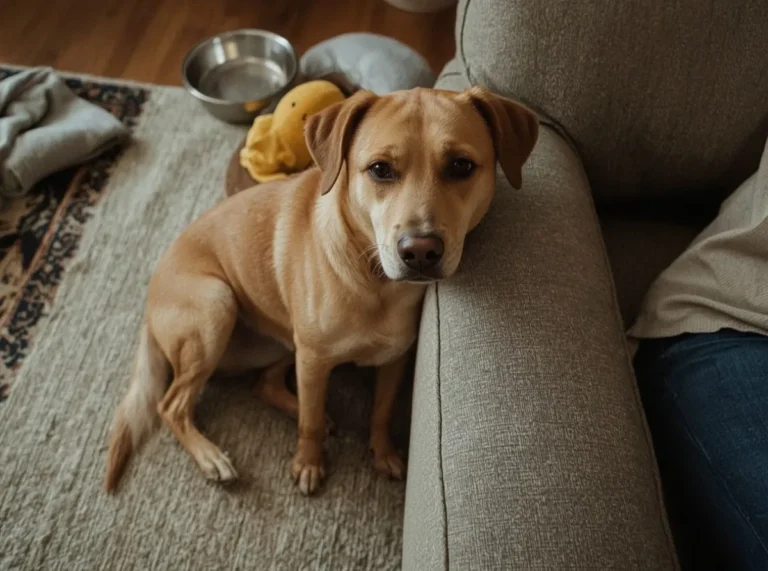
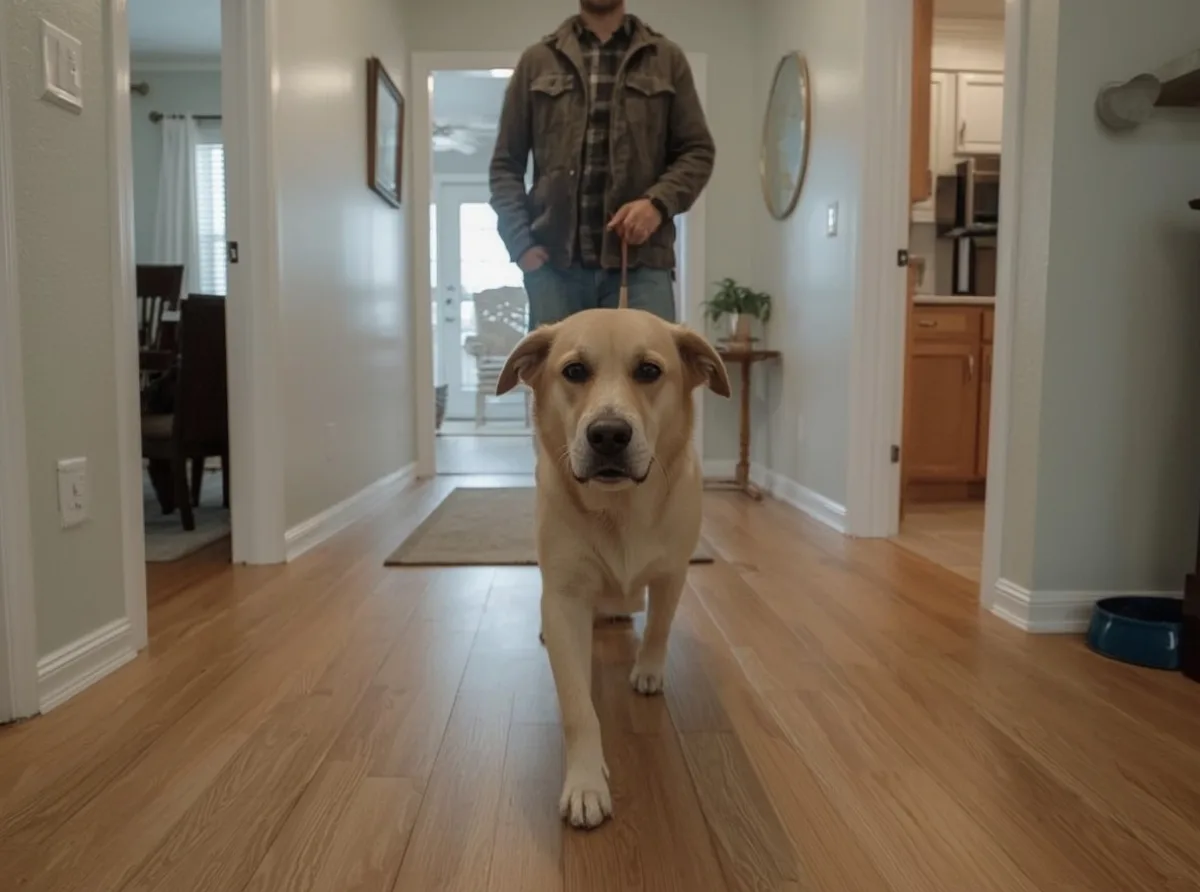
This kind of following can take many forms. A dog may move from room to room as you do, stop outside the bathroom door, or stay a few feet behind you while you cook, sort laundry, or answer the phone. The dog is present, but not pushy. It may lie down when you stop, then rise again when you leave.
In some homes, the behavior is almost background noise. The dog shadows a person during the morning routine, then drifts off once the house gets quieter. In other homes, it happens more selectively. A dog may follow one family member more than others, or only appear to track movement at certain times of day. That pattern often gives clues about what is driving it.
Here are a few common versions of the behavior:
- Walking behind a person from room to room without vocalizing
- Standing near a doorway and waiting rather than demanding interaction
- Entering and leaving spaces in step with household movement
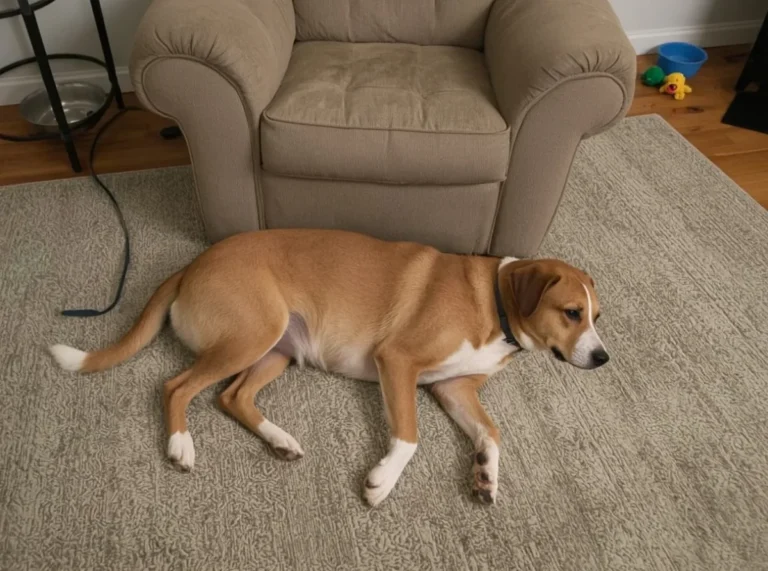
- Settling nearby after following for a short time
- Keeping visual contact without needing physical closeness
It is important not to confuse this with attention-seeking behavior that comes with pawing, whining, nudging, or barking. A dog can follow for reasons that have very little to do with wanting direct engagement. The motion itself may be about monitoring, habit, or comfort with proximity.
Why Dogs Often Follow Without Asking for Attention
Dogs are socially aware animals. Many have a strong interest in where the people around them are going, what they are doing, and whether the routine is changing. That interest does not always turn into a request for attention. Sometimes it remains a quiet form of observation.
One common reason is simple attachment. A dog may feel secure near a familiar person and choose to stay in the same general area. This is especially noticeable in households where the dog has learned that humans move in predictable patterns: kitchen, couch, bedroom, yard, repeat. The dog learns the route and follows along as part of the shared rhythm of the home.
Another reason is curiosity. Dogs often want to know what is happening next. If you stand up, they notice. If you open a cabinet, they notice. If you move into another room with a new sound or smell, they may check it out too. This does not mean they want to be entertained. It means they are paying attention to the environment through your movement.
There is also a practical side to it. In a home, people tend to represent access to food, doors, walks, toys, and activity. A dog may follow because people are the source of change. Even when no reward is being offered, the dog may have learned that human movement is worth tracking.
Quiet following is often less about demanding attention and more about staying oriented to the social and physical environment.
Emotional Reasons Behind the Behavior
Emotions shape this behavior more than many owners realize. A dog does not have to be anxious to want proximity, but some level of emotional comfort is often involved. A dog that follows calmly may simply feel safest when it can keep a person in view.
In some cases, the behavior reflects trust. The dog is relaxed enough to move with you without needing extra reassurance. It is not scanning the room, not startling easily, and not trying to control your actions. It is just keeping company in its own quiet way.
Other times, the behavior can point to mild uncertainty. A dog may follow without asking for attention because it is not fully settled in the environment. This is common after a move, schedule change, houseguest visit, or change in household noise. The dog may not look distressed, but it does seem to prefer staying close to a predictable person.
Some dogs also follow during moments of transition. When the home becomes active, or when the dog is unsure what comes next, trailing behind a familiar person can be a way to stay oriented. The dog is not necessarily anxious, but it may be using proximity as a stabilizing cue.
Subtle emotional states that can look similar
- Comfort and trust
- Curiosity about movement or routine
- Low-level uncertainty during change
- Social bonding without a demand for interaction
- Habit formed through repeated daily patterns
The tone of the behavior matters. A soft body, relaxed mouth, and easy pace usually suggest comfort. A dog that seems stiff, watches every movement intensely, or struggles to settle after following may be communicating something different. The outward action is the same, but the feeling behind it may not be.
How Routine and Environment Shape It
Daily life has a strong influence on whether a dog follows quietly or barely does it at all. In a calm home with predictable routines, the behavior may become almost invisible. The dog knows when people get up, when meals happen, and when the quiet hours begin. Following becomes part of the pattern, not a sign of conflict.
In a busier home, the behavior often becomes more noticeable. More movement means more chances to follow. More people means more reasons to keep track of who is going where. A dog may shadow the most active family member simply because that person is constantly changing rooms, opening doors, or moving between tasks.
Stimulation also plays a role. A dog that does not have much to do may use human movement as a form of mental engagement. If the environment is otherwise quiet, following can become one of the main ways the dog interacts with the day. That does not mean the dog is bored in a severe sense. It means the world is being observed through the people in it.
Changes in the environment can increase the behavior quickly. New furniture, a different work schedule, less outdoor activity, or a recent absence in the household may all make a dog more likely to trail behind people. Sometimes the following becomes more frequent simply because the household has become less predictable.
Situations where it often appears
- During morning routines and meal prep
- When a person gets up after sitting for a long time
- After guests arrive or leave
- When the household is quieter than usual
- After changes in schedule, travel, or home layout
What the Behavior May Signal About the Dog’s State of Mind
Following without wanting attention can signal a dog that is tuned in, not necessarily needy. The dog may be collecting information. Where is the person going? Is the house calm? Is something happening that might matter? For many dogs, moving alongside people is a normal way to stay informed.
It can also indicate a dog that values predictability. Some dogs feel better when they can anticipate movement and changes in the household. Following becomes a quiet way of staying connected to the rhythm of the day.
However, when the following looks uneasy, it can point to a dog that is not fully settled. A dog may trail behind more closely after a loud noise, during periods of separation, or when a preferred person is about to leave. In those moments, the behavior is less about companionship and more about checking whether the situation is stable.
The difference is often visible in body language. A comfortable dog moves smoothly and can stop without distress. A less comfortable dog may hover, remain on alert, or seem unable to choose a resting place. The dog is still following, but the meaning has shifted.
| Behavior | Likely Meaning |
|---|---|
| Follows calmly, then settles | Comfort, habit, social interest |
| Follows during routines only | Predictability and anticipation |
| Follows more after household changes | Seeking stability or reassurance |
| Follows with tension or restlessness | Possible uncertainty or low-level stress |
No single interpretation fits every dog. The same dog may follow for comfort in the morning and for uncertainty at night if the household feels different. That is why context matters more than the motion alone.
How Owners Commonly Misread It
One common mistake is assuming that any following means a dog wants more attention. Sometimes the dog is perfectly content and simply wants to remain in the same space. If a dog is not pawing, vocalizing, or interrupting, it may not be asking for interaction at all.
Another mistake is dismissing the behavior entirely. A dog that trails constantly, especially when it cannot relax unless a person is moving, may be trying to cope with uncertainty. That does not make the dog “bad” or overly dramatic. It may just mean the environment has made independent settling harder than usual.
Owners also sometimes assume that a dog following them is being obedient or trained to heel in the house. In reality, indoor following often has little to do with training. It may be a simple expression of social awareness. The dog is not necessarily trying to please or perform. It is noticing.
Look at what the dog does after following. Settling, resting, and moving away on its own usually suggest comfort. Hovering, pacing, and repeated re-checking can suggest something else.
Behavior Across Different Kinds of Dogs
Not every dog follows in the same way. Breed tendencies, life experience, and individual temperament all shape the pattern. Some dogs are naturally more observant and stay close simply because they are socially engaged with their surroundings. Others are more independent and only follow when something meaningful changes.
Dogs with a strong bond to a particular person may shadow that person more often, especially if the person handles feeding, walking, or nightly routines. Dogs that have experienced uncertainty in the past may also keep a closer watch on movement, even if they seem calm. That can be a leftover habit, not a sign of current distress.
Puppies often follow because they are still learning the layout of the home and the people in it. Adult dogs may follow more selectively, especially once routines are familiar. Older dogs sometimes follow because they prefer predictability and want to remain near the action without having to seek it out.
What changes the pattern over time
- Confidence with the home environment
- Consistency of daily routine
- Amount of outdoor activity and mental stimulation
- Changes in household members or schedule
- Age-related shifts in energy and awareness
What starts as puppy curiosity may become adult habit. What begins as uncertainty may fade as the dog settles in. The behavior is flexible, and it often changes with life stage and environment rather than staying fixed.
When Quiet Following Becomes More Noticeable
There are moments when the behavior stands out more clearly. Early morning is one. Dogs often wake with the household and track movement as the day gets underway. Evening is another, especially when the rhythm slows and the dog wants to keep the nearest familiar person within view.
It can also become more obvious after a disruption. A visitor, a new pet, a recent absence, or even a change in weather that keeps everyone indoors can alter how a dog moves through the home. The dog may become more watchful, and following may increase as a result.
Sometimes the behavior is strongest during times when the dog is not fully occupied. A well-exercised dog with enough mental activity may still follow, but it usually does so with an easy, loose energy. A dog with too little to do may follow more often simply because it is looking for somewhere to place its attention.
That difference can be subtle, but it matters. The same movement through the house may mean companionship on one day and unease on another. The surrounding routine helps explain the reason.
How to Read the Signals Around the Behavior
Body language often provides the missing context. A dog that follows without wanting attention usually gives off a different set of signals than a dog that is emotionally unsettled. Watch for the pace, the posture, and what happens when the person stops moving.
Relaxed following often looks smooth and unforced. The dog’s body stays loose, the tail is neutral or softly moving, and the dog can drift away once it has checked in. Tension changes the picture. A dog may stay unusually close, stand too still, or seem reluctant to choose a resting spot.
Helpful signals to notice
- Loose versus stiff body movement
- Ability to settle after following
- Interest that rises and falls naturally
- Choice to lie down nearby without hovering
- Signs of tension such as tight posture or persistent alertness
These signals do not need to be dramatic to matter. Small changes are often enough to tell the story. A dog that follows, pauses, and then curls up across the room is communicating something different from a dog that seems unable to disengage.
The Deeper Meaning of Staying Near Without Demanding Anything
Sometimes quiet following is simply part of how a dog participates in the household. The dog does not need to be touched, praised, or entertained to feel connected. It just wants to be present where the important things are happening.
That presence can be reassuring to the dog in a way that is easy to overlook. The movement of a person through the house may provide a steady, familiar thread in a day full of smaller changes. For many dogs, that thread is enough.
What matters most is not the act of following alone, but the pattern around it. If the dog follows, relaxes, and then moves off on its own, the behavior usually belongs to the normal texture of life with a dog. If it comes with tension, restlessness, or difficulty settling, it deserves a closer look because the dog may be using proximity to manage something less comfortable.
In everyday life, dogs often communicate in quiet ways. This is one of them. The dog does not need to ask for attention to say, in its own plain language, that it wants to stay oriented to the people and spaces that matter most.