When a house goes still, many dogs seem to notice right away. A television that was humming in the background stops. People leave for work. Footsteps disappear. Even the small sounds that usually fill a home suddenly fade, and a dog may respond by barking more often, more sharply, or with a different kind of urgency.
That change is not random. Quiet can make a dog more alert to everything else that remains: distant traffic, a neighbor moving around, a door closing two rooms away, or the sound of its own breathing. In a lively home, those noises are masked. In a quiet one, they stand out. For some dogs, that difference is enough to trigger more vocal behavior.
Dogs also use barking in social ways. It can express excitement, uncertainty, alertness, frustration, or a need to get attention. When the environment calms down, a dog’s own internal state may become more noticeable too. A house that feels quiet to people can feel oddly exposed to a dog, especially if the dog is sensitive, under-stimulated, or very tuned in to changes around the home.
What changes when the house gets quiet
A quiet house does not simply remove noise. It changes the whole rhythm of the environment. Dogs often depend on routine and familiar background activity to feel settled. When that background disappears, some dogs become more watchful.
You may notice bark patterns like these:
- barking at sounds that were previously ignored
- brief alert barks that happen after the house becomes still
- barking at windows, doors, or hallways more often than usual
- repeated vocalizing when family members stop moving around
- barking that starts after the dog has been resting quietly for a while
In many cases, the dog is not reacting to silence itself. It is reacting to the shift in conditions that silence creates. The house becomes easier to “read” from the dog’s perspective, and that can make every small trigger feel more important.
Background noise often helps dogs stay settled
Many dogs get used to a certain amount of sound in the home. The television, music, conversation, appliances, and footsteps all create a predictable layer of activity. Once that layer disappears, the dog may become more aware of outside sounds or movement in nearby rooms.
This is especially common in homes where the dog spends long periods alone. If the house is usually busy and then suddenly becomes quiet, the contrast can be striking. A dog that seemed relaxed during normal daytime activity may start barking more when everyone settles down for the evening.
Quiet does not always calm a dog. For some dogs, quiet removes the masking effect of everyday noise and makes them more sensitive to small triggers.
Why some dogs bark more in silence
Several internal factors can push a dog toward more barking when the home becomes quiet. The behavior is often a mix of sensitivity, anticipation, and habit. A dog may have learned that quiet moments lead to activity, meals, walks, or people returning. That expectation can make stillness feel loaded with meaning.
Dogs that are naturally vigilant tend to notice changes fast. They may bark at a distant car door, a person walking by outside, or a sound from another apartment. When the house is loud, those sounds blend into the environment. When it is quiet, they stand out.
Some dogs also bark more when they have extra energy and nowhere to put it. A calm-looking dog can still be mentally restless. In a quiet house, that restless energy often finds an outlet in vocalizing.
Attachment and social awareness play a role
Dogs are social animals, and many of them track the movements and presence of the people around them closely. When the house suddenly becomes quiet, a dog may notice the absence of social cues. If family members are in separate rooms or have all gone out, the dog may feel less anchored.
This is one reason some dogs bark more after people leave or when a household settles into a silent routine. The barking may be a way of seeking contact, checking for response, or expressing discomfort with the change.
- dogs with strong attachment may bark when people stop interacting
- dogs that dislike uncertainty may react to the quiet as a change in pattern
- dogs that are highly social may vocalize when activity drops suddenly
What the barking may mean emotionally
Barking in a quiet house can have different emotional roots. The same sound may reflect alertness in one dog and anxiety in another. Body language usually helps tell the difference.
A dog that is simply attentive may bark once or twice, then look toward the sound source and settle again. A dog that is more stressed may keep barking, pace, scan windows or doors, or struggle to relax after the trigger has passed. The ears, tail, mouth, and movement pattern often reveal more than the bark itself.
Common emotional states behind the behavior
- Alertness: The dog notices a new sound and barks to signal it.
- Excitement: Quiet may follow anticipation, such as waiting for a walk or return home.
- Frustration: The dog wants attention, activity, or access to something and vocalizes in response.
- Unease: Stillness may increase sensitivity and make the dog feel on edge.
- Habit: The dog has learned that barking in quiet moments often gets a response.
The same dog can show more than one of these states in the same day. A bark that starts as alertness can turn into frustration if the dog keeps hearing a sound and nothing changes.
If barking increases when the house gets quiet, the key question is not only “what did the dog hear?” but also “how did the quiet change the dog’s level of comfort?”
How routine shapes the pattern
Routine matters a great deal. Dogs often build expectations around the daily rhythm of the home. If mornings are busy, afternoons are quiet, and evenings are full of movement again, the dog may learn to stay alert during the slow parts of the day. Once that pattern forms, barking can become tied to the change in pace rather than to any single sound.
Dogs that lack enough mental or physical activity may be more likely to bark when the environment calms down. A walk, play session, training game, or even a structured sniffing break can reduce this tendency because the dog’s needs have been met before quiet sets in.
On the other hand, a dog that is over-tired or overstimulated may also bark more in a quiet house. Some dogs do not settle well when the day has been too busy, too unpredictable, or too intense. Silence can leave them alone with that tension.
Patterns that often make the barking worse
- long stretches without activity or engagement
- inconsistent household routines
- frequent comings and goings followed by long silence
- quiet times that happen right after excitement
- little exposure to being calm without constant input
These patterns can create a dog that seems “fine” in motion but vocalizes once the environment slows down. The barking is often more predictable than it first appears.
Different situations where it appears most often
Not every quiet house produces the same response. The setting matters. Some dogs bark more when everyone is asleep, while others do it when the house empties during the day. The trigger may also be linked to location within the home.
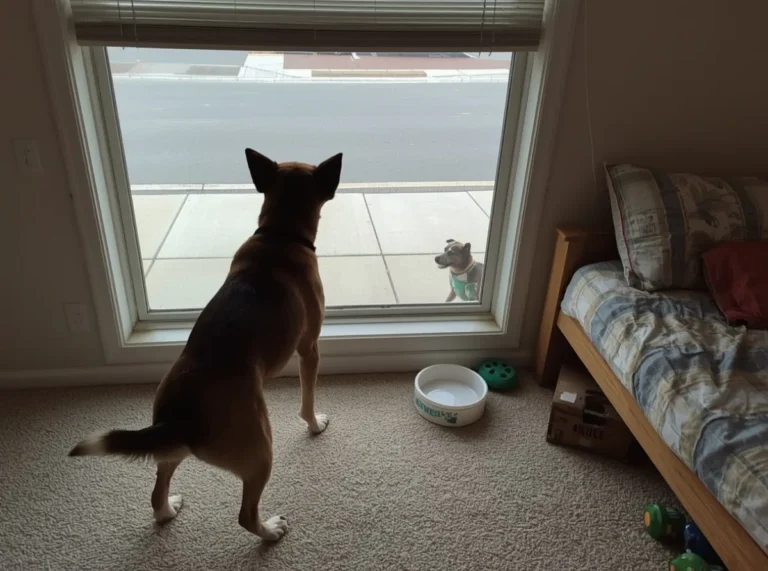
A dog near a front window may bark more when the indoor noise drops and outside sounds become more obvious. A dog that stays in a back room may bark because it suddenly notices isolation. Some dogs react most strongly in homes with echoing spaces, where a single footstep or pipe sound seems amplified.
| Situation | Why barking may increase |
|---|---|
| Nighttime quiet | Less activity, more sensitivity to small sounds, stronger awareness of outside movement |
| House empty during the day | Change in routine, social isolation, anticipation of return |
| TV or music turned off | Background noise disappears and external sounds become clearer |
| After a busy day | Residual energy or tension may surface once the environment slows |
These situations often overlap. A dog that barks at night may also bark more after dinner when people move into separate rooms. The quiet itself is only part of the picture.
Body language that helps explain the barking
Watching the dog’s posture can tell you a lot. A relaxed dog may bark briefly, then return to resting. The body stays loose. The mouth opens naturally. The tail may remain neutral or gently move.
A more reactive or stressed dog tends to look different. The body may stiffen before the bark. The neck extends. The ears point forward or flick rapidly. The eyes may lock on a target, even when that target is just a sound in another part of the house.
Signs the barking is more likely to be alert-based
- one or two sharp barks
- the dog pauses to listen
- the dog returns to calm after checking the source
- the body remains mostly loose
Signs the barking may be tied to stress or frustration
- repeated barking with little pause
- pacing or circling
- intense staring toward doors or windows
- difficulty settling after the noise stops
- whining, panting, or tense posture along with the barking
These signals matter because they shape the next step. A dog that is merely startled by a quiet house may need less intervention than a dog that cannot relax without ongoing support.
How owners often misunderstand the behavior
It is easy to assume the dog is “being noisy” or “looking for attention.” Sometimes that is part of the picture, but it is rarely the whole story. Barking in a quiet house often reflects how the dog is processing the environment, not a simple attempt to misbehave.
Another common mistake is to think the dog is barking at nothing. In reality, dogs hear and notice far more than people do. A sound that seems nonexistent to a person may be obvious to the dog. The quiet just makes it easier to pick up.
Owners sometimes also miss the role of change. The dog may be fine when the house is already calm, yet bark when a noisy period suddenly ends. That shift can be more important than the silence itself.
A dog that barks more when the house becomes quiet is often responding to contrast, not emptiness.
Ways the home environment influences barking
Home layout, sounds, and daily habits all affect the behavior. Open-plan homes can carry noise differently than smaller rooms. Apartments may transmit outside activity in subtle ways. Even a dog bed placed near a door or window can increase alert barking when the house gets quiet.
Some homes have predictable quiet zones. Others have pockets of sound from appliances, vents, or plumbing. Dogs learn these details quickly. Once the dog associates a certain silence with people leaving, bedtime, or long pauses between activities, barking can become part of the response.
Small environmental changes sometimes help more than people expect. A little background sound, a more comfortable resting place, or a view that does not constantly expose the dog to outside movement can reduce how often the barking starts.
- background noise may soften sudden sound changes
- a stable resting area can help the dog settle
- predictable routines can make quiet feel less uncertain
- enough exercise and enrichment can reduce restless vocalizing
What long-term consistency can reveal
Looking at the pattern over time matters. If barking happens only in certain quiet moments, it may be tied to specific triggers such as outside sounds, boredom, or routine changes. If it happens almost every time the house gets still, the dog may be highly sensitive to low-activity environments.
Long-term observation can also show whether the barking is getting more intense, staying the same, or fading as the dog matures. Puppies and younger dogs often vocalize more when they have not yet learned how to settle in quiet spaces. Adult dogs may bark less if their routine becomes more balanced. Some dogs, however, remain highly alert throughout life.
Consistency is useful because it tells you what kind of quiet matters most. Evening silence, empty-house silence, bedtime silence, and post-play silence are not identical. Each one can bring out a different response.
Questions worth noticing in everyday life
- Does the barking start after a specific transition?
- Is it tied to outside sounds, or does it happen without an obvious trigger?
- Does the dog seem tense before barking?
- Does the barking stop once activity returns?
- Has the pattern changed with age, routine, or season?
Those details often explain more than the barking itself. They show the shape of the dog’s experience inside the home.
When the quiet seems to invite more barking
Some dogs almost seem to wait for the home to settle before they begin barking. This can happen because quiet offers a clearer stage for observation. It may also happen because the dog has learned that silence often precedes something important: a meal, a visitor, a walk, or the return of family members.
In other cases, the dog barks because the lack of activity gives the mind fewer distractions. Without motion and noise to process, the dog turns inward and becomes more reactive to minor cues. A single creak can be enough to start the pattern.
That is why the behavior often appears strongest in homes with uneven energy. The dog gets pulled between busier periods and long pauses. The transition can feel more significant than any one part of the day.
Closing thought
When dogs bark more as the house becomes quiet, they are usually responding to a shift in the world around them. The silence changes what they hear, what they expect, and how secure they feel in the moment. For some dogs, that means more alert barking. For others, it means frustration, restlessness, or a search for connection.
The pattern becomes easier to understand when you look at the whole setting: routine, energy level, background sound, and body language. Quiet is not always restful from a dog’s point of view. In many homes, it is the moment when small things finally become noticeable.