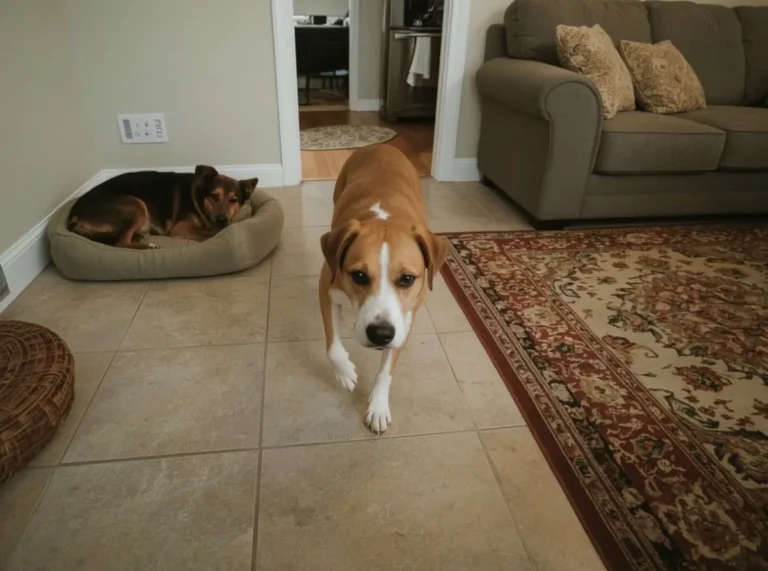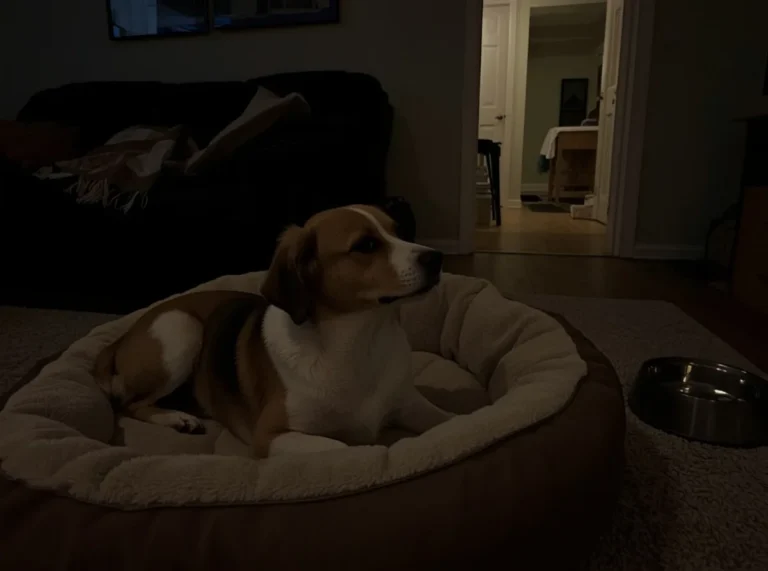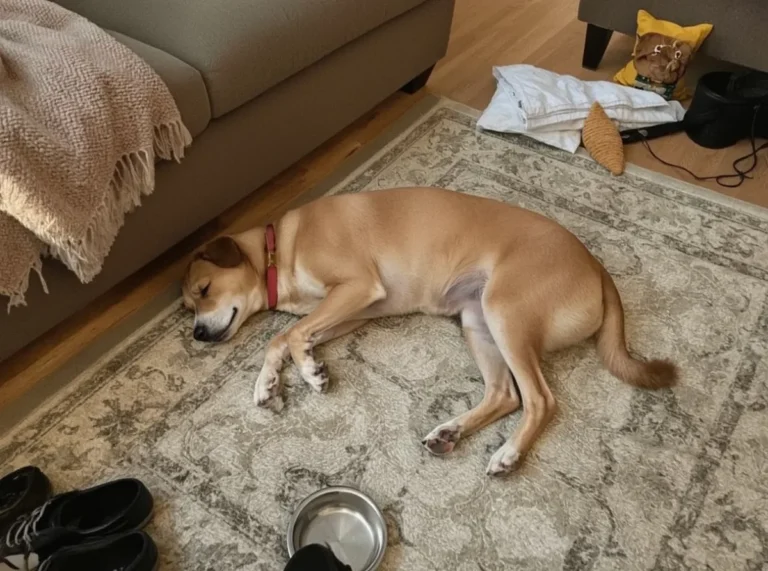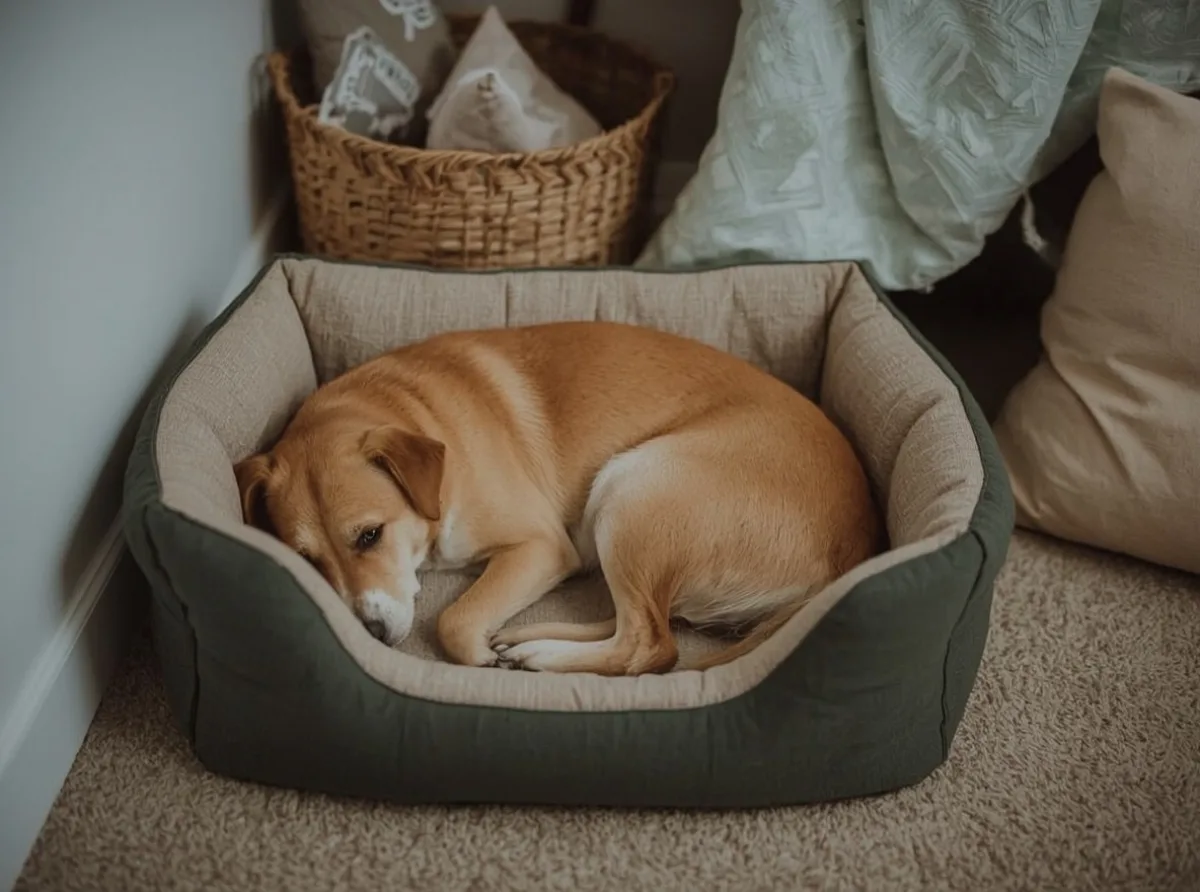
Some dogs settle best when they can tuck themselves into a narrow corner, a crate with the door open, a covered bed, or the space under a table. They may ignore a large soft bed in the middle of the room and choose the smallest, most enclosed spot they can find. To a person, that choice can look odd. To the dog, it often feels practical, safe, and restful.
This preference shows up in everyday ways. A dog may move from a spacious couch cushion to the space beside it. Another may sleep with its body pressed against a wall or curl tightly inside a bed with raised sides. The pattern is usually consistent, and it often says more about comfort than about stubbornness.
Small protected spaces can help dogs feel less exposed while they rest. That matters because sleep is when many dogs are least aware of their surroundings. If a dog wants to reduce interruptions, drafts, noise, or sudden movement, a snug spot can solve the problem without any effort from the human side.
What Small Protected Spaces Feel Like to a Dog
For many dogs, enclosed resting spots create a sense of boundaries. The body can relax more easily when the space around it is predictable. A dog does not need to keep checking what is happening behind, beside, or above it.
This is one reason dogs often prefer beds with bolsters, cave-style beds, crates with blankets, or corners between furniture. These spots offer gentle physical contact on one or more sides. That contact can feel reassuring, especially for dogs that like pressure or struggle to settle in open areas.
People sometimes assume a dog is being “clingy” when it seeks a protected space near them. That is not always accurate. The dog may simply want security without constant interaction. The space can be close to the family and still feel private.
Many dogs are not choosing the smallest space because it is cute or convenient. They are choosing it because it helps their body switch from alert mode to rest mode.
Natural Instincts Behind the Preference
Dogs descended from animals that had to rest while staying aware of danger. Even though modern pets live in safe homes, the instinct to seek a sheltered place has not disappeared. It shows up in smaller, ordinary ways: hiding under a desk during a thunderstorm, nesting in a blanket pile, or sleeping with their back against a wall.
Enclosed spaces can mimic den-like conditions. A den is not about punishment or isolation. It is about control over the environment. When a dog has a place that feels protected, it can rest without scanning every movement nearby.
That instinct is stronger in some dogs than others. Breed tendencies can play a role, but individual temperament matters just as much. One dog may love open spaces and spread out completely, while another may prefer a snug bed from puppyhood through old age.
Common instinct-driven reasons include:
- A desire to feel hidden from view
- A need for side or back support while lying down
- Preference for reduced noise and movement around the body
- Comfort with pressure from walls, pillows, or bolstered edges
- A habit of nesting or arranging bedding before sleep
Emotional Reasons Dogs Choose Protected Resting Spots
Comfort is physical, but it is also emotional. A dog that rests in a protected space may be telling you that the wider environment feels a little too open, busy, or unpredictable. That does not automatically mean the dog is anxious. It may simply mean the dog is sensitive to activity and prefers a lower-stimulation place to recharge.
Some dogs are naturally more watchful. They notice sounds in the hallway, footsteps outside, or a person changing position across the room. Small spaces reduce the amount of visual and physical input coming in at once. That can make resting feel easier.
Other dogs use protected spaces after social time. A family gathering, a long play session, or a noisy afternoon can leave them ready for quiet. The enclosure acts like a reset button. Once the dog is done engaging, it can retreat and recover without being disturbed.
If a dog consistently chooses a protected resting spot after busy or overstimulating periods, the behavior may reflect a need for recovery rather than fear.
What the Body Often Tells You
Dogs rarely announce their reasons in a direct way, so body language matters. A relaxed dog in a protected space usually looks soft and settled. The muscles loosen, the face looks smooth, and the breathing becomes slow and even. The dog may change position once or twice and then stay still.
A dog seeking comfort may also show subtle nesting behavior. It might circle, nudge a blanket, push its nose into a corner, or paw lightly at bedding before lying down. These are normal self-soothing actions. They often mean the dog is preparing the space the way it likes it.
On the other hand, tension can change the picture. If the dog enters the small space abruptly, stays on high alert, keeps the head raised, or reacts strongly to minor sounds, the resting spot may be serving as a hiding place instead of a comfort zone. That difference matters. Not every enclosed resting habit means the same thing.
Relaxed and tense signs can look different:
| Relaxed resting | Possible tension |
|---|---|
| Loose body, soft face, slow breathing | Stiff posture, frequent scanning, shallow breathing |
| Settles and sleeps | Enters and exits repeatedly |
| Chooses the space before resting | Rushes there after a disturbance |
| Remains easy to approach | May guard the space or avoid contact |
How Home Environment Shapes the Habit
The layout of a home can strongly influence where a dog rests. A quiet corner in a calm room often becomes a favorite because it combines shelter with predictability. Open-floor homes with lots of foot traffic may push some dogs toward more enclosed options. A dog that is regularly stepped around, touched unexpectedly, or disturbed while sleeping may start searching for tighter spaces on its own.
Temperature also matters. A dog may choose a small protected bed because it holds warmth better than an open cushion. This is especially common in short-haired dogs, small dogs, senior dogs, or dogs that feel cold easily. A covered bed or a tucked-away nook can help maintain a more stable sleeping environment.
Noise plays a role too. Appliances, children, visitors, and outdoor sounds all affect how open a space feels. Some dogs are not bothered enough to avoid the room entirely, but they still want a resting place that softens the noise. A crate with a blanket draped over part of it, for example, can make the space feel calmer without isolating the dog completely.
Environmental factors that often increase the preference:
- Frequent foot traffic through resting areas
- Bright, busy rooms with little visual privacy
- Drafts or cool floors
- Households with unpredictable noise
- Resting spots that are shared with other pets
Daily Routine and Stimulation Affect the Choice
A dog’s resting habits are not fixed in every setting. They often change with the rhythm of the day. After a walk, play session, training, or a visit from guests, a dog may look for a more protected place than usual. During slower hours, it may rest in a more open bed or lie in the middle of the room.
Routine matters because dogs learn what kinds of spaces feel associated with peace. If the household is calm at night but active during the day, the dog may establish a pattern of retreating to enclosed spots only during peak activity. Over time, that becomes a habit. The dog is not being dramatic; it is responding to the flow of its surroundings.
Too much stimulation can also make a protected resting spot more attractive. A dog that has had a long day of visitors, dog park activity, or constant handling may need a place where nothing is asked of it. In those moments, a small protected space serves as a boundary, not a limitation.
A change in the dog’s preferred resting spot after a busier schedule often points to a need for quieter recovery time.
When the Preference Becomes More Noticeable
Some dogs only seek protected spaces at certain life stages. Puppies often enjoy them because they are adjusting to a large world and may feel safer in a contained area. Adult dogs may use these spaces more selectively, especially when they want uninterrupted sleep. Senior dogs can return to them again as joints stiffen, hearing changes, or the dog becomes less tolerant of busy surroundings.
The preference can also become more obvious after a change in the home. A move, a new pet, a baby, new furniture, or a shift in work schedule can all change how open a resting area feels. Dogs notice these details quickly, even when humans think the change is minor.
Sometimes the behavior grows stronger when the dog learns that the protected space is consistently respected. If no one disturbs it there, the dog will return to it often. The space becomes part of the dog’s personal routine, like a favorite chair or quiet reading corner in a human home.
How to Tell Comfort from Discomfort
It is helpful to look at patterns rather than one isolated moment. A dog that prefers a protected space but otherwise eats normally, plays normally, greets people normally, and settles easily is likely making a simple comfort choice. The resting preference is just one part of the dog’s daily life.
Concerns are more likely when the dog seems unable to relax anywhere else, startles often, stays on edge, or uses the space to avoid ordinary household life. The difference is not just where the dog lies down. It is how the dog behaves before, during, and after resting.
Owners sometimes try to “fix” the preference by moving the dog to a more open bed. That usually does not help. A better approach is to notice what the dog is getting from the small protected space and then decide whether that need can be met in a healthier, more convenient way.
Questions that help clarify the meaning:
- Does the dog choose the space calmly or in a rush?
- Is the dog easy to wake and approach?
- Does the preference appear after noise, activity, or stress?
- Does the dog sleep deeply once settled?
- Has the behavior changed recently or remained stable for years?
What Owners Can Read From the Habit
A dog’s choice of a small protected resting space often reflects a mix of instinct, habit, and environmental comfort. It may mean the dog values privacy. It may mean the room feels too open. It may simply mean the dog likes pressure around the body while sleeping.
The key is not to overread the behavior, but not to dismiss it either. Dogs communicate through repeated choices. When the same dog keeps returning to the same type of resting place, that preference deserves attention. Not because it is mysterious, but because it is useful information about how the dog experiences the home.
In many homes, the best response is simple: keep the favored area clean, quiet, and undisturbed. Offer a few resting options, then let the dog decide. A dog that prefers a small protected space is often asking for one thing above all else: a place where the body can fully let go.