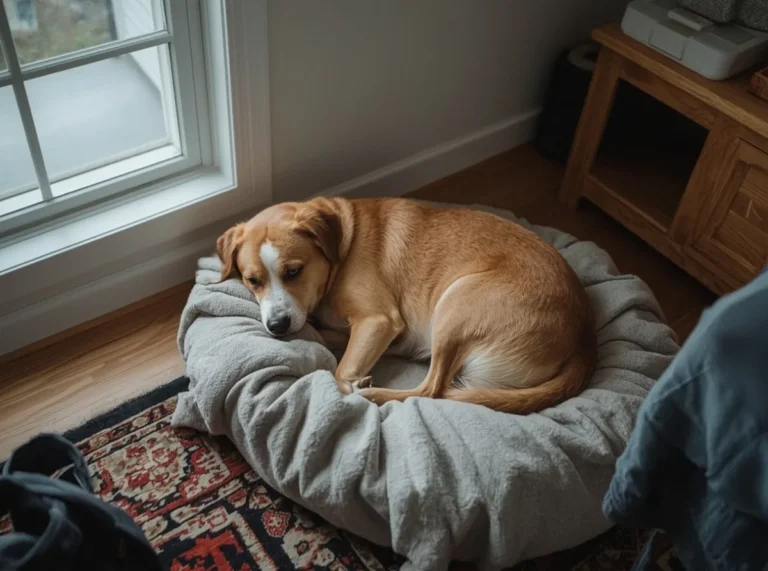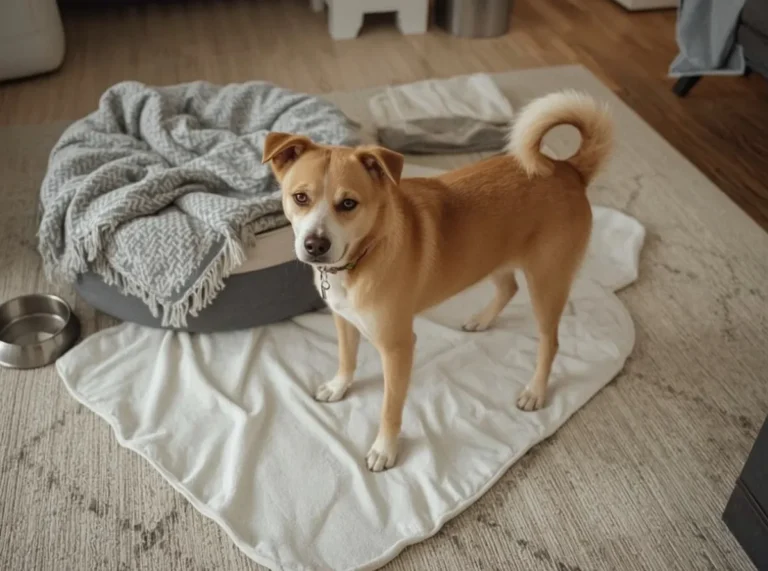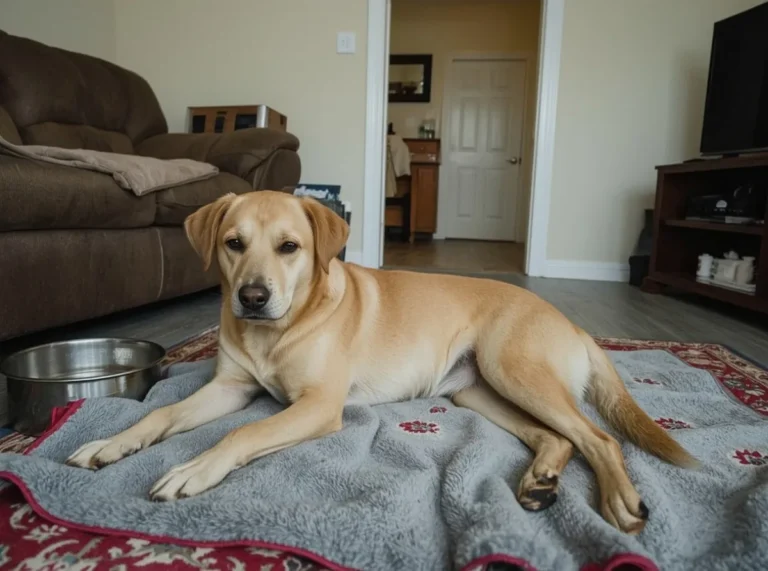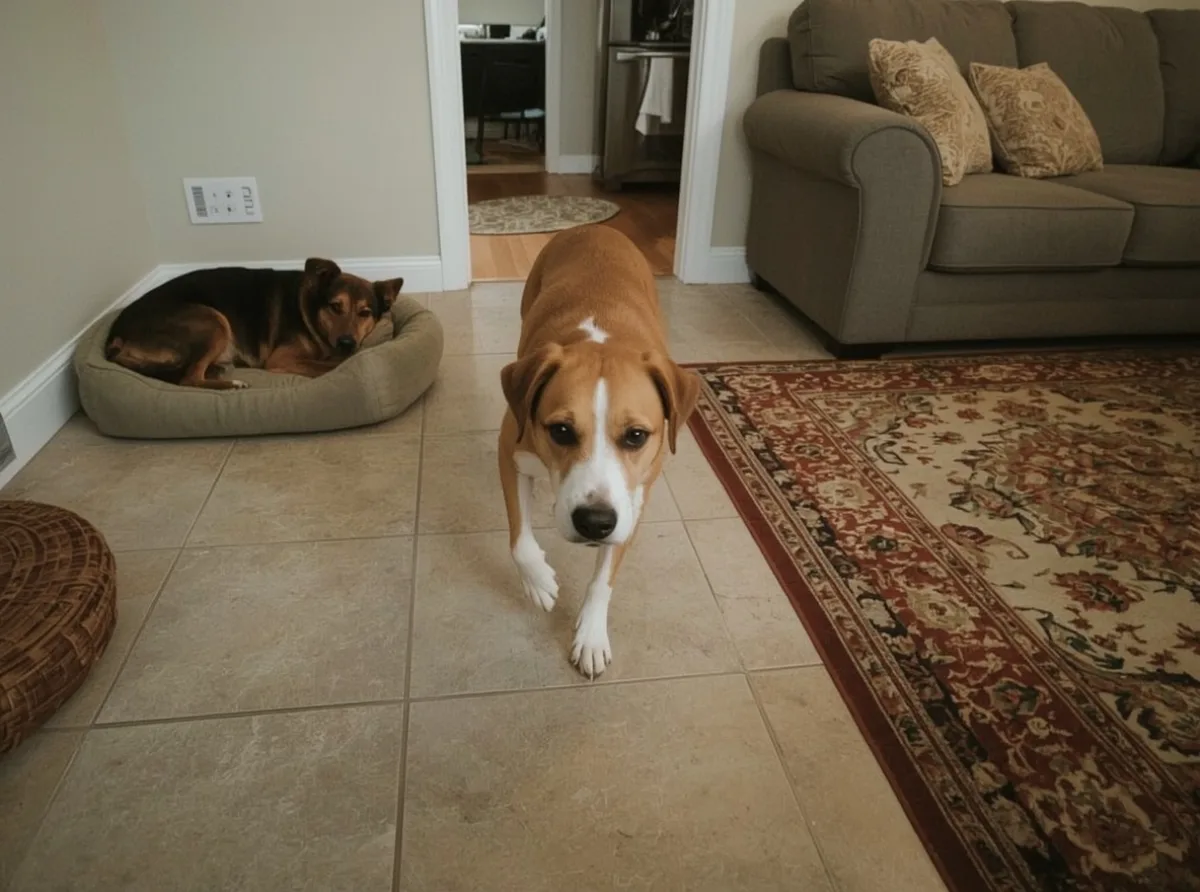
A dog that keeps changing resting spots is often telling you something simple, though not always obvious. Sometimes the answer is comfort. Sometimes it is temperature, noise, smell, tension, or a need to stay aware of what is happening around them.
Many dogs do this without any problem at all. They curl up on the floor, move to the couch, stretch out near a doorway, then later settle somewhere cooler or quieter. The habit can look random, but it usually follows a pattern once you pay attention to timing, surroundings, and your dog’s mood.
Frequent location changes are not always a sign of trouble. Still, when a dog cannot seem to settle anywhere for long, the behavior deserves a closer look. The resting spot itself may not be the main issue. The reason behind the movement often matters more.
What this behavior looks like in everyday life
Some dogs start the afternoon in one room and end up in three or four different places before evening. They may lie down for a few minutes, get up, circle the room, and choose another spot. In many homes, this happens quietly and without drama.
A dog might move because the sun shifted and the floor got warmer. Another may leave a room when children start talking loudly or when the TV gets louder. A third might switch spots several times because one area feels too open, while another feels too enclosed.
The behavior can look very different depending on the dog.
- Some dogs move calmly and slowly.
- Some seem to search for the “best” place to settle.
- Some get up quickly after only a few minutes.
- Some return to the same few locations again and again.
Noticing the pattern matters. A dog that alternates between a cool floor and a soft bed is often making practical comfort choices. A dog that never stays still, especially when tired, may be responding to discomfort or stress.
Comfort is one of the most common reasons
Dogs are very sensitive to physical comfort. A resting place that feels good for ten minutes may stop feeling good once their body heats up, their joints stiffen, or they fully relax. What looks like restlessness can be a dog simply adjusting to a changing body position.
Surface texture matters more than many people realize. A padded bed may feel inviting at first, but a firmer floor may feel better after a long walk. Some dogs like soft places for short naps and hard surfaces for deeper sleep. Others prefer to shift back and forth between both.
Pressure points also play a role. Older dogs, large breeds, and dogs with lean body types may dislike staying in one position too long. If a spot starts to press on elbows, hips, or shoulders, they may get up and look for relief somewhere else.
When a dog moves to a new resting spot and settles quickly, comfort is often the main reason. When the movement repeats many times in a short period, comfort may still be involved, but it is worth looking at other factors too.
Temperature changes can drive spot-hopping
Dogs regulate heat differently than people. A place that feels pleasant to you may be too warm for them, especially if they are covered in thick fur or have been active earlier in the day. They may choose cool tile, shaded corners, or an area near a vent instead of a soft bed.
Cold can cause the same kind of movement in the opposite direction. A dog may begin on the floor, then move to a blanket, then later seek out a sunny window or a couch with a warmer cushion. This is especially common in winter or in homes with air conditioning.
Even small changes in temperature can influence behavior. A dog lying near a door may get up when a draft starts. A dog in a sunny patch may shift once the light moves away. These are practical choices, not signs of indecision.
Common temperature-related resting patterns
- Moving from carpet to tile when overheated
- Leaving a bed with too much insulation
- Seeking sunlit areas during cool mornings
- Shifting away from vents, heaters, or drafts
If your dog keeps moving and seems unable to find a place that feels right, room temperature is one of the first things to check.
Noise, motion, and household activity matter
Some dogs rest lightly. They notice every footstep, door closing, or appliance sound. In a busy home, they may keep changing locations just to stay near the action while avoiding direct disturbance. They want rest, but not total isolation.
This is especially common in dogs that are socially aware or easily startled. They may choose one room while people are active, then relocate when the environment changes. A dog may lie by the kitchen during meal prep, move to the hallway when the family gathers, and later settle in a bedroom after the house gets quiet.
Household rhythm can shape the pattern.
- Morning movement often follows breakfast routines.
- Afternoon movement may follow cleaning, work calls, or children coming home.
- Evening movement may happen as the house becomes quieter.
Dogs that never get a predictable quiet period may keep searching for better rest. The movement is not always about the spot itself. Sometimes it is about escaping repeated interruptions.
Emotional reasons can be part of the pattern
Dogs do not always rest based only on physical comfort. Emotional state affects where they choose to lie down, how long they stay there, and whether they feel settled enough to sleep deeply. A dog that is anxious, uncertain, or on alert may change locations because no single spot feels secure for long.
Some dogs prefer to be near their people. They may follow family members from room to room and rest briefly wherever the nearest calm space happens to be. This can look like clinginess, but it often reflects attachment and a need to keep track of the social group.
Other dogs do the opposite. They move away from the center of activity because they are sensitive to too much social energy. They may search for a quieter corner, then shift again if they still feel exposed. In these cases, the dog is not avoiding rest. They are trying to protect it.
A dog that keeps moving from one place to another may be looking for security, not just comfort. The difference often shows up in body language: relaxed dogs settle easily, while tense dogs keep scanning, standing, or repositioning.
Subtle body language often gives the real clue
The movement itself is only part of the story. What the dog looks like while moving is often more useful than how many times they change spots. A relaxed dog usually walks slowly, lowers their body with ease, and resettles without much hesitation. Their muscles look soft, and they may sigh or stretch before lying down.
A dog that is uncomfortable or uneasy may behave differently. They may pace before choosing a place. They may lie down, get back up, spin several times, then lie down again. Their body may stay tense even when they are not active.
Signals that suggest a relaxed adjustment
- Easy movement from one spot to another
- Soft face and loose body
- Quick settling after the move
- Stretching or curling up comfortably afterward
Signals that may point to tension or discomfort
- Repeated getting up and lying down
- Restless pacing before settling
- Stiff posture or guarded movement
- Frequent shifting once down
When the body looks tense, the issue may be pain, anxiety, nausea, or an environment that feels too stimulating. The resting location becomes a clue, but not the full explanation.
Routine can make the behavior more or less noticeable
Dogs thrive on routine, even when the routine is informal. If their day is predictable, they often choose resting spots in a predictable way too. When the schedule becomes irregular, the resting pattern may become more scattered.
A dog may change spots more often during holidays, weekends, travel days, or houseguests. More activity, different smells, unfamiliar sounds, and shifting furniture can all make the environment feel less stable. Even a small change, like moving a dog bed to another room, can change where they prefer to rest.
Some dogs also adjust based on their own daily energy. After exercise, they may want one type of surface. After mental stimulation, they may want another. A dog that has not had enough activity may keep moving because they have energy left over and cannot fully settle.
Instinct still shapes how dogs choose places to rest
Even in a modern house, dogs do not stop being dogs. They still have instincts around safety, visibility, and social connection. That is part of why some dogs switch resting locations throughout the day instead of choosing one fixed bed and using it every time.
Many dogs like to rest where they can watch the room. Others prefer a location that gives them a wall at their back or a clear view of a doorway. Some choose spots that let them monitor the family while still keeping some distance. These preferences can shift depending on the dog’s age, confidence, and mood.
Here is a simple way to think about it:
| Resting pattern | Possible meaning |
|---|---|
| Moves between open and closed spaces | Searching for security and comfort |
| Chooses high-traffic areas | Wants proximity to people and activity |
| Prefers hidden corners | Seeks quiet, privacy, or reduced stimulation |
| Switches often without settling | May be uncomfortable, overstimulated, or in pain |
These are not strict rules. They are patterns worth noticing alongside body language and daily routine.
Age and physical condition can change the pattern
Puppies often move around because they are still learning how to rest. They may fall asleep in one place, wake up briefly, then wander to another spot. Their attention changes quickly, and their bodies need frequent short breaks. That kind of movement is usually normal.
Adult dogs often settle into more stable resting habits, but not always. Some remain very flexible and adapt to the day’s temperature, noise, and family activity. Others become more fixed in their preferences and return to the same two or three spots repeatedly.
Older dogs may change locations more often because their bodies need frequent repositioning. Stiff joints, muscle soreness, or trouble getting comfortable can make them shift from bed to floor and back again. They may also move simply because standing up and lying down is harder than it used to be.
When frequent location changes increase with age, comfort and mobility deserve special attention. A dog may be trying to relieve pressure, not just seeking a new favorite place.
When health concerns may be involved
Frequent shifting is not automatically medical, but some health issues can make resting hard. Pain, itching, digestive discomfort, overheating, breathing trouble, and urinary urgency can all interrupt rest. A dog that keeps moving may be trying to escape a feeling inside their body that they cannot resolve by lying still.
If the behavior appears suddenly, becomes more intense, or comes with other changes, health should move higher on the list. Look for signs like limping, licking one area, whining, panting at rest, drooling, trembling, reduced appetite, or trouble getting up. These details matter.
It is also worth paying attention if your dog seems unable to find a comfortable position at night. Restlessness during the day can sometimes be easier to overlook, but nighttime patterns may reveal more about pain or discomfort.
Situations that deserve a closer look
- Sudden change in resting behavior
- Repeated repositioning with no clear comfort found
- Stiffness when standing or lying down
- Scratching, licking, or chewing that interrupts rest
- Panting or pacing without recent exercise
These signs do not point to one single problem. They do suggest that the behavior is no longer just about picking a cozy spot.
How owners often misread the behavior
It is easy to assume a dog that keeps moving is being picky, spoiled, or dramatic. In many cases, that explanation misses the actual reason. Dogs usually do not care about the appearance of the resting place. They care about how it feels, how safe it seems, and whether it lets them relax.
Another common mistake is assuming a dog is “never tired” because they keep getting up. A tired dog can still be unable to settle. Fatigue and restlessness can exist at the same time, especially if the dog is uncomfortable, stressed, or overstimulated.
People also sometimes overlook the role of the environment. A dog may be perfectly willing to rest, but only in a place with fewer interruptions. If the home is loud, crowded, or unpredictable, the behavior may be a response to the setting rather than the dog’s mood alone.
What the pattern often means in real life
Frequent changes in resting location usually point to a search for the right balance. The dog may be balancing temperature, comfort, attention, safety, and quiet all at once. That search can be brief and harmless, or it can be a sign that something in the dog’s world is not quite right.
When the movement is calm and the dog settles well after each shift, the behavior often reflects normal adjustment. When the movement is constant, tense, or paired with other symptoms, it deserves more attention. The difference is usually found in the details, not the fact that the dog moved.
Paying attention to where the dog goes, when they go there, and how they act before and after the move can reveal a lot. A dog that chooses the kitchen floor after a walk, the rug after sunset, and a corner by the bedroom later in the evening is giving you a readable pattern. That pattern is usually practical, not random.
The resting spot itself is only one piece of the picture. The whole room, the whole day, and the dog’s own body shape the decision. Once those pieces come into view, the behavior becomes much easier to understand.