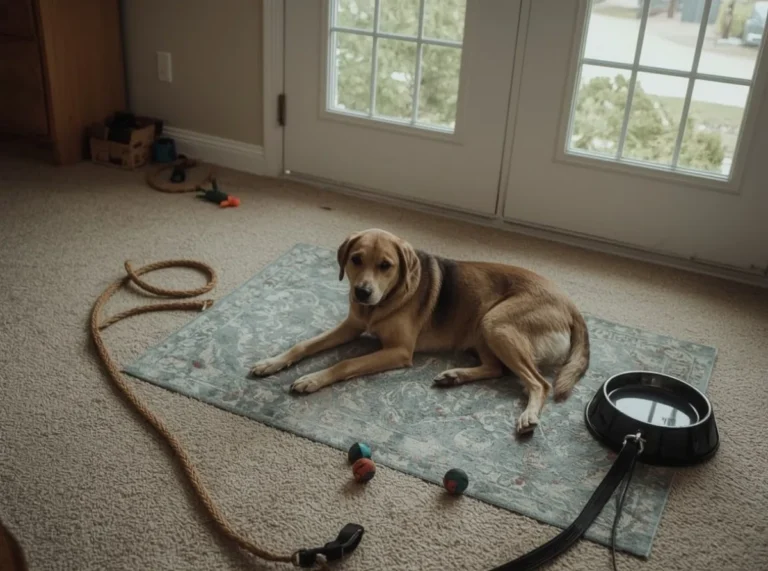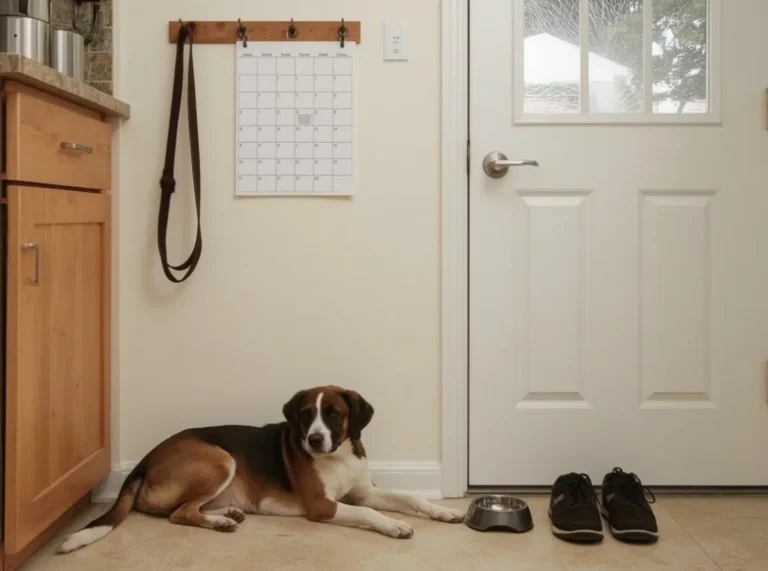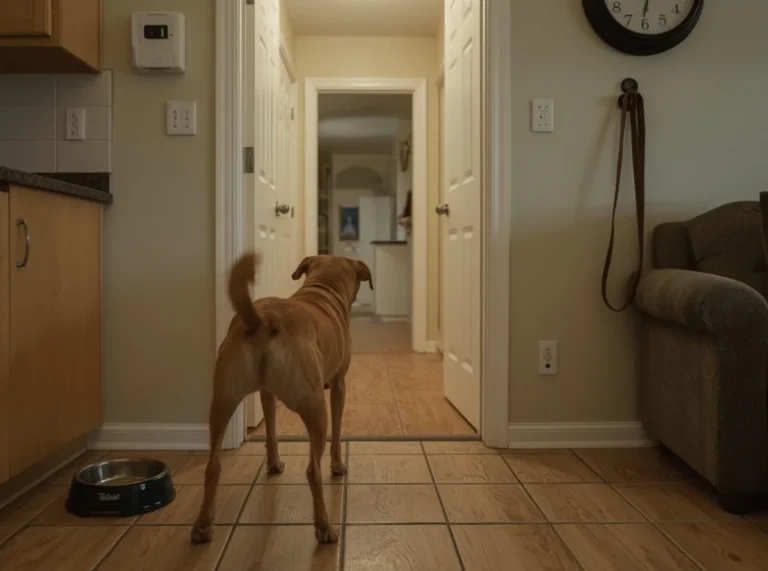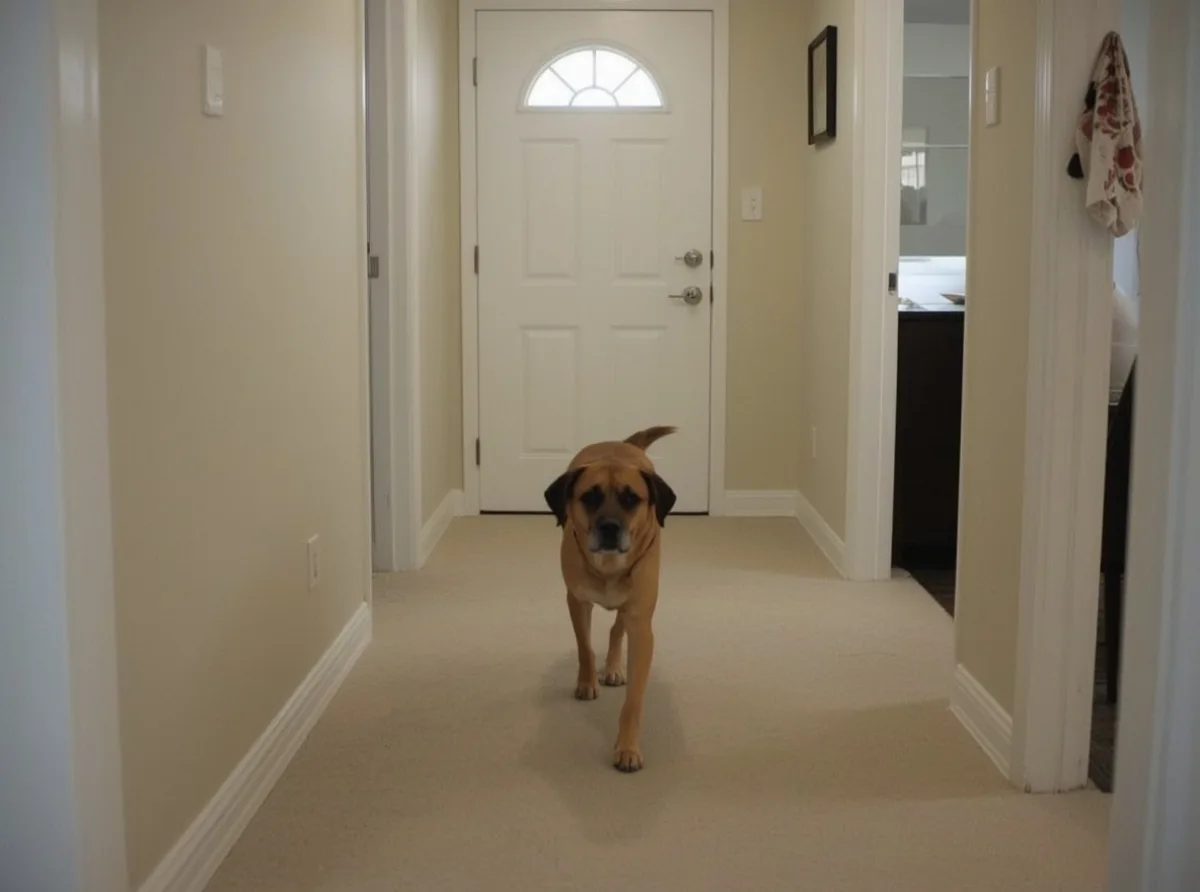
Some dogs seem to make a full-time job out of walking the same route from the front door to the living room, then down the hallway, into the kitchen, and back again. At first, it can look random. A dog rises from a nap, checks one window, turns a corner, sniffs the baseboards, and repeats the whole circuit ten minutes later.
That repeated patrolling is often more than simple wandering. It can reflect alertness, habit, boredom, stress, curiosity, or a strong need to keep track of the home and everyone inside it. The same behavior can look very different from one dog to the next. A relaxed shepherd-like breed may move with purpose and quiet focus, while another dog may pace in a sharper, more restless way.
House patrols are common in dogs that feel a strong sense of responsibility over their territory. They may be checking for changes, monitoring sounds, or simply following a routine that helps them feel organized. In many homes, the behavior blends instinct with daily life, so it becomes part of the dog’s normal rhythm.
What matters most is not only how often a dog patrols, but how the behavior looks and when it happens. A calm walk through the house after dinner can mean something very different from repeated pacing late at night with tight body language and no ability to settle. The details tell the real story.
What repeated house patrols often look like
Patrolling does not always mean the same thing. Some dogs move slowly, stopping at doors and windows before continuing on. Others make quick loops, checking the same spots again and again. Some seem to have a fixed route, almost as if they are following an invisible schedule.
In everyday life, owners may notice these patterns most clearly:
- Walking from room to room without obvious purpose
- Checking windows, doors, or stairways several times
- Sniffing the same corners, vents, or entry points
- Pausing to listen, then continuing the circuit
- Repeating the pattern at certain times of day
Not every version of this behavior means the dog is worried. A dog may patrol after hearing a noise outside, after the household becomes quiet, or when family members move to different parts of the home. Sometimes the pattern is brief and disappears once the dog feels satisfied that everything is in order.
Other dogs turn patrolling into a habit. They do it after waking up, after meals, or when they have nothing else to do. The movement becomes familiar, and familiar movement often becomes repeated movement.
Instinct plays a major role
Many dogs are naturally inclined to monitor their surroundings. Even breeds that were not specifically developed for guarding often carry some level of alertness toward their environment. Dogs are highly social, highly observant animals, and the home becomes their territory very quickly.
That territorial awareness does not always look dramatic. Sometimes it appears as quiet movement from space to space, as if the dog is making rounds. A dog may be responding to tiny changes that people barely notice: a car passing, a sound from another apartment, a shift in scent from an open door, or the smell of a visitor left behind.
Repeated patrolling often reflects a mix of instinct and uncertainty: the dog notices a change, checks it, and may check again to confirm that nothing has shifted.
This kind of behavior is especially common in dogs with strong awareness of boundaries. They may track where the family sleeps, where food appears, where strangers enter, and where outside sounds seem loudest. In their mind, the house is not just a place to relax. It is a space to monitor.
Emotional reasons behind the behavior
Patrolling can also be tied to a dog’s internal state. A dog that feels uneasy may move around the home to regain a sense of control. The motion itself can be self-soothing. Checking familiar areas again and again can reduce uncertainty, at least for a little while.
Some dogs patrol when they are alert but not truly relaxed. They are not panicked, but they are not fully at ease either. Their bodies may look a bit stiff. Their ears may shift toward every sound. They may settle for a moment, then rise again because something in the environment still feels unfinished.
Other dogs use movement to handle anticipation. If they expect dinner, a walk, or a family member to return soon, they may circulate through the house while waiting. The behavior can become a kind of active waiting, where the dog stays engaged instead of lying still.
There is also a connection between patrol behavior and attachment. Dogs that are closely bonded to their people may keep track of where everyone is. They move between rooms as if making sure the household is intact. In some homes, the behavior increases when a favorite person is home and the dog wants to monitor their location.
Signs that the patrol is emotionally driven
- Repeated checking without fully relaxing afterward
- Stiff or tense body posture
- Scanning behavior, especially toward doors and windows
- Frequent stopping to listen
- Difficulty settling once the loop ends
A dog with a more emotional reason for patrolling may seem less interested in the act of walking itself and more focused on reassurance. The pattern becomes a way of confirming that nothing has changed.
How the home environment shapes the habit
The layout and energy of a home can make patrolling more likely. A quiet house with lots of windows may encourage a dog to watch for movement outdoors. A busy household with frequent comings and goings may keep the dog on alert. Open floor plans can also make repeated movement easier because the dog can move between key areas without obstruction.
Routine matters too. Dogs pay close attention to patterns. If the household tends to get quiet after 8 p.m., or if everyone gathers in different rooms during the evening, the dog may begin to patrol during those transitions. The behavior can emerge when the day changes pace.
Some dogs also patrol more when they lack enough mental or physical stimulation. A dog with unused energy may turn to repetitive movement simply because the body needs an outlet. This is not always a behavior problem on its own. Sometimes it is the dog’s way of filling time.
Sounds and smells have a large influence as well. A dog living near a hallway, staircase, elevator, street, or shared wall may patrol more often because there is more to monitor. The dog may be responding to small environmental cues that seem insignificant to people but important to canine senses.
Common environmental triggers
- Visitors arriving or leaving
- Outdoor noise from traffic, neighbors, or other animals
- Changes in family routine
- Long periods of inactivity
- New furniture, boxes, or altered room layouts
Even small changes can matter. A moved couch, a door left open, or a new scent in the hallway may be enough to make a dog begin another round of inspection.
Breed tendencies and individual personality
Some dogs are more likely to patrol because of their breed history, but breed alone does not tell the whole story. Herding dogs, guarding breeds, and other highly observant dogs often have stronger tendencies to keep track of movement and boundaries. They may naturally circle through the house with a sense of purpose.
Still, individual personality matters just as much. Two dogs from the same breed can behave very differently. One may nap most of the day and only rise when something important happens. Another may spend hours checking each room as part of a self-appointed routine.
A dog’s life experiences also shape the habit. A rescue dog that once lived in a noisy, unstable setting may patrol more because constant scanning once helped it stay safe. Another dog may have learned that patrolling brings attention, meals, or interaction from people, which can reinforce the behavior over time.
Breed can influence the tendency to patrol, but the dog’s history, daily routine, and sense of security often shape how strong the behavior becomes.
When patrolling is calm and when it becomes concerning
Not every dog that patrols the house has a problem. Calm patrolling can be a normal part of canine life. The dog moves, checks, and returns to rest. The pattern is steady but not urgent. The dog can be interrupted and still settle afterward.
Concern grows when the behavior becomes difficult to stop or begins to crowd out normal rest. A dog that circles the house for long stretches, seems unable to lie down, or keeps patrolling even after reassurance may be showing signs of stress or hypervigilance. In those cases, the behavior is less about simple awareness and more about an unsettled internal state.
Body language helps separate the two. A calm dog may move smoothly, with loose muscles and an easy return to bed. A more stressed dog may have a tight face, fixed eyes, rapid head turns, or a posture that looks held together rather than relaxed.
| Type of patrol | Common signs | Likely meaning |
|---|---|---|
| Calm | Loose movement, brief checking, easy return to rest | Habit, monitoring, or mild alertness |
| Moderate | Repeated loops, listening at doors, daytime or evening patterns | Routine, anticipation, or environmental monitoring |
| Intense | Restlessness, stiffness, inability to settle, frequent scanning | Stress, discomfort, or heightened vigilance |
The same route through the house can mean different things depending on the dog’s state of mind. The behavior itself is only part of the picture.
What dogs may be checking for
Dogs usually patrol for a reason, even when the reason is subtle. They may be checking whether someone is home, whether a sound has changed, or whether a smell near the doorway needs another look. They may also be checking for access points, such as a front door, back door, window, or gate leading outside.
Some dogs learn a particular sequence. They may inspect the kitchen first because food often appears there, then the living room because the family gathers there, and then the entryway because it is the most likely place for change. Once that pattern is learned, the dog can repeat it automatically.
That automatic quality is easy to miss. A dog may appear to be “on duty,” but in many homes the patrol is partly a routine and partly a habit of observation. The dog is not necessarily worried about danger. It may simply be keeping track of a familiar world.
How owners often misread the behavior
People sometimes assume a dog that patrols is being stubborn, nosy, or defiant. In reality, the behavior usually has a practical or emotional root. The dog is not trying to make life inconvenient. It is responding to its own sense of the environment.
Another common misunderstanding is assuming all repeated pacing means anxiety. That is not always true. Some dogs patrol because they are alert, active, or waiting for the next household event. If the dog can stop, relax, and resume normal behavior later, the patrol may simply be part of daily life.
At the same time, ignoring the behavior completely can also miss important signs. If the dog patrols more often after changes in routine, visitors, or household tension, those patterns can reveal a lot. Dogs often show their internal state through movement before they show it through anything else.
Questions worth noticing in daily life
- Does the dog patrol more at certain times?
- Can the dog settle comfortably afterward?
- Does the behavior increase when the house is quiet?
- Does it happen after noises, changes, or departures?
- Does the dog look relaxed or watchful while moving?
These details help separate a harmless habit from a sign that the dog feels overworked by its own environment.
Long-term patterns matter more than isolated moments
A single evening of extra house patrolling does not mean much by itself. Dogs respond to temporary events all the time. But a repeated pattern over weeks or months can show that the behavior has become part of the dog’s way of managing the home.
Long-term observation often reveals a rhythm. Some dogs patrol mainly in the early morning. Others do it when household activity slows down. Some only begin after specific triggers, like a delivery truck, a new pet, or a change in sleep schedule.
When the pattern is stable and the dog still eats, rests, plays, and interacts normally, the patrol may simply be one of the dog’s regular habits. When the pattern grows stronger or begins to crowd out rest, it deserves a closer look. The difference is not always dramatic, but it is meaningful.
Repeated patrolling becomes more important when it changes the dog’s ability to rest, enjoy the home, or shift out of alert mode.
Why some dogs patrol more in certain stages of life
Age can influence how often a dog patrols. Younger dogs may move around the house simply because they have more energy and less impulse control. They may keep checking the same spaces because the world feels interesting and movement feels natural.
Adult dogs often patrol with more purpose. Their movement may be tied to routine, territorial awareness, or family patterns. They have learned the map of the home and know what each sound means. Their patrols can look almost scheduled.
Older dogs may patrol for different reasons. Some become more watchful as their senses change or as their comfort with the environment shifts. Others move more often because rest becomes less deep, or because they are seeking reassurance in familiar spaces. A dog that never used to patrol may start doing it later in life, especially if hearing, vision, or health begins to change.
That is why the same behavior should always be viewed in context. A puppy circling the house is not giving the same message as a senior dog doing the same thing at 2 a.m.
What the behavior may say about the dog’s emotional world
Repeated patrols often point to a dog that is paying close attention to its surroundings and trying to organize its space. That can be a completely normal expression of canine awareness. Dogs are creatures of routine, scent, sound, and movement. House patrols fit naturally into that pattern.
But the behavior can also reveal a dog that does not feel fully settled. The dog may be alert because it wants to protect the home, because the environment feels too active, or because it has learned that movement helps it handle uncertainty. In that sense, patrolling can be a window into the dog’s internal balance.
The difference between normal alertness and emotional strain often shows up in the dog’s ability to return to rest. A dog that patrols and then sleeps deeply is probably using the behavior as part of a manageable routine. A dog that patrols endlessly may be telling a different story.
When you watch the pattern closely, the meaning becomes clearer. The route, the timing, the body language, and the dog’s ability to settle all matter. Repeated house patrols are never just about walking. They are about what the dog thinks the home needs to be in that moment.