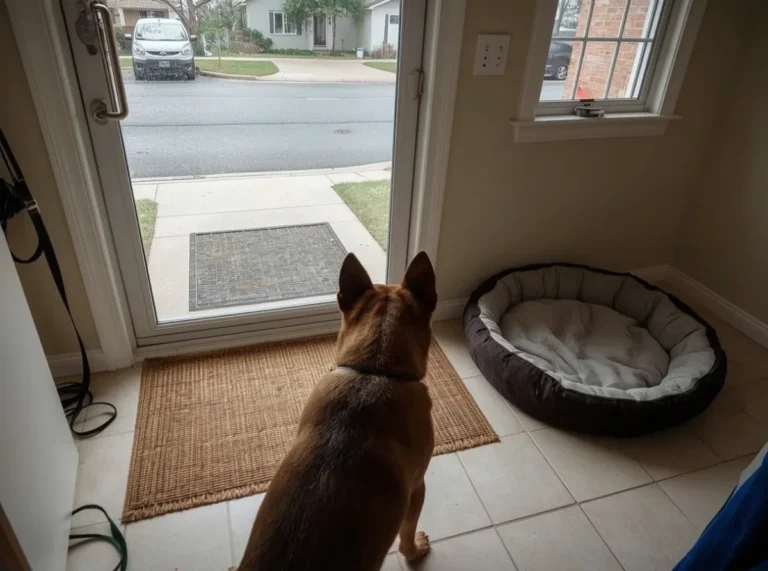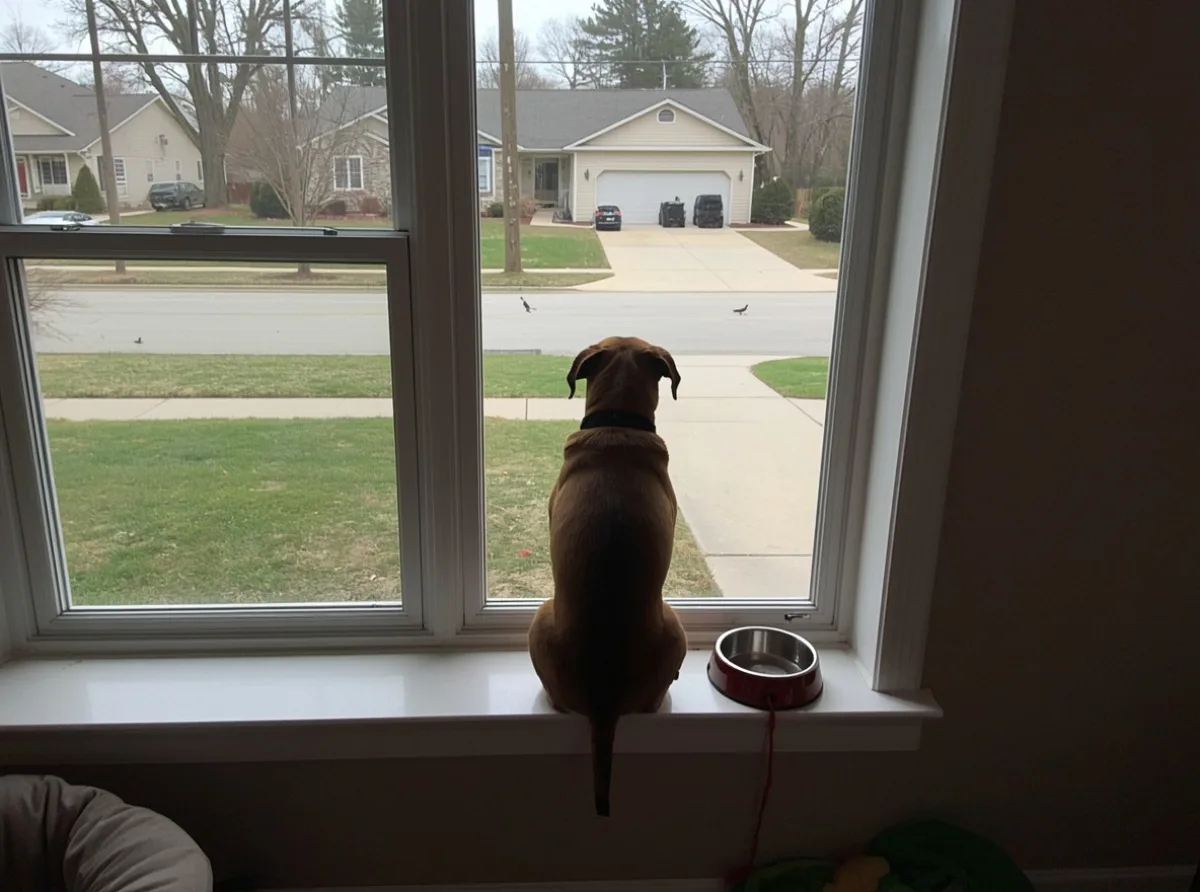
Some dogs treat a window like the most interesting place in the house. They may sit there for long stretches, tracking movement outside, listening for sounds, or waiting for something they seem to expect. To an owner, it can look like simple curiosity. In many cases, it is. But the reason a dog keeps returning to the window is often a blend of instinct, habit, emotional attachment, and plain old neighborhood entertainment.
That behavior can be steady and calm, or sharp and intense. One dog may watch the street quietly for hours and barely blink when a car passes. Another may rush to the glass every time a mailbox lid closes or a leaf moves across the yard. The difference matters, because the window is not just a view. For many dogs, it is a place where sight, sound, and expectation all meet.
Owners often assume the dog is guarding the house, waiting for a person, or feeling bored. Those can all be part of it, but they are not the whole picture. Window watching is usually a small window into the dog’s daily emotional world. It can reflect alertness, curiosity, anticipation, concern, or a learned routine that has become strangely important.
What Window Watching Looks Like in Everyday Life
Window watching does not always look dramatic. In some homes, it is almost invisible until you notice the same dog returning to the same spot again and again. The posture may be relaxed: front paws on the sill, ears forward, eyes moving slowly from one thing to another. In other dogs, the body gets tense, the neck stretches, and the tail becomes rigid. The difference between calm observation and reactive fixation is easy to miss at first.
A dog that watches windows may do it at predictable times. Morning light can bring neighborhood activity, which means walkers, delivery trucks, and other dogs outside. Late afternoon may be another active period, especially if the household tends to quiet down while the outdoors becomes busy. Some dogs also learn the family schedule and use the window to check for arrivals, departures, or changes in routine.
It helps to think of the behavior as a repeated choice. The dog is not just standing near glass by accident. Something about that spot is valuable enough to keep drawing attention. Sometimes it is the view itself. Sometimes it is the acoustic advantage. A window can reveal a lot before a sound reaches the rest of the house.
Common signs that the window has become a favorite spot
- The dog goes there without being called.
- It reacts quickly to movement outside.
- It pauses at the window during changes in household routine.
- It seems calmer after checking the view.
- It returns to the same window throughout the day.
Not every dog that looks out the window is guarding anything. Many are simply keeping up with the world outside, the same way people glance at their phones or check the weather. Still, the regularity of the habit usually means something about the outside environment has become meaningful.
Natural Instincts Behind the Behavior
Dogs are wired to notice motion, shifts in sound, and changes in their surroundings. That sensitivity helped their ancestors detect threats, find opportunities, and stay aware of what was happening nearby. A window gives a dog access to all three. Birds hop across a fence, a neighbor walks a dog, a package arrives, a leaf skitters by. Each tiny event can register as important.
Predatory and territorial instincts can both play a role. For some dogs, watching outside feels like surveillance. They are monitoring a border. For others, it is more about stalking movement with sustained attention. Terriers, herding breeds, and many watchdog-type breeds often show a stronger interest in outside activity, though mixed-breed dogs can be just as intense. Breed tendency shapes the pattern, but it does not fully explain it.
There is also a social side. Dogs are highly responsive to members of the household and to events connected to them. If the front window is where they can watch family members leave or return, the spot becomes emotionally loaded. A dog may not understand the clock, but it can learn that certain people appear at certain times. The window becomes part lookout, part waiting area.
For many dogs, window watching is not a random habit. It is a mix of instinct, learned expectation, and sensitivity to movement outside.
Why some dogs are more drawn to windows than others
- Breed tendencies: alert, energetic, or visually focused dogs may notice outdoor movement more quickly.
- Personality: some dogs are naturally observant and prefer watching over direct interaction.
- Early experiences: dogs exposed to active outdoor environments may develop stronger checking habits.
- House layout: a low window, bay window, or window near a favorite resting spot invites more use.
- Daily reinforcement: if interesting things happen there, the behavior becomes self-sustaining.
Once a dog discovers that the window provides useful information, the habit can stick. Repetition turns interest into routine, and routine becomes part of the dog’s day.
Emotional Reasons Dogs Keep Looking Outside
Window watching is often emotional, even when it appears practical. Some dogs are simply interested in what is happening beyond the glass. Others seem to use the window as a way to cope with boredom, uncertainty, or separation from a person they care about. The emotion does not always rise to the level of distress. It may just be a mild need to check in.
Anticipation is one of the strongest reasons. A dog that expects the return of a family member may spend part of the day scanning the same view. That waiting can look patient and calm. In some dogs, though, anticipation becomes agitation. They may pace, whine, or jump whenever a certain sound appears outside. At that point the window is no longer a neutral lookout; it is a place where hope gets repeatedly triggered.
Boredom matters too. A dog with too little mental stimulation may turn to the environment for entertainment, and the outdoors offers endless possibilities. A moving trash can, a squirrel, a child on a bike, a changing shadow—each one is something to examine. If the dog does not have many other outlets, the window can become the day’s main event.
In some homes, window watching is comforting. The dog may like the predictable rhythm of people passing, cars arriving, and birds landing in the same places. Predictability can be soothing. The window gives the dog something to monitor without having to engage directly. That can be especially true for shy dogs or dogs that prefer observation to interaction.
Emotional states that may show up near the window
- Curiosity: relaxed posture, soft eyes, steady scanning.
- Expectation: focused attention, repeated checking, increased alertness at certain times.
- Boredom: lingering without much change in posture, seeking stimulation from outside events.
- Unease: stiff body, rapid head turns, barking, or difficulty settling after looking outside.
These states can overlap. A dog may start with curiosity and shift into agitation if the outside scene becomes exciting or alarming. Paying attention to that change is more useful than labeling the behavior too quickly.
How Home Environment Shapes the Habit
Not every window gets equal attention. Dogs often prefer the one with the best view of the street, driveway, front door, or shared yard. A window near a bird feeder can become a favorite if wildlife appears there often. A window facing a neighbor’s fence might matter less unless it offers sound cues or familiar movement. Dogs are practical about this in their own way. They gravitate toward the place where the most information arrives.
Household routine can reinforce the habit without anyone meaning to. If the dog gets praised for sitting at the window, or if it sees delivery arrivals from there, the pattern strengthens. If family members often talk to the dog through that window, it becomes socially important too. Even a simple act like opening the blinds each morning can turn the spot into a daily ritual.
Noise and stimulation outside also matter. A quiet cul-de-sac creates a different viewing experience than a busy urban street. In one setting, the dog may watch passively. In another, it may be on alert constantly. Dogs living near shared sidewalks, apartment hallways, or active front yards tend to spend more time monitoring the glass because there is always something new to notice.
Seasonal changes can shift the pattern as well. Winter may bring fewer people but more visibility through bare trees. Spring may increase movement, sounds, and outdoor activity. Some dogs become more window-focused during periods when the household is less active indoors. A slower family routine can leave the dog with more time to observe the outside world.
A window becomes more important when it consistently predicts movement, sound, or change. Dogs notice patterns long before humans do.
Environmental factors that intensify window watching
| Factor | Effect on Behavior |
|---|---|
| Frequent outdoor traffic | More checking, more alertness, more bark triggers |
| Visible front yard or street | Strong interest in passing people, animals, and vehicles |
| Bird feeders or wildlife | Longer periods of silent observation |
| Routine arrivals and departures | Expectation-based watching |
| Limited indoor stimulation | More reliance on the window for entertainment |
In a home with lots of mental and physical activity, the window may still matter, but less obsessively. In a quieter home, it can become the dog’s main source of novelty.
When the Behavior Means More Than Simple Curiosity
Sometimes the difference between ordinary watching and a more meaningful issue is subtle. The dog may not be barking nonstop or acting upset, yet the behavior can still signal tension. One clue is how hard it is for the dog to disengage. A relaxed observer can leave the window after a few minutes. A more anxious or fixated dog may resist being called away, continue staring after the trigger is gone, or return instantly the moment it hears a sound outside.
Watch for body language, not just eye contact. Tight muscles, weight shifted forward, shallow breathing, ears locked in one position, and repeated pacing can indicate that the dog is not simply enjoying the view. In some cases, the window becomes a place where frustration builds. The dog sees movement but cannot reach it. That mismatch can create restlessness.
Separation-related habits can also appear here. Some dogs watch the window because a person has recently left. They may rest there until the return is possible, or until another cue distracts them. If the behavior appears mostly when the house is empty, it may reflect attachment rather than general curiosity. A dog that watches the window only during departures may be tracking a particular person, not the neighborhood as a whole.
There is another pattern that owners sometimes miss: learned reinforcement. If a dog barks at passersby and the barking reliably results in owner attention, the window behavior can intensify. The dog may not be “trying to misbehave.” It has simply learned that the window is an effective place to get a response. That can turn a casual habit into a deeply rehearsed routine.
Signs the window watching may be emotionally loaded
- The dog cannot settle after a trigger passes.
- It paces between the window and other rooms.
- It barks with a sharp, repetitive pattern.
- It checks the same spot many times in a short period.
- It seems more vigilant when family members leave.
When these signs show up together, the behavior is usually telling you more than “I saw something outside.” It may be speaking to expectation, frustration, or unease.
Different Dogs, Different Window Habits
Not all window watchers behave the same way. A young, energetic dog may rush to the glass whenever it hears a sound, then move on quickly when nothing happens. An older dog may prefer a comfortable perch and watch quietly for long periods. A bold, confident dog often approaches the window as if it owns the view. A cautious dog may stay slightly back, using the window as a safe observation point rather than a front-row seat.
Working breeds and herding breeds may show especially strong environmental monitoring. They are often alert to movement by design. But even a laid-back companion dog can become a dedicated observer if the window offers enough stimulation. The behavior does not always announce itself through intensity. Sometimes it appears as consistency: the same dog, the same spot, the same times every day.
Puppies may approach windows out of pure novelty. They are learning the shape of the world, and the outside scene is full of moving parts. As they mature, their reasons often become more specific. The habit may stay, but the meaning changes. What began as simple fascination can turn into monitoring, anticipation, or a response to household patterns.
How the same behavior can look different
- Playful watching: quick, bouncy interest, easy to redirect.
- Neutral watching: relaxed observation, little tension, no strong reaction.
- Defensive watching: stiff body, vocalization, protective stance near the glass.
- Waiting behavior: repeated checking tied to people, routines, or expected events.
These versions can blend together in one dog. A dog that watches calmly most of the day may still react sharply to one specific trigger, such as the mail carrier or another dog walking past the house.
How Owners Often Misread the Behavior
It is easy to interpret a dog’s window habit in a simple way. People often call it guarding, boredom, or nosiness. Those labels are not always wrong, but they can miss the more specific pattern. A dog may not be guarding in a classic sense at all. It may be responding to sound before sight, waiting for a predictable person, or using the window as a self-chosen resting place.
Another common misunderstanding is assuming that all window watching is harmless. For many dogs it is, but not always. A dog that is overly fixated can become over-aroused by repeated triggers outside. That can leave it more reactive during walks, more vocal during the day, or less able to relax at home. The behavior itself is not the issue; the level of tension underneath it is what matters.
Some owners also miss the dog’s need for mental stimulation. If the window is the most interesting part of the day, the dog may be telling you that the rest of the routine is too flat. That does not mean the dog needs constant activity. It means the environment may need more variety, better structure, or more chances to engage in other kinds of thinking and movement.
What looks like staring out the window can be a sign of a dog trying to manage boredom, expectation, or alertness in a predictable way.
In practice, the best interpretation comes from pattern recognition. When does the dog go there? What does it react to? How quickly can it settle afterward? The answers tell a more accurate story than the behavior alone.
What the Habit Says About Dog–Human Life Indoors
Dogs do not separate home life from outside life the way people often do. A window connects those worlds. For many dogs, especially those living closely with human schedules, the view outside becomes part of the household rhythm. It is where departures are noticed, routines are tracked, and outside activity is folded into the dog’s sense of the day.
That is why window watching can be so persistent. It often fits into the dog’s version of normal. The behavior may even feel comforting to the dog because it creates a predictable role: watch, wait, notice, repeat. Some dogs are happiest when they can maintain that role with minimal interruption. Others use the window as an anchor while the household shifts around them.
When the habit is mild, it may be nothing more than one of the dog’s preferred pastimes. When it grows more intense, it can reveal that the dog is taking too much responsibility for monitoring the world outside. A dog that feels compelled to oversee every movement is not always relaxed, even if it seems settled on the surface.
The most revealing part is often not the watching itself but the transition away from it. A dog that can look, register, and then walk off is usually in a good place. A dog that cannot let go of the window may be showing you that the outside world has become a little too important, or that the inside world is a little too dull to compete with it.
That is why certain dogs keep watching the windows. The glass offers more than scenery. It offers information, routine, anticipation, and a place to focus all at once. For some dogs, that is enough to make the window the most meaningful spot in the house, day after day, without ever needing to bark a word about it.