Some dogs stretch out flat the moment they settle down. Others fold themselves into a tight little circle, nose tucked near the tail, legs pulled close, and back curved like a comma. That sleeping position is so common that many owners barely notice it until they start wondering why one dog seems to curl up almost every night.
The answer is usually not mysterious. Curling up tightly can be a normal mix of instinct, comfort, temperature control, and emotional self-protection. For many dogs, it is simply the easiest way to rest. For others, it can reveal something about how they feel in the space around them.
The shape a dog chooses at bedtime often changes with age, breed, personality, and routine. A dog may curl tightly on a cold floor but stretch out after a long walk. Another may keep the same tucked posture no matter where it sleeps. Those differences matter because they show how flexible and context-driven the behavior can be.
What Tight Curling Looks Like in Everyday Life
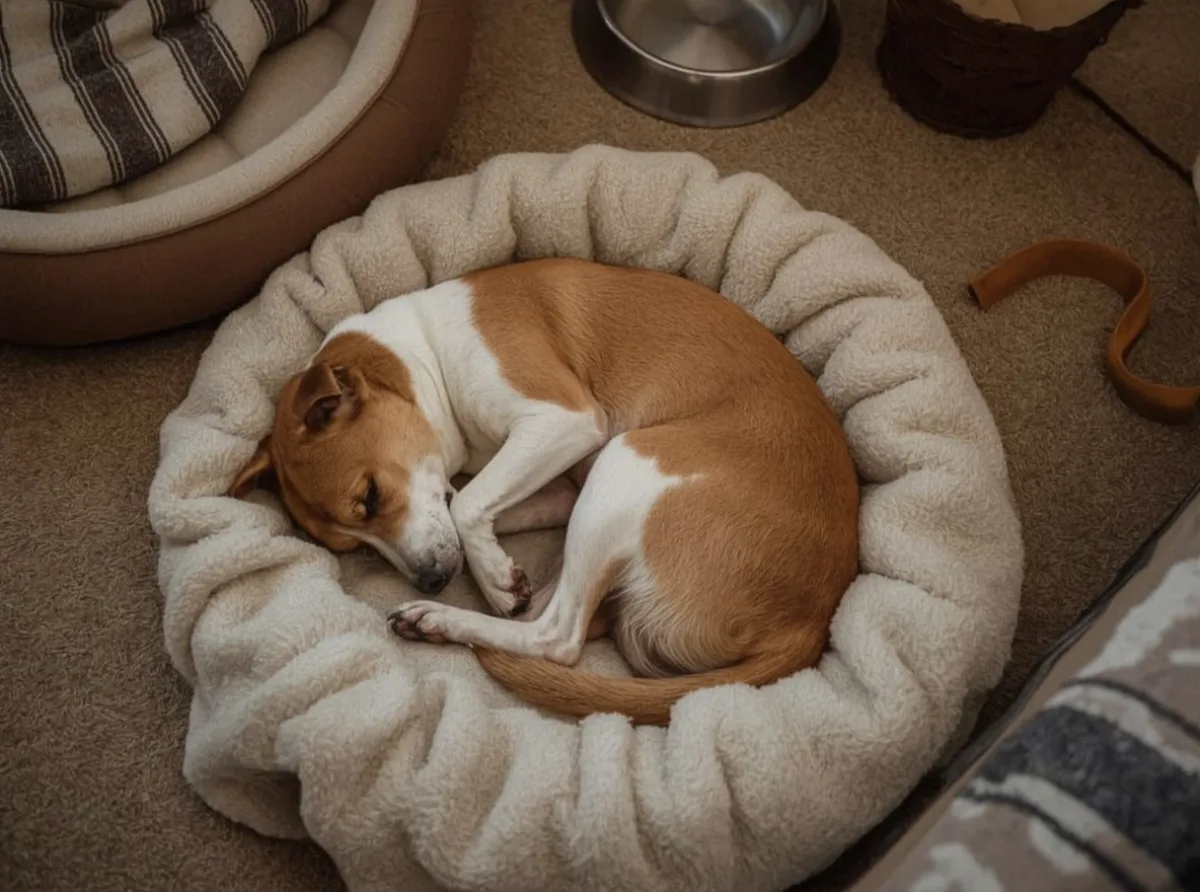
Tight curling is more than just a compact sleeping pose. The dog usually draws the paws inward, bends the spine into a rounded shape, and places the nose near the hind legs, flank, or tail. Some dogs also hide the face under a paw or press it against the body.
It often happens at the beginning of a nap rather than after the dog is fully asleep. The dog may circle once or twice, lower itself carefully, then pull into the familiar shape right away. In homes with multiple sleeping spots, this posture can appear on couches, dog beds, blankets, laundry piles, or even on the floor if the dog wants a specific spot.
Owners often notice that tightly curled sleeping is more common at certain times of day. Evening naps, quiet mornings, and cooler nights tend to bring it out. A dog may also curl up after a stimulating event, like visitors arriving, a car ride, or a busy walk, when it wants to settle its body and reduce outside input.
When a dog curls tightly while sleeping, the position itself is usually normal. The meaning comes from the pattern around it: temperature, comfort, routine, and the dog’s overall body language while awake.
Why Dogs Commonly Sleep in a Tight Curl
At the simplest level, curling up is efficient. It reduces exposed surface area, helps conserve body heat, and lets the dog rest in a compact, protected position. That instinct traces back to ancestors that needed to stay warm and safe while sleeping in outdoor or semi-sheltered environments.
Many dogs still keep that old habit even when they live in comfortable homes. The behavior can be strongest in smaller dogs, short-haired breeds, and dogs that naturally feel the cold. But even large, fluffy, or very confident dogs may curl up when the room is cool or the bedding is soft enough to hold the shape.
There is also a comfort factor. A rounded posture can feel secure, especially for a dog that likes boundaries around its body. The curled shape creates a kind of self-made nest. Some dogs seem to settle more deeply when they can “contain” themselves in that way.
Common practical reasons
- Retaining body heat in a cool room
- Reducing pressure on joints or sensitive areas
- Creating a sheltered feeling in an open space
- Matching the size of a bed, crate, or blanket
- Establishing a familiar sleep routine
None of these reasons has to point to a problem. In many cases, the dog is simply choosing the most comfortable position available. The body tends to favor what feels safe, warm, and easy to maintain through a full sleep cycle.
How Instinct Shapes the Sleeping Position
Dogs do not sleep like people do. Their resting posture is influenced by movement patterns, denning instincts, and a long history of using body shape to control exposure. Curling up is one of the clearest examples of that instinct showing up in a domestic home.
Wild canines often selected sleeping positions that protected vulnerable areas of the body. The belly, neck, and face are softer and less guarded than the back and hips. Tucking those areas inward helps a sleeping animal feel less exposed. Even though modern dogs sleep indoors, that instinct can remain strong.
Breed tendencies can affect this too. Dogs bred for colder climates may be comfortable in curled positions because they were shaped by environments where heat retention mattered. Smaller companion breeds sometimes do the same for the same reason. But instinct alone does not explain everything. Two dogs of the same breed can sleep in very different ways depending on age, habits, and personality.
A dog that curls tightly every night may be responding to an old internal pattern that says, “This is a safe way to rest.” That is not a sign of fear on its own. It is more accurate to think of it as a preferred resting framework, one that can be influenced by the dog’s surroundings.
Temperature and Body Comfort Matter More Than Many Owners Realize
Temperature is one of the most common reasons dogs curl tightly while sleeping. Dogs lose body heat through exposed areas, so a rounded shape helps reduce heat loss. You may see this more often in winter, after the air conditioner has been on, or on floors that pull warmth away from the body.
Some dogs use the curled position even in mild weather because it simply feels good on their joints. A tucked posture can create a sense of support, especially if the dog prefers a cushiony surface. When a dog has a bed with raised sides, it may nestle into the curve and form an even tighter ball.
Comfort also depends on the dog’s physical state. A dog that has been active, slightly sore, or tired from a long day may choose a more compact posture because it is easy to maintain. Dogs with arthritis or older dogs with stiff backs sometimes adjust their sleeping shape from night to night depending on how they feel.
| Situation | What the curled posture may suggest |
|---|---|
| Cool room or winter night | Heat conservation |
| Soft bed with raised sides | Preference for a nest-like boundary |
| After active exercise | Need for a secure, easy resting posture |
| Older dog with stiffness | Seeking a position that feels supported |
These patterns are often straightforward. If the dog gets up relaxed, stretches normally, and seems happy during the day, the posture is more likely about comfort than concern.
What Tight Curling Can Reveal About Emotional State
Dogs do not use sleeping positions as direct emotional confessions, but posture still reflects how safe or settled they feel. A dog that curls tightly in a calm, familiar home may simply be resting in a private, self-contained way. Another dog may choose the same shape when the environment feels uncertain.
That difference is why context matters. A curled dog with loose muscles, relaxed breathing, and an easy wake-up pattern is not the same as a curled dog that seems tense, startles quickly, or keeps checking the room before settling. The sleeping position can look identical while the internal state is very different.
Subtle signs around the posture often tell the story. A dog that curls because it is content may have soft facial muscles, even breathing, and no sign of guarding. A dog that curls because it wants protection may keep the tail tightly wrapped, the ears slightly pinned, or the body so compressed that it seems reluctant to fully let go.
A tight sleep posture can be calm, cautious, or simply habitual. The rest of the dog’s body language is what helps distinguish one from another.
Signs that the curl is probably relaxed
- Loose muscles while settling down
- Normal, steady breathing
- Easy transition into sleep
- Waking without abrupt startle behavior
- Comfortable movement when changing positions
Signs it may reflect unease
- Very rigid limbs or tucked chin
- Frequent repositioning before sleep
- Looking around before lying down
- Difficulty fully relaxing in the chosen spot
- Startling easily when approached
These signals do not mean something is wrong every time they appear. Dogs can be cautious for a few minutes and then settle normally. Still, repeated tension in sleep can show that the dog is not fully comfortable in the environment.
How Routine and Environment Shape the Habit
A dog’s sleep posture often reflects the rhythm of the household. In a quiet home with predictable routines, many dogs fall asleep the same way every day. In a busier home, the posture may shift depending on noise, traffic, and how easy it is for the dog to find a protected corner.
Furniture layout matters more than people expect. A bed placed in an open hallway may encourage tighter curling than a bed placed in a calm corner. Crates, covered beds, and blankets can also change the way a dog sleeps because they offer a more enclosed feeling. Some dogs seek that enclosure on purpose.
Daily stimulation affects it too. Dogs that spend the day alert, social, or mentally busy may end up sleeping more compactly because they want a sense of closure. Others may stretch out after a satisfying routine because their body feels fully comfortable in the room.
Noise can play a role as well. A dog sleeping near a television, kitchen, or shared family space may choose a tighter position, almost like a habit of staying ready. That does not always indicate stress. Sometimes it is just the posture that feels easiest when the environment is active.
Age, Size, and Breed Tendencies
Age changes sleep posture in noticeable ways. Puppies often curl up very tightly because they are small, warm-seeking, and used to sleeping close to littermates. Their bodies naturally favor a nest-like shape, and they may shift less when they are deeply tired.
Adult dogs often keep the curling habit if it worked well early in life. Some become more selective, curling when they want comfort and stretching when they are overheated or fully relaxed. Older dogs may alternate between positions more often because joint comfort becomes a bigger factor.
Size and coat type also matter. Small dogs often lose heat faster and curl up more often. Short-haired dogs and lean dogs may do the same for warmth. Heavy-coated breeds can still curl tightly, but they may do it for habit, security, or body support rather than temperature alone.
That said, breed tendencies should never be treated like a fixed rule. A Labrador may sleep in a tight ball. A Chihuahua may sprawl out. Individual comfort always wins over general expectation.
When Tight Curling Becomes More Noticeable
Some dogs curl up more tightly during periods of change. A new home, a changed schedule, recent travel, or the arrival of a new pet can make the sleeping posture more compact. The dog may be trying to create a familiar-feeling boundary while the surroundings are still becoming predictable.
The behavior may also stand out after stressors that are easy to overlook. A loud storm, guests staying overnight, a disrupted feeding schedule, or even a different sleeping arrangement can lead to a more tucked sleeping style. Once the routine stabilizes, the posture often changes again.
There are also times when the opposite happens. A dog may loosen into a stretched-out sleep after several calm days and a satisfying amount of activity. That shift can be a useful sign that the dog feels settled enough to expose more of the body.
Changes in sleeping posture often matter more than the posture itself. A dog that suddenly curls much tighter than usual may be responding to a change in comfort, temperature, or daily rhythm.
How Owners Commonly Misread the Behavior
People sometimes assume that a tightly curled dog is anxious by default. That is not always true. Many dogs simply prefer the position, especially if they have slept that way since puppyhood. A curled shape is a normal resting habit, not a diagnosis.
Another common mistake is assuming the position is only about warmth. Temperature is important, but it is not the whole explanation. Dogs also use body shape to feel grounded, protected, and physically supported. The same posture can serve more than one purpose at once.
It is also easy to overlook the role of habit. Dogs love predictability. If a particular bed, blanket, or corner has always worked well, the dog may curl up there out of routine rather than any obvious need. The posture can become part of the dog’s nightly script.
What to pay attention to instead of the shape alone
- Breathing pattern
- Muscle tension
- How easily the dog settles
- Whether the dog wakes calmly or sharply
- How the posture changes in different rooms or seasons
Looking at those details gives a clearer picture than the sleeping pose on its own. A tight curl can mean very different things depending on whether the dog is relaxed, chilly, overloaded, or simply following a routine that feels natural.
The Deeper Dog-Human Context Behind Sleep Postures
Sleeping position is one of the quiet ways dogs respond to the household around them. They notice where people move, which spaces feel protected, and how much interruption to expect. The posture they choose can reflect that background more than anything else.
In a home where the dog is allowed to choose a secure, undisturbed spot, curling up may be a sign that the dog has enough trust to rest fully. In a noisier or less predictable setting, the same posture may show a dog trying to make its own small shelter within a larger, active space.
That is why the best reading of the behavior comes from long-term observation. One night of curling up tightly says little. A consistent pattern across rooms, seasons, and emotional states says much more. Dogs reveal their comfort through repetition, not one-off moments.
If a dog that normally stretches out suddenly starts curling tightly every night, the shift deserves attention. It may be as simple as a colder room or a new blanket, but it can also reflect discomfort, age-related stiffness, or changes in household activity. When the pattern changes, the reason usually sits somewhere in the dog’s daily life.
Reading the Pattern Without Overthinking It
The most useful approach is not to treat tight curling as a problem to fix. It is better to read it as one clue among many. A dog that curls up tightly while sleeping may be warm, secure, habitual, or mildly cautious. Often it is a combination of all four.
Owners who watch the context usually get the clearest answer. Is the room cold? Is the bed open or enclosed? Does the dog relax quickly once curled up, or does it stay tense? Does the behavior appear only in certain rooms or all the time? Those questions matter more than the shape alone.
When the posture looks comfortable and the dog wakes up easily, there is usually nothing to correct. When the posture becomes rigid, persistent, or paired with other signs of discomfort, the environment is worth checking. Bedding, temperature, routine, and physical comfort often explain more than people expect.
A tight sleeping curl is one of those ordinary dog behaviors that can mean several things without being unusual at all. The shape may be small, but the context around it is where the real story lives.