Some dogs choose the center of a room. Others drift straight toward the wall, the baseboard, or the tight angle of a corner and settle there as if it is the most natural place in the house. At first glance, it can look unusual. A dog bed may be available, the sofa may be open, and yet the floor along a wall seems to win every time.
In many cases, this choice is simple and harmless. Dogs often pick sleeping spots based on comfort, temperature, awareness, and habit. Still, the exact location matters because dogs do not always sleep in random places. Where they rest can reflect how secure they feel, how much they want to observe the room, or how they manage stimulation around them.
Walls and corners create a very specific kind of resting zone. They reduce the number of directions from which something can approach, and they give a dog a sense of boundary. For some dogs, that boundary feels soothing. For others, it becomes a preferred lookout position, especially in busy homes or unfamiliar spaces.
What Sleeping Near Walls or Corners Can Look Like in Daily Life
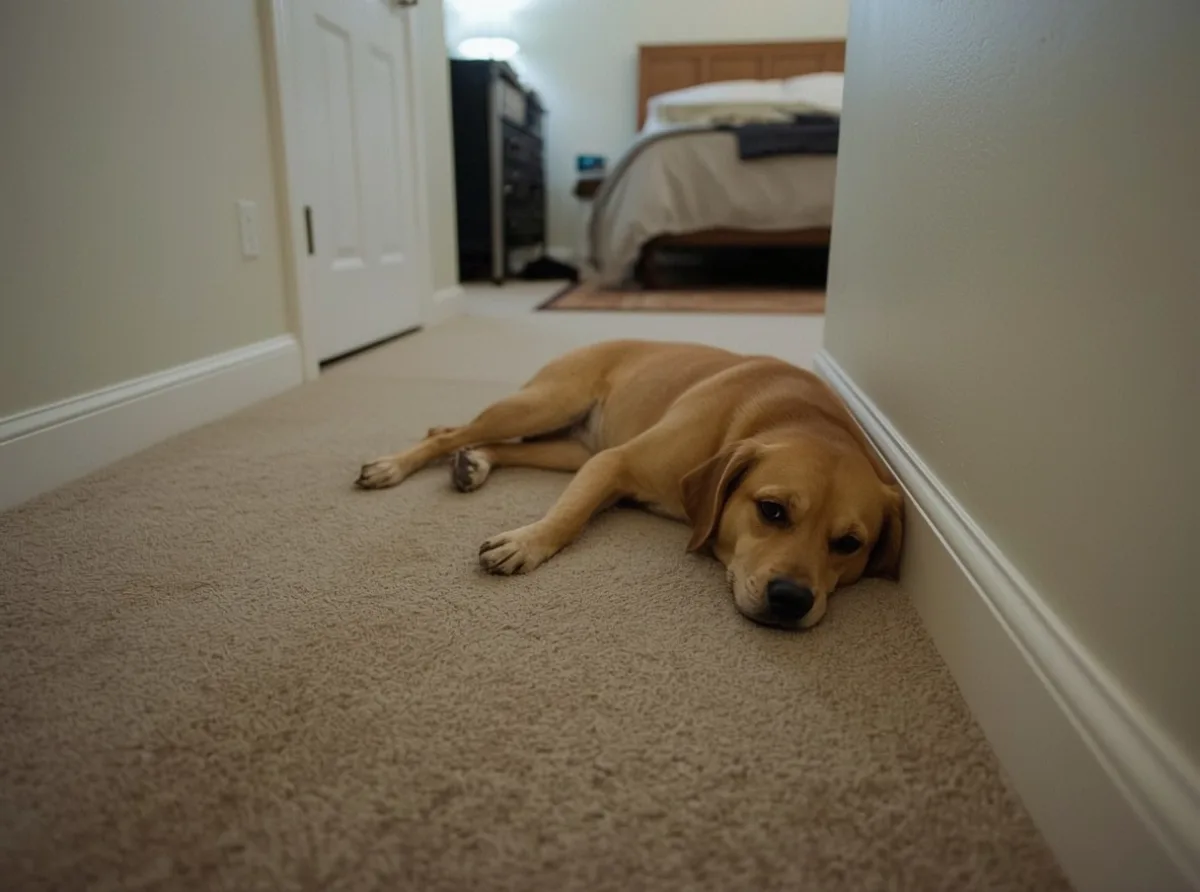
Not every dog uses walls in the same way. One dog may press lightly against a wall with its back while stretching out. Another may curl tightly into the angle of a corner. A third may lie parallel to a wall, keeping most of the room in view.
The posture can say a lot. A relaxed dog near a wall often looks loose in the body, with soft breathing and an easy face. A more guarded dog may keep the head up longer, open one eye when the room changes, or sleep lightly rather than fully sink into rest.
Sometimes the behavior appears in predictable moments. Dogs may gravitate toward walls after visitors leave, during loud household activity, after a walk, or when they are too tired to stay engaged but still want a feeling of control. In other homes, the pattern becomes part of the dog’s routine and shows up every afternoon without any obvious trigger.
Common ways dogs position themselves
- Curled into a corner with the body tucked tightly
- Sleeping along a wall with the spine parallel to it
- Lying with the back against a wall for support
- Choosing an edge of the room instead of an open area
- Resting near door frames, hallways, or furniture that creates a boundary
These positions are not automatically a concern. The important detail is not just where the dog sleeps, but how the dog behaves while doing it and how often the pattern shows up.
A dog that chooses a wall or corner for comfort is often seeking structure, security, or less sensory pressure. The meaning depends on the dog’s body language, routine, and overall temperament.
Why Dogs May Prefer Walls and Corners
Dogs are shaped by instinct as much as by household life. In nature, animals often choose spots that help them feel protected from behind while still allowing awareness of what is happening around them. A wall or corner can create that effect in a modern home. It gives the dog a backstop and narrows the number of directions to monitor.
That can be especially appealing to dogs that are mildly cautious or highly observant. Some dogs prefer sleeping where they can see the entrance to a room. Others want their backs protected while they relax. Corners and walls can satisfy both instincts at once.
Temperature also matters. Floors along exterior walls may feel cooler. In warmer rooms, that can be a relief. In colder seasons, a wall can feel less exposed than a spot in the middle of the room, even if the floor is the same. Dogs often make small comfort decisions that seem odd to people but make perfect sense to them.
Possible reasons behind the choice
- Feeling more protected from behind
- Wanting to monitor the room with less effort
- Preferring cooler or firmer flooring
- Seeking a quieter edge away from traffic
- Following a familiar habit that has become automatic
Some dogs also learn that corners are not disturbed as often. If family members walk through the center of a room but avoid the edges, the dog quickly notices. Over time, the corner becomes a low-interruption place, and that alone can make it more attractive than a plush bed in a busier spot.
What the Behavior Can Suggest About a Dog’s Emotional State
The emotional meaning of the behavior depends on context. A dog that naps near a wall after a long morning of play may simply be exhausted and looking for a stable place to drop off. A dog that always sleeps in a corner with a tense body, minimal movement, and quick alertness may be telling a different story.
Some dogs use boundaries to regulate themselves. They are not necessarily scared, but they may be sensitive to noise, movement, or social activity. A wall gives them a clear edge. A corner gives them even more enclosure. That can be comforting for dogs that feel overwhelmed by open space.
Other dogs are more socially aware. They want to remain close to the household but not in the middle of the action. Sleeping near a wall lets them stay connected without being in the way. That balance can be a sign of a dog that is watchful, reserved, or simply selective about engagement.
When a dog sleeps near walls or corners, the posture matters as much as the location. Loose muscles, deep rest, and easy breathing usually point to comfort. Tightness, frequent waking, or a startled response can suggest unease.
It is also possible for the behavior to reflect a learned preference rather than an emotional issue. Dogs are pattern-driven. If a particular corner has always been quiet, cool, and undisturbed, the dog may return there because it has become the best resting spot in the home.
Subtle Signals That Help Explain the Choice
To understand what the sleeping spot means, it helps to notice small signs around it. The same wall can mean relaxation in one dog and tension in another. The difference often shows up in the details.
A dog that is comfortable may flop down quickly, adjust once or twice, and then settle. The mouth stays relaxed. The ears may rest in a neutral position. Breathing becomes slow and even. If the dog changes position, it does so without looking worried or startled.
A dog that is more guarded may take longer to settle. It may circle the space, pause to scan the room, or keep the head lifted longer than expected. Even while lying down, it may react to small sounds and remain ready to move.
Body language to notice
- Loose versus stiff muscles
- Slow, steady breathing versus shallow breathing
- Soft eyes versus hard, watchful eyes
- Relaxed ears versus ears held forward or tight
- Easy posture versus a body that seems compressed or braced
Dogs that sleep pressed into corners sometimes look especially tucked in, with the body compact and the limbs held close. That can be normal, especially in smaller breeds or dogs that enjoy nesting. But if the dog seems frozen in place, hesitant to move, or unwilling to lie anywhere else, the behavior deserves a closer look.
How Environment Shapes This Habit
The household setting can strongly influence where a dog chooses to sleep. In a quiet home with predictable routines, a wall may simply be one of several comfortable options. In a busy home, it may become the dog’s preferred retreat. Dogs often adjust their rest spots to match the amount of activity around them.
Open-plan homes can make some dogs feel exposed. There may be fewer natural barriers, more foot traffic, and less visual separation. In that setting, a wall or corner can help the dog create a private zone without leaving the room entirely. The dog stays included but not overwhelmed.
Routine matters too. If the dog is used to resting near the same wall after meals, or in the same corner once the house gets loud in the evening, the behavior may become deeply reinforced. Dogs value predictability. Once a location has a history of calm, they often return to it.
Environmental factors that may increase the behavior
- Frequent movement in the center of the house
- Noisy children, visitors, or other pets
- Bright, open spaces with little cover
- Air vents, cool flooring, or drafts near walls
- Lack of a quiet bed in a low-traffic area
Some dogs are more sensitive to environmental changes than others. Even a shift in furniture arrangement can affect where they sleep. A sofa moved away from a wall, a new crate, or a different walking route through the home can change the dog’s sense of the safest resting place.
When the Behavior Is Most Noticeable
Wall or corner sleeping often becomes more obvious during certain life moments. After a move, during renovations, when a new pet enters the household, or when the schedule changes, dogs may seek tighter, more protected resting spots. The change can be temporary and completely normal.
It also shows up in dogs that are in a transitional phase of life. Puppies may use corners because they feel small and want enclosure. Older dogs may prefer walls because they reduce the effort of choosing a spot and may feel easier on the body. A dog recovering from illness or simply becoming more selective with age may also gravitate toward the edges of a room.
Busy days can make the behavior stronger. A dog that is overstimulated may retreat to a wall after a long stretch of noise and activity. That does not automatically mean anxiety. Sometimes it is only the dog’s way of lowering the volume of the world.
When It Looks Calm and When It Looks Defensive
Not all wall sleeping has the same feel. A calm dog may choose a corner in a casual, unbothered way and still sleep deeply. A more defensive dog may use the wall like a shield, staying alert and ready to move quickly. The two can look similar at a glance, but the energy is different.
A relaxed dog tends to settle with confidence. It may turn its back to the room, stretch fully, and remain undisturbed. A defensive or highly vigilant dog often keeps one side protected while monitoring the environment, especially if the home feels unpredictable.
There are also mixed cases. A dog may appear calm but still choose a wall every time because it likes the sense of control. Another may seem casual but actually be using the wall to reduce social pressure from other pets or people in the home. The behavior alone does not tell the full story.
Signs of a relaxed choice
- Approaches the spot casually
- Settles without hesitation
- Sleeps deeply and stays asleep
- Changes positions freely
- Does not startle easily
Signs of a more guarded choice
- Chooses the spot immediately after scanning the room
- Remains tense even while lying down
- Wakes at small sounds
- Prefers the same protected angle every time
- Seems reluctant to rest in more open areas
These differences matter because they help separate a simple preference from a pattern that may reflect discomfort. A dog that feels safe often behaves differently from a dog that feels exposed.
How Dog–Human Interaction Can Affect the Pattern
People sometimes overlook how much their own routines shape a dog’s sleeping habits. If family members frequently step around the center of the room, if children play nearby, or if guests sit in open gathering spaces, the dog may learn that walls and corners are the least interrupted places to rest. In that sense, the behavior is partly social.
Some dogs also sleep near walls because they want closeness without direct contact. They may enjoy being in the same room as their people while avoiding the center of attention. That can be a quiet sign of attachment. The dog is participating in household life from the edge of it.
On the other hand, a dog that constantly chooses the most hidden corner in the house, avoids open rest areas, and seems uneasy whenever people move nearby may need more support in feeling secure. The location then becomes a clue, not just a habit.
A dog’s sleeping spot is often negotiated with the household, even if no one notices the negotiation. Noise, movement, furniture placement, and attention patterns all shape where the dog feels comfortable enough to rest.
What to Consider Before Reading Too Much Into It
It is easy to assume that a dog sleeping by a wall means fear, and that is not always true. Many dogs simply like the structure. Others enjoy the temperature or the way the room feels from that angle. Some dogs are creatures of habit and keep returning to the same spot because it has become part of their daily rhythm.
Still, pattern matters. If the dog used to rest in more open places and now avoids them, that change may be worth noticing. If the dog seems more tense, less restful, or more easily startled, the sleeping location may be one piece of a larger shift in comfort. The corner is not the whole message, but it can be a useful clue.
Pay attention to consistency. A dog that occasionally naps against a wall is different from a dog that always chooses the tightest boundary in the home and never seems fully at ease elsewhere. The first is likely preference. The second may reflect a need for better environmental support, more calm, or a veterinary conversation if other changes are present.
When the Pattern Deserves Closer Attention
There are times when wall or corner sleeping is simply part of a dog’s personality. There are also times when it accompanies other changes that matter more than the location itself. If the dog begins sleeping near walls along with reduced appetite, unusual clinginess, avoidance of family activity, restlessness, or trouble settling, the broader pattern is worth taking seriously.
Physical discomfort can also influence sleeping choice. Dogs with joint pain, digestive upset, or sensitivity may seek certain surfaces or positions that feel better on the body. A wall can help them brace, or a corner may offer a position that feels stable. If the behavior appears alongside signs of stiffness, limping, licking, or unusual posture, the sleeping spot may be tied to comfort in a physical sense.
What matters most is whether the dog seems able to rest well. A dog that chooses a wall and then sleeps peacefully is usually communicating something simple. A dog that chooses a wall but never seems fully settled may be saying the environment, routine, or body sensation is not quite right.
How Long-Term Patterns Usually Develop
In many homes, the preference develops gradually. A puppy tries a few places, finds one corner calmer than the others, and returns there until the habit sticks. An adult dog enters a new home and discovers that a wall beside the hallway keeps the room in view without too much exposure. Repetition turns preference into routine.
Once a resting spot has proven useful, dogs can be surprisingly loyal to it. They remember where they felt safe, where no one disturbed them, and where they could settle quickly after activity. That is why the same wall can remain the favorite place for years.
Sometimes the pattern changes with age. A dog that once slept in the center of the room may grow more selective and seek edges later in life. Another may move away from corners as it becomes more confident, or as the home becomes quieter and more predictable. The behavior is often flexible, not fixed.
What the Habit Usually Means in Real Life
For most dogs, sleeping near walls or corners means one or more of three things: the space feels protected, the location is physically comfortable, or the area has become part of a trusted routine. Those are ordinary reasons, and they often overlap. A dog does not have to be anxious to like a corner. It just has to find it useful.
The surrounding context is what gives the behavior its meaning. A relaxed dog in a corner is not the same as a tense dog in a corner. A habit that appears only during noisy moments is not the same as one that dominates every rest period. The details reveal whether the dog is simply choosing a favorite boundary or trying to cope with something bigger.
When you watch the posture, timing, and consistency together, the pattern becomes easier to understand. The wall is not just a wall to the dog. It may be a boundary, a shield, a cool surface, a quiet spot, or a familiar place that helps sleep come more easily. Often, it is a combination of several of those at once.
That combination is what makes the behavior so common. Dogs are practical animals. If one spot helps them feel safer, cooler, calmer, or less interrupted, they will choose it again and again. And if the choice remains relaxed and steady, it is usually just another small expression of how a dog organizes comfort in the home.