Evening can change a dog fast. A dog that was relaxed in the afternoon may start barking more, pacing the hallway, staring out the window, or reacting strongly to small sounds once the sun goes down. Some dogs seem to go from calm to sharp-edged in a short window of time.
This shift often catches owners off guard because nothing obvious has changed in the room. The couch is the same. The people are the same. Yet the dog is not. That difference is usually not random. Evening reactivity often reflects a mix of physical fatigue, accumulated stimulation, shifting household rhythms, and a dog’s natural alertness when the day quiets down.
For some dogs, the evening is simply the most demanding part of the day. For others, it is the time when they finally have enough stillness to notice every sound, movement, or change around them. Understanding why this happens makes the behavior easier to read and less mysterious.
What Evening Reactivity Often Looks Like
Dogs do not all show evening reactivity in the same way. Some become vocal. Others become restless. A few become more defensive, especially around windows, doors, or family members moving through the house.
Common signs include:
- Repeated barking at sounds outside
- Pacing from room to room
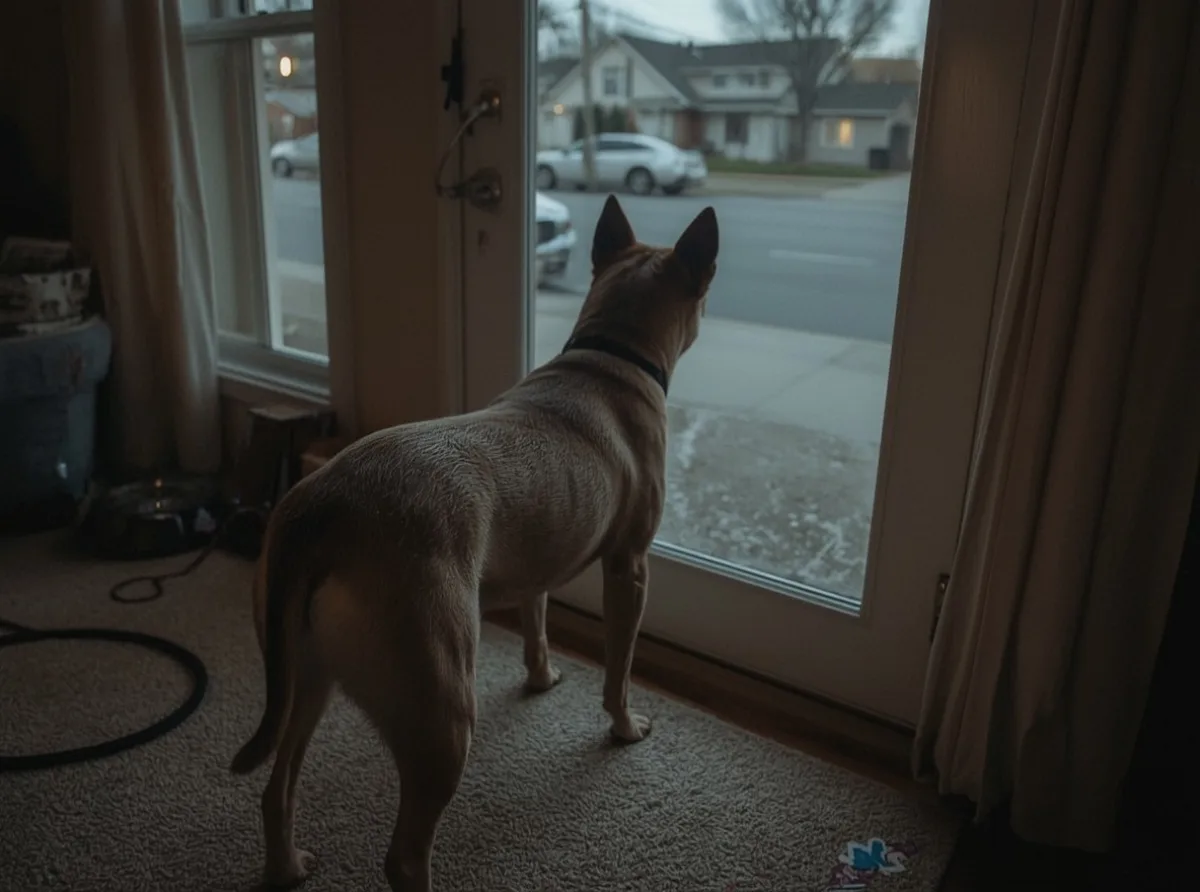
- Stiff body posture near doorways or windows
- Sudden interest in people, dogs, or noises that usually do not matter
- Whining, nudging, or shadowing owners more closely than usual
- Escalating reactions to routine events like neighbors coming home or a TV sound from another room
Sometimes the reaction is mild at first. A dog may only raise its head or freeze for a second before moving into a fuller response. That small pause can be an early sign that the evening is affecting the dog’s state of mind before the behavior becomes obvious.
A dog that reacts more in the evening is not always “being difficult.” Often, the dog is responding to a changed level of comfort, energy, or awareness as the day winds down.
Why the Evening Can Feel Harder for Some Dogs
One of the biggest reasons is simple: the dog is tired. Tired dogs do not always look sleepy. Many become less patient, less flexible, and more sensitive to things they might normally ignore. A dog that has had a full day of activity, noises, visitors, or handling may have less room left to cope by evening.
That reduced tolerance can show up as reactivity. The dog may be less able to regulate excitement or frustration, so ordinary triggers feel bigger. A delivery truck, a family member opening the front door, or a dog passing across the street may push the dog over its threshold more quickly than earlier in the day.
Another factor is the natural rhythm of household life. Evenings often bring more movement in some homes and less in others. Kids are home, cooking starts, people switch rooms, lights change, and the front door may open and close repeatedly. In a quiet home, the opposite can happen: after hours of background activity, the stillness itself makes every small sound stand out.
Accumulated stimulation during the day
A dog does not always react to the current moment only. It reacts with the day behind it. If the morning included a long walk, the afternoon had a delivery, and the evening brings neighbors outside talking near the fence, the dog may be carrying a lot of unfinished arousal.
This matters because dogs do not always reset quickly. Some decompress fast. Others stay alert for hours. When the day piles up sensory input, the evening becomes the point where the dog finally reaches a breaking point.
Less exercise, more frustration
Not every reactive evening dog is under-exercised, but some are under-stimulated in a way that is easy to miss. A dog may have physical movement during the day without getting enough mental engagement. That can leave a kind of restless energy that peaks later.
At the same time, some dogs get too much stimulation without enough recovery. A busy day can create a dog that looks active on the outside but is emotionally worn out on the inside. By evening, that dog may be more likely to snap, bark, or pace because the nervous system is tired, not because the dog needs more excitement.
Emotional Reasons Behind Evening Reactivity
Reactivity is often mistaken for stubbornness, but the emotional side matters more than many people realize. Dogs can feel uncertain, over-alert, frustrated, protective, or even slightly insecure as the household changes around them. Evening is a time when those feelings may rise to the surface.
Some dogs are naturally more sensitive to shifts in routine. They notice when dinner is later than usual, when the walk was shorter, or when their owner is distracted. These small changes may not matter much to a more easygoing dog, but to a sensitive dog they can be enough to create tension.
Attachment can also play a role. Dogs that are very bonded to their people sometimes become more reactive in the evening because they expect connection, structure, or reassurance at that time of day. If that expectation is interrupted, the dog may become clingier, more vocal, or more easily irritated.
Evening reactivity can reflect emotional arousal, not just “bad behavior.” A dog may be tired, uncertain, over-focused, or looking for predictability when the day feels less structured.
Anticipation and pattern memory
Dogs are good at learning patterns. If the evening usually includes a walk, food, play, or family movement, the dog may start expecting those events before they happen. That anticipation can look like agitation. Some dogs bark more because they are excited. Others become tense because the expected routine is delayed.
This is why a dog may seem more reactive before dinner or shortly after sunset. The dog is not only responding to the present. It may be reacting to a memory of what usually happens next.
Protectiveness at low-activity hours
Many dogs are more alert when the neighborhood gets quiet. During the day, there is enough general noise that individual sounds blend together. In the evening, a single footstep, car door, or hallway echo may stand out sharply. Dogs with a protective or vigilant temperament can interpret that change as important.
That does not always mean fear. Sometimes it means the dog is on duty in its own mind. But when vigilance builds without relief, the behavior can become more reactive than calm. The dog stays ready for something to happen, and that readiness has a cost.
How Environment Shapes Evening Behavior
The same dog may be calm in one home and highly reactive in another. The environment matters because evening behavior is often shaped by what the dog sees, hears, and predicts.
Dogs living near busy sidewalks, apartment hallways, or active street traffic often react more in the evening because sounds travel differently and people are more likely to be home. In suburban homes, windows facing the street can become a trigger zone once the day cools and more neighbors walk dogs or come outside. In homes with yards, fence-line activity may increase around dinner time and create repeated opportunities for arousal.
Even lighting can play a role. Dusk creates shadows, movement, and partial visibility. Some dogs become more watchful when they cannot clearly identify what they are hearing or seeing. A shape in the yard or a figure across the street may be enough to push the dog into barking or pacing.
Household routine changes the dog’s state of mind
Evening routines are rarely quiet for dogs, even when they seem ordinary to people. Food preparation, children settling down, a shower running, dishes clattering, and people moving between rooms all create a layered sensory environment. A dog that handles daytime calm well may react when the home becomes busy in a more compressed way.
On the other hand, some dogs react most when evening becomes too still. They may watch the door, listen for sounds outside, and become more sensitive because there is less activity to distract them. The same time of day can be stressful for opposite reasons depending on the dog and the home.
| Common evening trigger | How it may affect a dog |
|---|---|
| Household noise during dinner prep | Increased arousal, barking, pacing, attention-seeking |
| Quiet streets after sunset | Heightened vigilance, window barking, scanning |
| Delayed routine | Frustration, whining, clinginess, restless movement |
| Outdoor activity near the property | Defensive reactions, fixation, repetitive barking |
What the Behavior May Signal About the Dog’s State
Not every reactive evening dog is anxious in the same way. Some are overstimulated. Some are under-cared for in terms of structure. Some are simply more observant at night. Reading the dog’s body language helps separate these possibilities.
A dog that barks with a loose body, quick recovery, and normal interest afterward may be excited or alert rather than deeply distressed. A dog that is stiff, unable to settle, hard to redirect, or showing tension in the face and tail may be dealing with stronger emotional pressure.
Look at the full picture. Is the dog able to eat, rest, and accept gentle interaction later? Does the behavior only happen in one spot, like the front window? Does it worsen when the household becomes louder or more chaotic? Those patterns often matter more than the barking itself.
Subtle signs that often appear first
- Freezing or pausing before reacting
- Hard staring toward a window or door
- Closed mouth with tight facial muscles
- Sudden shift from resting to scanning
- Repeated repositioning without settling
- Quick breathing or a body that looks held rather than loose
These early signals often show that the dog is moving from neutral to reactive before the full response begins. Catching that transition is useful because it explains why the evening reaction may seem to come “out of nowhere.” It usually does not. The dog has been building toward it.
Different Dogs, Different Evening Patterns
Some dogs are naturally more reactive at night because of temperament. Watchful breeds, sensitive individuals, and dogs with strong environmental awareness may all show stronger evening behavior than others. That does not make the behavior wrong. It means the dog’s threshold is lower under certain conditions.
Age can also matter. Puppies may seem reactive in the evening because they are overtired and unable to regulate themselves well. Adult dogs may show evening reactivity when they have learned to expect activity at that time. Older dogs can become more reactive when vision, hearing, or comfort changes make evening feel less predictable.
Even within the same dog, the behavior can shift over time. A dog may be calm for months and then begin reacting more in the evening after a change in schedule, a move, a new neighbor, or a period of stress. That change is often a clue that something in the dog’s daily balance has been altered.
When a dog seems calm until the day gets long
Some dogs appear easygoing all day and then become noticeably different after a full stretch of routine. They may handle short disruptions well but become reactive once evening arrives because the day has worn them down. These dogs often do better when their day includes predictable rest, not just exercise.
For them, the issue is not only stimulation. It is recovery. Without enough true downtime, the nervous system never fully settles, and evening becomes the point where the pressure shows.
How Owners Often Misread Evening Reactivity
It is common to assume the dog is “acting up” right before bedtime or trying to get attention. Sometimes attention plays a part, but that explanation is often too small. Evening behavior can be tied to emotion, habit, and environment at the same time.
Owners may also think the dog is more stubborn at night when the real issue is lower coping ability. A dog that ignores commands in the evening may not be refusing to listen in a deliberate way. The dog may simply be too aroused to process what is being asked.
Another common misunderstanding is treating all barking as the same. A sharp, repetitive bark at the door means something different from a soft, uncertain vocalization near the owner’s feet. One may be alertness. Another may be discomfort. The sound alone does not tell the whole story.
When evening reactivity is repeated, the pattern often says more about the dog’s daily load than about a single bad moment.
What Makes the Behavior More Noticeable Over Time
Dogs rarely become more reactive in the evening for no reason. The pattern often strengthens when it is unintentionally rehearsed. If the dog barks every night at the same window and that behavior always gets a response, the habit can deepen. Even if the response is frustration or scolding, the dog is still practicing the pattern.
Environmental repetition matters too. If the same outside trigger appears around the same time each evening, the dog may start anticipating it before it even happens. The reaction becomes faster because the dog has learned the sequence.
Consistency in routine can either soften or sharpen the pattern. A stable schedule with clear rest periods may reduce evening intensity. A shifting schedule can make the dog feel like each evening is a new problem to solve.
Patterns to notice in everyday life
- Does the reaction happen before dinner, after dinner, or both?
- Is the dog worse when the house is quiet or when it is busy?
- Does the dog settle more easily after a walk, a chew, or time away from the window?
- Are weekends different from weekdays?
- Does the reaction rise when the dog has had visitors, errands, or extra noise earlier in the day?
These details help show whether the dog is reacting to time of day, household energy, or a specific recurring trigger. In many cases, it is a combination, and the evening simply reveals it more clearly.
Why the Quiet Hours Matter So Much
Evening reactivity is often strongest when the world gets quieter. That quiet does not always soothe dogs. For some, it sharpens every detail. A distant bark carries farther. A floorboard creak matters more. A passing car becomes a clear event instead of background noise.
This is one reason dogs may seem to “wake up” emotionally after sunset. The environment changes from layered and busy to more defined and separate. Dogs that rely on sound and movement for context may suddenly feel the need to monitor everything around them.
That monitoring can look like problem behavior, but it is often a form of coping. The dog is trying to make sense of a world that has become less predictable at the exact time the body is also getting tired.
Natural Instincts and Modern Homes
Dogs are not built to experience the modern evening the way people do. Many household routines compress activity into a short period after work, then expect the dog to stay relaxed in the middle of it. The dog’s instinct may be telling it to watch, guard, or respond while the human expectation is simply to settle down.
This mismatch explains why evening reactivity can be especially strong in homes with frequent transitions. Doors open and close. Food appears. People move around. The dog is asked to remain calm inside a shifting environment that feels important and active to the dog even when it seems normal to the household.
For dogs with strong social awareness, evening also brings the full family group together. That can increase excitement, frustration, or attachment-based behavior. The dog may not know where to put its energy, so it turns that energy outward.
Reading the Difference Between Alert and Overloaded
Not every evening reaction needs the same interpretation. A dog that barks once and then relaxes may be alert. A dog that barks repeatedly, scans the room, and cannot disengage may be overloaded. The difference lies in recovery.
If the dog can return to rest, accept a cue, or switch attention without much effort, the reaction may be mild vigilance. If the dog stays stuck, the emotional load is probably higher. That stuck feeling is what often makes evening reactions more exhausting for both the dog and the household.
Pay attention to how long the behavior lasts, not just how loud it is. A short, sharp response can be easier to manage than a quieter but persistent pattern of pacing, whining, and scanning. Duration often tells a clearer story than volume.
When Evening Reactivity Becomes a Familiar Rhythm
Some dogs develop a predictable evening rhythm: a burst of alertness, a round of barking, then a long stretch of settling. Others do not fully settle and instead hover in a reactive state for hours. The first pattern may reflect a manageable trigger-response cycle. The second often suggests the dog is having trouble regulating throughout the whole evening.
That rhythm can become part of the home if it happens night after night. Family members start expecting it. The dog starts expecting the same sequence too. Once that shared pattern is established, evening behavior can feel automatic, even when no one wants it to be.
Looking closely at the timing helps make sense of it. A dog that reacts right as the household shifts into dinner or TV time may be responding to structure changes. A dog that reacts later, when everyone has settled, may be responding to quiet, external sounds, or stored-up energy from earlier in the day.
A Calm Ending to a Very Common Pattern
Evening reactivity usually has roots that are easier to understand than they first appear. Tiredness, anticipation, sensitivity to sound, environmental change, and the emotional tone of the household all contribute in different ways. A dog that seems “worse” at night is often simply showing the point where the day’s pressures become visible.
That pattern can look dramatic, but it is often built from ordinary things: a full day, a changing house, a quiet street, and a dog that notices more than people expect. When those pieces come together, evening becomes the hour when the dog’s internal state is hardest to hide.
For many dogs, the behavior is less about wanting to cause trouble and more about trying to manage the end of the day in the only way they know how. The signs are usually there in the body long before the bark arrives.