When a dog’s eyes suddenly look wider than usual, it can catch your attention fast. Sometimes the change is small: the whites show a little more, the eyes seem rounder, or the gaze looks sharper than normal. Other times the whole face seems different, almost as if the dog is staring at the world with extra intensity.
That look does not always mean the same thing. A dog can have wider-looking eyes because of excitement, curiosity, tension, fear, pain, or even a simple change in posture. The eyes are only one part of the picture, and they make the most sense when you notice what the rest of the body is doing.
In everyday life, this is one of those signals that can be easy to misunderstand. A dog may look suddenly alert after hearing a sound at the door, or unexpectedly uneasy when a visitor approaches. The eyes often change before the rest of the body seems to catch up, which is why the expression can feel so noticeable.
What wider-looking eyes can look like in daily life
Dog owners usually notice this expression in ordinary moments, not dramatic ones. A dog may be lying on the couch, then suddenly hear a bag rustle in the kitchen and lift its head with a bigger, rounder eye shape. Another dog may be calmly walking outside, then see another dog across the street and look visibly more open-eyed and fixed on the scene.
Sometimes the change is subtle. The eyes may not be truly larger; instead, the eyelids open more, the whites show at the corners, or the gaze becomes more direct. Dogs with naturally prominent eyes make this even easier to notice, but the same general signal can appear in many breeds.
It helps to think of the eyes as part of a bigger message. A dog that looks wide-eyed but has a loose body, wagging tail, and soft mouth is telling a very different story from a dog with a stiff body and a closed mouth. The face alone rarely gives the full meaning.
Common situations where it shows up
- Sudden noises, like a dropped pan or door slam
- Visitors arriving unexpectedly
- Seeing another dog, cat, or wild animal
- Anticipating food, a walk, or playtime
- Feeling unsure in a new place
- Experiencing discomfort or pain
In each of these moments, the eyes may widen for different reasons. The same look can appear in both happy and uneasy situations, which is why context matters so much.
Excitement and anticipation can widen the eyes
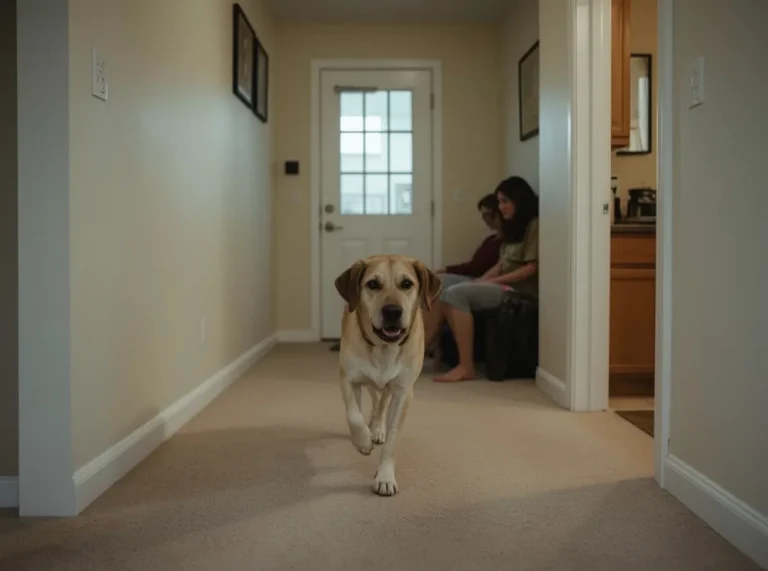
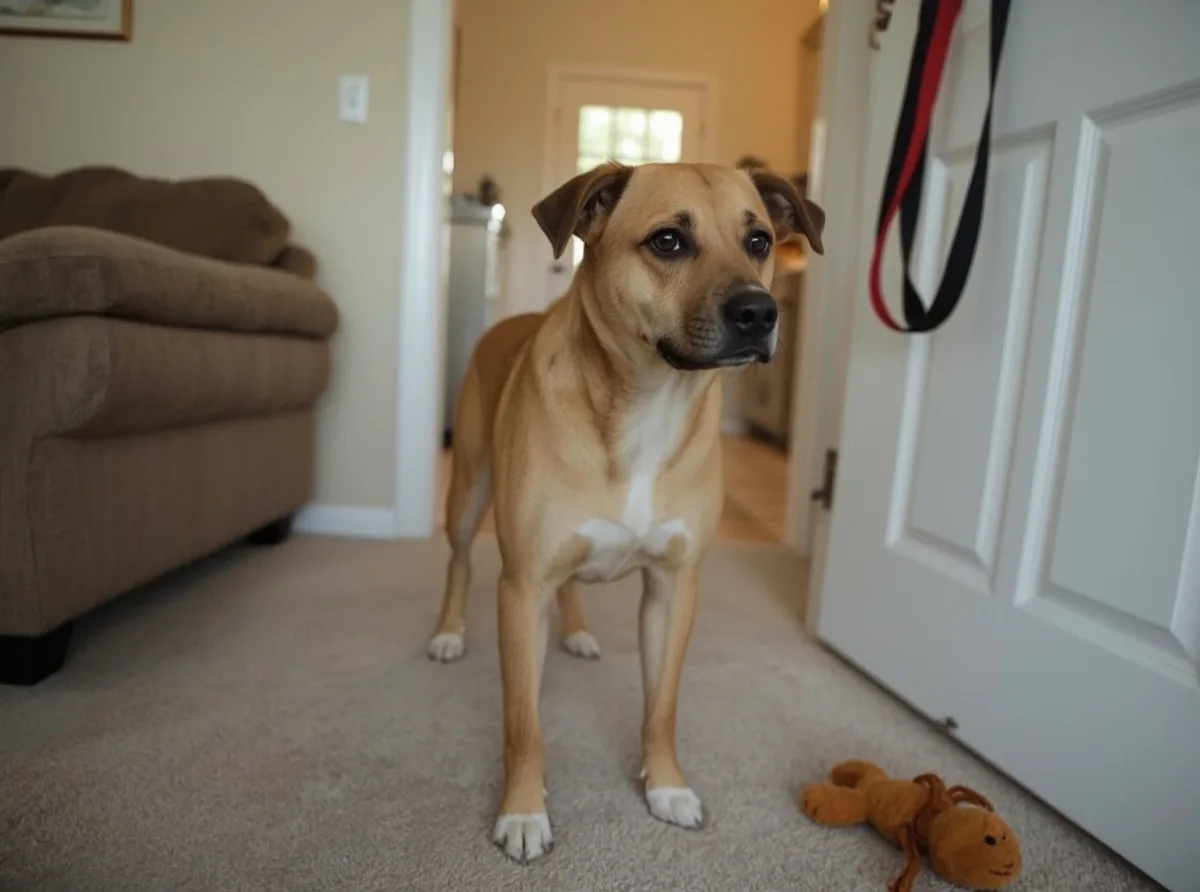
One of the most common reasons for wider-looking eyes is simple excitement. Dogs are highly responsive to routines, and their eyes often change when they sense something good is about to happen. If your dog sees you pick up a leash, hears the treat bag, or notices the car keys, the expression may sharpen immediately.
This kind of wide-eyed look usually comes with other signs of eager energy. The body may lean forward, the tail may start moving, and the ears may perk up. The dog is not necessarily stressed. It may just be fully engaged with the moment.
Some dogs get especially bright-eyed when they are expecting a favorite activity. A dog waiting by the door for a walk may look very different from the same dog resting after a meal. The wider eyes in this case are part of attention and anticipation, not concern.
Wide-looking eyes are not automatically a warning sign. In many dogs, they simply show focus, excitement, or readiness.
Signs that the wide-eyed look is happy or eager
- Loose, bouncy body movement
- Relaxed mouth or open panting
- Tail wagging in a fluid way
- Soft ears, not pinned back
- Quick but not rigid movement
When those signs appear together, the expression often reflects positive arousal. The dog is awake to the moment, but not necessarily troubled by it.
Alertness and curiosity can make the face look sharper
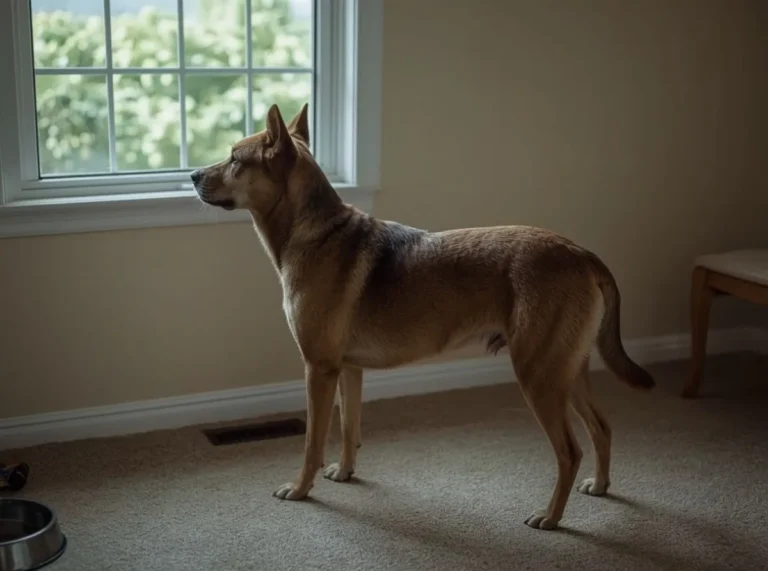
Dogs are built to notice movement, sound, and scent changes quickly. A sudden shift in the eyes often happens when a dog’s attention moves from relaxed to alert. This can occur in a quiet living room, on a walk, or while your dog watches the yard through a window.
In these moments, the dog may be trying to understand what is happening. The eyes open wider because the brain is collecting information. Curiosity can look a lot like tension at first glance, especially if the dog has become very still.
That stillness is important. A curious dog may stare, but the body remains flexible. A worried dog may also stare, but the muscles look tighter and the posture may become more guarded. The difference is often in the rest of the frame, not the eyes alone.
What alert curiosity may look like
- Head lifted slightly higher than normal
- Eyes focused toward a sound or movement
- Body leaning forward, but not locked
- Ears angled toward the source of interest
- Quick shifts of attention from one thing to another
This kind of eye change is common in dogs that are naturally observant. Some dogs seem to notice everything, and their eyes reflect that constant scan of the environment.
Stress, uncertainty, and fear often show up in the eyes too
Wide-looking eyes can also mean a dog feels uneasy. In those cases, the expression is often more tense than bright. The whites of the eyes may become more visible, the pupils may appear large, and the dog may seem to “freeze” while looking at the source of concern.
Fearful eye changes usually happen alongside other body signals. The dog may lower its head, turn slightly away, lick its lips, yawn, shift weight backward, or tuck the tail. The face may look rounder, but the overall posture is often smaller and more guarded.
Dogs do not all express discomfort the same way. Some become very still, while others move away or pace. A sudden wide-eyed look can be one of the first clues that a dog needs more space or a calmer environment.
If a dog’s eyes suddenly look wider and the body becomes stiff, treat it as a possible stress signal until the rest of the posture tells you otherwise.
Common stress clues that often appear with wide eyes
- Closed or tight mouth
- Stiff legs or frozen posture
- Tail tucked low or held very still
- Whale eye, where more of the white is visible
- Backing away or avoiding eye contact
- Repeated lip licking or yawning without being tired
These signals matter because stress can build quickly if the dog feels trapped. A dog that looks wider-eyed during a difficult moment may be asking for distance, not attention.
Pain and physical discomfort can change the eye expression
Sometimes the reason has nothing to do with emotion alone. Dogs in pain can look different in the face, and the eyes may appear more open or strained. This can happen with injuries, stomach discomfort, eye irritation, ear pain, dental pain, or general illness.
The challenge is that pain does not always look dramatic. A dog may still walk, eat, or greet you, while the eyes seem subtly different. The expression might be less soft than usual, less relaxed around the edges, or more tense after being touched in a certain area.
Eye changes connected to pain often show up with other small shifts. The dog may move less freely, resist being handled, or seem less interested in normal activities. If the change in eye appearance happens suddenly and the dog also seems unwell, that deserves attention.
Possible signs that discomfort may be involved
- Squinting or blinking more than usual
- One eye looking different from the other
- Reduced appetite or energy
- Reluctance to jump, climb, or play
- Head shaking or pawing at the face
- Changes in grooming or resting patterns
A wide-eyed look on its own does not confirm pain. But when it appears with other behavioral changes, it becomes part of a more important pattern.
Why the environment matters so much
A dog’s surroundings can shape eye expressions more than many people realize. A quiet home may lead to softer, calmer eyes most of the time, while a busy household can keep a dog in a more alert state. Frequent noise, constant movement, or unpredictable interactions can make a dog look wide-eyed more often.
Routine also plays a role. Dogs that know exactly when meals, walks, and rest time happen often settle more easily. Their expressions may stay softer because they do not need to keep scanning for what happens next. Dogs with irregular schedules may appear more watchful and less settled.
New environments can bring this out too. A dog visiting a boarding facility, a new apartment, or a crowded park may look wider-eyed simply because everything around it is unfamiliar. The dog is taking in a lot at once.
Environmental factors that can increase the look
- Loud or sudden household noises
- Frequent visitors
- Too much activity in a small space
- Unfamiliar smells, sounds, or surfaces
- Changes in daily routine
- Limited rest or overstimulation
Some dogs settle poorly when they do not get enough predictable downtime. In those cases, the eyes can stay in a more alert expression for much of the day.
Body language gives the real meaning
It is easy to focus on the eyes because they are so noticeable, but they are only one part of the picture. A dog’s ears, mouth, shoulders, tail, and movement pattern often reveal the true meaning of the look. Two dogs can have equally wide-looking eyes and be feeling completely different things.
For example, a dog with bright eyes, loose shoulders, and a wiggly body is likely excited or engaged. A dog with wide eyes, a stiff neck, and a closed mouth may be uneasy. The same expression becomes much clearer once you see how the body supports it.
This is why many experienced dog owners learn to check the whole dog, not just the face. A sudden eye change can be a useful early signal, especially before the behavior becomes more obvious. It gives you a chance to read the moment instead of guessing later.
| Eye expression | Body pattern | Possible meaning |
|---|---|---|
| Bright, open eyes | Loose and bouncy | Excitement or anticipation |
| Wide eyes with stillness | Stiff, frozen posture | Stress or uncertainty |
| Wide eyes with forward lean | Focused but flexible | Alert curiosity |
| Uneven eye appearance | Guarding or reduced movement | Possible discomfort or pain |
Breed shape and facial structure can affect how noticeable it looks
Not every dog’s eyes appear the same way. Some breeds naturally have more prominent eyes or facial shapes that make changes easier to see. In those dogs, a small shift in expression can look dramatic. Other dogs have deeper-set eyes, so the change may be much subtler.
That means owners should avoid comparing one dog’s face to another too closely. The useful question is not whether the eyes look “normal” compared with another breed. It is whether they look different from that dog’s usual expression.
Age matters too. Puppies may seem wide-eyed often because they are still learning the world, and their attention jumps from one thing to the next. Adult dogs usually show the expression with more context, while senior dogs may have changes related to comfort, vision, or health that affect how their eyes appear.
When the look happens often, patterns matter more than moments
A single wide-eyed moment rarely tells the whole story. What matters more is how often it happens and what tends to set it off. If your dog only looks this way when you open the treat cupboard, that is probably simple excitement. If the expression appears during handling, at the vet, or around certain noises, the trigger may be more about worry or discomfort.
Tracking patterns can be surprisingly helpful. Noting when the eyes change, what happened right before, and how the body looked afterward can show whether the behavior is tied to joy, vigilance, stress, or pain. Over time, the pattern becomes easier to read.
Some owners notice that their dog’s wide-eyed look is most common at specific times of day. Even that can be meaningful. A dog that gets more alert in the evening may be responding to household activity, fatigue, or a shift in routine. The timing can reveal more than the expression itself.
The same eye shape can mean very different things depending on what happened in the minute before it appeared.
How owners often misread it
One common mistake is assuming wide eyes always mean the dog is happy to see something. Another is assuming they always mean fear. Both are too simple. Dogs use the same facial tools in different emotional states, and the eyes are especially flexible.
Another misunderstanding happens when a dog looks wide-eyed during play. Play can involve excitement, arousal, and even a little tension. That does not automatically make it a problem. But if the dog stops taking breaks, loses flexibility, or starts to look increasingly stiff, the meaning may be changing.
It is also easy to miss the role of context. A dog staring wide-eyed at the front door might be anticipating a visitor, hearing a strange sound, or reacting to a trigger outside. The same face can belong to a very different inner state depending on the moment.
Questions that help clarify the meaning
- Did the expression appear suddenly or gradually?
- What was happening right before it changed?
- Is the body loose, tense, or frozen?
- Is the dog moving toward something or away from it?
- Does this happen in the same situations repeatedly?
These simple questions often do more than staring at the eyes alone. They connect the expression to a real situation instead of a guess.
Reading the whole moment, not just the face
A dog’s eyes widen for many reasons, and most of them make sense once you slow down and watch the full picture. A sudden change can reflect eagerness, interest, uncertainty, or physical discomfort. The face gives you a clue, but the body gives you the context.
That is why the most useful response is not to label the look too quickly. It is to notice what changed, what came before it, and whether the dog relaxed again afterward. A dog that settles back into a soft posture after a quick alert moment is different from one that stays rigid and watchful.
Once you start reading those patterns, the expression becomes less mysterious. It turns into part of a conversation your dog is already having through posture, movement, and attention. The eyes are simply one of the clearest parts of that message.
And in ordinary home life, that message often arrives quietly. A glance toward the window. A sudden brightening at the sound of your footsteps. A tense stare during a strange noise. Those moments say a great deal, especially when you see how they fit into the rest of the day.