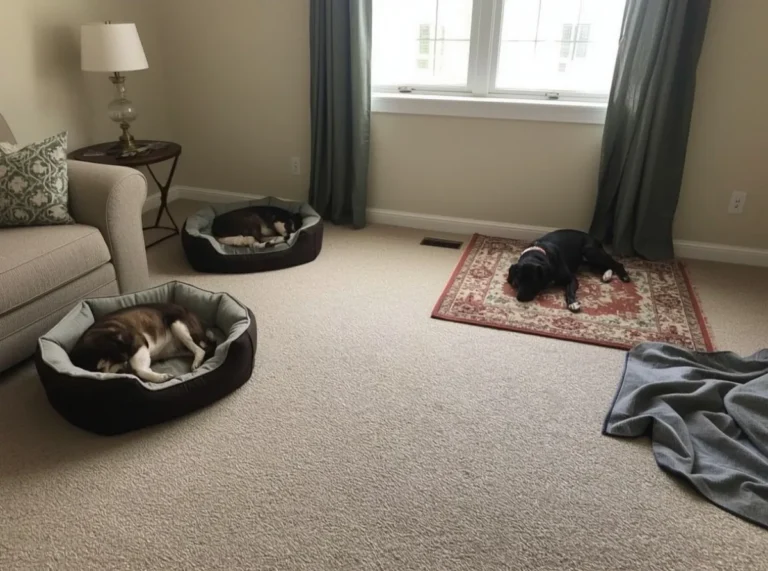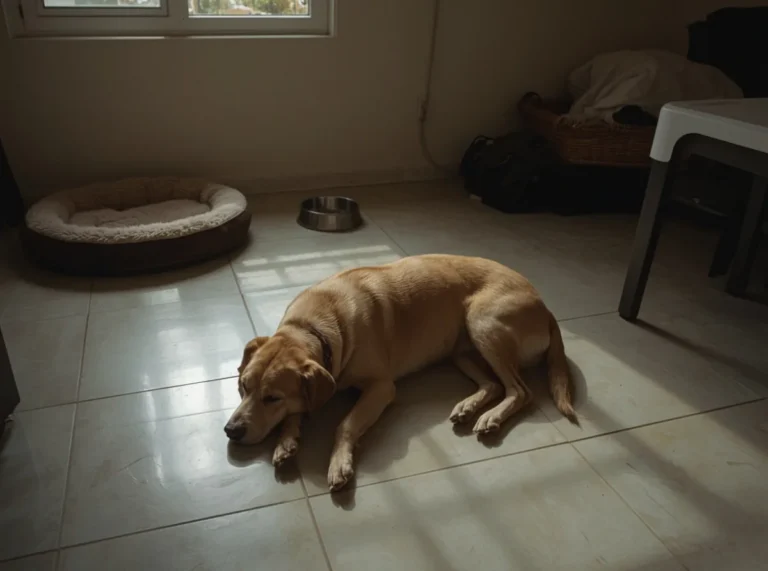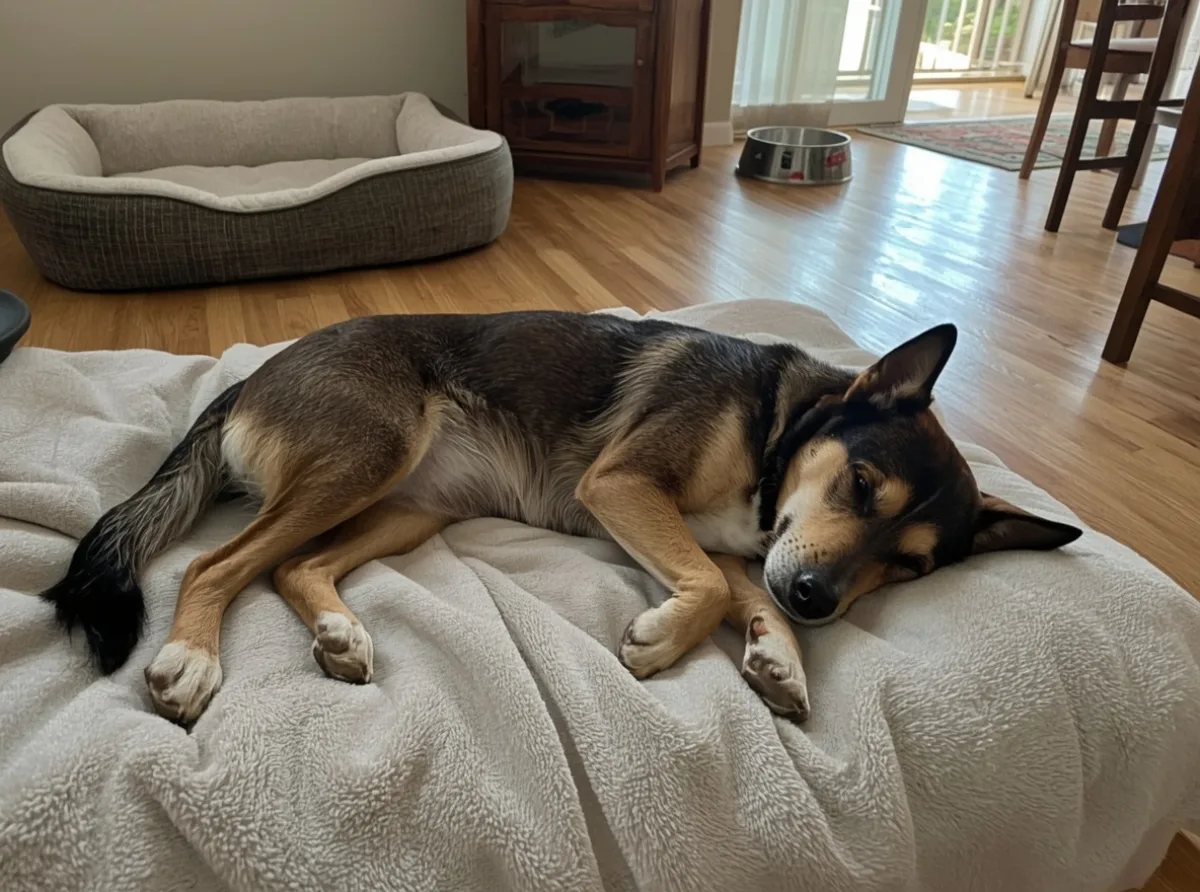
A relaxed sleeping dog usually looks very different from a dog that is only resting lightly. The body softens first. Legs may stretch out or curl loosely, the mouth may sit slightly open, and the breathing becomes slow and even. There is no visible effort to stay alert.
Many dogs also change positions as they settle. They may start with a few small adjustments, then sink deeper into the bed, floor, couch, or rug. Once they reach true rest, the body tends to stop “checking” the room. That stillness is one of the clearest signs that the dog feels safe enough to sleep fully.
Relaxed sleep behavior can look simple from the outside, but it carries a lot of information. A dog that sleeps easily is usually showing comfort with the environment, trust in the routine, and a low level of internal tension. The details matter. A tucked tail, tense paws, or eyes that keep opening can mean something very different from loose, heavy sleep.
Not every dog sleeps the same way. Breed, age, daily activity, and personality all shape how rest appears. Even so, there are common patterns that help distinguish deep relaxation from light dozing or guarded sleep.
What relaxed sleep looks like in everyday life
One of the most obvious signs is a loose body. The dog may lie on one side, on the back, or in a sprawled position with the limbs extended naturally. There is no stiffness in the shoulders or neck. The abdomen may rise and fall in a steady rhythm, and the face often looks soft instead of tight.
The ears usually rest in a neutral position. They are not pinned back unless the dog happens to be resting that way for comfort, and they are not constantly flicking toward every sound. The eyes are closed or partly closed without frequent opening. Some dogs even let their lips loosen enough that the tongue peeks out a little.
In a relaxed sleep state, a dog may dream. Small twitches in the paws, whiskers, or muzzle are common. Short bursts of movement during sleep do not automatically mean stress. In many cases, they are just part of normal dreaming, especially when the rest of the body remains loose.
Breathing is another useful clue. Calm sleep usually brings a slower, steadier rhythm. The chest and belly move gently instead of sharply. If the breathing is smooth and the dog does not seem to be straining, that is often a good sign that the rest is genuine.
Body language that often goes with deep relaxation
A dog’s sleep posture can say a lot about how secure it feels. A soft jaw, slack limbs, and a fully supported body often appear when the dog is very comfortable. Some dogs rest with one hind leg stretched out behind them. Others fold themselves into a compact shape but still look loose rather than tense.
The following signs often show up together:
- Loose muscles in the face, shoulders, and legs
- Even, quiet breathing
- Minimal startle response to normal household sounds
- Slow transitions into sleep rather than abrupt collapse
- Little to no scanning of the room
There can also be subtle signals before sleep begins. A relaxed dog may circle once or twice, then settle without hesitation. It may sigh, stretch, turn a few times, and then stop moving. Those small rituals often mean the dog is comfortable enough to let go of vigilance.
Some dogs like to sleep belly-up. Others prefer to tuck into a nest-like shape. Either can be normal. The key difference is not the position itself but the absence of tension. A dog sleeping in a curled position can still be deeply relaxed if the body looks soft and the breathing is easy.
How relaxed sleep differs from light resting
Light resting and real sleep are easy to confuse. A dog lying down with eyes closed is not always in deep rest. Sometimes the dog is only pausing, listening, or conserving energy while still staying partly aware of the surroundings.
In light rest, the ears may react to sounds, the eyes may open easily, and the body may look ready to stand up at any moment. The dog can appear settled, but the posture stays guarded. This is common in busy homes, during trips, or in unfamiliar places.
Relaxed sleep goes further. The body stops preparing for action. A dog in deep rest is not tracking every footstep or responding to every tiny noise. That difference may be subtle, but it is important.
| Behavior | Light Rest | Relaxed Sleep |
|---|---|---|
| Body position | Ready to rise quickly | Loose, fully supported |
| Eyes | May open easily | Closed or softly shut |
| Breathing | Normal but watchful | Slow and even |
| Ear response | Follows sounds closely | Less reactive |
| Overall feel | Quiet but alert | Deeply at ease |
Why dogs sleep more easily in some situations than others
Environment matters a great deal. Dogs often sleep more deeply in homes where the routine is predictable and the noise level stays reasonable. A dog that knows when meals, walks, and bedtime happen usually settles faster. Familiarity lowers the need to stay on guard.
Quiet spaces also help. Soft bedding, a consistent sleeping area, and enough room to stretch make relaxation easier. Some dogs prefer a crate, others a bed in the corner, and some simply want a rug near family activity. The right place is usually the one where the dog can stop monitoring what is happening around it.
Daily stimulation has an effect too. A dog that has had enough exercise, mental engagement, and social contact may be more ready to sleep deeply. That does not mean every dog needs intense activity. It means the day should include enough movement and engagement to reduce built-up restlessness.
On the other hand, too much activity can also interfere with sleep. A dog that has been overstimulated may lie down but keep its body tight. It may drop off and wake repeatedly. Over-tired dogs do not always look calm, even when they are exhausted.
A dog often sleeps most relaxed when the day is predictable, the space feels safe, and the body has had enough activity to settle naturally.
Emotional reasons behind relaxed sleep
Sleep is tied to emotional state in dogs more than many people realize. A dog that feels secure is more willing to stop watching and start resting. That sense of safety does not appear only in dramatic moments. It shows up in small choices, like whether the dog sleeps near a doorway, under a table, in the open, or tucked into a quiet corner.
Trust plays a part as well. Dogs are social animals, and many of them sleep better when they understand the household rhythm and the people around them. Even independent dogs benefit from knowing that the environment is stable. Predictability can reduce internal tension enough for deeper rest.
Stress can keep a dog in a half-awake state. Loud interruptions, recent changes in routine, visitors, other pets, or unresolved discomfort can all make sleep lighter and more interrupted. In those cases, the dog may still lie down often, but the body does not fully release.
Sometimes a dog that seems sleepy is actually emotionally tired rather than truly relaxed. That can look like constant napping with brief wake-ups, shifting positions repeatedly, or sleeping only when the room is very still. The difference between genuine calm and shutdown-like exhaustion can be subtle, so the overall pattern matters more than one moment.
Common sleep positions and what they often suggest
Different sleeping positions can hint at how relaxed a dog feels, though no single position tells the whole story. The same dog may use several positions depending on temperature, bedding, and how secure it feels at the moment.
Side sleeping
Side sleeping is one of the clearest signs of comfort. The dog is exposing much of its body and letting the muscles go. This position often appears when the dog feels safe, warm enough, and fully settled.
Back sleeping
Sleeping on the back, with the belly exposed, often shows high comfort. Not every dog likes this position, but for those that do, it usually means they do not feel the need to protect the body.
Curling up
A curled sleeping dog is not necessarily tense. Many dogs curl up for warmth or habit. What matters is whether the body still looks loose. A relaxed curl has soft paws, an easy face, and no visible tightness in the shoulders.
Chin resting on paws
When a dog rests the chin on the paws and drifts off, it may be in a more shallow stage of sleep or transition. If the body gradually loosens afterward, that can still lead to deep rest. If the dog keeps lifting its head, it may be only partially asleep.
When relaxed sleep is most noticeable
Dogs often show the deepest sleep after a full day with a steady rhythm. This might be after a morning walk, a meal, a calm period at home, and a predictable evening routine. The body knows what to expect, and that familiarity supports rest.
Many dogs also sleep more deeply in the middle of the day when the home becomes quieter. Background activity drops, lights shift, and the household slows. For some dogs, that midday window is when the most peaceful sleep happens.
After social interaction, a long outing, or training that uses both mind and body, sleep can become more obvious. The dog may settle faster and stay down longer. That is not simply about being tired. It is also about the nervous system moving out of an alert state.
Weather can influence this too. Rainy, cool, or especially warm days may change sleep patterns depending on the dog. A comfortable resting spot that matches the temperature often helps the dog settle more completely.
Signs that the dog is not fully relaxed
Some dogs look asleep but remain partly vigilant. Their bodies may keep a slight stiffness, especially in the shoulders or neck. The eyes may open at small sounds. The dog may shift every few minutes without fully committing to sleep.
Other signs of incomplete relaxation can include:
- Frequent changes in position without settling
- Awakening to minor household noise
- Tense paws or a tucked tail
- Short naps with rapid returns to wakefulness
- A posture that looks braced or ready to move
This does not always mean something is wrong. Some dogs are naturally more alert, and some environments make deep sleep harder. But when it happens often, it can point to stress, discomfort, or a lack of confidence in the setting.
Pain can also change sleep behavior. A dog that cannot get comfortable may lie down repeatedly, rise often, or avoid stretching out. The sleep may appear restless rather than calm. When that pattern is new or persistent, physical discomfort should be considered.
A dog that cannot stay in one loose position for long may not be relaxed enough to sleep deeply, even if it appears tired.
How owners often misread relaxed sleep
People sometimes assume a dog is calm just because it is lying down. That is not always true. A dog can be still while remaining mentally on duty. The difference may be visible only in the softness of the body and the steadiness of the breathing.
Another common mistake is to interpret every twitch as distress. Small movements during sleep are often normal. Dogs dream, and dreaming can cause brief paw kicks, facial flicks, or little body shivers. If the dog otherwise looks loose and comfortable, those motions usually do not mean anything is wrong.
Some owners also expect a dog to sleep in one particular position to count as relaxed. In reality, dogs have preferences. A dog may sleep curled up most of the time and still be very calm. Another may sprawl out only when the room is warm and quiet. Context matters more than appearance alone.
The most useful question is not “What position is the dog in?” but “Does the whole body look at ease?” That includes the face, chest, paws, and the way the dog enters and exits sleep.
Routine, attachment, and household rhythm
Dogs often sleep better when the household rhythm feels familiar. Feeding times, walk times, quiet hours, and bedtime routines create structure. That structure can make rest easier because the dog is not constantly guessing what comes next.
Attachment to people can also influence sleep. Some dogs want to rest near their family, even if they are not being touched. Others prefer a nearby spot with a clear view of the room. Either pattern can support relaxation if the dog feels included without being disturbed.
Household energy matters, too. A home with repeated bursts of noise, guests, children playing, or many pets moving around may produce lighter sleep. The dog may still adapt, but its rest can be more interrupted. A stable routine gives the nervous system fewer reasons to stay half-awake.
It helps to notice where the dog chooses to sleep on its own. That choice often says more than anything else. A dog that returns to the same quiet place day after day is usually telling you that the spot works for deep rest.
What long-term sleep patterns can reveal
Over time, sleep behavior becomes a useful window into comfort and wellbeing. A dog that consistently sleeps deeply after normal daily activity is usually showing a good match between environment, routine, and temperament. The pattern may stay very steady across weeks or months.
Changes matter, though. A dog that once slept deeply but now wakes often, moves constantly, or seems unable to settle may be reacting to something new. That could be a change in the home, an increase in noise, less exercise, a shift in schedule, or a health issue that makes rest uncomfortable.
Age also shapes sleep. Puppies may crash hard after bursts of play but still wake frequently. Adult dogs often become more predictable. Older dogs may sleep more, yet their rest can become lighter or more fragmented. The basic signs of relaxation stay similar, but the pattern around them can change.
Consistency is the key. One calm nap says little. Repeated relaxed sleep in the same kind of setting usually tells a clearer story about how safe and comfortable the dog feels in daily life.
Stable, loose, uninterrupted sleep in familiar settings often reflects a dog that has settled well into its environment.
A calm sleeping dog in context
Relaxed sleep is not just about being tired. It is about letting go. The body softens because the dog does not feel the need to keep watch. The face changes, the breathing settles, and movement fades into stillness.
That stillness can look ordinary at first glance, but the details show a lot. A dog that sleeps deeply, wakes without strain, and returns to rest easily is usually navigating its world with a fair amount of comfort. The signs are quiet, but they are clear once you know where to look.
In everyday life, the most reliable clues are simple: loose posture, easy breathing, a peaceful face, and an environment that allows the dog to stop scanning. When those pieces come together, sleep looks less like a pause and more like true rest.