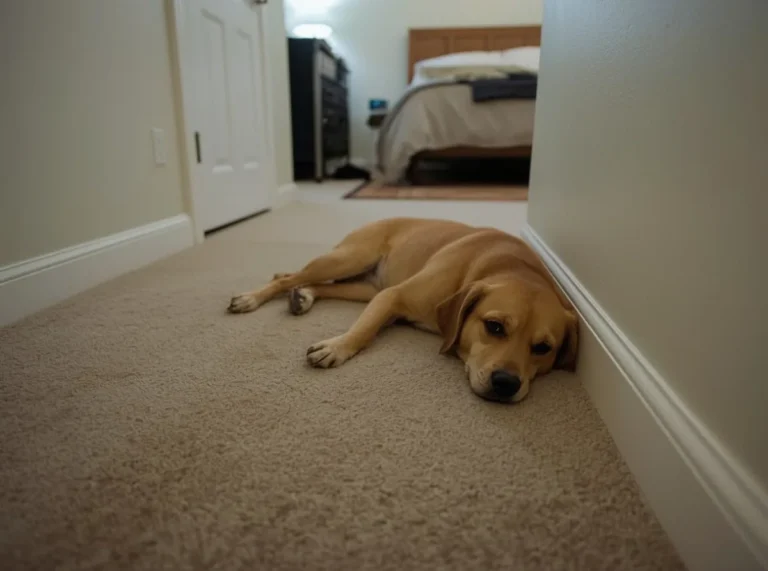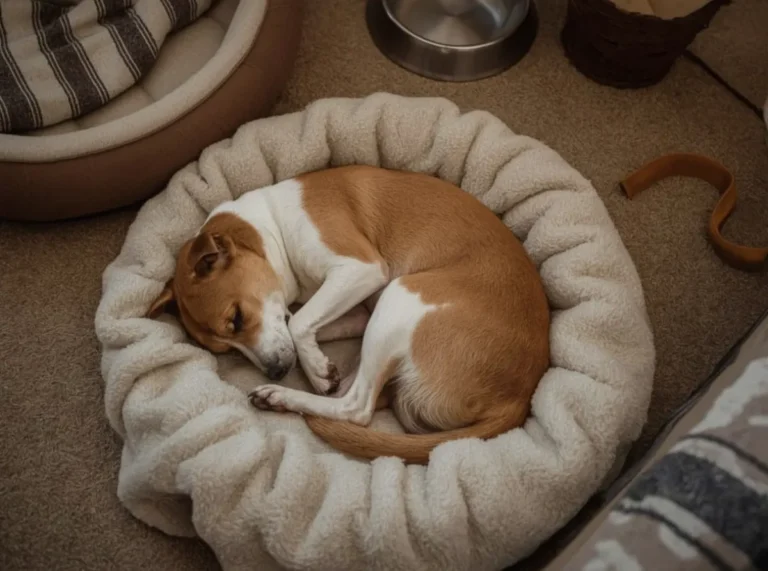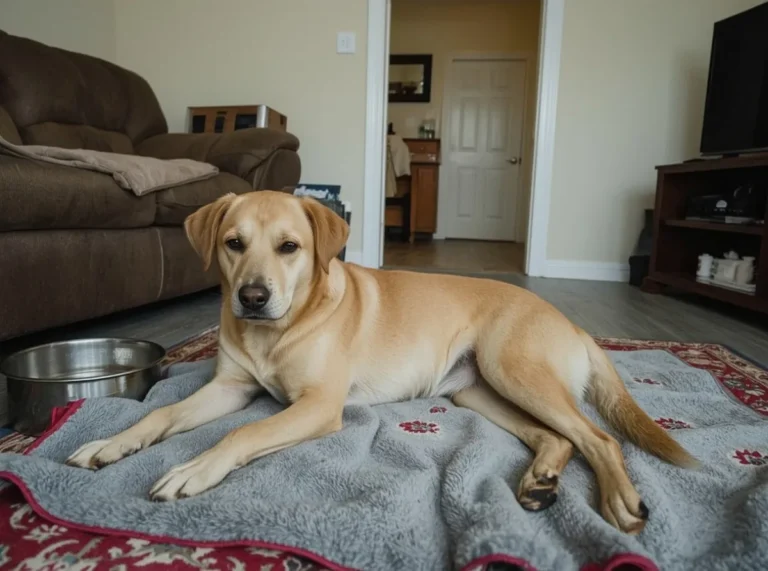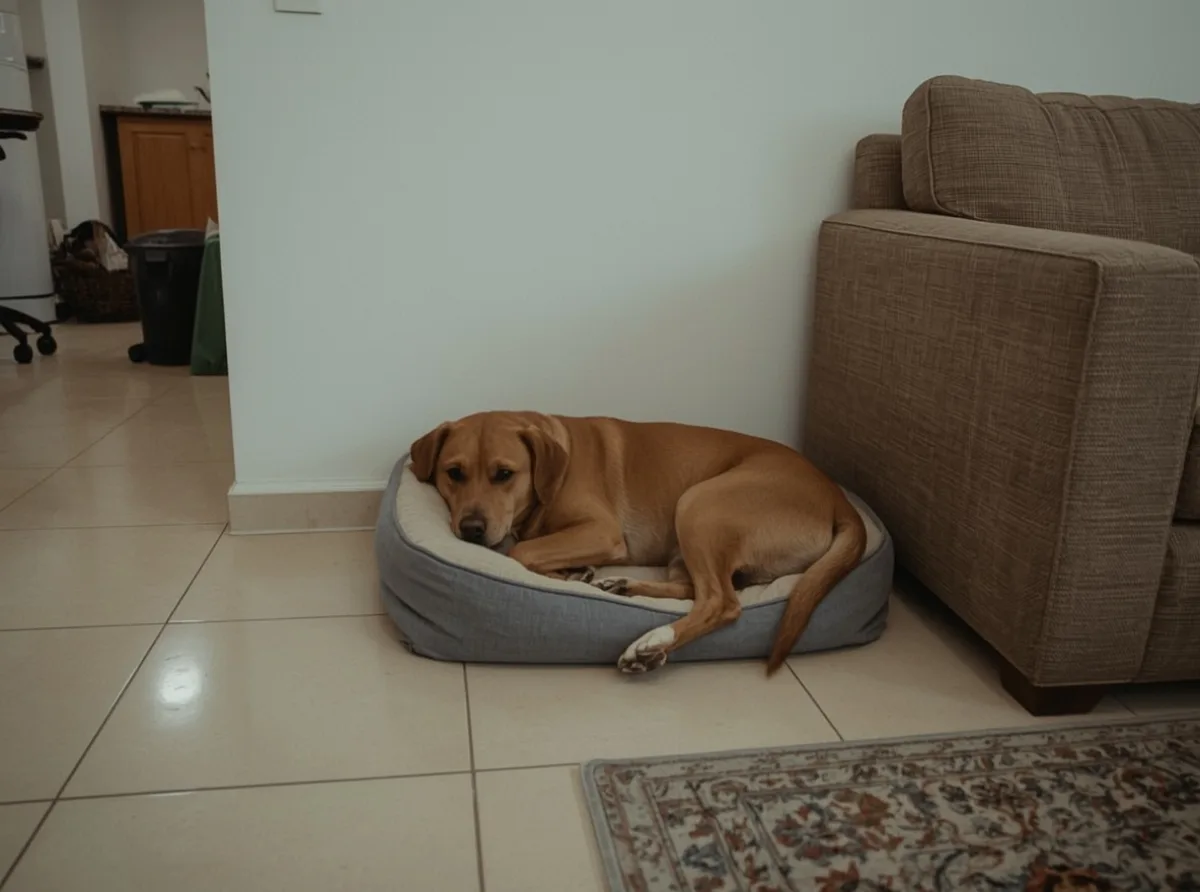
Some dogs seem to settle fastest when they can tuck themselves into a quiet corner, away from foot traffic, noise, and constant movement. A corner may look unremarkable to a person, but to a dog it can feel like a protected pocket of space. It gives them a clear view of the room while keeping their body partly shielded, which often helps them relax.
That preference is not random. In everyday life, dogs often choose places that help them feel less exposed, less interrupted, and less expected to stay “on.” A quiet corner can offer exactly that. It creates a small boundary without requiring the dog to be isolated from the household.
When a dog rests better in a quiet corner, the choice usually reflects comfort, habit, and the way the dog processes the surrounding environment. Some dogs are naturally more sensitive to noise or movement. Others simply like having a predictable spot where they can drop their guard.
Why quiet corners often feel safer
Dogs are both social and alert by nature. They may want to stay near people, but they also watch what happens around them. A corner can reduce the number of directions from which activity reaches them, which makes the space feel easier to manage.
For many dogs, this matters more than the actual size of the spot. A small bed in the middle of a busy room may never feel as restful as a plain blanket in a corner near a wall. The wall creates a boundary. The corner creates a sense of enclosure. Together, those details can help a dog let go of the need to monitor everything.
Quiet resting places often work best when they reduce surprise. Less movement around the dog usually means less tension in the body.
Dogs also tend to rest better when they can choose the amount of contact they want. A corner gives them the option to observe without being approached from every side. That can be especially helpful in homes with children, visitors, other pets, or constant household activity.
What this looks like in everyday life
The behavior often appears in small, ordinary moments. A dog may follow the family into the living room, circle once, and then settle behind a chair or beside a sofa. Another dog may ignore a plush bed in the center of the room and instead curl up against a wall near the hallway. Some will even move between spaces until they find the quietest one available.
It can also show up after active parts of the day. Following a walk, a play session, or a noisy mealtime, the dog may retreat to a corner rather than staying where the action is happening. The choice is often practical. The dog is not necessarily avoiding the family; it may simply be choosing the easiest place to recover.
In some homes, the quiet corner is near the entrance of a room. In others, it is behind furniture or tucked beside a crate with the door open. What matters is not the exact location but the feeling the place creates for the dog.
Common signs a dog has picked a corner for true rest
- Loose body posture
- Slow breathing
- Minimal repositioning
- Soft eyes or closed eyes
- Little response to mild household noise
When a dog is genuinely resting, the corner is usually just a place to sleep or decompress. The body looks settled, not braced. That difference matters.
Emotional reasons behind the preference
Quiet corners can support several emotional states, and not all of them are negative. Some dogs simply like privacy. Others feel overstimulated and need fewer visual and sound triggers. A few dogs use corners as a way to regulate themselves after social activity, just as some people prefer a chair in the back of a café rather than the center of the room.
Shy dogs may choose corners because the open room feels too exposed. Highly observant dogs may use corners because they can rest while still keeping track of what happens nearby. Even confident dogs may prefer a quiet corner when the home becomes busy, because rest and vigilance do not always disappear at the same time.
A dog’s comfort level can also shift with age. Puppies may seek corners when they are tired and overwhelmed. Adult dogs may do it out of habit and efficiency. Senior dogs may prefer corners because they need more predictability and less disruption.
A dog that rests in a quiet corner is often asking for lower stimulation, not necessarily for distance from the family.
How environment shapes the choice
The layout of a home can strongly affect where a dog rests best. Open floor plans often give dogs fewer natural boundaries, so corners become especially appealing. In a busy household, even small changes like chair placement, hallway traffic, or the sound of appliances may influence where the dog goes to settle down.
Routine matters too. If a dog is used to naps after certain events, such as a walk or a meal, it may start heading to the same corner each time. Repetition turns a simple spot into a familiar resting cue. The dog learns that this place means “nothing is expected of me here.”
Stimulation can push the preference further. A home with constant conversation, music, children running through the room, or frequent door activity makes quiet spaces more valuable. The corner is not magical; it is just the least demanding option in a busy setting.
Environmental features that often make corners appealing
- One or two protected sides from walls or furniture
- Less foot traffic than the center of the room
- Reduced visual exposure
- Fewer sudden sounds nearby
- Easy access to the family without being in the middle of activity
Some owners notice that the same dog prefers different corners in different parts of the day. Morning resting may happen near the kitchen if the house is calm, while afternoon rest shifts to a bedroom or den. That kind of movement usually shows that the dog is adjusting to the environment, not being inconsistent.
What the behavior may signal about stress or comfort
Resting in a corner can mean the dog feels safe enough to relax, but context matters. A dog that chooses a corner and sleeps deeply is likely using the space well. A dog that wedges itself into a corner while remaining tense may be seeking security rather than comfort.
Small body cues help tell the difference. A relaxed dog may stretch out, sigh, or roll slightly onto one hip. A stressed dog may stay tightly curled, keep the head up, or scan the room instead of fully settling. The corner is the same. The internal state is not.
It is also worth noticing whether the dog can be interrupted easily. A calm resting dog may stir briefly and go back to sleep. A tense dog might startle, rise quickly, or leave the space at the sound of movement. Those details show whether the corner is truly restful or simply the least overwhelming place available.
If a corner helps a dog relax, the goal is usually to preserve the feeling of safety, not to force more exposure.
How dogs use corners as a kind of boundary
Dogs do not understand personal space the way people do, but they do notice physical boundaries. A corner provides one. It reduces the chance of being approached from behind and limits the directions from which a person or another pet can enter the dog’s resting area.
This boundary can be especially important in homes with multiple animals. Some dogs prefer corners because they help avoid being stepped over, nudged, or followed while resting. Others like them because the corner makes their space easy to defend if another pet gets too interested. Even when no conflict exists, the sense of control can be comforting.
The same logic can apply to dogs that live with children. A corner may simply feel easier to predict. Fewer interruptions, fewer accidental touches, and fewer sudden games nearby can make it the calmest option in the room.
When the preference becomes more noticeable
Dogs often lean into quiet corners at certain times of day. Late afternoon, after guests arrive, or during household cleanup are common moments. Noise and motion tend to build gradually, and the dog may respond by relocating before rest becomes impossible.
The behavior may also become more obvious during periods of change. A new pet, a move, construction noise, schedule shifts, or visitors staying over can all make quiet spaces more attractive. The corner becomes a reliable anchor when the rest of the environment feels less predictable.
Some dogs become stronger corner sleepers as they mature. They learn which places in the home are easiest on their nervous system. Over time, the preference can become a stable habit. That is often a sign that the dog has found a practical solution to everyday stimulation.
Reading the difference between calm and guarded resting
Not every corner-resting dog is seeking the same thing. One dog may be fully relaxed. Another may be protecting itself from uncertainty. Owners often notice the location first and miss the body language that tells the fuller story.
A relaxed dog usually looks unhurried. The ears may rest naturally, the mouth may be soft, and the breathing may slow. The dog may stay in place for a long time without vigilance. A guarded dog may choose the same spot but remain watchful, tighten when someone passes, or shift quickly if the room gets louder.
That is why the question is not just “Where does the dog lie down?” but “How does the dog behave once it gets there?” The answer often reveals whether the corner is a comfort zone, a coping space, or both.
Subtle signals that the dog is genuinely comfortable
- Resting weight distributed evenly
- Soft facial muscles
- No constant head lifting
- Easy transitions into sleep
- Little reaction to ordinary household sounds
How owners can support this preference without overdoing it
Supporting a dog that loves quiet corners usually means making the area available and respectful, not dramatic. A clean mat, bed, or blanket in the chosen space is often enough. The dog does not need a luxury setup if the location itself is what provides comfort.
It helps to keep that resting area free from routine interruptions. Reaching over the dog, leaning into the corner, or asking for interaction every time the dog settles there can reduce the sense of safety. If the dog has chosen the spot to rest, allowing uninterrupted time often works better than trying to “encourage” more sociability.
At the same time, the corner should not become a place of permanent retreat if the dog seems increasingly withdrawn, tense, or hard to engage in other parts of the day. The pattern matters more than the location. A dog that uses a corner in a balanced way is one thing. A dog that hides there all day and appears uneasy may need a closer look.
Long-term patterns and what they can reveal
Over time, a dog’s corner preference can say a lot about the kind of rest it needs. Some dogs use the same quiet spot throughout life because their temperament naturally favors calm, enclosed spaces. Others change with age, health, or household rhythm. The pattern may stay steady, or it may shift as the dog’s daily comfort changes.
Consistency is often more telling than any single day. A dog that returns to a corner after play, after visitors leave, or before a nap is likely using the space in a healthy way. A dog that suddenly starts hiding in corners more often than before may be signaling that the home feels louder, busier, or less predictable than usual.
Owners do not need to overanalyze every resting choice. But noticing when, where, and how a dog settles can reveal a lot about what helps that dog truly rest.
Quiet corners are not just hiding places. For many dogs, they are practical resting zones that reduce pressure, limit interruptions, and make sleep easier to reach.
Why this matters in daily home life
When a dog rests better in a quiet corner, that preference can shape the whole flow of the household. It may influence where a bed should go, where visitors should avoid stepping, or how children are taught to approach a resting dog. Small adjustments can make a big difference in how easily the dog settles.
The best setup is usually the one that respects the dog’s need for calm without cutting the dog off from the family. A corner near the edge of shared space often works well because it offers both connection and protection. The dog can be part of the room without being in the middle of it.
That balance is often what makes the corner so useful. It gives the dog a place to rest with less effort, and it lets the home stay active without making rest impossible. For many dogs, that is exactly the kind of arrangement that leads to better sleep and easier recovery throughout the day.