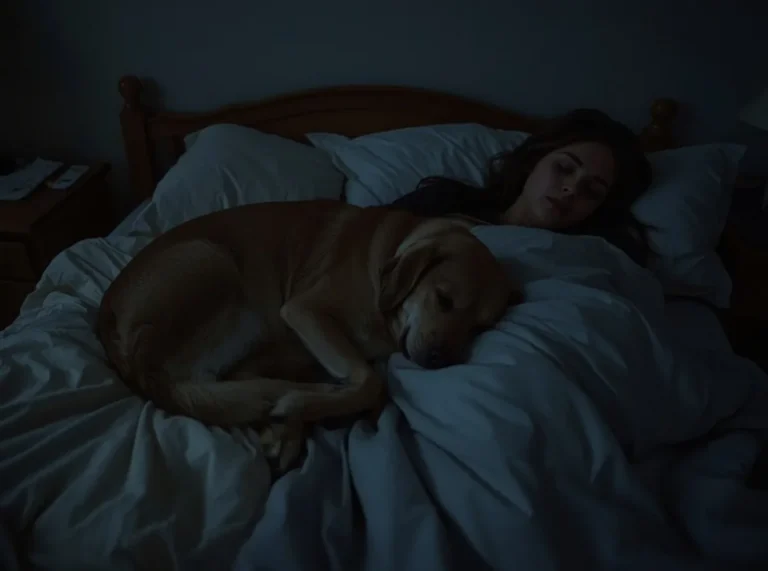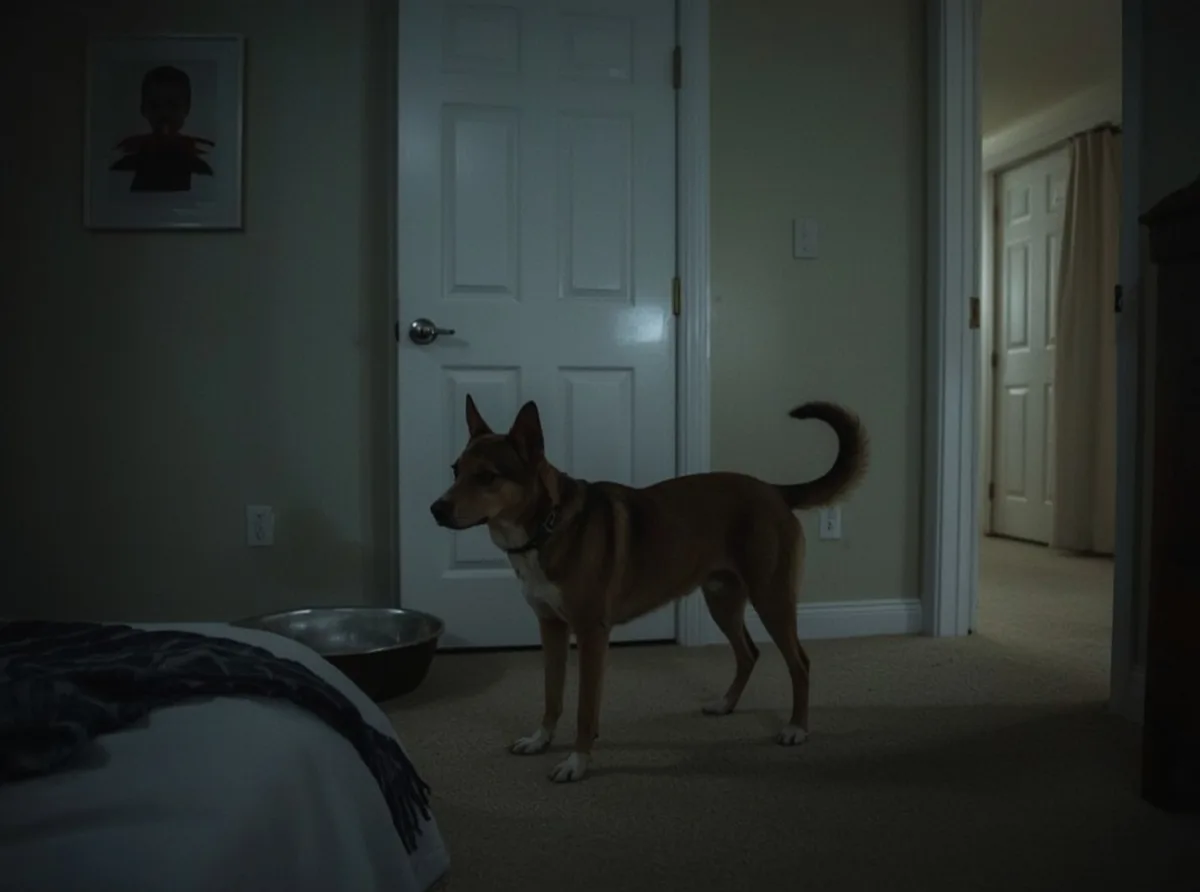
Nighttime restlessness in dogs can look small at first. A dog shifts from bed to floor, follows a person from room to room, sighs, licks its paws, or settles and rises again before dawn. Sometimes the change is so subtle that it only becomes obvious after it happens night after night.
Many owners notice it most when the house finally goes quiet. During the day, a dog may seem normal, but at night the same dog paces, whines, stares at doors, scratches at bedding, or seems unable to fully relax. That pattern can feel confusing because sleep time is supposed to be the calmest part of the day.
Restlessness at night does not point to one single cause. It can reflect discomfort, stress, boredom, age-related changes, habits, or a simple mismatch between the dog’s daily rhythm and the household’s routine. The behavior matters because it is often a message, and the message is usually clearer when you look at the whole pattern instead of one isolated night.
What nighttime restlessness can look like
Not every restless dog behaves in the same way. Some dogs move quietly and frequently, while others become vocal or clingy. A dog may settle in one spot, get up after a few minutes, circle, and lie down again. Another may stay near the bedroom door or sleep lightly with frequent head lifts.
These behaviors are easy to miss when they are mild. Owners often notice them only after the dog starts disturbing sleep. In many homes, the first clue is not a dramatic event but a series of small disruptions that build up over time.
Common nighttime signs
- Pacing or repeated walking around the house
- Frequent position changes while trying to sleep
- Whining, barking, or soft vocalizing
- Following people instead of settling alone
- Scratching at the bed, carpet, or door
- Restless circling before lying down
- Sudden waking and difficulty resettling
- Licking paws, rubbing the face, or other self-soothing behaviors
Some dogs show restlessness without making noise. Others are much more obvious. The difference matters because a quiet restless dog may still be struggling just as much as a more vocal one.
Nighttime restlessness is a behavior pattern, not a diagnosis. The meaning depends on what else is happening in the dog’s body, routine, and environment.
Emotional reasons behind the behavior
Dogs often communicate emotional tension through movement. When a dog cannot settle at night, the reason may be internal rather than external. A dog that seems unsettled may be anxious, overstimulated, uncertain, or simply not fully ready to relax after the day.
Separation-related discomfort can show up most clearly after dark. If a dog sleeps differently when a person is away, or becomes more unsettled when the house is quiet, attachment may be part of the picture. Some dogs are comfortable during the day because activity distracts them, but at night they feel the absence of normal household movement more strongly.
There is also the possibility of general emotional sensitivity. Certain dogs react strongly to small changes. A different bedtime, a new noise outside, a visitor staying over, or even a rearranged room can create enough uncertainty to keep them from settling easily.
Emotional states that can contribute
- Anxiety or unease
- Overattachment to a person
- Uncertainty about a change in routine
- Excitement that did not fully resolve during the day
- Low tolerance for household noise or movement
- Stress from recent events, travel, or a new environment
These emotional causes often leave clues elsewhere. A dog may ask for more reassurance, shadow one person closely, or have trouble relaxing in other quiet moments too. Nighttime restlessness becomes easier to understand when it fits a larger pattern of sensitivity.
If a dog seems calm during the day but repeatedly struggles to settle at night, the issue may be less about energy alone and more about emotional readiness to rest.
Physical discomfort and age-related changes
Some restless nights have nothing to do with behavior in the usual sense. A dog may simply be uncomfortable. Pain, stiffness, digestive upset, itching, urinary urgency, or breathing difficulty can all interfere with sleep. When the body is not comfortable, the dog keeps shifting in search of relief.
This becomes more common with age. Older dogs may have arthritis, reduced mobility, cognitive changes, or a weaker sleep-wake rhythm. They may wake more often, seem confused in the dark, or wander because they cannot easily return to a deep sleep. A senior dog that paces at night is not necessarily being difficult. It may be trying to manage discomfort or disorientation.
Even younger dogs can become restless from physical reasons. An ear infection, a sore leg, gas, fleas, or an overly warm sleeping area can disrupt sleep more than owners expect. The dog may not cry out. Instead, it simply cannot settle into one comfortable position.
Physical causes that deserve attention
- Joint stiffness or arthritis
- Itchy skin or parasites
- Upset stomach or nausea
- Need to urinate more often
- Dental pain
- Breathing problems
- Neurological or cognitive changes in older dogs
When restlessness appears suddenly or gets worse quickly, especially in an older dog, physical discomfort should be considered early.
How routine and environment shape the behavior
Dogs rely heavily on patterns. When meals, walks, play, and sleep happen in a predictable rhythm, many dogs settle more easily. When that rhythm is off, night restlessness becomes more likely. A dog that did not get enough activity, mental engagement, or bathroom breaks may have trouble calming down later.
At the same time, too much stimulation can cause the opposite problem. A busy household, late-evening visitors, loud television, rough play before bed, or a long nap in the afternoon can all shift a dog’s internal clock. The dog may look tired but still not be ready for real rest.
The sleeping environment matters too. Some dogs are sensitive to temperature, bedding texture, light, or noise. A crate placed near a hallway, a bed near a heating vent, or a room with regular outside sounds may be enough to keep a light sleeper in a half-alert state. Other dogs need closeness and feel unsettled when separated from the family at night.
Environmental factors that can trigger restlessness
- Inconsistent bedtime or wake time
- Late-night stimulation
- Insufficient exercise or mental activity
- Too much daytime sleeping
- Noisy surroundings
- Uncomfortable bedding or temperature
- Changes in where the dog sleeps
- Stress from household activity or visitors
In many homes, the behavior improves when the daily structure becomes more stable. Not because the dog is being trained out of a problem, but because the body begins to expect rest at the same time each night.
What owners often think it means
It is common to assume a restless dog is simply being stubborn or looking for attention. Sometimes attention-seeking is part of it, especially if the dog has learned that pacing near the bed leads to petting, treats, or being let outside. But that explanation does not cover every case, and it can be misleading when the dog is actually uncomfortable or worried.
Another common assumption is that the dog “needs more exercise.” Activity matters, but more exercise is not always the answer. A dog that is too tired, overstimulated, sore, or anxious may become even more unsettled if the day is packed with too much physical effort. The key is not just fatigue. It is balance.
Some owners also interpret nighttime movement as bad manners or a sign that the dog is not properly trained. Yet restlessness at night often reveals something much simpler and more practical: the dog does not feel settled enough to stay still. That may come from habit, health, environment, or emotion.
Behavior that happens at night is often less about obedience and more about comfort, expectation, and the dog’s ability to fully switch off.
Subtle signals that often appear before full restlessness
Dogs usually give smaller signals before the behavior becomes obvious. These early cues matter because they show the dog is having trouble calming down before pacing or whining begins. A dog may keep scanning the room, hold its body stiffly, or lie down with its head still high instead of relaxing fully.
Some dogs yawn often, lick their lips, or keep checking where people are. Others hover near a bed but do not commit to it. A dog may also repeatedly move to cooler or warmer spots, suggesting it is trying to solve a physical discomfort problem rather than an emotional one.
Early cues to watch for
- Tense posture
- Frequent head lifting
- Persistent attention toward a door or hallway
- Inability to relax the face or shoulders
- Repeated sniffing or searching behavior
- Slow circling before lying down
These details help separate a dog that is casually changing positions from one that is unable to fully relax. The difference can be subtle, but it often points toward a meaningful cause.
How household relationships can affect nighttime rest
Nighttime restlessness is sometimes tied to social patterns inside the home. A dog that wants constant closeness may struggle more when everyone goes to bed. A dog that feels responsible for monitoring the house may remain alert because the transition to sleep feels like the end of its job.
This can happen in homes where a dog has become very tuned in to one person’s routine. If that person moves around late at night, works irregular hours, or wakes often, the dog may mirror those patterns. In other homes, the dog may be responding to tension, inconsistency, or a change in who is present at bedtime.
Dogs also read household energy well. A stressful evening, an argument, a sick family member, or a major change in the home can affect a dog even if the dog does not show stress during the day. The resting period is when that tension can surface.
Different patterns in puppies, adults, and senior dogs
Puppies are often restless at night because they are still learning the rhythm of sleep, bathroom breaks, and settling in a new home. Their restlessness tends to look different from that of an adult dog. It may be more linked to loneliness, incomplete housetraining, or simply not having the habits needed to sleep through the night yet.
Adult dogs often show restlessness when something in the routine changes or when an ongoing issue is building. This might be boredom, unmet needs, stress, or the start of a health concern. Adults are more likely than puppies to have a consistent pattern that reveals the cause over time.
Senior dogs deserve particular attention because changes in nighttime behavior can be an early sign of a physical or cognitive issue. They may wander, wake often, appear disoriented, or seem unable to find a comfortable place to rest. A once-sound sleeper who becomes restless later in life is worth observing carefully.
Age-related differences
| Life stage | Common pattern | What it may suggest |
|---|---|---|
| Puppy | Frequent waking, whining, difficulty settling | Need for routine, bathroom breaks, reassurance |
| Adult | Pacing, shifting, light sleep, clinginess | Routine mismatch, stress, boredom, discomfort |
| Senior | Wandering, confusion, repeated waking | Pain, cognitive change, sleep disruption, medical concerns |
The same outward behavior can mean different things depending on age. That is why context matters so much.
When the behavior becomes more noticeable
Nighttime restlessness often stands out after a schedule change. A family holiday, travel, a move, a new pet, or a shift in work hours can disturb a dog’s sense of predictability. Even something as small as later walks or different feeding times may change how easily the dog settles.
Some dogs also become more restless after a day with little structure. If they spent most of the afternoon sleeping and little time engaging with the family, bedtime may arrive before their body has built enough natural sleep pressure. Others are restless after highly active days because their nervous system remains stimulated long after the last walk.
Weather and season can play a role too. Hot nights, storms, and changes in daylight can affect sleep quality. A dog that is fine in one season may seem much more unsettled in another.
What a consistent pattern can tell you
Single restless nights are easy to explain away. Repeated patterns are more useful. If the behavior happens around the same time each night, after the same type of day, or in the same location, those details narrow the possible causes.
For example, a dog that paces only after late evening visitors may be reacting to stimulation and change. A dog that gets up several times and struggles more in the morning may be dealing with stiffness or age-related discomfort. A dog that is restless only when sleeping apart from a person may be showing attachment-related distress.
Consistency does not always mean the problem is serious, but it does mean the behavior has structure. Structure gives clues. Clues make it easier to decide whether to adjust routine, change the sleeping setup, or ask a veterinarian about possible pain or illness.
Patterns are more informative than isolated nights. The timing, location, and surrounding events often reveal the real source of the restlessness.
Reading the behavior without overreacting
Nighttime restlessness is easy to overread, and just as easy to ignore. The middle ground is to watch it carefully, compare it to the dog’s normal habits, and notice what else changes along with it. Appetite, bathroom habits, daytime mood, mobility, and interaction style all help explain what the dog is going through.
A dog that sleeps lightly but otherwise moves happily, eats normally, and seems comfortable during the day may simply need a better evening routine. A dog that paces, pants, avoids lying down, or cannot settle most nights may be signaling more than a habit problem. The difference is not only in how much the dog moves, but in what the rest of life looks like around that movement.
Nighttime restlessness can be a small behavior with a wide range of meanings. In one dog, it reflects a late bedtime and too much stimulation. In another, it points to pain, worry, or age-related changes. The body rarely lies about comfort, even when the reason is not immediately obvious.
When the house goes quiet and the dog cannot do the same, the behavior is worth noticing. Not because every restless night points to something serious, but because the pattern often says more than the noise does. The restless dog is usually trying to communicate a need, and the exact need becomes clearer when you pay attention to the details around it.