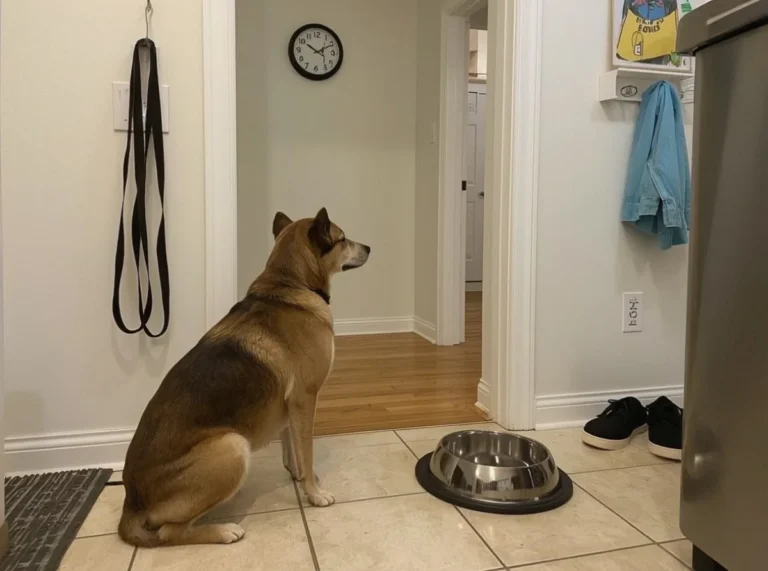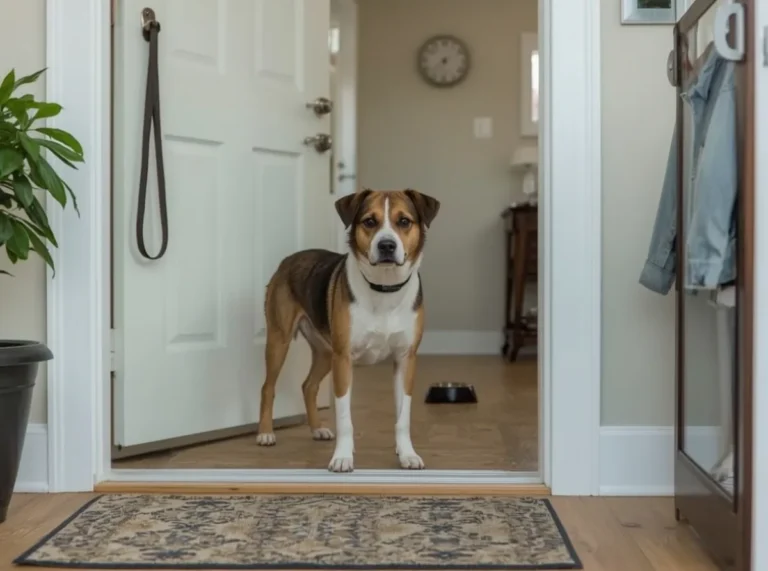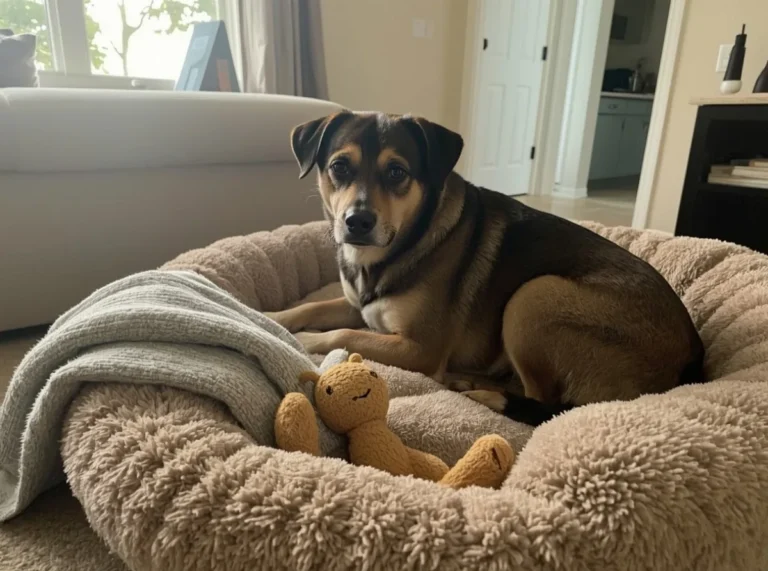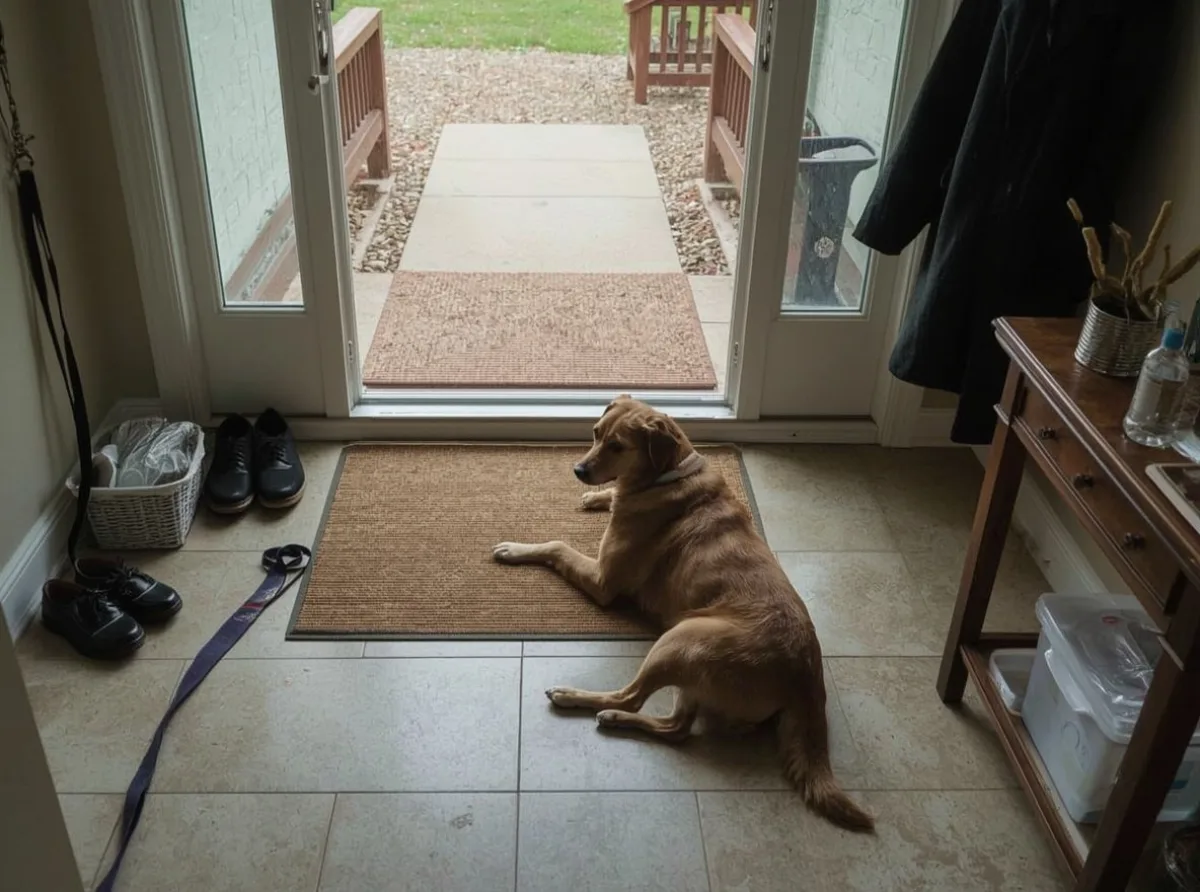
Some dogs seem to have a favorite spot that is not a bed, not a couch, and not even the kitchen. It is the doorway. More specifically, they return to entryways at certain times of day, almost as if they are keeping a schedule of their own.
That habit can look harmless, slightly funny, or oddly precise. A dog may settle near the front door before the family arrives home, pace by the back entrance around walk time, or sit at the mudroom when the house begins to wake up. The timing is often what makes the behavior stand out. It does not happen all day. It happens when something in the dog’s world is about to change.
Entryways are meaningful places for dogs. They are transition points. Sound, scent, movement, and routine all come together there. A doorway is where the outside world meets the home, and many dogs treat that line very seriously.
When a dog stays near an entryway at specific times, the behavior usually reflects a mix of expectation, habit, awareness, and emotional attachment. Sometimes it is simple anticipation. Sometimes it is watchfulness. Sometimes it is the dog following a daily rhythm so closely that the door becomes the center of that pattern.
What the behavior looks like in everyday life
In real homes, this behavior does not always look the same. One dog may lie flat near the front door every evening around 5:30, just before the first person returns from work. Another may wander to the garage door every morning right before the leash comes out. A third may stand by the back door after dinner, waiting for the usual potty break.
Some dogs rest quietly and only lift their heads when they hear movement. Others move back and forth, changing positions but staying close to the same threshold. A few may press themselves against the door, watch through glass, or listen for sounds in the hallway or outside. The timing often matters more than the exact posture.
There is also a difference between a dog that chooses a doorway briefly and one that seems drawn there over and over. Brief visits may simply mean the dog heard a familiar sound. Repeated returns at set times suggest the dog has built an internal pattern around what usually happens next.
In many dogs, entryways become “waiting zones” because they reliably predict something important: a person coming home, a walk, a bathroom break, a delivery, or the start of a household routine.
Why entryways become important at certain times
Dogs are excellent at noticing patterns. They do not need a clock to learn that lunch happens after the computer shuts down, or that shoes and keys often mean a walk is coming. Over time, those repeated cues create strong expectations, and the doorway becomes the place where that expectation feels most useful.
The timing of the behavior often reveals what the dog has learned. A dog waiting near the entryway every weekday afternoon may be reacting to the sound of a car or the usual return of family members. Another dog may show up by the front hall when the household gets active in the morning because that is when people move in and out the most. The dog is not guessing randomly. It is reading the rhythm of the home.
Routine strengthens doorway behavior because entryways are linked to outcomes. Doors open, people appear, leashes come out, walks begin, and visitors arrive. If those things happen at roughly the same times every day, the dog starts to position itself where the action usually begins.
Common timing patterns
- Before family members arrive home from work or school
- Shortly before regular walks
- Around mealtimes when people move toward the kitchen and entry zones
- When the household wakes up and starts opening doors
- During daily departures, especially if the dog expects a comeback soon
- When outdoor activity sounds begin, such as mail delivery or a neighbor returning home
Emotional reasons behind the habit
Expectation is only part of the story. Many dogs stay near entryways because the spot carries emotional weight. For some, it is about attachment. They know someone important enters through that door, and staying close feels like being ready for that person.
In other cases, the doorway becomes a place of alertness. Dogs naturally monitor movement near boundaries. They may feel more responsible for checking what is happening outside the home, especially if sounds or scents arrive from that direction. The timing can sharpen this response. If the same event happens every day at the same hour, the dog can become highly tuned to it.
There can also be a comfort factor. A familiar routine reduces uncertainty. A dog that knows the door will open soon may prefer to wait there rather than stay elsewhere in the house and risk missing the event. For some dogs, waiting is soothing because it gives them a clear job.
Not every dog is emotionally driven in the same way. One dog may wait because it is deeply bonded to one person. Another may do it because the entryway is the place where interesting things happen. Another may simply prefer that location because it offers a good view, a nice draft, or easy access to both inside and outside spaces.
Signals that often travel with the behavior
- Head lifting toward every sound near the door
- Soft but focused eye contact toward the entrance
- Pacing between the doorway and another nearby spot
- Perked ears and a still body when a familiar sound appears
- Occasional whining, especially close to arrival times
- Restless circling that settles once the expected event happens
How environment shapes the pattern
The home itself can make doorway behavior stronger or softer. In a busy household, entryways are active places. People come and go, doors open often, and the dog learns that the area matters. In a quiet home, the pattern may be narrower but more noticeable because the dog’s waiting becomes linked to only a few important events.
House layout matters too. Some homes place the dog’s bed or favorite resting spot near the front hall without much planning. Others have a large window by the entry, giving the dog a clear view of arrivals. A dog may choose the nearest vantage point simply because it can hear, see, or smell changes early.
Seasonal changes can influence the habit as well. In winter, dogs may wait near doors more often because they expect walks or because people move through certain entrances to avoid bad weather. In summer, the same dog might shift to a screened door, porch, or garage threshold where outdoor activity is easier to track.
Even the sounds around the home can create timing-based behavior. A car in the driveway, footsteps on a stairwell, a neighbor’s gate, or the click of a lock can all become part of the dog’s schedule. Once the dog connects those sounds with an upcoming event, the entryway becomes the natural place to wait.
Routine and timing: why the pattern repeats
Dogs thrive on repetition. A repeated schedule teaches them what comes next, and that knowledge changes where they choose to be. If a dog has learned that the front door means the family comes home at 6:00, it may begin waiting there at 5:45 or even earlier. The more accurate the pattern seems from the dog’s point of view, the more likely the behavior is to repeat.
This timing can build slowly. At first, the dog may only appear near the door after hearing a key in the lock. Later, it starts arriving before the sound. Eventually, the habit can become so consistent that the dog seems to know the exact minute something happens.
That precision often surprises owners, but it makes sense from a dog’s perspective. The dog is not using human language or reading a calendar. It is noticing repeated sensory cues: light changes, footsteps, device sounds, meal preparation, clothing routines, and outdoor activity patterns. These cues form a chain, and the entryway sits at the center of it.
When a dog waits by an entryway at the same time every day, it is often responding to a chain of learned cues, not just to the door itself.
When the behavior is relaxed versus when it may be more charged
Not every doorway wait means the same thing. A calm dog may simply lie beside the door with loose muscles, normal breathing, and a relaxed face. This version often looks peaceful. The dog is aware, but not upset.
A more charged version can show up as pacing, barking, whining, scratching, or stiff posture. The dog may react quickly to every sound and struggle to settle. In those cases, the entryway is not just a waiting spot. It is a place of heightened arousal.
Subtle differences matter. A relaxed dog may glance toward the door and then go back to resting. A more activated dog may keep returning to the same spot, even after trying to lie down elsewhere. It may seem unable to disconnect from the timing of the expected event.
Table: calm waiting vs more intense waiting
| Behavior | More relaxed form | More intense form |
|---|---|---|
| Body posture | Loose, settled, easy to shift | Rigid, tense, hard to relax |
| Movement | Minimal, occasional repositioning | Pacing, repeated checking, jumping up |
| Sound response | Notices key sounds, then calms | Reacts to many noises, stays on edge |
| Emotional tone | Anticipation or comfort | Stress, frustration, or strong excitement |
What owners often misunderstand
It is easy to assume that a dog waiting by the door is always anxious to see someone. Sometimes that is true. But the same behavior can come from habit, territorial awareness, excitement about a walk, or a strong sense of routine.
Another common misunderstanding is that the dog is being stubborn or difficult when it refuses to leave the entryway. In many cases, the dog is simply following the most meaningful cues in the environment. The doorway has become the place where the next event usually starts.
Some owners also miss how consistent the timing is. They notice the dog near the door and assume it is random. Once the pattern is observed closely, though, the dog often appears at the same hour, after the same household activity, or in response to the same sound sequence. That pattern is often the key to understanding the behavior.
The body language around the doorway matters as much as the spot itself. A dog with soft eyes and a loose tail is telling a very different story from a dog with frozen muscles and intense staring. The location is the same, but the meaning can be quite different.
How different daily situations influence it
A dog may stay near an entryway for very different reasons depending on the time of day. In the morning, it may be anticipating a routine. The leash comes out. Someone puts on work shoes. The dog knows movement toward the door often leads to outside time.
In the afternoon, the behavior may shift toward expectation of people returning home. Dogs often become especially alert as evening approaches because the house transitions from a quiet space to a busier one. They may hear cars, voices, or steps that match familiar arrival patterns.
At night, doorway behavior can also reflect monitoring. Some dogs feel more sensitive when the household gets quiet, and they may choose a threshold where they can quickly notice outside sounds. Others want to be near the family’s routine one last time before settling down.
Doorway waiting can also appear around specific events rather than clock time. A dog may remain near the entrance before the mail is delivered, when a favorite dog walker is due, or when a family member usually leaves for a short errand. The behavior is less about the hour itself and more about what the hour predicts.
Attachment, alertness, and social behavior
Dogs are social animals, and entryways often become places where social life begins and ends. This is where greetings happen. Departures happen here too. A dog that stays close to the door at certain times may be participating in the household’s social rhythm, not just watching a piece of wood and metal.
Attachment can strengthen the pattern. Dogs often learn which person leaves through which door, and when. If one family member returns at a consistent time, the dog may choose the relevant entryway before that person appears. That may look like loyalty, and in a way it is, but it is also a learned expectation built from daily life.
Alert dogs may show a stronger version of the same habit. They watch changes more closely, react faster, and hold their attention longer. For them, the doorway is both social and practical. It is the place where they can intercept motion, investigate scents, and prepare for the next interaction.
More easygoing dogs may show the habit in a softer way. They may settle near the door but remain loosely engaged, ready to join whatever happens next without appearing tense. The location is shared, but the internal state is different.
When the behavior becomes especially noticeable
Some dogs only show this pattern during very specific windows. It may appear before meals, before the family’s usual return time, or before a weekly event such as garbage pickup or a dog-sitter’s arrival. These repeated moments teach the dog to focus attention in advance.
The behavior can become more noticeable after changes in the home too. If schedules shift, a dog may become more alert around the door because it is trying to re-learn the pattern. A new work schedule, school pickup time, visitor routine, or moving to a different home can all make the dog spend more time at entry points until the new rhythm feels predictable.
Dogs that are highly sensitive to sound may also show more doorway waiting during noisy periods. If the dog can hear footsteps in the hallway, delivery vehicles outside, or the garage door opening, the entrance may feel like the safest place to monitor what happens next.
In some cases, the habit becomes a visible part of the dog’s day because it has no other outlet for anticipation. The dog is not getting enough activity, interaction, or mental engagement elsewhere, so the doorway starts to absorb attention that might otherwise be spread across the day.
Long-term consistency and what it can reveal
When a dog returns to entryways at the same times over weeks or months, the pattern is usually meaningful. It may show a strong memory for routine, a stable attachment to people, or a consistent response to household events. The behavior can stay the same for years if the environment stays predictable.
In other dogs, the habit changes with age. A young dog may wait near the door because everything is exciting and new. An adult dog may do it because the routine is well established. An older dog may keep the same pattern but move more slowly, resting closer to the door instead of pacing.
Long-term observation often shows that the doorway is not the real goal. The real goal is what the doorway predicts. That might be people, food, a walk, outside access, or a chance to stay aware of the household’s next move. The place itself matters because of its association with repeated events.
If the timing stays consistent, the behavior is usually part of the dog’s learned daily map. If the timing suddenly changes, the pattern often reflects a change in routine, environment, or emotional state.
How to read the context without overreading it
Context is everything. A dog lying by the door at 5 p.m. may be waiting calmly for a family member. A dog doing the same thing while panting, whining, and scanning every sound may be showing stronger arousal. The position is identical, but the message is not.
Look at what happens before and after the doorway behavior. Does the dog settle once the person arrives? Does it stop after a walk? Does it return only when the house becomes active? These patterns help explain whether the behavior is about expectation, routine, or something more unsettled.
It also helps to notice whether the dog chooses one entryway or several. A dog may wait at the front door for arrivals but prefer the back door for outdoor breaks. That distinction can reveal how the dog organizes the home in its mind. Each doorway may have a different meaning.
Some dogs stay near entryways because that is where life happens in their household. They are not being dramatic. They are being observant. The door marks the moment when something important is likely to begin, and for a dog, that makes it worth watching closely.
What the timing usually means in plain terms
A dog that stays near an entryway at specific times is usually responding to a learned sequence. The behavior may be driven by anticipation, attachment, alertness, or a simple desire to be where events start. The exact reason depends on the dog, the household, and the routine around that doorway.
What makes the habit interesting is the timing. Dogs do not wait near doors for no reason. The pattern often lines up with real-life cues they have learned to trust: footsteps, sounds, people’s schedules, leash routines, or the emotional energy of the home. Once those cues become familiar, the entryway becomes a natural place to watch and wait.
That is why the behavior can look so precise. The dog is not checking the clock. It is reading the day.