Dogs often choose surprising places to rest, and hallways or entrances are common ones. A dog stretched across a doorway, tucked beside a front hall, or settled near a corridor may look like it is simply being stubborn. In many cases, though, the spot says something about comfort, awareness, habit, or the way the dog experiences the home.
That choice can mean different things depending on the dog, the room, the time of day, and what is happening around them. Some dogs want to stay near movement. Others are looking for a place where they can watch the house without being in the center of it. A hallway or entrance often offers both access and control, which makes it appealing in ways that are easy to miss.
Owners sometimes notice the behavior most when they are trying to step around a sleeping dog at the door. But the pattern is usually more interesting than simple convenience. It may reflect instinct, attachment, alertness, temperature preferences, or a dog’s routine in the home. The same spot can also mean different things for a puppy, an adult dog, or an older dog.
Why Hallways and Entrances Feel Appealing to Many Dogs
Hallways and entrances sit at the edge of a dog’s social world. They connect rooms, people, sounds, and movement. For a dog, that makes them highly informative places. A dog lying there can sense who is coming and going without having to pick a single room to commit to.
Many dogs also like these spots because they are transitional. A hallway is not as exposed as the middle of a living room, but it is not fully isolated either. An entrance can offer a mix of safety and observation. Dogs that want to stay close to the action, but not right in the middle of it, often settle into these locations naturally.
In homes with multiple people, these areas become especially active. Doors open. Footsteps pass by. Voices change direction. To a dog, that constant flow can feel important and worth monitoring. The spot becomes a kind of informal lookout post.
For many dogs, an entrance or hallway is less about “guarding” in a dramatic sense and more about staying aware of the home’s rhythm.
What the Behavior Looks Like in Everyday Life
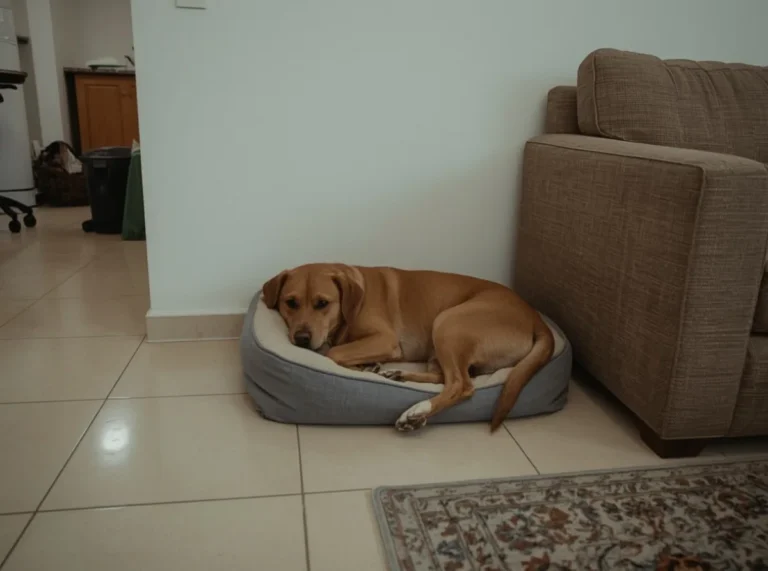
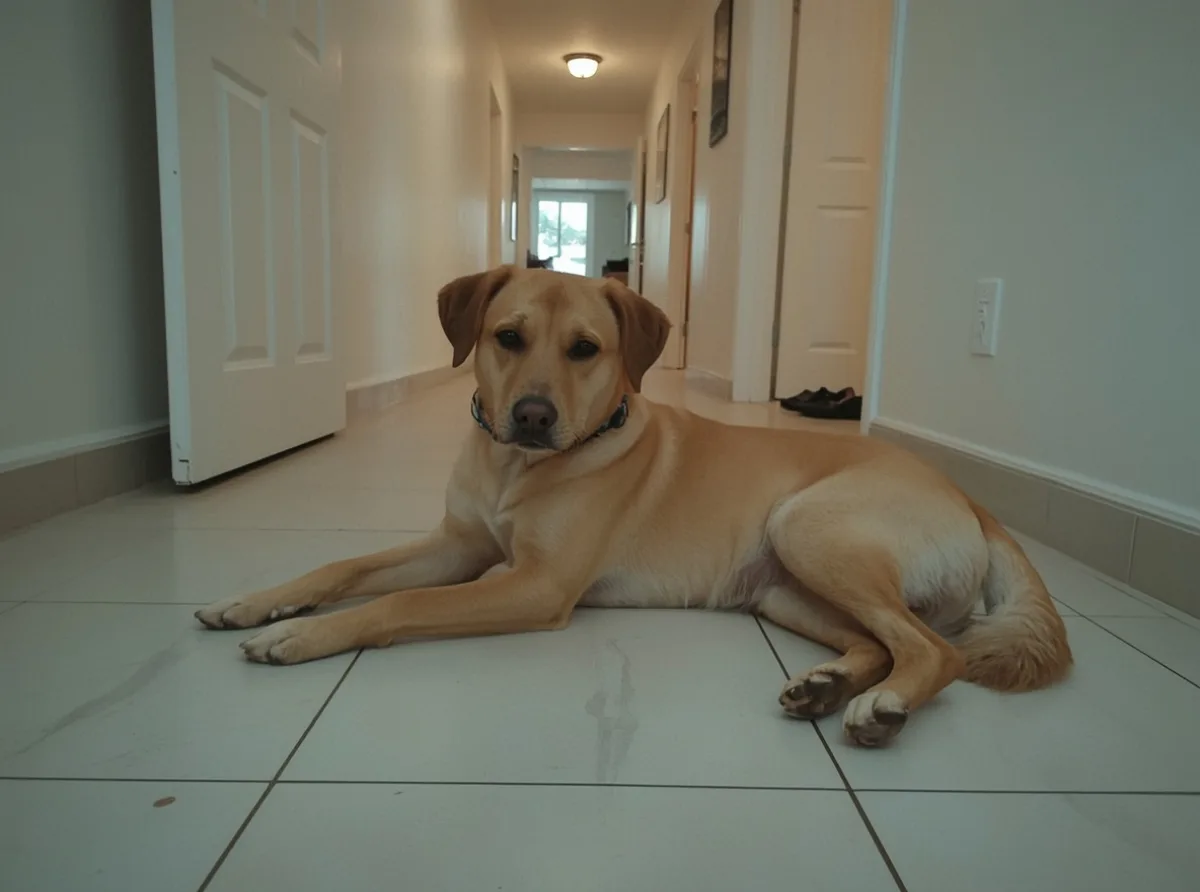
Some dogs lie lengthwise across a hallway, forcing everyone to step around them. Others curl up beside the front door, close to the wall, with just enough space to move if needed. A few choose the narrowest possible patch near a threshold or sit with their nose pointed toward the busiest route in the house.
The behavior often appears during predictable moments. A dog may rest there while family members are getting ready to leave, when deliveries are expected, or during the quiet stretch between mealtimes and evening activity. It can also happen after the dog has finished eating, playing, or going outside and wants to stay near where the next event might happen.
Some dogs treat the hallway as a temporary stop. They doze there for a few minutes, then shift to another room. Others return to the same location every day. That consistency is one of the clearest signs that the choice is meaningful to the dog, not accidental.
Common ways the habit shows up
- Sleeping just inside the front door or near a main entrance
- Lying in a hallway that connects the busiest parts of the home
- Resting where the dog can see approaching people or pets
- Using a doorway as a boundary between rooms
- Choosing a cool tile floor in a corridor during warmer hours
Instincts That Can Influence the Choice
Dogs are social animals with a strong history of monitoring movement around their group. That background can still show up in household habits. A hallway or entrance is a place where movement is concentrated, and dogs often notice that immediately. Choosing that spot can be a modern version of keeping tabs on the group.
Some dogs are naturally inclined to position themselves where they can respond quickly. This does not always mean they are anxious or protective in a problem sense. It can simply mean they are attentive. A dog that likes to know what is happening may settle in a doorway because it can hear footsteps, watch body language, and move toward activity without delay.
There is also a practical angle. Hallways usually connect sleeping areas, kitchens, living rooms, and doors. Those paths are meaningful in a dog’s daily map. A dog may not think in human terms about “location,” but it definitely learns which places lead to food, people, walks, and outdoor access. Entrances and corridors become high-value real estate.
Emotional Reasons Behind the Behavior
Comfort and awareness are often at the center of this habit, but emotion can play a role too. A dog may sleep close to a hallway or entrance because it wants to stay near the people it trusts. If family members move through that area often, the dog gets both proximity and a steady stream of familiar cues.
Some dogs seem to choose these spots when they are feeling uncertain. Not every dog that sleeps by a door is stressed, but a dog that is easily startled, easily distracted, or very alert to noise may prefer a place where it can watch instead of being surprised from behind. The hallway offers fewer blind spots than a tucked-away corner.
That said, the emotional meaning is not always serious. A dog may simply feel settled there because it has learned that the spot is where interesting things happen. Dogs build habits quickly when a location consistently matches their needs. Over time, the hallway becomes part of the dog’s comfort pattern.
If a dog repeatedly chooses the same doorway or corridor, the spot is likely meeting a need: closeness, visibility, temperature control, or easy access to movement.
How Routine Shapes the Habit
Daily life has a strong effect on where a dog decides to rest. In a home with fixed routines, dogs often choose resting spots that help them stay connected to those patterns. If people leave through the front door every morning, that area may become important. If the household is busiest in the afternoon, the hallway near the kitchen or living room may become the preferred place.
Dogs notice small repeating details. The sound of keys, the hum of a vacuum in another room, the opening of a cabinet, or the arrival of a car in the driveway can all become signals. A hallway or entrance can feel like the best place to collect those signals without needing to follow every single one.
Routine also matters because dogs often choose places based on what happened there before. If the hallway was a good place to cool down, relax, or keep an eye on family movement, the dog remembers that. The habit then strengthens. What began as a casual nap spot can become the dog’s default resting zone.
Routine factors that often reinforce the behavior
- Regular departures and returns through the same door
- Predictable feeding or walking times tied to nearby movement
- Frequent activity in adjacent rooms
- Household members crossing the same path throughout the day
- A pattern of positive experiences near the entrance
Environment and Temperature Can Matter More Than People Realize
Sometimes the reason is not emotional at all. Hallways and entrances can be cooler than other areas of the home, especially if they have tile, stone, wood, or drafts near the door. Dogs that like a cool surface may choose those spots because they feel better there physically.
In warmer months, this becomes even more noticeable. A hallway may offer airflow from open doors, vents, or cross-breezes. During colder weather, the opposite may happen, and the dog may move away from the entrance unless the area is near a heater or surrounded by blankets and rugs. The environment changes the appeal of the spot in very real ways.
Light and noise also influence the choice. Some dogs avoid bright, busy rooms but still like being close enough to monitor them from a quieter threshold. Others choose the entrance because it gives them a break from the noise of a kitchen, television, or children playing. The location does not have to be emotionally loaded to be useful.
When the Behavior Reflects Attachment
Dogs that bond closely with their people may place themselves where the household traffic is heaviest. A hallway near a bedroom, office, or front door often gives them the best chance to keep track of their favorite humans. That can look like loyalty, but it is also simply a practical social strategy for a dog that wants access.
This is especially common in dogs that follow family members from room to room during the day. Even if they are not actively seeking attention, they often want to be within range. A hallway lets them stay near enough to notice when something changes without having to choose one person or one room.
Some dogs also use these spaces to manage distance. They may not want direct contact all the time, yet they do not want to be fully separate either. A doorway can be the ideal compromise. The dog is connected, but not crowded.
Subtle Signals That Add Meaning
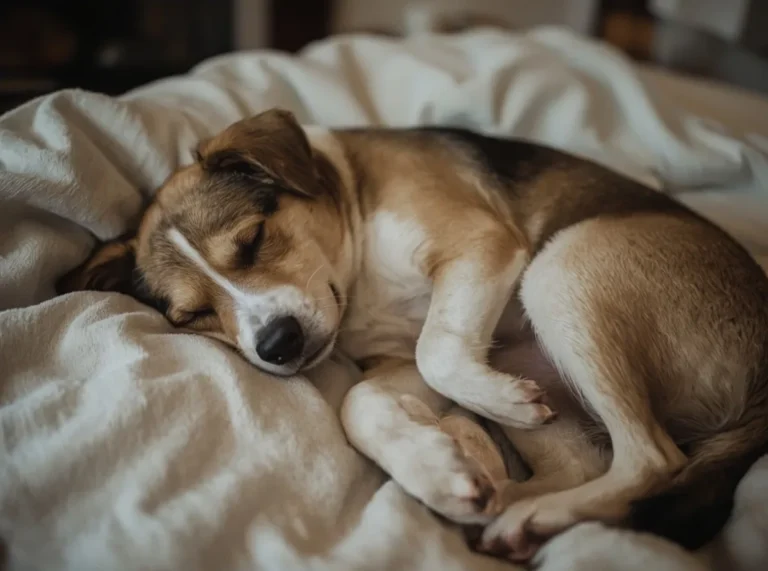
The sleeping spot itself tells part of the story, but body language gives more context. A dog lying with loose limbs, soft eyes, and a relaxed mouth is usually showing comfort. If the dog is on its side or sprawled out, the hallway is likely just a convenient resting place.
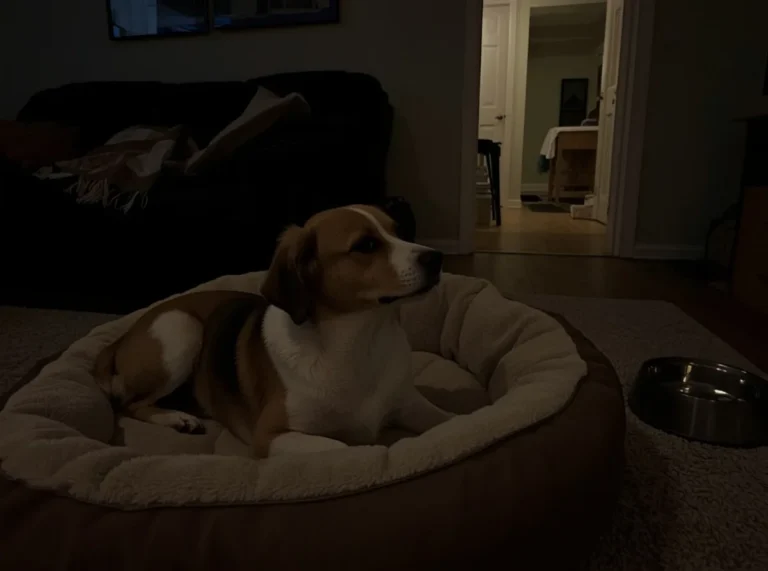
Different posture can suggest different feelings. A dog that lies upright, keeps its head lifted often, or wakes quickly at every sound may be more watchful. That does not automatically mean trouble, but it may mean the dog is using the location to stay alert. A dog that shifts away when someone approaches may want less disturbance, while one that barely reacts may simply be deeply relaxed.
Watch for these details together rather than in isolation. One tense moment does not define the behavior. Repeated patterns over time matter more.
Signals that can help interpret the habit
- Soft, loose body: likely comfort or habit
- Head up often: increased awareness
- Frequent repositioning: sensitivity to movement or noise
- Choosing the same spot daily: strong preference
- Sleeping in a narrow threshold: desire for access and visibility
How People Often Misread the Behavior
It is easy to assume that a dog sleeping by the entrance is trying to guard the house or waiting for someone in particular. Sometimes that is part of it, but not always. Many dogs are not acting out a dramatic role. They are just selecting a place that feels useful, familiar, and comfortable.
Another common misunderstanding is that the dog is being difficult when it blocks a hallway. In reality, the dog may have chosen the most efficient resting spot according to its own needs. If the area is cool, central, and full of information, it can be more appealing than a plush bed in a quiet corner that feels disconnected from daily life.
It is also easy to overlook how much control dogs like to have over their environment. A doorway gives them options. They can rest, observe, move, or get up quickly. That flexibility can be deeply satisfying, especially for dogs that prefer not to feel trapped in one room.
A dog’s favorite sleeping place is often the place that offers the best mix of comfort, access, and awareness.
Different Meanings in Puppies, Adults, and Older Dogs
In puppies, hallway or entrance sleeping may be tied to curiosity and a strong need to stay near people. Puppies are still learning where everything happens, so the center of traffic can feel safer and more informative than a quiet bed in another room. They also change positions often, so the habit may shift quickly from one day to the next.
Adult dogs usually show clearer preferences. If they keep returning to the same corridor or threshold, the behavior has likely become part of their routine. At this stage, it may be less about exploration and more about practical comfort, social awareness, or predictability.
Older dogs may choose these places for physical reasons. Cooler floors can help them settle. Easy access to multiple rooms may also matter more if moving around takes extra effort. Some senior dogs prefer locations where they can rise slowly and see what is happening without needing to relocate often.
Age-related patterns that often appear
- Puppies: curiosity, closeness, and quick changes in resting spots
- Adults: stable routines and strong location preferences
- Older dogs: comfort, temperature control, and easy access
When the Behavior Becomes More Noticeable
The habit often stands out during transition moments in the home. People are coming or going. Guests arrive. Dinner is underway. A delivery truck stops outside. These moments create movement and sound, which naturally draw a dog to a central watching point. Hallways and entrances become more appealing because they help the dog stay connected to the flow.
It may also become more obvious in homes where the dog does not have many alternate options. If beds are placed in quiet corners but the household is active in the central areas, the entrance may win every time. Dogs tend to repeat what works. If a certain spot gives them the best access to the life of the house, they will keep choosing it.
Changes in the household can intensify the behavior as well. A new schedule, a new pet, visitors, or shifting household noise can make a dog seek a more strategic location. The hallway becomes a place to monitor change without having to commit to one room.
When the Habit Seems Strong or Hard to Change
Some dogs use entrances and hallways so consistently that the behavior looks built in. This often happens when the spot has been rewarding for a long time. The dog has learned that it can see movement, stay near people, and rest comfortably all in one place. That combination is hard to replace.
If the behavior is stable and the dog appears relaxed, it usually just reflects a well-established preference. But if the dog seems tense, startles easily, or refuses to settle anywhere else, the habit may be linked to a need for vigilance. That kind of pattern is worth observing in context, especially if it changes suddenly.
The most useful question is not whether the behavior is “normal,” but what the dog gets from the spot. Once that is clearer, the pattern makes a lot more sense. A hallway is not random to a dog. It is often a very specific answer to a daily need.
What the Behavior Usually Means in Practice
A dog sleeping close to hallways or entrances is often balancing three things: comfort, awareness, and access. The location can help the dog stay near the family without being underfoot in a direct way. It can also offer a better view of movement and a comfortable surface or temperature.
That mix explains why the behavior is so common. It fits a dog’s social nature and its practical instincts. The entrance is not just a passage for people. For many dogs, it is a valuable resting place with a job to do.
When a dog keeps choosing that area, the choice usually makes perfect sense from the dog’s point of view. The house is full of signals, and the hallway is one of the best places to catch them. That is often the whole story. No drama required.