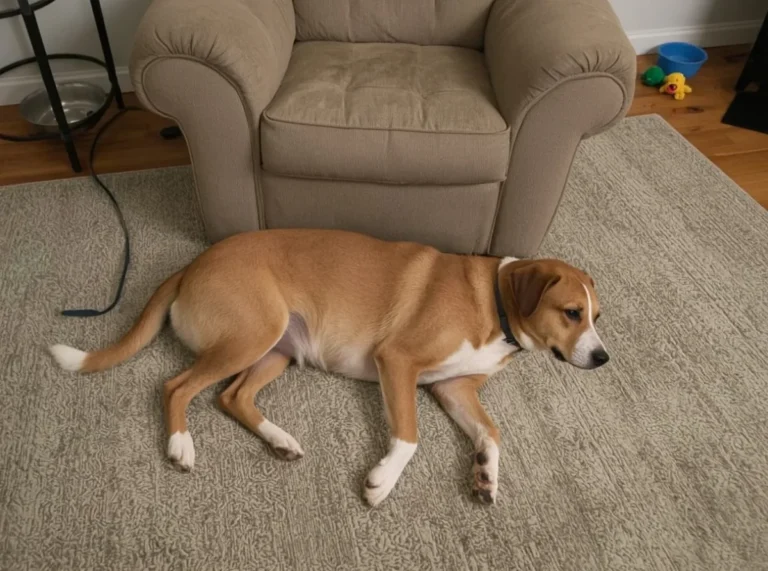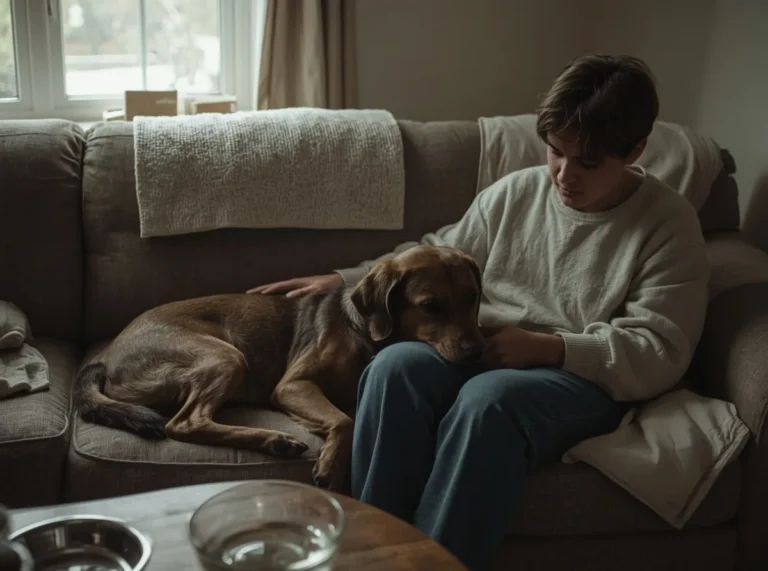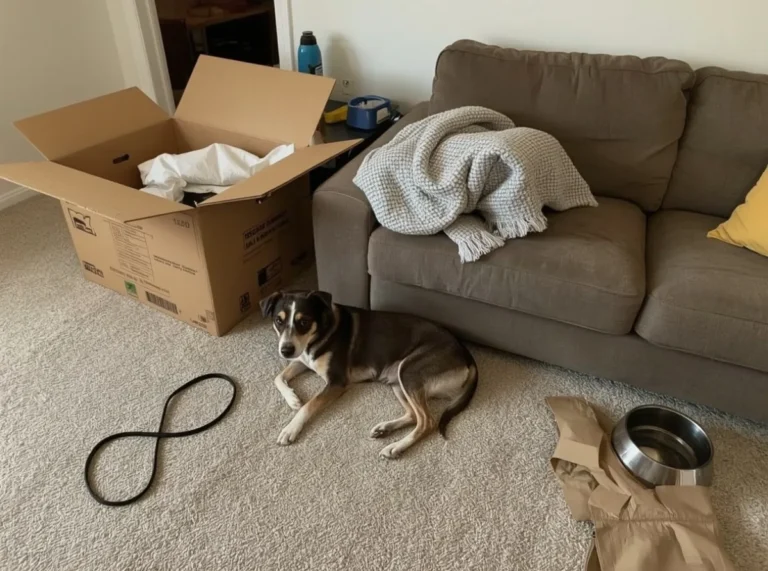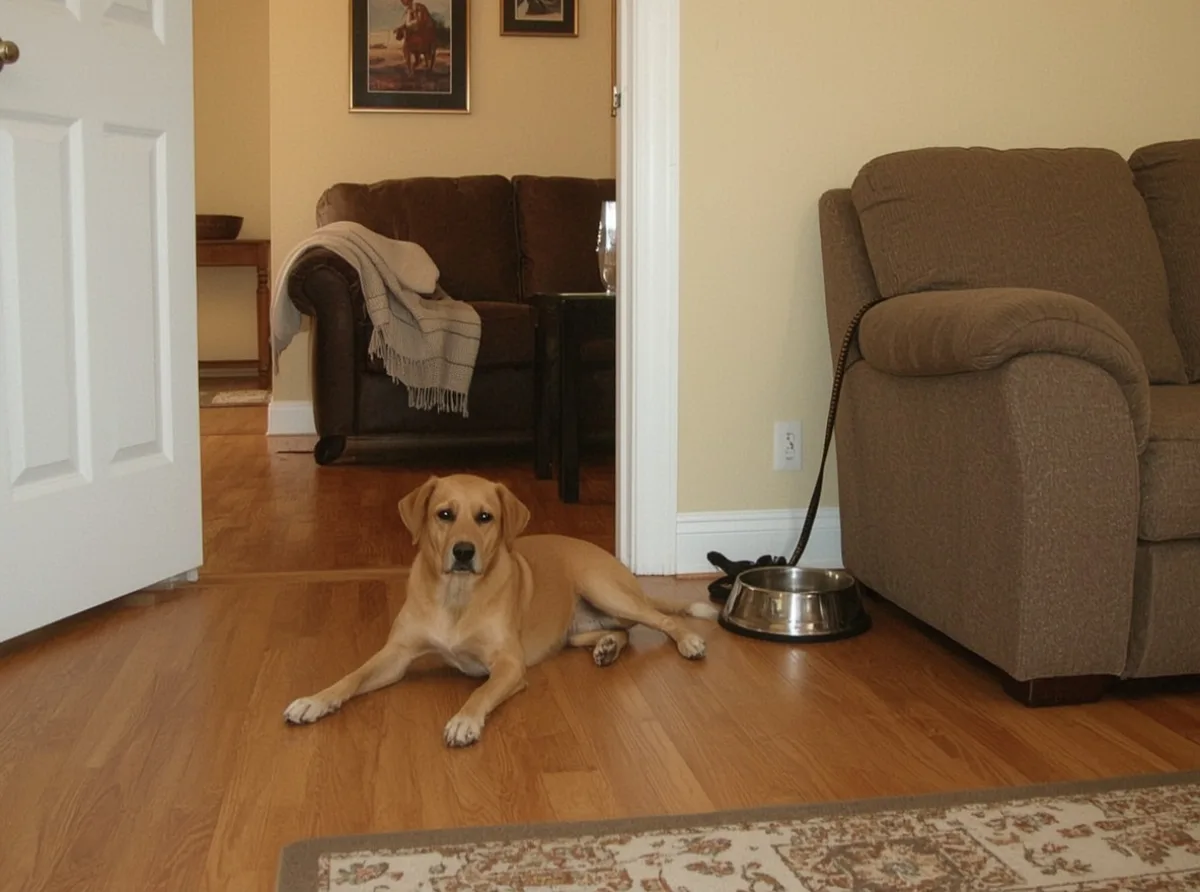
A dog can sit near a favorite person and seem almost still, as if it is listening to a sound no one else can hear. The ears may turn slightly. The eyes may stay soft and fixed. The body does not demand attention, yet the dog remains fully aware of the person’s every move.
That quiet observation often says more than a burst of excitement ever could. Some dogs watch because they feel safe. Some watch because they are waiting for a cue, a routine, or a moment they know well. Others watch out of habit, attachment, or simple curiosity. The meaning depends on the dog, the setting, and the way the body looks while it is happening.
Dogs do not always show affection through constant movement. In many homes, the most attached dog is the one that follows a person with steady eyes, settles nearby, and tracks small changes in mood or activity. The behavior can be subtle. It can also be very revealing.
What Quiet Observation Looks Like in Everyday Life
Quiet observation is easy to miss because it does not look dramatic. The dog may lie across the room and watch someone cook dinner. It may rest beside the couch and glance up every few minutes. It may stand in a doorway, not entering the room, just keeping its person within view.
Often the dog is relaxed enough to stay put but alert enough to notice movement. The tail may be neutral or slowly wagging. The mouth may be closed, or the tongue may rest loosely. Some dogs tilt their head slightly when their favorite person speaks, especially if the tone changes.
At times, the behavior appears strongest during ordinary routines. A dog may quietly observe while someone gets dressed, makes coffee, grabs keys, or sits down at a laptop. These moments matter because they are predictable. Dogs are very good at learning patterns, and many will watch carefully when they know something familiar is about to happen.
Small signs that often go with the behavior
- Soft, steady eye contact without tension
- Ears that turn toward the person’s voice
- A loose body rather than a stiff one
- Following with the eyes instead of moving the whole body
- Quiet settling nearby instead of asking for constant interaction
Sometimes the dog is not “doing nothing” at all. It is reading. A favorite person can become a center of reference, and the dog quietly tracks that person to understand what happens next.
Quiet watching is often a sign of attention, comfort, and emotional focus, but the body language around it tells the real story.
Why a Dog May Prefer Watching Rather Than Approaching
Not every dog shows attachment by leaning in, jumping up, or demanding touch. Some dogs express closeness by keeping a careful distance while still staying engaged. That can happen for several reasons, and many of them are completely normal.
One common reason is trust. A dog that feels safe does not always need to be physically attached to a person’s side. It can relax nearby, observe the room, and remain confident that the person is there. This is often seen in dogs that know their home well and feel secure in their routine.
Another reason is social bonding. Dogs are naturally attentive to the people they care about. They watch faces, movements, and patterns. A favorite person often becomes the one they monitor most closely, because that person controls food, walks, play, door openings, and the general rhythm of the day. The watchfulness is practical as well as affectionate.
There is also a temperament factor. Some dogs are simply more observant than others. They may be calmer by nature, less physically demonstrative, or more interested in assessing a situation before acting. These dogs can look serious when they are actually comfortable.
In other cases, the behavior reflects anticipation. The dog may be waiting for the next cue it recognizes: a leash being picked up, a snack being prepared, a bedtime routine beginning. The observation is quiet because the dog has learned patience. It knows the sequence and is reading the room before the moment arrives.
When the Behavior Appears Most Often
The habit usually becomes more noticeable during transitions. A dog may watch its favorite person closely when that person shifts from one activity to another. Standing up from the couch, moving toward the kitchen, reaching for a coat, or turning off a light can all trigger alert but quiet attention.
It often shows up in places where the dog feels both comfortable and invested. The living room, bedroom doorway, kitchen edge, or the hallway outside a closed door can become favorite observing spots. These are places where the dog can keep watch without needing to be in the center of the action.
Meal times are another common moment. Dogs are excellent at noticing food-related patterns. Even if the person is not feeding them directly, a favorite person’s presence may signal something important. The dog watches not because it is anxious in every case, but because the routine is meaningful.
Some dogs also become quietly observant when the household gets quieter than usual. If a person is tired, sick, emotional, or unusually still, the dog may sit nearby and keep checking in without being intrusive. Many owners notice this as a kind of silent companionship.
Common situations where quiet watching increases
- Before walks or outings
- During food preparation
- When a person is resting or unwell
- In the evening, when routines become predictable
- When the household is unusually quiet
The same dog may ignore a person while that person is busy with phone calls or chores, then become highly attentive the moment the routine changes. That shift is often more about timing than mood.
What the Behavior Can Signal Emotionally
Quiet observation can reflect affection, but affection is only part of the picture. A dog may also be seeking reassurance, trying to understand a mood, or staying tuned to a person it relies on heavily. The emotional meaning depends on whether the dog looks soft and settled or tense and guarded.
When the body is loose and the gaze is calm, the behavior usually points to contentment. The dog is present, aware, and comfortable. It may not need to move because it already feels connected. This is often the case with dogs that have a strong bond with a predictable person.
If the dog watches with a high, fixed stare, a stiff posture, or very little blinking, the meaning can be different. That can suggest uncertainty, anticipation, or overfocus. The dog may still be attached to the person, but the emotional state is less relaxed. Context matters here. A dog that looks rigid near the door before a walk is not showing the same thing as a dog that lies with loose muscles beside a sleeping owner.
Some dogs are highly sensitive to human emotion. They notice changes in voice, pace, facial expression, and body tension. A quiet observer may simply be checking on its person. This can happen in homes where the dog has learned that subtle shifts matter. Dogs are often better than people expect at reading the atmosphere of a room.
A calm, observant dog is usually communicating in the safest way it knows: by staying near, staying aware, and not interrupting the moment.
How the Environment Shapes the Behavior
The same dog may act differently in a peaceful home than in a busy one. In a quiet household, observation can blend into the background because there is less movement to track. In a lively home, the dog may watch one person more carefully simply because that person feels more predictable than the rest of the activity.
Routine has a strong influence. Dogs settle into patterns quickly. If a favorite person feeds them at the same time each morning, sits in the same chair at night, or always reaches for the leash before a walk, the dog will notice. Quiet watching often grows from these repeated signals. The behavior is less random than it looks.
Stimulation matters too. A dog that gets enough exercise, mental engagement, and social contact may observe in a calm, balanced way. A dog that is under-stimulated may watch just as intently, but the observation can look more restless. In that case, the dog may be waiting for something to happen because not much else is going on.
Stress in the environment can also change the meaning. Loud voices, unfamiliar guests, changes in schedule, or too much activity may make a dog more watchful. It may stay close to its favorite person as a way of staying oriented. That does not automatically mean fear, but it can show that the dog is relying on the person for stability.
Environmental factors that often affect quiet observation
| Factor | How it can shape the behavior |
|---|---|
| Consistent routine | Makes the dog watch for familiar next steps |
| Busy household | Encourages the dog to choose one trusted person to follow |
| Low stimulation | Can make observation more noticeable because there is less else to do |
| Noise or disruption | May increase alert watching and checking in |
| Comfortable setting | Often leads to soft, relaxed observation |
A dog’s surroundings do not create the behavior alone, but they shape how often it appears and how intense it looks. The same quiet stare can mean very different things in a calm room versus a tense one.
Attachment, Alertness, and Social Habit
The behavior sits at the intersection of several natural dog traits. Dogs are social animals. They are also observant, adaptive, and highly responsive to repeated human signals. Quiet watching can be a blend of all three.
Attachment is often the easiest explanation to see. A favorite person becomes emotionally important, and the dog keeps track of that person with steady attention. This can be especially visible in households where one person handles more of the dog’s care. The dog learns whose actions matter most.
Alertness plays a role as well. Many dogs are not simply resting when they watch. They are scanning for changes. A tiny shift in posture, a sound from another room, or the movement of a hand can be enough to hold their attention. This is normal for dogs that are naturally tuned in to their surroundings.
Social habit matters because dogs learn what works. If watching a person leads to attention, a walk, food, or a friendly response, the behavior is reinforced. But even without direct rewards, a dog can develop the habit of staying visually connected to the human it trusts most.
Breed tendencies may influence how obvious the behavior looks, but they do not decide everything. A quiet observer can be a herding dog, a companion breed, a mixed-breed rescue, or a large independent adult with a soft spot for one person. The pattern depends on temperament and life experience as much as on genetics.
How to Read the Difference Between Calm and Concerned Watching
The key is not the watching itself. It is the quality of the watching. Calm observation tends to look loose, unforced, and almost restful. Concerned or uncertain watching looks more concentrated, with a body that seems ready to react.
A calm dog may rest with one hip to the side, blink slowly, and look away occasionally. It may watch for a minute, then drift off, then check back in. That rhythm is usually healthy and relaxed.
A concerned dog may stay frozen longer, track every movement, or stare without the usual softening around the eyes. The ears may be forward and tight. The body may lean slightly toward the person, as if bracing for something. In some dogs, the behavior can overlap with clinginess or vigilance.
It helps to notice what happens before and after the observation. Does the dog settle easily? Does it get up and follow without tension? Or does it seem unable to relax until the person moves? Those patterns give the behavior its meaning.
Relaxed watching ends naturally. Tense watching tends to continue, sharpen, or interrupt the dog’s ability to settle.
How Human Behavior Affects the Dog’s Observation
People often shape this habit without realizing it. Dogs watch the person who is most predictable, most rewarding, or most emotionally readable. A favorite person may move in a way the dog has learned to trust. Their voice may be calmer, their timing more consistent, or their routines easier to understand.
Sometimes the dog watches because that person is the one who responds best to quiet communication. A glance, a shift in posture, or a small sound may be enough to get a response. Dogs notice that. They learn which humans are worth reading carefully.
On the other hand, a person who is inconsistent can also trigger close observation. If the dog never knows when that person will leave, return, feed, or invite interaction, it may keep watching to stay prepared. The behavior is not always about affection alone. It can also be about tracking uncertainty.
Even the way a person behaves around rest time matters. A dog that sees its favorite person sit quietly every evening may begin to join that stillness. The observation becomes part of shared routine. Over time, the dog may seem to know the schedule better than anyone else in the house.
What the Behavior Often Means in Mature Dogs
Adult dogs tend to show quieter, more refined versions of this behavior. Puppies may stare with sharp curiosity, then bounce off to something else. Mature dogs often become more selective. They watch because they have learned that attention is useful, and because they have built strong patterns with the people around them.
In older dogs, the behavior can become gentler and more constant. Some seniors watch a favorite person with a kind of settled attention that lasts through long naps and slow movements. They may not follow as much as they once did, but they still keep track. The habit can feel almost like companionship through quiet presence.
If an older dog begins watching more than before, the reason is worth noticing. Changes in vision, hearing, comfort, mobility, or routine can all affect how closely a dog tracks a person. A senior dog may lean more on visual contact if it feels uncertain in other ways.
At any age, the repeated pattern matters most. A dog that quietly observes its favorite person day after day is usually showing a stable form of connection. The details around that connection tell whether it is relaxed, anticipatory, or mildly concerned.
What Owners Often Misread
People sometimes assume a quiet observer is bored, needy, or sad. That is not always true. A dog that watches without interrupting may be perfectly content. It may simply prefer stillness over physical closeness at that moment.
Others read the behavior as obedience or dependence alone. While those elements can be present, they do not explain everything. A dog’s gaze can carry attachment, memory, habit, and emotional awareness all at once. It is rarely one simple thing.
Another common mistake is ignoring the body. The face alone can be misleading. A soft stare can belong to a calm dog, but the same stare paired with stiffness or a tucked tail tells a different story. Looking at the whole dog makes the behavior easier to understand.
It is also easy to think the dog wants something specific every time it watches. Sometimes it does. Other times it is just being near a person it cares about. Not every moment of attention is a request. Some are just part of the relationship.
Long-Term Patterns and What They Reveal
When the behavior stays consistent over time, it often shows a stable bond. The dog has learned who feels important, what routines matter, and when to pay attention. This consistency is one reason the behavior can seem so meaningful to owners. It is not random. It is repeated and familiar.
Dogs with secure, comfortable relationships often develop a steady pattern of quiet watching that comes and goes with daily life. The dog does not need to be on top of the person to stay connected. It can remain near enough to observe and still feel settled.
If the behavior becomes more intense, more frequent, or more rigid, the context should be checked. Changes in household schedule, stress, health, or stimulation can all shape how the dog uses observation. A dog that suddenly watches more closely may be adjusting to something it has not yet fully understood.
In the end, the behavior is best read as part of a larger picture. The dog’s posture, routine, environment, and emotional rhythm all matter. Quiet watching is one of the most understated ways dogs stay close to the people they trust most. It can be tender, practical, or both at once, and it often says more in stillness than loud affection ever could.