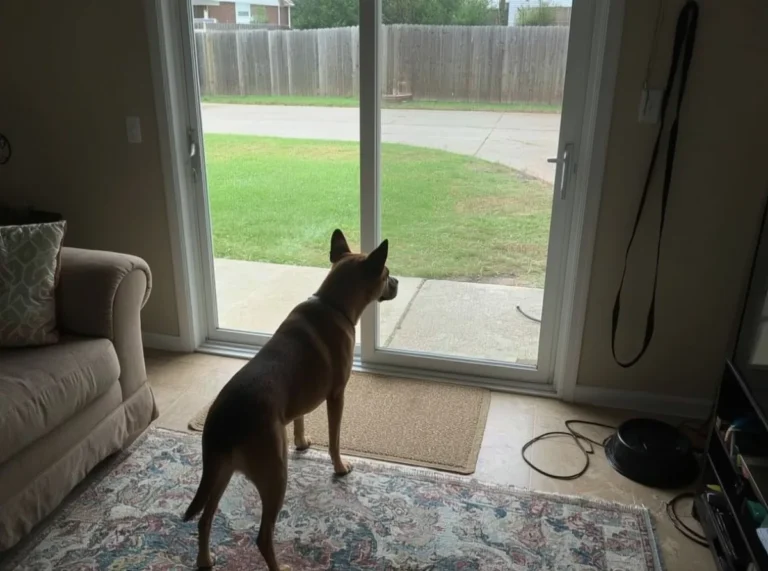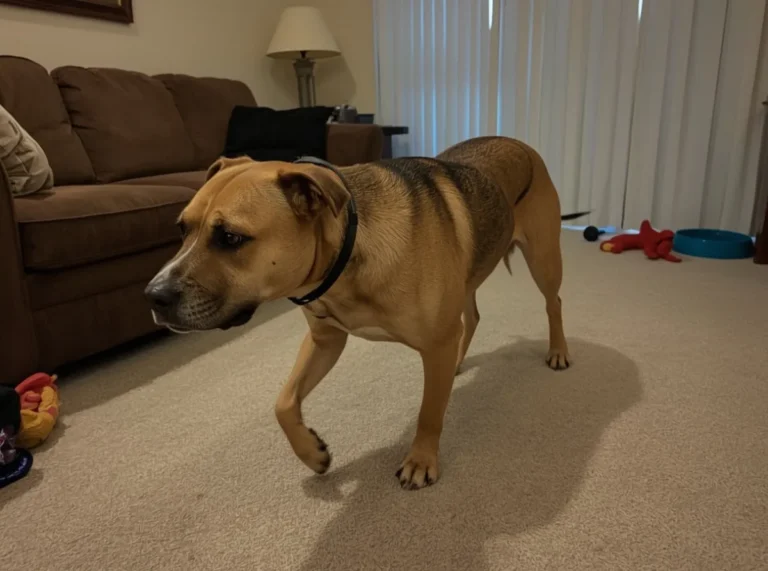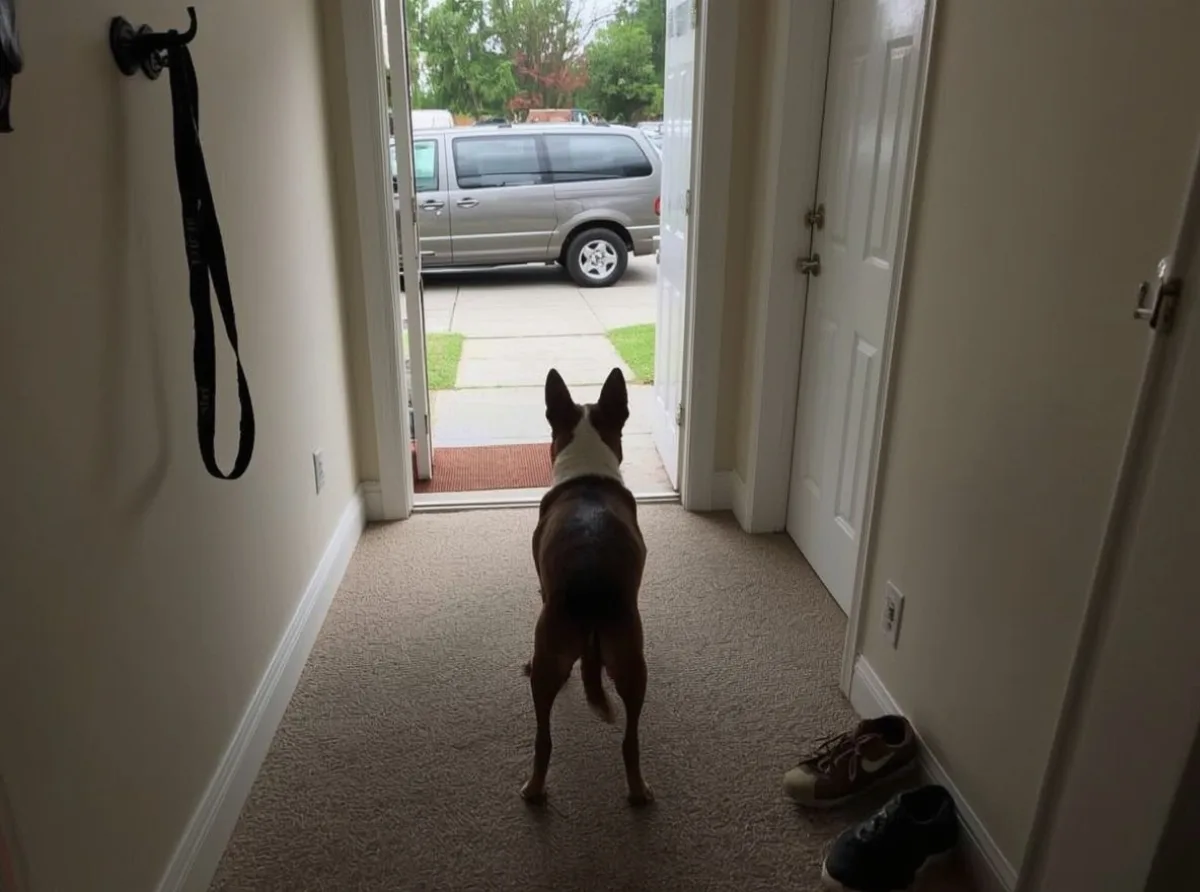
A dog that has always seemed easygoing can suddenly become reactive in places that used to feel ordinary. A walk past the mailbox, a familiar guest at the door, the neighbor’s dog across the street, or even the kitchen at dinnertime can trigger barking, lunging, freezing, or intense staring. When that happens, it can feel surprising because nothing about the setting seems new.
Sudden reactivity in familiar environments usually has a reason, even when the reason is not obvious. Dogs do not react in a vacuum. Their responses are shaped by pain, stress, pattern changes, memory, hormones, past experiences, and the small details of a place that humans often overlook. A familiar environment can stop feeling predictable to a dog long before it looks different to a person.
That is why a dog may seem “fine yesterday” and reactive today. The environment may be the same on the surface, but the dog’s body, mood, or sense of safety has shifted. Understanding those changes makes the behavior less mysterious and more manageable.
When Familiar Places Start Feeling Different
Dogs build expectations from repeated experiences. They learn which hallway is quiet, which room usually holds food, which route leads to a park, and which sounds tend to follow certain events. When those patterns hold steady, a dog often settles into them. When they break, even slightly, the same place can feel uncertain.
That uncertainty can show up as reactivity. A dog that once ignored the front window may suddenly bark at every passerby. A calm dog in the car may become tense in the parking lot at the same store. A dog that used to greet visitors politely may now rush, vocalize, hide, or snap when someone enters the home.
The key detail is that the setting does not have to be dramatically different for the dog to respond differently. Small shifts are enough. A new smell, a louder appliance, a different leash, a crowded schedule, a missed meal, or a long day without rest can all change how a dog interprets a place they already know.
Familiarity does not always equal comfort. A place can be known well and still feel harder to a dog when their internal state changes.
Common Triggers Hidden Inside Ordinary Routines
Sudden reactivity often appears in places where dogs spend the most time, because that is where subtle changes are easiest to miss. The kitchen, living room, backyard, front door, and neighborhood walking route are common examples. Dogs may react there because they are already highly practiced in those spaces and have strong expectations about what should happen next.
Routine disruptions are a frequent cause. Dogs notice when mealtimes shift, walks become shorter, household noise increases, or a favorite resting place is moved. They also notice when the human schedule changes. More guests, different work hours, a new baby, school breaks, travel, or renovations can create tension that appears later as reactivity in the same old places.
Physical discomfort matters too. A dog with ear pain may become touchy near the couch because they associate being handled there. A sore back can make a dog guard the hallway because turning quickly feels uncomfortable. Even mild pain can lower tolerance and make ordinary events harder to handle.
Examples of everyday triggers
- Repeated noises from appliances, HVAC systems, or nearby construction
- Unexpected visitors or deliveries at familiar times
- Changes in walking routes or neighborhood traffic
- New scents from cleaners, candles, or other animals
- Less sleep, fewer breaks, or longer periods of boredom
- Discomfort from illness, injury, or dental pain
When these triggers stack up, a dog may look as if they are reacting to nothing at all. In reality, the reaction often follows a string of small stressors that have built up across the day or week.
Internal Stress Can Change the Same Room
Many owners focus first on the environment, but the dog’s inner state is just as important. A dog under stress may become more watchful, more easily startled, or less able to recover after a mild surprise. That does not always appear as obvious anxiety. Sometimes it looks like irritability, stiffness, or a sudden refusal to move through a space they normally use without issue.
Stress can come from many directions. A dog that is underexercised may build frustration that spills out in familiar places. A dog with too much stimulation may reach a limit and begin reacting to household sounds that never bothered them before. A dog that has had repeated tense interactions may start anticipating conflict in places tied to those events.
Memory plays a role here. Dogs remember where something uncomfortable happened. If a nail trim, a scolding, a painful stumble, or a rough encounter occurred in a certain room or on a certain street, that location may later carry an emotional charge. The reaction might not appear immediately. It can surface days or weeks later, especially if the dog’s overall stress level is already high.
A dog may react to a familiar setting because the body is already near its limit. The place is only the final spark.
How Body Signals Often Change Before the Reaction
Sudden reactivity rarely begins with the loudest behavior. The earliest clues are usually physical and subtle. A dog may become still, narrow their eyes, lick their lips, shift weight forward or backward, or hold their tail differently. These signals often show up before barking or lunging, and they can reveal that the dog is already uncomfortable.
Some dogs become more movement-based. They pace, circle, scan the room, or keep repositioning themselves near doors or windows. Others go quiet and rigid. A dog that normally greets people with loose body movement may suddenly stand with a hard stare and a closed mouth. That change is easy to miss if the owner is only watching for vocal reactions.
Context matters as well. A dog that seems “stubborn” in the entryway may actually be uncertain about what is coming next. A dog that refuses to pass a doorway may be reacting to a sound, scent, or remembered event attached to that spot. When owners look at body language instead of only the explosive behavior, the pattern becomes clearer.
Common early warning signs
- Freezing or slowing down unexpectedly
- Hard staring or intense focus on a person, dog, or sound
- Lip licking, yawning, or sudden sniffing without a clear reason
- Stiff tail, rigid spine, or raised hackles
- Turning away, hiding, or avoiding a normally easy area
- Quick shifts from quiet behavior to vocal protest
These signs do not always mean a dog is about to react aggressively, but they do mean the dog is not fully relaxed. Once the body is tense, a familiar environment can feel much less predictable.
Why Reactivity May Start After a Period of Calm
One of the most confusing parts of sudden reactivity is that it often appears after a long stretch of stability. A dog may have spent months or years handling the same environment with little issue. Then, after a move in routine, a health change, or one stressful event, the behavior shifts.
That delay is common. Dogs can tolerate a lot until they cannot. A reaction may not appear during the first stressful event because the dog is still coping. Later, once the nervous system has had time to accumulate tension, the reaction becomes visible in a place that used to be easy.
This is especially true for dogs that are naturally observant or sensitive. They may not show discomfort early, which can make the shift seem sudden. In reality, the buildup started earlier. The visible reaction is simply the first clear sign that the dog’s coping capacity has changed.
How Owners Often Misread the Behavior
It is common to assume that a dog is acting out, being defiant, or becoming “territorial” when reactivity appears in a familiar environment. Sometimes those labels miss the point. The behavior may be less about control and more about uncertainty, discomfort, or overstimulation.
Another common mistake is treating the environment as the only issue. If a dog reacts in the hallway, the hallway is not necessarily the whole problem. The dog may be tired, sore, worried, or overwhelmed, and the hallway is just where those feelings finally show up. That distinction matters because it changes how the behavior is interpreted.
Owners also sometimes ignore mild warnings because the dog has behaved well there for years. A small change in tolerance can be overlooked until the reactions become more dramatic. By then, the dog may have practiced the new response enough that it becomes easier to repeat.
Sudden reactivity is often a sign of pressure, not a sign that the dog has “changed personality.”
Emotional States That Can Sit Under the Surface
Several emotional states can contribute to reactivity in familiar places. Fear is one. Frustration is another. Some dogs are reacting because they want access to something and feel blocked. Others react because they feel crowded, cornered, or unable to create space.
Protectiveness can also play a role, especially in the home. A dog that feels responsible for monitoring doors, windows, or family members may become more alert when the household becomes busier or noisier. That alertness may look sudden, but it often reflects an ongoing sense of responsibility that has grown over time.
Overarousal is easy to underestimate. A dog does not need to be visibly frantic to be over threshold. A day full of excitement, visitors, play, errands, or unfinished rest can leave the dog more reactive by evening. The same person, same room, and same sound can feel much bigger to a dog whose nervous system is already activated.
How Environment and Routine Influence the Threshold
The threshold for reactivity is not fixed. It changes with sleep, pain, hunger, exercise, and daily predictability. A dog who is well rested and mentally settled can handle more before reacting. A dog who is run down can react to much less.
Routine has a stabilizing effect when it is consistent and realistic. Regular walks, predictable meal times, quiet rest periods, and familiar handling patterns can help a dog feel secure. When those patterns are disrupted, even temporarily, the dog may lose some of that emotional balance.
The amount of stimulation in the home also matters. Busy households can be enjoyable, but they can also wear a dog down. Constant movement, frequent visitors, loud conversations, kids running through rooms, and multiple competing noises can create low-level strain. A dog may seem fine for most of the day and then suddenly react when another small stressor is added.
| Situation | Possible effect on reactivity |
|---|---|
| Consistent routine | Lower uncertainty, easier recovery |
| Poor sleep or rest | Shorter fuse, faster escalation |
| New household noise | Increased vigilance and startle response |
| Pain or illness | Lower tolerance for touch, movement, or closeness |
| Too much excitement | Reduced ability to settle in familiar places |
When Medical Issues Deserve Attention
Not every behavior shift is caused by stress alone. A dog that becomes reactive in a familiar environment may be in pain or not feeling well. That possibility should stay on the table, especially if the change is quick, intense, or paired with appetite changes, stiffness, hiding, restlessness, or sensitivity to being touched.
Dental pain, skin irritation, joint discomfort, digestive upset, hearing changes, and vision changes can all alter how a dog moves through a known space. A dog may startle more easily if they cannot hear another person approaching. They may snap when bumped because the body hurts. They may seem confused in places they used to navigate confidently if they are not seeing as well.
Medical changes do not always look dramatic. Sometimes the first clue is simply that a dog who once tolerated everyday life now has a much lower threshold. If the pattern appears without a clear environmental explanation, health should be considered early rather than later.
Patterns That Help Explain the Shift
Looking at the timing can be useful. Does the reactivity happen in the morning before the dog has settled? Only in the evening after a long day? During feeding times? Near a specific doorway or room? Around certain people or other animals? These details often reveal what the dog is responding to.
Some dogs react most strongly when they are trapped in a predictable sequence. For example, the front door opening may always lead to a burst of movement, a stranger’s voice, and a leash being clipped on. Over time, the whole chain can become emotionally loaded. The dog may not be reacting to the door itself. They may be reacting to what the door means.
Other dogs are sensitive to place-based memories. A couch where a child once startled them, a corner where another dog invaded space, or a patch of yard where a painful incident happened can become a trigger point. The location remains familiar, but the emotional association changes.
Questions that reveal the pattern
- Did the behavior begin after a change in schedule, household activity, or health?
- Does it happen in one exact spot or across several familiar areas?
- Is the dog more reactive when tired, hungry, excited, or sore?
- Does the behavior appear only around certain noises, people, or animals?
- Has the dog had an unpleasant event in that place before?
Why Some Dogs React More Quickly Than Others
Individual temperament matters. Some dogs are naturally adaptable. Others are more cautious, more observant, or more sensitive to change. Breed tendencies can influence alertness and intensity, but personality and life history matter just as much.
A dog that has always preferred predictability may have a lower tolerance for disruption. A dog that bonds closely with one person may become more reactive when that person is absent or less available. A dog with a history of repeated stress may keep a shorter emotional distance from everyday events.
Age can also influence response. Younger dogs may react because they have not yet built much confidence in managing stimulation. Older dogs may react because of physical discomfort, sensory decline, or reduced resilience. The same environment can ask different things of a dog at different stages of life.
What Makes the Reaction Look Sudden
The word “sudden” often describes the owner’s experience more than the dog’s internal process. From the outside, it seems abrupt because the behavior appears without a major obvious change. Inside the dog, however, there is usually a chain of smaller changes that went unnoticed.
A dog may have been sleeping less, feeling sore, hearing more noise, getting fewer chances to decompress, or spending longer near stressors. Each factor slightly reduces the cushion. Eventually, a routine moment tips the balance. The familiar environment is still there, but the dog can no longer meet it with the same calm response.
That is why the first obvious reaction can feel so sharp. It represents the point where the dog’s coping system stopped absorbing the pressure. Once that happens, the same space may need to be approached differently for a while, because the dog’s threshold is no longer what it used to be.
The Deeper Meaning of a Familiar Place Becomes Tense
When a dog reacts in a place they know well, the event is rarely random. The behavior usually points to a mismatch between the dog’s current emotional or physical state and the demands of the environment. The location may be unchanged, but the dog is bringing a different body, a different memory, or a different level of stress into it.
That is why attention to patterns matters more than the single outburst. A one-time reaction can be a fluke. Repeated reactions in the same familiar setting usually say something more specific. They tell you where the dog feels pressure, what kind of stimulation they are struggling with, and whether the issue is linked to health, routine, memory, or a combination of all three.
Once the pattern becomes visible, the behavior starts to make sense. The hallway, the doorway, the backyard, or the living room is no longer just a setting. It is a place where the dog has been pushed past comfort in a way that deserves to be understood, not dismissed.
Familiar environments do not lose meaning for dogs. They gain associations, and those associations can change with time.
That is why a dog who reacts “out of nowhere” is often telling a fuller story. The room is familiar. The route is familiar. The schedule is familiar. But something inside the dog is no longer the same, and the reaction is the visible part of that shift.